
How much vitamin A do you need per day depends on your age, sex, and life stage. Vitamin A is an essential fat-soluble nutrient that supports normal vision, immune function, growth, and the maintenance of healthy tissues. Getting enough is important, but consuming excessive amounts—especially from supplements or certain animal foods—can be harmful.
The good news is that many people can meet their vitamin A needs through a varied diet that includes vegetables, fruit, eggs, dairy products, fish, and appropriately fortified foods. Understanding the recommended daily intake can help you make informed food choices and avoid taking more than you need.
Key Takeaways
- Adult men generally need 900 micrograms (mcg) RAE of vitamin A daily, while adult women need 700 mcg RAE.
- Requirements differ for children, teenagers, pregnant people, and breastfeeding people.
- Vitamin A comes from animal foods as preformed vitamin A and from plant foods as carotenoids, which the body can convert into vitamin A.
- The adult upper limit for preformed vitamin A is 3,000 mcg RAE per day; this is a safety limit, not a target.
- A balanced diet is generally the best starting point for meeting daily vitamin A needs.
- People who are pregnant or might become pregnant should avoid liver and liver products because of their very high preformed vitamin A content.
Recommended Daily Vitamin A Intake by Age and Sex
The recommended dietary allowance (RDA) is the average daily intake considered sufficient to meet the needs of nearly all healthy people in a particular group. The table below uses U.S. National Institutes of Health guidance and is expressed in micrograms of retinol activity equivalents (mcg RAE).
| Age or life stage | Recommended vitamin A per day |
|---|---|
| Infants, birth–6 months | 400 mcg RAE* |
| Infants, 7–12 months | 500 mcg RAE* |
| Children, 1–3 years | 300 mcg RAE |
| Children, 4–8 years | 400 mcg RAE |
| Children, 9–13 years | 600 mcg RAE |
| Teen boys, 14–18 years | 900 mcg RAE |
| Teen girls, 14–18 years | 700 mcg RAE |
| Adult men, 19+ years | 900 mcg RAE |
| Adult women, 19+ years | 700 mcg RAE |
| Pregnant teens, 14–18 years | 750 mcg RAE |
| Pregnant adults, 19+ years | 770 mcg RAE |
| Breastfeeding teens, 14–18 years | 1,200 mcg RAE |
| Breastfeeding adults, 19+ years | 1,300 mcg RAE |
*For infants, these values are adequate intakes (AIs), not RDAs. These reference values are from U.S. guidance and may not match the recommendations used in every country.
How Much Vitamin A Do Adults Need Per Day?
For most healthy adults, the recommended daily amount is:
- Adult men: 900 mcg RAE
- Adult women: 700 mcg RAE
- Pregnant adults: 770 mcg RAE
- Breastfeeding adults: 1,300 mcg RAE
These values refer to total vitamin A intake from food and other sources. They are not supplement-dose instructions.
How Much Vitamin A Do Children Need?
Children’s requirements increase as they grow. For example, children aged 1–3 generally need 300 mcg RAE daily, while those aged 9–13 need 600 mcg RAE.
Children should get vitamin A through a suitable diet unless a qualified healthcare professional recommends another approach. Avoid giving children adult-strength vitamin supplements without professional guidance.
What Does mcg RAE Mean?
RAE stands for retinol activity equivalents. It is a unit used to compare vitamin A from different sources because the body processes preformed vitamin A and plant carotenoids differently.
- Preformed vitamin A is found in foods such as eggs, dairy, fish, and liver.
- Provitamin A carotenoids, including beta-carotene, are found in plant foods such as carrots, sweet potatoes, and spinach.
- The body converts some carotenoids into vitamin A, but the amount converted varies.
For this reason, food-composition tables may show vitamin A in mcg RAE rather than simply listing the weight of beta-carotene.
Health Professional Fact Sheet
Best Foods to Meet Your Daily Vitamin A Needs
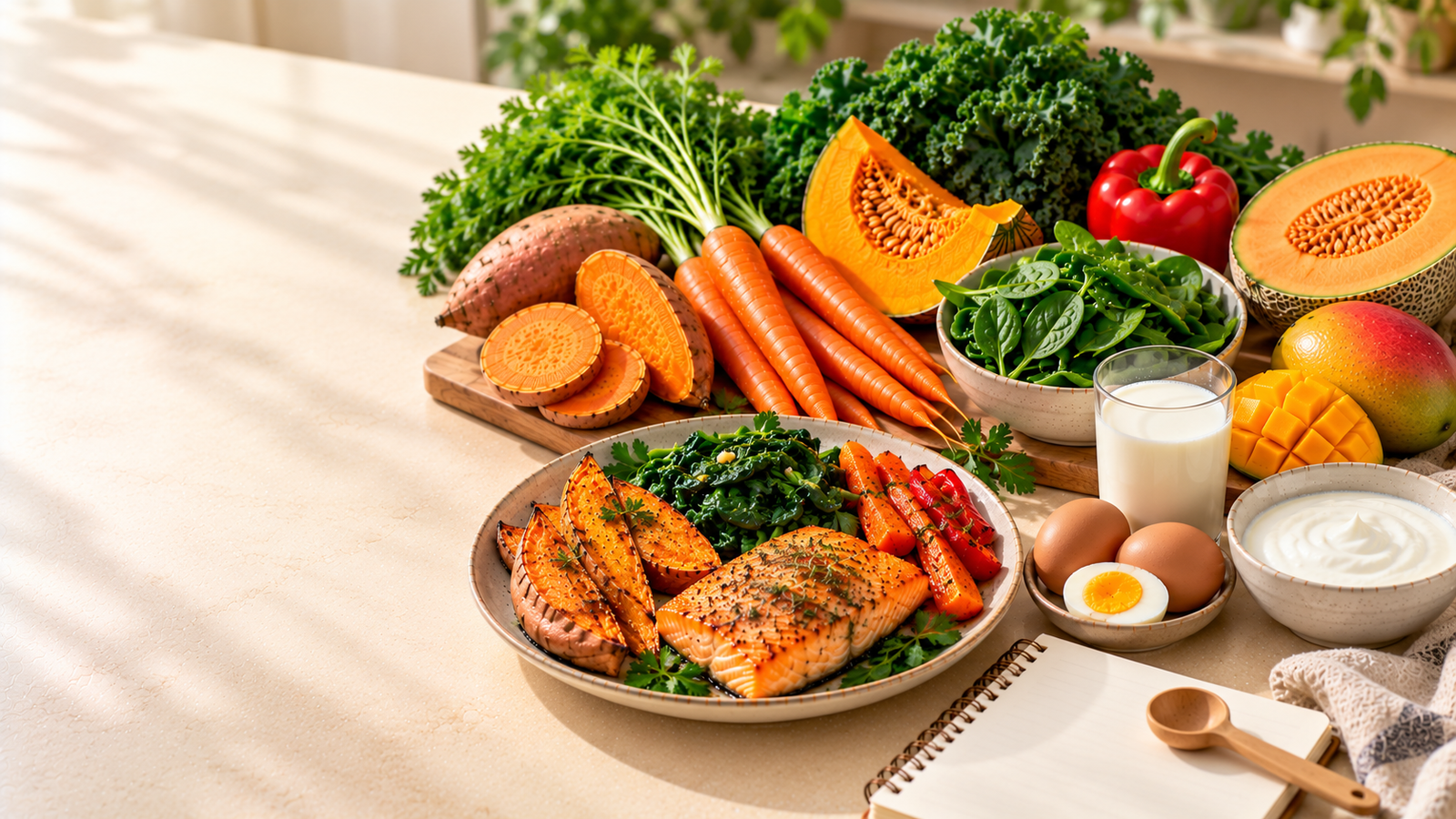
You can meet your vitamin A needs with a variety of everyday foods. The amount provided depends on the serving, preparation method, and whether a product is fortified.
| Food | Approximate vitamin A per serving |
|---|---|
| Sweet potato, baked, 1 whole | 1,403 mcg RAE |
| Spinach, boiled, ½ cup | 573 mcg RAE |
| Carrots, raw, ½ cup | 459 mcg RAE |
| Fortified skim milk, 1 cup | 149 mcg RAE |
| Cantaloupe, ½ cup | 135 mcg RAE |
| Mango, 1 whole | 112 mcg RAE |
| Hard-boiled egg, 1 large | 75 mcg RAE |
| Cooked salmon, 3 oz | 59 mcg RAE |
Approximate values can vary by variety, serving size, preparation, and fortification. Liver is omitted from this everyday list because it contains exceptionally high amounts of preformed vitamin A.
Plant-Based Sources
Useful plant-based sources include:
- Sweet potatoes and pumpkin
- Carrots and red bell peppers
- Spinach, kale, and other dark leafy greens
- Mangoes, cantaloupe, and apricots
Pairing these foods with a little dietary fat, such as olive oil, nuts, or seeds, can help the body absorb carotenoids.
Animal-Based and Fortified Sources
Preformed vitamin A is found in eggs, dairy products, fish, and liver. Some cereals and plant-based drinks also have vitamin A added.
Check product labels to compare amounts. You do not need to eat liver to meet your vitamin A requirements, and liver should be avoided during pregnancy or when pregnancy is possible.
How to Meet Your Vitamin A Needs Through Meals
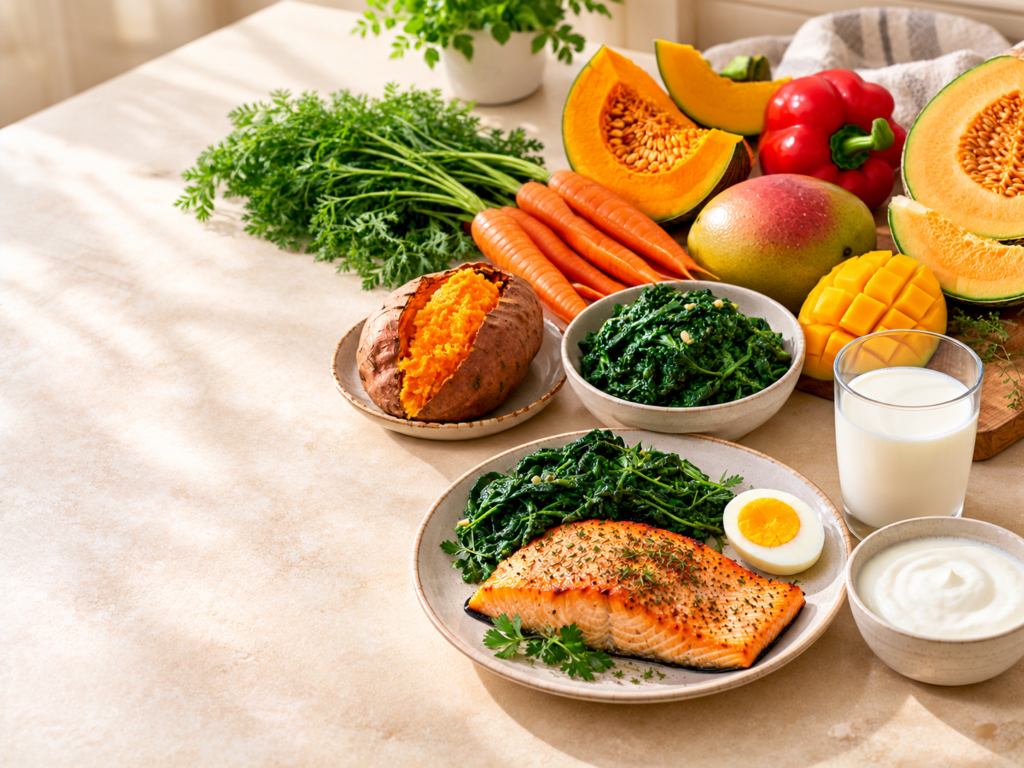
You do not need to calculate every nutrient at every meal. A varied eating pattern can help you get vitamin A alongside other important nutrients.
Here are simple meal ideas:
- Breakfast: Eggs with spinach and whole-grain toast.
- Lunch: Lentil curry with carrots or pumpkin.
- Snack: Mango, cantaloupe, or plain yogurt with fruit.
- Dinner: Baked sweet potato with roasted vegetables and fish, beans, or tofu.
- Vegetarian dinner: Chickpea and pumpkin curry served with spinach and whole grains.
Aim for variety across the week rather than relying on one food every day. If you use fortified foods, check the label to see how much vitamin A a serving provides.
Vitamin A Rich Foods: Complete Food Guide
Can You Get Too Much Vitamin A?
Yes. Although vitamin A is essential, excessive intake of preformed vitamin A can cause health problems. For adults, the tolerable upper intake level is 3,000 mcg RAE per day from preformed vitamin A. This includes sources such as animal foods and supplements containing retinol or retinyl esters. It is a safety limit, not a target.
Possible effects of excessive intake include nausea, headache, dizziness, blurred vision, and liver problems. Very high intake during pregnancy can harm fetal development.
To stay safe:
- Avoid taking high-dose vitamin A supplements unless a healthcare professional recommends them.
- Check whether your multivitamin contains preformed vitamin A, beta-carotene, or both.
- Avoid liver and liver products during pregnancy or if you might become pregnant.
- Ask a healthcare professional before combining multiple supplements.
- Do not assume that a supplement is safe simply because it is sold without a prescription.
The upper limit applies to preformed vitamin A, not beta-carotene naturally present in vegetables. However, high-dose beta-carotene supplements are also inappropriate for some people, including smokers and former smokers.
What Happens If You Don’t Get Enough Vitamin A?
Vitamin A deficiency can affect eyesight, immune function, and the normal maintenance of tissues. Possible signs include difficulty seeing in dim light and dry eyes. Severe deficiency can cause serious eye damage.
Some people may be more likely to develop deficiency, including those with conditions that interfere with fat absorption. Risk also depends on diet and broader nutritional circumstances.
If you think you may have a deficiency, seek medical advice rather than starting high-dose supplements on your own. Symptoms can have several causes, and a healthcare professional can assess your diet, medical history, and need for testing.
Do You Need a Vitamin A Supplement?
Not everyone needs a vitamin A supplement. Many people can meet their requirements through food, while supplements may be useful in particular circumstances, such as a diagnosed deficiency or a clinician-identified need.
Before taking a supplement:
- Review your usual diet and any fortified foods you eat.
- Check the supplement label for the amount and form of vitamin A.
- Consider vitamin A from any other multivitamins or supplements you use.
- Ask a healthcare professional whether supplementation is appropriate for you.
Avoid using high-dose supplements to try to improve eyesight, skin, or immunity when you have no identified deficiency. Excess vitamin A can be harmful, and supplements are not a substitute for a varied diet.

Vitamin A Requirements During Pregnancy and Breastfeeding
Vitamin A remains important during pregnancy and breastfeeding, but the recommended amount changes with life stage.
- Pregnant teens: 750 mcg RAE per day
- Pregnant adults: 770 mcg RAE per day
- Breastfeeding teens: 1,200 mcg RAE per day
- Breastfeeding adults: 1,300 mcg RAE per day
These are U.S. reference values. Individual advice may vary depending on local guidance and personal health needs.
Pregnant people should be especially careful with preformed vitamin A because excessive amounts can cause birth defects. Avoid liver and liver products during pregnancy or if pregnancy is possible, and discuss prenatal supplements with your healthcare professional.
Plant foods containing beta-carotene, such as carrots, sweet potatoes, and spinach, can contribute vitamin A without the same toxicity risk associated with excessive preformed vitamin A.
Read the NIH Office of Dietary Supplements’ Vitamin A and Carotenoids Fact Sheet
Frequently Asked Questions
How much vitamin A do you need per day as an adult?
Adult men generally need 900 mcg RAE per day, and adult women need 700 mcg RAE. Requirements differ during pregnancy and breastfeeding.
Is 900 mcg of vitamin A too much?
For adult men, 900 mcg RAE is the recommended daily allowance, not an excessive amount. Whether a particular intake is appropriate depends on age, life stage, and the form of vitamin A.
How much vitamin A should a woman take daily?
The recommended amount is generally 700 mcg RAE for adult women, 770 mcg RAE during pregnancy, and 1,300 mcg RAE while breastfeeding. These are total daily intake recommendations, not instructions to take that amount as a supplement.
How much vitamin A do children need daily?
Children ages 1–3 generally need 300 mcg RAE daily, ages 4–8 need 400 mcg RAE, and ages 9–13 need 600 mcg RAE. Requirements differ for infants and teenagers.
Can I get enough vitamin A from food alone?
Many people can meet their vitamin A needs through a varied diet containing vegetables, fruits, eggs, dairy products, fish, and fortified foods. People with certain medical conditions may need individualized guidance.
What is the maximum safe daily intake of vitamin A?
For adults, the upper limit for preformed vitamin A is 3,000 mcg RAE per day. This is not a recommended target, and it does not apply in the same way to beta-carotene naturally present in foods.
Should I take vitamin A every day for better eyesight?
Not necessarily. Adequate vitamin A supports normal vision, but supplements are not guaranteed to improve eyesight in people who already get enough. High doses can be harmful.
How to Meet Your Daily Vitamin A Requirement Through Food
Meeting your daily vitamin A requirement does not usually require expensive supplements. A balanced diet that includes colorful vegetables, fruits, eggs, dairy products, and fish can help you get enough vitamin A. The amount you need depends on your age, sex, and life stage.
Adult men generally need 900 mcg RAE of vitamin A per day, while adult women need 700 mcg RAE. Pregnancy and breastfeeding increase these requirements. Combining plant-based foods with moderate amounts of animal-based foods can help you build a varied, nutrient-rich eating pattern.
Best Food Sources of Vitamin A
Consider adding these vitamin A-rich foods to your regular meals:
- Sweet potatoes: Provide beta-carotene, which the body can convert into vitamin A.
- Carrots: An easy source of beta-carotene for snacks, salads, soups, and cooked meals.
- Spinach: Supplies provitamin A carotenoids along with other nutrients.
- Pumpkin and winter squash: Offer orange-colored carotenoids that contribute to vitamin A intake.
- Mango and cantaloupe: Provide beta-carotene in a naturally sweet form.
- Eggs: Supply preformed vitamin A.
- Milk and dairy products: Can contribute vitamin A, particularly when fortified.
- Salmon and other fish: Provide vitamin A in varying amounts.
- Fortified breakfast cereals: May provide additional vitamin A; check the nutrition label.
The exact amount of vitamin A varies with portion size, food variety, preparation, and fortification. Eating a variety of these foods is more practical than relying on one food alone.
Vitamin A Requirements by Age and Life Stage
Your daily vitamin A needs change as you grow. Infants have different requirements from children, teenagers, and adults. Pregnancy and breastfeeding also affect how much vitamin A is recommended.
| Age or life stage | Recommended daily intake |
|---|---|
| Infants, 0–6 months | 400 mcg RAE (AI) |
| Infants, 7–12 months | 500 mcg RAE (AI) |
| Children, 1–3 years | 300 mcg RAE |
| Children, 4–8 years | 400 mcg RAE |
| Children, 9–13 years | 600 mcg RAE |
| Teen boys, 14–18 years | 900 mcg RAE |
| Teen girls, 14–18 years | 700 mcg RAE |
| Adult men | 900 mcg RAE |
| Adult women | 700 mcg RAE |
| Pregnant teens | 750 mcg RAE |
| Pregnant adults | 770 mcg RAE |
| Breastfeeding teens | 1,200 mcg RAE |
| Breastfeeding adults | 1,300 mcg RAE |
Important: AI means Adequate Intake and applies to infants when an RDA has not been established. RAE stands for retinol activity equivalents, a unit that accounts for differences in how the body uses vitamin A from different sources.
These figures are recommended intake levels, not a requirement to consume the same amount from a supplement. Most people should aim to meet their needs through a varied diet, with supplements used when appropriate.
What Is the Difference Between Preformed Vitamin A and Beta-Carotene?
Vitamin A comes in two main dietary forms: preformed vitamin A and provitamin A carotenoids.
Preformed vitamin A is found in animal-derived foods such as eggs, dairy products, fish, and liver. The body can use this form directly.
Provitamin A carotenoids, including beta-carotene, are found in plant foods such as carrots, sweet potatoes, spinach, pumpkin, and mango. The body converts some of these carotenoids into vitamin A.
This difference matters when considering both nutrition and safety. High intakes of preformed vitamin A can be harmful, while beta-carotene from ordinary foods does not carry the same established upper limit. However, high-dose beta-carotene supplements are not appropriate for everyone, especially smokers and former smokers.
How to Improve Vitamin A Absorption
Eating vitamin A-rich foods is important, but your body also needs to absorb the nutrient. Vitamin A is fat-soluble, meaning dietary fat helps the body absorb it.
Try these simple food-pairing ideas:
- Add a little olive oil to a spinach or carrot salad.
- Serve roasted sweet potatoes with a meal containing healthy fats.
- Combine pumpkin or squash with a small amount of oil during cooking.
- Eat eggs with vegetables as part of a balanced breakfast.
- Include a variety of colorful vegetables instead of relying on just one source.
You do not need to add large amounts of fat to your meals. Small amounts incorporated into a balanced eating pattern can help with the absorption of fat-soluble nutrients.
Can You Get Too Much Vitamin A?
Yes. Getting too much preformed vitamin A from supplements, certain medications, or frequent high intakes of some animal foods can cause harmful effects. For adults, the tolerable upper intake level for preformed vitamin A is 3,000 mcg RAE per day from all sources.
This upper limit is a safety boundary, not a daily target. It does not apply in the same way to beta-carotene naturally present in foods.
Excessive preformed vitamin A can cause symptoms such as nausea, headache, dizziness, blurred vision, and, in serious cases, liver damage. High intakes during pregnancy can also cause birth defects.
If you are pregnant or planning a pregnancy, avoid high-dose vitamin A supplements and liver products unless a qualified healthcare professional advises otherwise. Check supplement labels carefully, and speak with a doctor or pharmacist before combining vitamin A products with medication.
Sample One-Day Meal Plan to Support Vitamin A Intake
You can include vitamin A-rich foods throughout the day without eating the same food at every meal. The following is a simple example, not a prescribed diet or a calculated vitamin A total.
| Meal | Example foods |
|---|---|
| Breakfast | Eggs, fortified cereal, or milk |
| Morning snack | Mango or cantaloupe |
| Lunch | Spinach and carrot salad with a little olive oil |
| Afternoon snack | Yogurt or another balanced snack |
| Dinner | Baked salmon or beans with roasted sweet potato and green vegetables |
The vitamin A supplied by this meal plan will depend on portions, brands, preparation, and food choices. Fortified products also vary, so use their nutrition labels when estimating intake.
Frequently Asked Questions About Daily Vitamin A Intake
How much vitamin A do adults need per day?
Adult men generally need 900 mcg RAE daily, and adult women need 700 mcg RAE. Needs may be higher during pregnancy and breastfeeding.
Is 900 mcg of vitamin A too much?
Not necessarily. For adult men, 900 mcg RAE is the recommended daily intake. Safety depends on the form and total amount consumed; the adult upper limit of 3,000 mcg RAE applies to preformed vitamin A, not beta-carotene from ordinary foods.
Which foods are highest in vitamin A?
Liver is exceptionally rich in preformed vitamin A. Sweet potatoes, carrots, spinach, pumpkin, and other orange or dark-green vegetables provide provitamin A carotenoids. Because liver contains very high amounts of preformed vitamin A, it requires particular caution during pregnancy.
Can I get enough vitamin A without supplements?
Many people can meet their needs through a varied diet containing vegetables, fruits, eggs, dairy products, fish, and fortified foods. People with absorption problems or other specific health needs may require professional advice.
Should I take vitamin A every day?
Not everyone needs a vitamin A supplement. If your diet already supplies enough, extra supplementation may offer no benefit and can increase the risk of excessive intake. Ask a qualified healthcare professional whether a supplement is appropriate for you.
What does mcg RAE mean?
Mcg RAE means micrograms of retinol activity equivalents. It is the unit used to express vitamin A intake while accounting for differences between preformed vitamin A and carotenoids that the body converts into vitamin A.
Conclusion
Understanding how much vitamin A you need per day helps you make informed choices about food and supplements. Most adult men need 900 mcg RAE daily, while most adult women need 700 mcg RAE. Needs increase during breastfeeding and vary for children, teenagers, and pregnant people.
Build your intake around a variety of foods, including carrots, sweet potatoes, spinach, pumpkin, eggs, dairy products, and suitable fish. Check fortified food labels, avoid unnecessary high-dose supplements, and take particular care with preformed vitamin A during pregnancy.
The goal is not to consume as much vitamin A as possible. It is to get the right amount for your life stage through a balanced diet and appropriate professional guidance.
1 thought on “How Much Vitamin A Do You Need Per Day?”