
How much vitamin E do you need per day? The answer depends mainly on your age and life stage. For most adults, the recommended dietary allowance (RDA) is 15 mg of alpha-tocopherol per day under US dietary reference recommendations. People who are pregnant generally need the same amount, while breastfeeding adults need 19 mg daily.
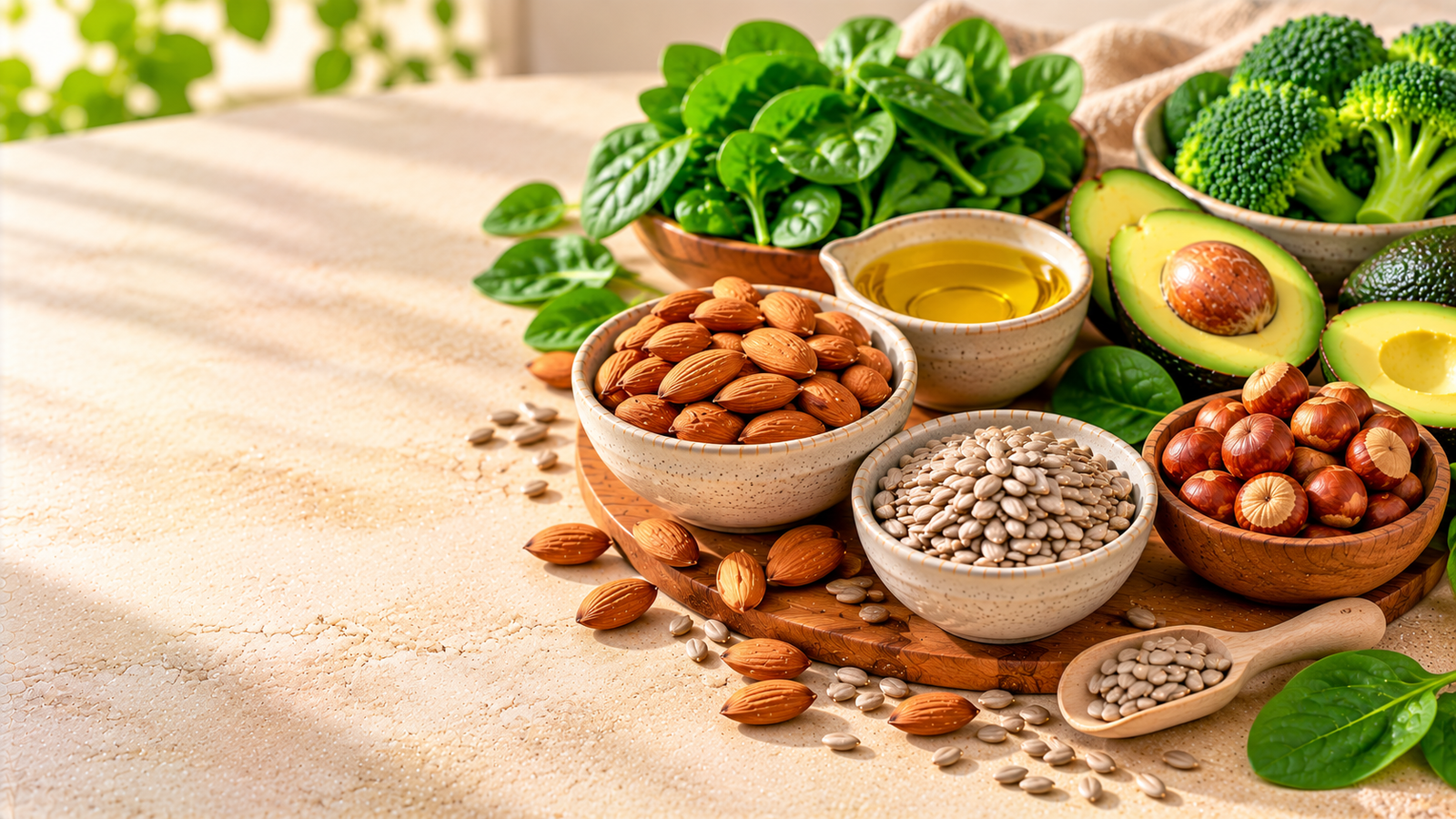
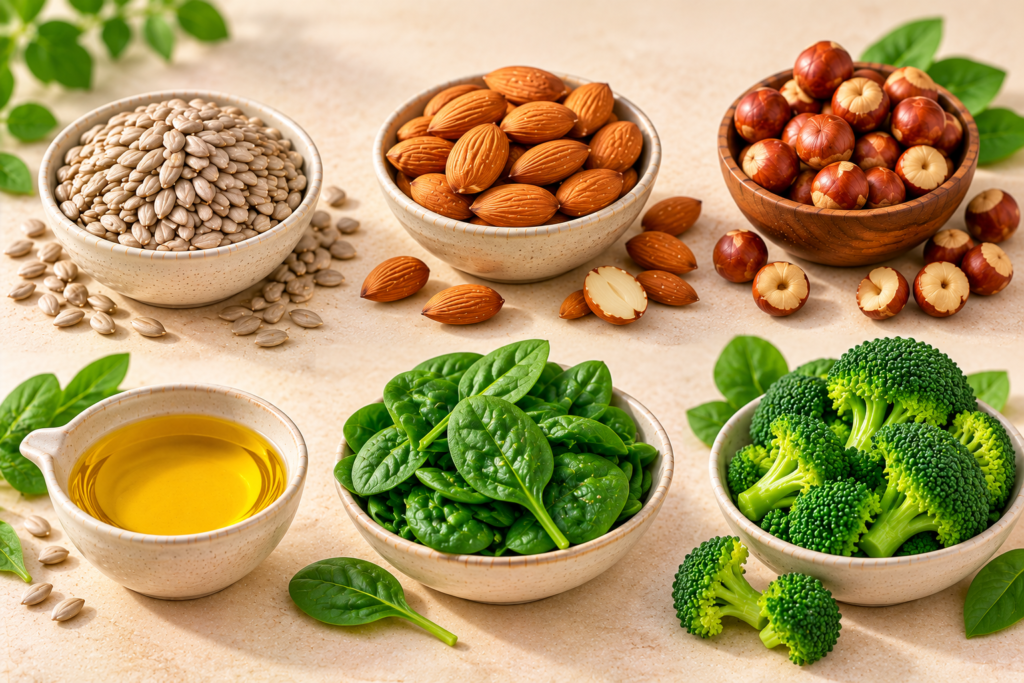
Vitamin E is a fat-soluble nutrient that helps protect cells from oxidative damage and supports normal immune function. You can get it from foods such as almonds, sunflower seeds, vegetable oils, spinach, and other nutrient-rich foods.
Knowing your daily vitamin E requirement can help you plan a balanced diet without unnecessarily relying on supplements. This guide explains recommended amounts by age, practical food sources, upper limits, and when medical advice may be needed.
Most Important Points
- Adults: The recommended amount is 15 mg of vitamin E per day.
- Breastfeeding: The US RDA increases to 19 mg per day.
- Children and teenagers: Requirements vary by age, from 6 mg to 15 mg daily.
- Food first: Nuts, seeds, and some vegetable oils are concentrated sources.
- Supplements are not automatically necessary: Many people can meet their needs through food.
- High doses can be harmful: Vitamin E supplements can increase bleeding risk and interact with certain medications.
- These recommendations refer to alpha-tocopherol, the form used to establish vitamin E requirements.
How Much Vitamin E Do You Need Per Day by Age?
The recommended daily vitamin E intake changes as children grow and during breastfeeding. The following values are based on US dietary reference recommendations published by the National Institutes of Health (NIH).
| Age or life stage | Vitamin E needed per day |
|---|---|
| Infants, 0–6 months | 4 mg |
| Infants, 7–12 months | 5 mg |
| Children, 1–3 years | 6 mg |
| Children, 4–8 years | 7 mg |
| Children, 9–13 years | 11 mg |
| Teenagers, 14–18 years | 15 mg |
| Adults, 19 years and older | 15 mg |
| Pregnancy, ages 14–18 | 15 mg |
| Pregnancy, ages 19 and older | 15 mg |
| Breastfeeding, ages 14–18 | 19 mg |
| Breastfeeding, ages 19 and older | 19 mg |
For infants, the figures are adequate intakes (AIs), not RDAs. These are general reference values, not personalized medical prescriptions.
How much vitamin E do adult men and women need?
Adult men and women aged 19 and older generally need 15 mg daily. There is no separate standard RDA for men versus women in this age group.
You can meet this requirement through a variety of foods, including nuts, seeds, certain plant oils, and vegetables. You do not need to take a supplement simply because you are an adult.
How much vitamin E do pregnant or breastfeeding women need?
The recommended amount during pregnancy is 15 mg per day. During breastfeeding, the recommendation increases to 19 mg per day.
If you are pregnant or breastfeeding, discuss supplements with your healthcare professional, particularly if you already take a prenatal vitamin or another product containing vitamin E. Avoid combining supplements without checking their total nutrient content.
What Does 15 mg of Vitamin E Look Like in Food?
The easiest way to understand your daily vitamin E requirement is to look at familiar foods and their approximate nutrient content.
| Food | Typical serving | Approximate vitamin E |
|---|---|---|
| Wheat germ oil | 1 tablespoon | 20.3 mg |
| Sunflower seeds, dry roasted | 1 oz (28 g) | 7.4 mg |
| Almonds, dry roasted | 1 oz (28 g) | 6.8 mg |
| Sunflower oil | 1 tablespoon | 5.6 mg |
| Hazelnuts, dry roasted | 1 oz (28 g) | 4.3 mg |
| Peanut butter | 2 tablespoons | 2.9 mg |
| Peanuts, dry roasted | 1 oz (28 g) | 2.2 mg |
| Spinach, boiled | ½ cup | 1.9 mg |
| Broccoli, boiled | ½ cup | 1.2 mg |
| Kiwi | 1 medium | 1.1 mg |
Amounts are approximate and can vary by product, variety, and preparation. Values are based on NIH vitamin E food-source information.
Example: A simple way to reach your daily requirement
A day that includes almonds at breakfast, sunflower seeds with lunch, and spinach or broccoli at dinner can provide a meaningful amount of vitamin E. Depending on the portions, you may obtain much of your daily requirement without supplements.
You do not need to eat every food in the chart or meet the target with one meal. Focus on a varied diet and remember that oils, nuts, and seeds can be calorie-dense.
How to Meet Your Daily Vitamin E Requirement
You can meet your vitamin E needs through everyday meals. The goal is not to consume a perfect combination of foods every day, but to build consistent habits that provide a range of nutrients.
1. Add nuts or seeds to breakfast
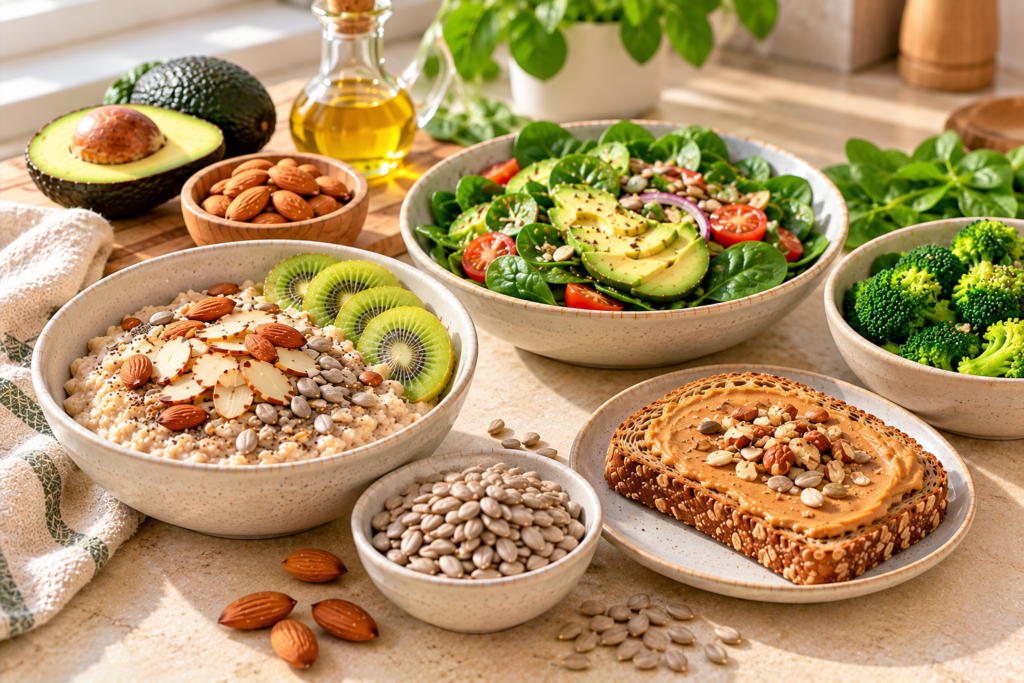
Sprinkle almonds or sunflower seeds over oatmeal, whole-grain cereal, or plain yogurt. A small serving can provide a substantial amount of vitamin E.
2. Include leafy green vegetables
Spinach and other leafy greens contribute vitamin E alongside folate, vitamin K, and other nutrients. Add them to soups, curries, salads, or omelets.
3. Use suitable plant oils in moderate amounts
Sunflower oil and some other vegetable oils provide vitamin E. Use them in suitable cooking applications or dressings, following the product’s storage instructions.
4. Read food labels
Some breakfast cereals and other packaged foods are fortified with vitamin E. Check the nutrition label to confirm whether a product contains added vitamin E and how much it provides per serving.
5. Pair variety with sensible portions
Nuts, seeds, and oils contain beneficial nutrients, but they also contribute calories. Include moderate portions as part of meals that meet your individual nutritional needs.
Can You Take Too Much Vitamin E?
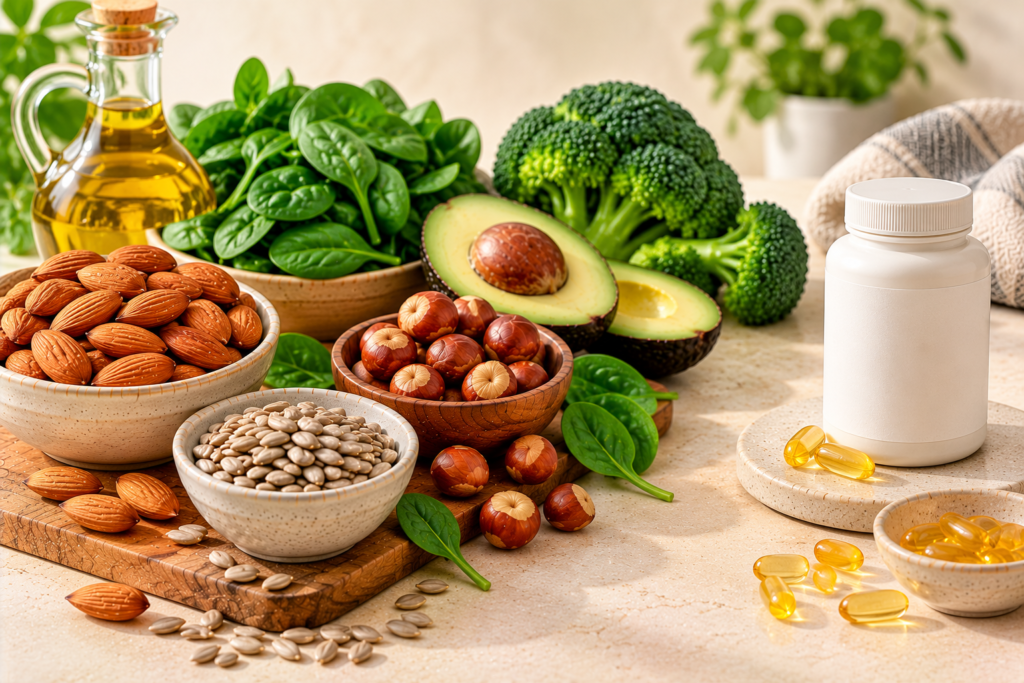
Yes. Although vitamin E from ordinary foods is generally safe, high-dose supplements can cause problems.
The US tolerable upper intake level (UL) for adults aged 19 and older is 1,000 mg per day of supplemental alpha-tocopherol. This is a safety limit, not a recommended target, and it does not mean that taking a high dose is beneficial.
Why are high-dose vitamin E supplements a concern?
Large doses can interfere with blood clotting and increase the risk of bleeding, including serious bleeding in the brain. Vitamin E supplements can also interact with anticoagulant and antiplatelet medicines.
Some research has raised safety concerns about long-term high-dose supplementation, including at doses below the established upper limit. Therefore, do not use the UL as a personal supplement target.
Who should seek advice before taking vitamin E supplements?
Speak with a healthcare professional before starting a supplement if you:
- Take blood-thinning medication.
- Have a bleeding disorder.
- Are preparing for surgery.
- Are pregnant or breastfeeding and already use other supplements.
- Have a condition that affects the absorption of dietary fat.
- Are receiving cancer treatment.
Important: The upper limit applies to supplemental alpha-tocopherol, not the naturally occurring vitamin E in ordinary foods. There is no need to avoid nutritious foods such as nuts or seeds because of the supplement upper limit.
What Happens If You Do Not Get Enough Vitamin E?
Vitamin E deficiency is uncommon in healthy people who eat a varied diet. It is more likely in people with certain disorders that interfere with fat absorption or rare inherited conditions.
Possible signs of deficiency
Severe deficiency can affect the nervous system and muscles. Possible symptoms include:
- Muscle weakness.
- Numbness or tingling.
- Problems with balance or coordination.
- Certain vision or neurological difficulties.
These symptoms can have many different causes, so they do not confirm a vitamin E deficiency by themselves. A healthcare professional can assess your symptoms and decide whether testing or treatment is appropriate.
Does low vitamin E always mean you need a supplement?
No. The right approach depends on the cause. A person with inadequate dietary intake may benefit from improving food choices, while someone with a fat-absorption disorder may need medically supervised supplementation.
Do not diagnose or treat a suspected deficiency based on symptoms alone.
Vitamin E Daily Requirement: Food or Supplements?
For most healthy people, food is the preferred starting point. A varied diet provides vitamin E alongside fiber, unsaturated fats, vitamins, minerals, and other useful nutrients.
| Consideration | Food sources | Supplements |
|---|---|---|
| Best use | Meeting routine nutritional needs | Addressing a specific need when appropriate |
| Examples | Almonds, sunflower seeds, plant oils, spinach | Capsules, softgels, or multivitamins |
| Nutrient content | Varies by food and portion | Depends on the product and dose |
| Main consideration | Variety and portion size | Dose, interactions, and professional advice |
If your diet is varied and you have no condition affecting nutrient absorption, you may not need a separate vitamin E supplement. If you are considering one, check the amount per serving and discuss it with a healthcare professional, particularly if you take medication.
For more detailed guidance, see the NIH Office of Dietary Supplements Vitamin E fact sheet.
How Much Vitamin E Do You Need at Different Ages?
The recommended daily amount of vitamin E depends on your age and life stage. Vitamin E requirements are measured in milligrams (mg) of alpha-tocopherol, the form used to establish dietary recommendations.
| Age or life stage | Recommended daily vitamin E |
|---|---|
| Babies 0–6 months | 4 mg |
| Babies 7–12 months | 5 mg |
| Children 1–3 years | 6 mg |
| Children 4–8 years | 7 mg |
| Children 9–13 years | 11 mg |
| Teens 14–18 years | 15 mg |
| Adults 19 years and older | 15 mg |
| Pregnancy | 15 mg |
| Breastfeeding | 19 mg |
These recommendations apply to healthy people and include both males and females. Infants have adequate intake (AI) values rather than established recommended dietary allowances (RDAs). Individual needs may differ because of certain medical conditions.
2. Add a Detailed Vitamin E Foods Chart
Place this section after your existing list of vitamin E-rich foods. It adds practical nutritional information and naturally incorporates related keywords such as foods high in vitamin E, vitamin E food sources, and natural sources of vitamin E.
Best Foods to Help You Meet Your Daily Vitamin E Needs
Eating a variety of nuts, seeds, vegetable oils, and green vegetables can help you reach your daily vitamin E requirement without relying on supplements. The following amounts are approximate and can vary by brand, variety, and preparation method.
| Food | Serving size | Vitamin E |
|---|---|---|
| Wheat germ oil | 1 tablespoon | 20.3 mg |
| Dry-roasted sunflower seeds | 1 ounce | 7.4 mg |
| Dry-roasted almonds | 1 ounce | 6.8 mg |
| Sunflower oil | 1 tablespoon | 5.6 mg |
| Hazelnuts | 1 ounce | 4.3 mg |
| Peanut butter | 2 tablespoons | 2.9 mg |
| Dry-roasted peanuts | 1 ounce | 2.2 mg |
| Cooked spinach | ½ cup | 1.9 mg |
| Cooked broccoli | ½ cup | 1.2 mg |
| One medium kiwi | 1 fruit | 1.1 mg |
| Mango | ½ cup | 0.7 mg |
Source: NIH Office of Dietary Supplements, Vitamin E Health Professional Fact Sheet.
Which Foods Provide the Most Vitamin E?
Wheat germ oil, sunflower seeds, almonds, and sunflower oil are particularly concentrated sources of vitamin E. For example, one ounce of almonds provides approximately 6.8 mg, or about 45% of the adult Daily Value of 15 mg.
You do not need to eat all these foods every day. Combining moderate portions of nuts or seeds with vegetables and other balanced meals can help you obtain vitamin E alongside other essential nutrients.
3. Add a New Section: A Simple One-Day Vitamin E Meal Plan
How to Get 15 mg of Vitamin E From Food
If you are wondering how to get enough vitamin E every day, spreading vitamin E-rich foods across your meals can make your daily target easier to reach.
Here is an illustrative meal plan using approximate nutrient values:
| Meal | Food suggestion | Approximate vitamin E |
|---|---|---|
| Breakfast | Oatmeal with 1 ounce of almonds | 6.8 mg |
| Lunch | Meal with ½ cup cooked spinach | 1.9 mg |
| Snack | 1 tablespoon peanut butter | 1.45 mg |
| Dinner | Meal with ½ cup cooked broccoli | 1.2 mg |
| Additional food | 1 tablespoon sunflower oil used in food preparation | 5.6 mg |
| Approximate total | 17 mg |
The peanut butter value is estimated using half of the NIH-listed amount for two tablespoons. Actual intake depends on portions, ingredients, and preparation.
This example shows that an adult can meet the 15 mg daily vitamin E recommendation through ordinary foods. However, it is an illustration rather than a prescribed diet; adjust portions and ingredients to suit your energy needs and overall dietary pattern.
4. Add This Important SEO Section: How the Body Absorbs Vitamin E
Does Vitamin E Need Fat to Be Absorbed?
Vitamin E is a fat-soluble vitamin, which means the body absorbs it along with dietary fat. Including foods containing unsaturated fats in a balanced meal can support the absorption of vitamin E.
Practical ways to include vitamin E in meals include:
- Add almonds or sunflower seeds to oatmeal, yogurt, or salads.
- Eat spinach or broccoli alongside a meal that contains some healthy fat.
- Use a moderate amount of vegetable oil in cooking or salad dressing.
- Choose a varied diet rather than depending on one food to meet all your nutrient requirements.
Vitamin E is stored in the body, particularly in fatty tissues, so you do not need to consume every vitamin E-rich food on the same day. Consistent, balanced eating is more useful than trying to obtain large amounts from a single source.
5. Expand the Vitamin E Supplement Safety Section
Can You Take Too Much Vitamin E?
Vitamin E from food is generally safe, but high-dose supplements can increase the risk of bleeding. The adult upper limit of 1,000 mg per day applies to supplemental alpha-tocopherol; it is not a recommended intake target. Potential adverse effects can occur at lower supplemental doses, too.
Before taking a vitamin E supplement, consider these precautions:
- Blood-thinning medicines: Vitamin E supplements can interact with anticoagulant and antiplatelet medicines and may increase bleeding risk.
- Surgery: Tell your healthcare professional about supplements you use before a planned procedure.
- Cancer treatment: Supplements may interfere with certain chemotherapy or radiation treatments. Ask your oncology team before taking them.
- Existing health conditions: People with conditions that impair fat absorption may need individualized advice about vitamin E.
- High-dose products: Do not assume that a product is safe simply because its dose is below the adult upper limit.
For most healthy adults, meeting vitamin E needs through food is a sensible starting point. A clinician can determine whether supplementation is appropriate when deficiency, malabsorption, or another medical concern is present.
6. Add These SEO-Friendly FAQs
Add these questions near the end of your article, before the conclusion. Use them as visible FAQ content; only add FAQ schema if your SEO setup supports it and the markup accurately reflects the page.
1. Is 400 IU of vitamin E too much per day?
A 400 IU supplement is a high dose compared with the adult daily requirement of 15 mg. The milligram equivalent depends on whether the supplement contains natural or synthetic vitamin E. High-dose supplementation can increase health risks, so consult a healthcare professional before using it regularly.
2. Can I get enough vitamin E from food alone?
Yes. Many people can meet their daily vitamin E needs through a varied diet containing almonds, sunflower seeds, vegetable oils, spinach, and other nutrient-rich foods. Supplementation is not automatically necessary.
3. What is the best time to take vitamin E?
If your healthcare professional recommends a vitamin E supplement, taking it with a meal that contains some fat may help absorption. Follow the product instructions and your clinician’s advice.
4. Which fruit contains vitamin E?
Kiwi, mango, and avocado can contribute vitamin E to your diet. However, nuts, seeds, and certain vegetable oils generally provide much larger amounts per serving than most fruits.
5. Do men and women need different amounts of vitamin E?
For adults aged 19 and older, the recommended amount is 15 mg per day for both men and women. Pregnancy does not increase the recommendation above 15 mg, while breastfeeding increases it to 19 mg per day.
6. What happens if you do not get enough vitamin E?
Vitamin E deficiency is uncommon in healthy people, but it can occur with certain disorders that prevent proper fat absorption. Severe deficiency may cause nerve and muscle problems, coordination difficulties, or vision problems. Seek medical advice if you have symptoms or a condition that affects nutrient absorption.
7. Strengthen Internal and External Linking
Add these links where they naturally fit in the article.
Suggested internal links — replace the example paths with your actual published URLs:
- Vitamin E Rich Foods: Best Sources for Your Diet
- Vitamin A Benefits and Food Sources
- Vitamin C Rich Foods: Best Natural Sources
- Healthy Fats: Types, Benefits, and Food Sources
Recommended authoritative external link:
– NIH Office of Dietary Supplements: Vitamin E Fact Sheet
This source provides detailed information about daily requirements, food sources, absorption, deficiency, and supplement safety.
Internal and External Linking Opportunities
Add these links in the most relevant sections of your published article.
- Vitamin E Rich Foods — Complete Food Guide
- Vitamin E Benefits: Why This Vitamin Matters
- NIH Vitamin E Fact Sheet for Health Professionals
Replace the internal placeholders with the actual URLs from your website before publishing.
Frequently Asked Questions About Daily Vitamin E Intake
1. How much vitamin E do you need per day as an adult?
Adults aged 19 and older generally need 15 mg per day of alpha-tocopherol. This amount can usually be obtained from a varied diet.
2. Is 400 IU of vitamin E too much per day?
A 400 IU supplement is a high dose compared with the adult RDA of 15 mg. IU-to-milligram conversion depends on whether the supplement contains natural or synthetic vitamin E. High doses can carry risks, so do not take 400 IU daily without discussing the need with a healthcare professional.
3. How much vitamin E do women need daily?
Most adult women need 15 mg per day. The recommendation is also 15 mg during pregnancy and 19 mg during breastfeeding under US dietary reference guidelines.
4. How much vitamin E do children need per day?
Children need different amounts depending on age: 6 mg for ages 1–3, 7 mg for ages 4–8, and 11 mg for ages 9–13. Teenagers aged 14–18 need 15 mg daily.
5. Can you get enough vitamin E from food alone?
Yes. Many people can meet their needs through foods such as sunflower seeds, almonds, hazelnuts, suitable plant oils, spinach, and other vegetables. A supplement is not automatically necessary.
6. What is the best time of day to take vitamin E?
There is no universally required time of day. If a healthcare professional recommends a supplement, follow the product instructions; taking vitamin E with a meal containing some fat can help its absorption.
7. What is the maximum safe amount of vitamin E per day?
For adults aged 19 and older, the US upper limit is 1,000 mg per day of supplemental alpha-tocopherol. This is a safety limit, not a recommended intake. Lower doses can also be inappropriate for some people because of medication interactions or other health risks.
8. Do I need vitamin E supplements if I eat healthy foods?
Not necessarily. If you eat a varied diet and absorb nutrients normally, you may already be meeting your needs. Supplementation should be based on your individual circumstances and, when appropriate, professional advice.
Conclusion: Know Your Daily Vitamin E Needs
Understanding how much vitamin E you need per day makes it easier to plan a balanced diet and avoid unnecessary supplementation. For most adults, the recommended intake is 15 mg daily, increasing to 19 mg during breastfeeding under US dietary reference recommendations.
You can obtain vitamin E from almonds, sunflower seeds, vegetable oils, spinach, and other nutrient-rich foods. Aim for variety rather than relying on one food or taking high-dose supplements without a clear reason.
Remember that recommended intake and supplement safety limits are different. If you have a condition affecting nutrient absorption, take medication that affects blood clotting, or suspect a deficiency, seek advice from a qualified healthcare professional.
1 thought on “How Much Vitamin E Do You Need Per Day?”