
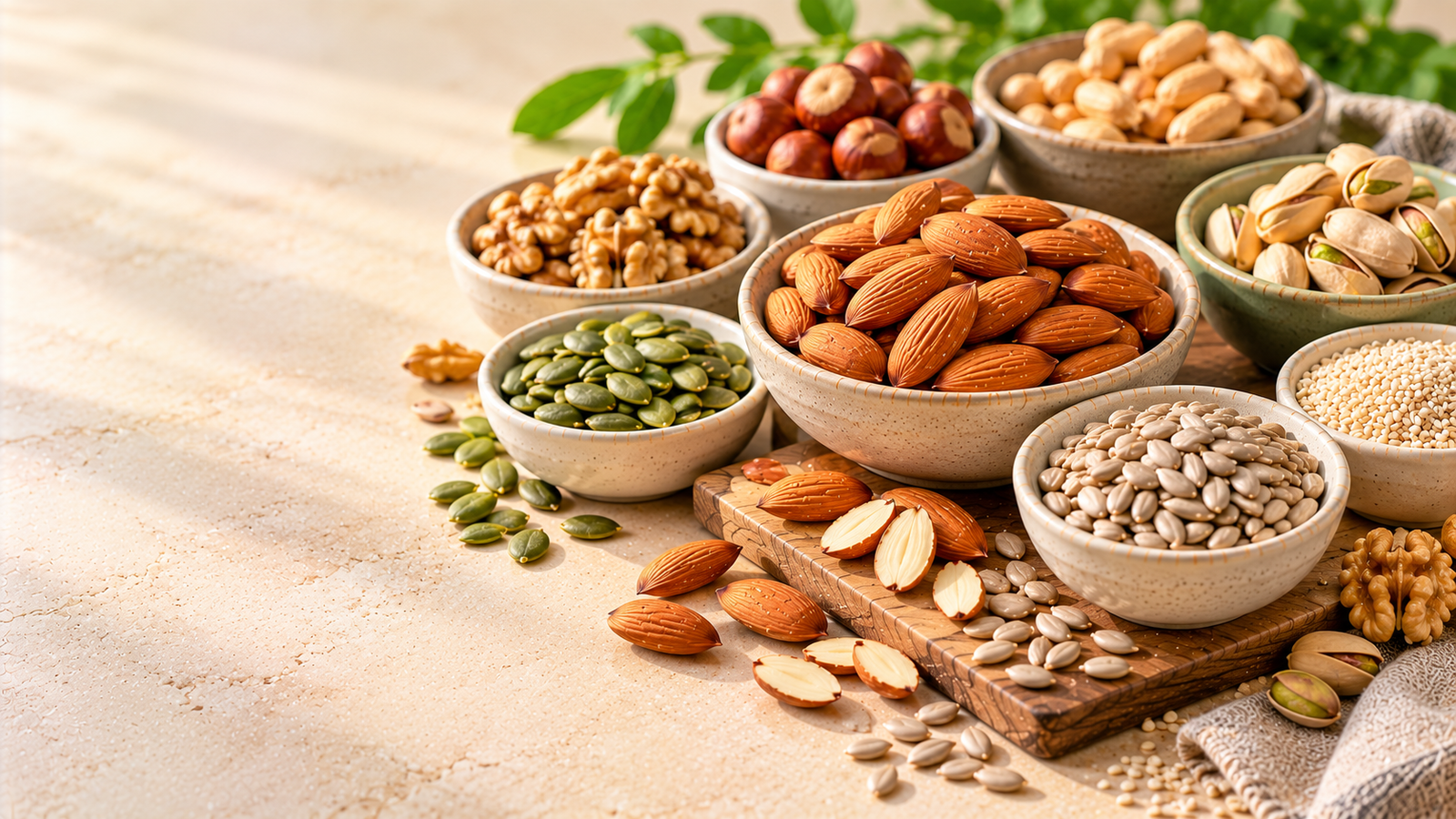
Choosing the right nuts and seeds can make it easier to get enough vitamin E from everyday foods. Nuts and seeds high in vitamin E include sunflower seeds, almonds, and hazelnuts, which provide meaningful amounts of this essential fat-soluble vitamin in relatively small servings. Vitamin E helps protect cells from oxidative damage and supports normal immune function.
Whether you want to improve your daily nutrition, plan healthier snacks, or add more plant-based nutrients to your meals, knowing which nuts and seeds provide the most vitamin E can help you make informed choices.
In this guide, you’ll find a vitamin E content chart, serving-size comparisons, practical snack ideas, and simple ways to include these foods in a balanced diet.
Most Important Points
- Sunflower seeds and almonds are among the best commonly available nut and seed sources of vitamin E.
- Dry-roasted sunflower seeds provide approximately 7.4 mg per ounce, while dry-roasted almonds provide about 6.8 mg per ounce.
- Hazelnuts and peanuts also contribute vitamin E, although their amounts differ.
- Most adults need 15 mg of vitamin E daily, so a variety of foods can help meet this target.
- Nuts and seeds also supply protein, unsaturated fats, fiber, and other nutrients.
- Choose portions that suit your energy needs, and consider unsalted varieties if you want to reduce sodium intake.
Health Professional Fact Sheet+1
Why Is Vitamin E Important for Your Health?
Vitamin E is a group of fat-soluble compounds, with alpha-tocopherol being the form recognized as meeting human vitamin E requirements. Its primary role is antioxidant protection: it helps protect cell membranes from damage caused by free radicals.
Vitamin E also contributes to normal immune function. Nuts and seeds are useful food sources because they provide vitamin E alongside other nutrients, including unsaturated fats, minerals, and—in many cases—fiber and plant protein.
Including vitamin E-rich foods as part of a varied eating pattern is a practical approach to meeting your nutrient needs. However, eating extra vitamin E does not automatically prevent or treat a disease, and high-dose supplements are not a substitute for a balanced diet.
Best Nuts and Seeds High in Vitamin E
Not all nuts and seeds contain the same amount of vitamin E. Sunflower seeds and almonds stand out among common choices, while hazelnuts, peanuts, and certain other nuts provide smaller but useful amounts.
1. Sunflower Seeds

Sunflower seeds
7.4 mg
Per 1 ounce (28 g) • Approximately 49% of the Daily Value
Sunflower seeds are one of the strongest everyday sources of vitamin E. Sprinkle them over salads, oatmeal, yogurt, or cooked vegetables, or enjoy a measured portion as a snack. Choose plain or lightly salted varieties when possible.
Dry-roasted sunflower seeds provide about 7.4 mg of vitamin E per ounce, making them a particularly useful choice for people looking to increase their dietary intake.
2. Almonds

Almonds
6.8 mg
Per 1 ounce (28 g) • Approximately 45% of the Daily Value
Almonds are an easy addition to breakfast bowls, homemade trail mix, and lunchbox snacks. They provide vitamin E, unsaturated fats, fiber, and plant protein.
Dry-roasted almonds provide approximately 6.8 mg of vitamin E per ounce. A small handful can contribute substantially toward an adult’s daily requirement.
3. Hazelnuts

Hazelnuts
4.3 mg
Per 1 ounce (28 g) • Approximately 29% of the Daily Value
Hazelnuts offer a rich, nutty flavor and can be eaten whole, chopped into oatmeal, or mixed with fruit. They are a useful alternative to almonds when you want variety in your vitamin E food sources.
Dry-roasted hazelnuts supply approximately 4.3 mg of vitamin E per ounce. They are also energy-dense, so a measured serving can help you enjoy them as part of a balanced diet.
4. Peanuts
Peanuts are technically legumes, not botanical nuts, but they are commonly eaten as nuts and fit naturally into this food guide.
One ounce of dry-roasted peanuts provides approximately 2.2 mg of vitamin E. Peanut butter is another convenient option: two tablespoons provide about 2.9 mg, although the amount varies by product.
Enjoy peanuts as a snack or add peanut butter to whole-grain toast, oatmeal, or smoothies. Check ingredient labels if you want to limit added salt, sugar, or oils.
5. Pine Nuts
Pine nuts can contribute vitamin E to salads, grain bowls, pesto, and vegetable dishes. They also provide unsaturated fats and minerals.
Their vitamin E content is lower than that of sunflower seeds and almonds in commonly reported serving comparisons. Use them for flavor and variety rather than assuming that all nuts provide equally high amounts of vitamin E.
6. Brazil Nuts
Brazil nuts are known for their selenium content, but they are not among the richest common sources of vitamin E. They can still contribute small amounts to a varied diet.
Because Brazil nuts can contain very high and variable amounts of selenium, avoid eating large quantities regularly just to obtain more nutrients. A small serving is generally more sensible.
7. Pistachios
Pistachios provide protein, fiber, and several micronutrients, but their vitamin E content is relatively low compared with sunflower seeds and almonds in standard serving comparisons.
They are still a useful snack for dietary variety. Choose unsalted pistachios if you are trying to manage sodium intake.
8. Walnuts
Walnuts are valued for their unsaturated fats, including alpha-linolenic acid, a plant-based omega-3 fatty acid. However, they are not among the top sources of vitamin E by typical serving size.
Enjoy walnuts for their overall nutritional contribution rather than choosing them specifically for their vitamin E content.
9. Sesame Seeds
Sesame seeds can add flavor, texture, and minerals to meals. Their vitamin E content is comparatively modest in standard serving comparisons, so they are best used alongside other vitamin E-rich foods rather than as your main source.
10. Flaxseeds
Flaxseeds are particularly known for fiber and alpha-linolenic acid. They are not a leading source of vitamin E, but ground flaxseeds can add variety to oatmeal, smoothies, and yogurt.
For people specifically aiming to increase vitamin E intake, sunflower seeds and almonds are generally more effective choices per typical serving.
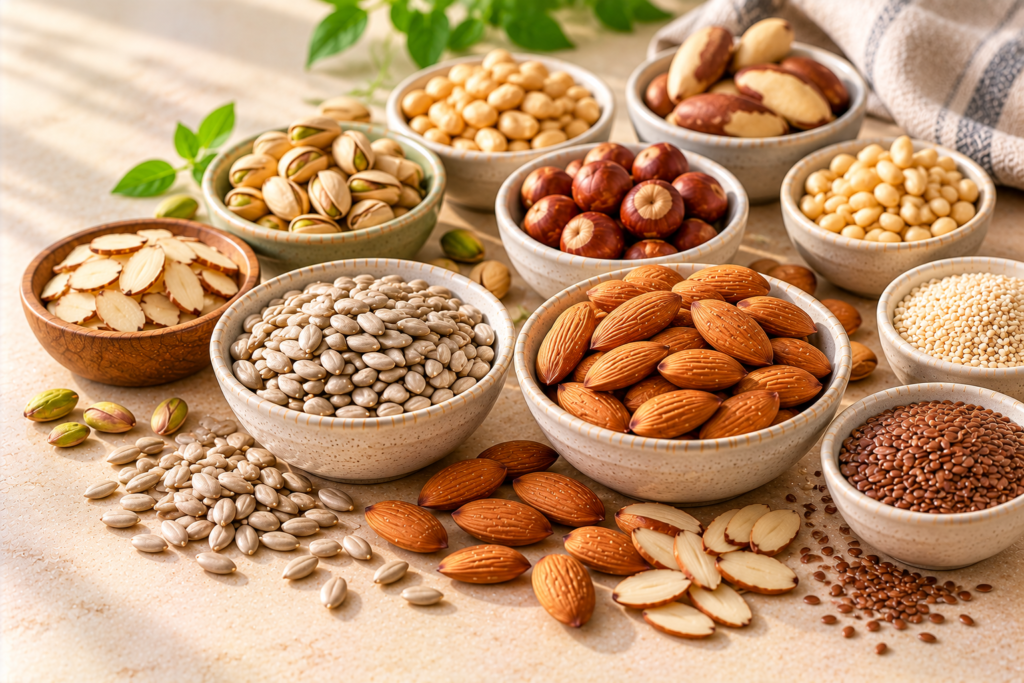
Vitamin E Content Chart: Nuts and Seeds Compared
Use this chart to compare common nuts and seeds by typical serving size. The figures below are approximate; variety, processing, and preparation can affect nutrient content.
| Nut or seed | Serving size | Vitamin E | Approx. adult Daily Value |
|---|---|---|---|
| Sunflower seeds, dry-roasted | 1 oz (28 g) | 7.4 mg | 49% |
| Almonds, dry-roasted | 1 oz (28 g) | 6.8 mg | 45% |
| Hazelnuts, dry-roasted | 1 oz (28 g) | 4.3 mg | 29% |
| Peanut butter | 2 tablespoons | 2.9 mg | 19% |
| Pine nuts | 1 oz (28 g) | 2.7 mg | 18% |
| Peanuts, dry-roasted | 1 oz (28 g) | 2.2 mg | 15% |
| Brazil nuts | 1 oz (28 g) | 1.6 mg | 11% |
| Pistachios, dry-roasted | 1 oz (28 g) | 0.6 mg | 4% |
| Sesame seeds | 1 oz (28 g) | 0.5 mg | 3% |
| Walnuts | 1 oz (28 g) | 0.2 mg | 1% |
| Flaxseeds | 1 tablespoon | About 0.02 mg | Less than 1% |
Values are approximate and based on published food-composition comparisons. Different databases, serving definitions, and preparation methods can produce different values.
What does the chart tell you? If your main goal is to get more vitamin E from nuts and seeds, sunflower seeds and almonds are especially practical choices. Hazelnuts are another good option. Other nuts and seeds can still be valuable parts of a varied diet, even if their vitamin E content is lower.
How Much Vitamin E Do You Need Per Day?
The recommended dietary allowance (RDA) for most adults aged 14 and older is 15 mg of vitamin E per day. People who are breastfeeding need 19 mg daily. Requirements for younger children are lower.
| Age or life stage | Daily vitamin E recommendation |
|---|---|
| Birth to 6 months | 4 mg (adequate intake) |
| 7–12 months | 5 mg (adequate intake) |
| Children 1–3 years | 6 mg |
| Children 4–8 years | 7 mg |
| Children 9–13 years | 11 mg |
| Teens and adults 14+ | 15 mg |
| Pregnancy | 15 mg |
| Breastfeeding | 19 mg |
These values are general dietary recommendations, not prescribed doses for treating a deficiency. Individual advice may differ for people with conditions that affect nutrient absorption.
Can Nuts and Seeds Help You Meet Your Daily Vitamin E Needs?
Yes. For example, one ounce of sunflower seeds provides approximately 7.4 mg of vitamin E, while one ounce of almonds supplies around 6.8 mg. Together, those portions provide about 14.2 mg, close to the adult recommendation of 15 mg.
This is an illustration, not a requirement to eat both portions every day. You can also obtain vitamin E from vegetable oils, leafy vegetables, avocado, and fortified foods. Consider your overall dietary pattern and energy needs when choosing portions.
Easy Ways to Eat More Vitamin E-Rich Nuts and Seeds
The easiest way to include nuts and seeds high in vitamin E is to add modest portions to meals you already enjoy.
1. Add Almonds to Breakfast
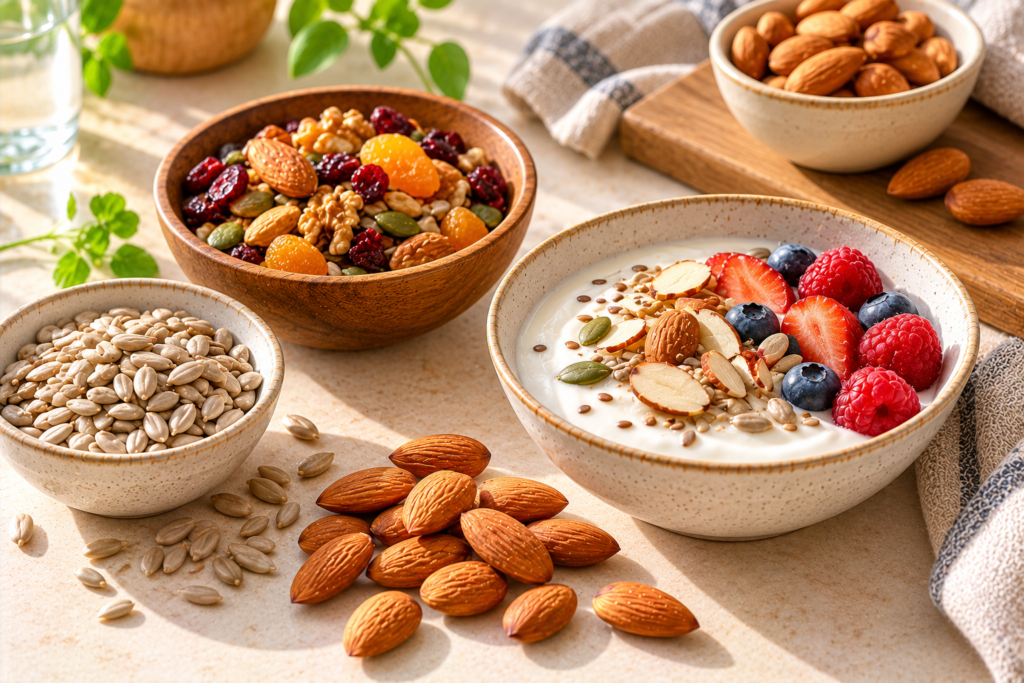
Sprinkle chopped almonds over oatmeal, plain yogurt, or whole-grain cereal. This adds texture, healthy fats, and vitamin E without requiring a separate meal.
Suggested internal links — replace these example paths with your actual published URLs:
2. Use Sunflower Seeds in Salads
Add a tablespoon or two of sunflower seeds to green salads, grain bowls, or cooked vegetables. They provide a crunchy topping and can help increase the vitamin E content of a meal.
3. Make a Homemade Trail Mix
Combine almonds, sunflower seeds, and a small amount of dried fruit for a convenient snack. Keep the portion moderate because nuts and seeds are energy-dense.
4. Choose Nut Butter
Spread peanut or almond butter on whole-grain toast, or stir it into oatmeal. Compare labels if you want a product without added sugar or excess sodium.
5. Blend Seeds Into Everyday Meals
Sprinkle sesame seeds over vegetables or add ground flaxseeds to yogurt. These ingredients contribute other nutrients, too, even though they are not all high in vitamin E.
Are Nuts and Seeds Better Than Vitamin E Supplements?
For most healthy people, getting vitamin E from food is a sensible starting point. Nuts and seeds supply vitamin E alongside other nutrients, and they can fit into a balanced eating pattern without requiring high-dose supplements.
However, supplements may be appropriate when a healthcare professional identifies a deficiency or a medical condition that affects absorption. Do not assume that taking more vitamin E will provide greater health benefits.
High-dose vitamin E supplements can increase bleeding risk, especially for people who take anticoagulant or antiplatelet medicines. The adult upper limit for supplemental alpha-tocopherol is a safety limit, not a daily target.
Food-first tip: If you have a condition that affects fat absorption, speak with a healthcare professional about whether your diet provides enough vitamin E. Food alone may not correct a medically diagnosed deficiency in such cases.
Tips for Choosing and Storing Nuts and Seeds
A few simple habits can help you enjoy nuts and seeds regularly while preserving their quality.
- Choose plain or lightly salted varieties: These make it easier to manage added sodium.
- Check ingredient labels: Some flavored products contain added sugar, salt, or oils.
- Store them in airtight containers: Keep them in a cool, dry place, away from direct sunlight.
- Refrigerate or freeze larger quantities: This can help slow rancidity, especially in warm climates.
- Check freshness before eating: Discard nuts or seeds that smell rancid, look moldy, or have an unusual taste.
- Account for allergies: Avoid foods that trigger an allergy, and follow medical advice about cross-contact. NIH Office of Dietary Supplements — Vitamin E Fact Sheet
Nuts and seeds contain fats that can deteriorate over time, so good storage helps preserve their flavor and quality.
Frequently Asked Questions
1. Which nuts have the most vitamin E?
Among common nuts, almonds and hazelnuts are notable sources. Almonds provide approximately 6.8 mg per ounce, while hazelnuts provide about 4.3 mg per ounce in the cited food-composition data.
2. Which seeds are highest in vitamin E?
Sunflower seeds are one of the best common seed sources of vitamin E. A one-ounce serving of dry-roasted sunflower seeds provides approximately 7.4 mg.
3. How many almonds should I eat for vitamin E?
One ounce of almonds—roughly a small handful—provides around 6.8 mg of vitamin E. The number of almonds in an ounce varies with their size, so weighing a portion is more accurate than counting individual nuts.
4. Are sunflower seeds better than almonds for vitamin E?
By typical one-ounce servings, dry-roasted sunflower seeds provide slightly more vitamin E than dry-roasted almonds: about 7.4 mg compared with 6.8 mg. Both are useful options.
5. Can I eat nuts and seeds every day?
Many people can include nuts and seeds daily as part of a balanced diet. Choose portions suited to your energy needs, account for allergies, and vary your choices to obtain a broader range of nutrients.
6. Do walnuts contain a lot of vitamin E?
Walnuts provide vitamin E, but considerably less per typical serving than almonds or sunflower seeds. They remain a nutritious food because they provide unsaturated fats and other beneficial nutrients.
7. Can nuts and seeds prevent vitamin E deficiency?
They can help meet normal dietary requirements, but they cannot guarantee prevention in people with disorders that interfere with fat absorption or vitamin E transport. Anyone at increased risk should seek individualized medical advice.
Conclusion
The best nuts and seeds high in vitamin E include sunflower seeds, almonds, and hazelnuts. These foods offer useful amounts of vitamin E in everyday portions, while peanuts and other nuts and seeds can contribute to a varied diet.
For a practical approach, add sunflower seeds to salads, enjoy a small handful of almonds as a snack, or include hazelnuts in breakfast bowls. Combine these choices with vegetables, suitable vegetable oils, and other nutrient-rich foods to support a balanced eating pattern.
You do not need to rely on one food or take high-dose supplements to improve your diet. Focus on variety, sensible portions, and reliable nutrition information.