
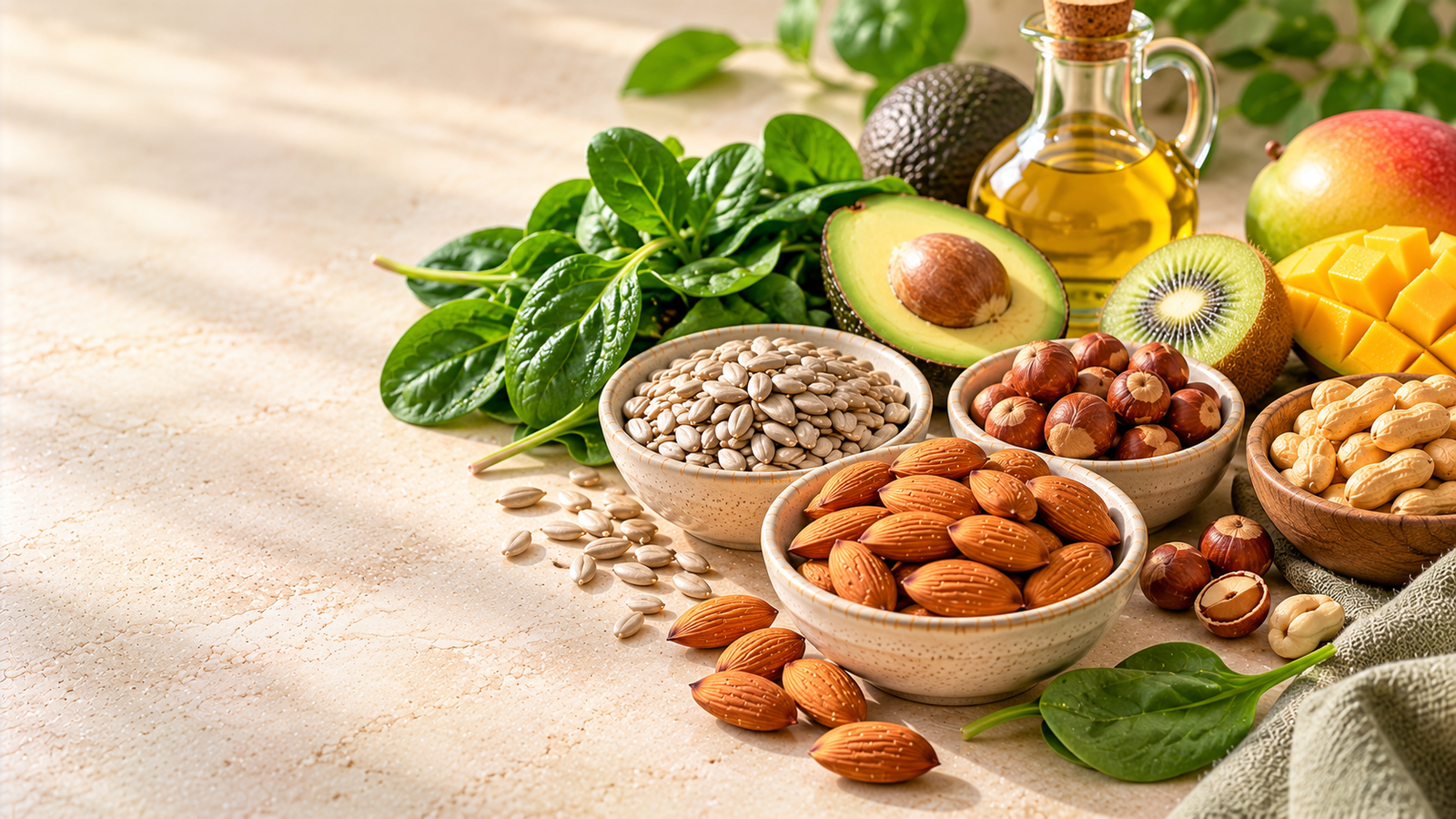
A vitamin E foods chart makes it easier to identify everyday foods that provide this important fat-soluble vitamin. Vitamin E helps protect cells from oxidative damage and supports normal immune function. You can obtain it from foods such as sunflower seeds, almonds, hazelnuts, vegetable oils, spinach, and avocado.
Rather than relying on one food, a varied diet that includes nuts, seeds, plant oils, and vegetables can help you meet your nutritional needs. This guide compares common vitamin E sources, shows approximate amounts per serving, and explains how to include them in balanced meals.
Most Important Points
- Sunflower seeds and almonds are among the most concentrated everyday food sources of vitamin E.
- Vegetable oils, including wheat germ oil and sunflower oil, can provide substantial amounts in small servings.
- Avocado, spinach, and other vegetables contribute vitamin E alongside other nutrients.
- Most adults need 15 mg of vitamin E daily.
- Nutrient amounts vary by food variety, brand, preparation method, and serving size.
What Is Vitamin E and Why Do You Need It?
Vitamin E is a group of fat-soluble compounds. Alpha-tocopherol is the form recognized as meeting human vitamin E requirements.
Its main functions include:
- Antioxidant protection: Helps protect cell membranes from damage caused by free radicals.
- Immune function: Supports normal immune system activity.
- Cell health: Helps maintain the normal function of cells throughout the body.
- Normal blood vessel function: Plays a role in processes that support healthy blood vessels.
Vitamin E deficiency is uncommon in healthy people who absorb fat normally. It is more likely in certain conditions that interfere with fat absorption.
For reliable background information, see the NIH Office of Dietary Supplements Vitamin E fact sheet.
Vitamin E Foods Chart: 20 Best Food Sources
Use this vitamin E foods chart to compare approximate amounts of vitamin E in common foods. Values are estimates for typical servings, not exact amounts for every product.
| Food source | Typical serving | Vitamin E (approx.) |
|---|---|---|
| Wheat germ oil | 1 tablespoon | 20.3 mg |
| Sunflower seeds, dry-roasted | 1 ounce (28 g) | 7.4 mg |
| Almonds, dry-roasted | 1 ounce (28 g) | 6.8 mg |
| Sunflower oil | 1 tablespoon | 5.6 mg |
| Safflower oil | 1 tablespoon | 4.6 mg |
| Hazelnuts, dry-roasted | 1 ounce (28 g) | 4.3 mg |
| Almond butter | 2 tablespoons | 4.0 mg |
| Peanut butter | 2 tablespoons | 2.9 mg |
| Pine nuts | 1 ounce (28 g) | 2.7 mg |
| Peanuts, dry-roasted | 1 ounce (28 g) | 2.2 mg |
| Avocado | ½ medium fruit | 1.5 mg |
| Spinach, cooked | ½ cup | 1.9 mg |
| Turnip greens, cooked | ½ cup | 1.3 mg |
| Broccoli, cooked | ½ cup | 1.2 mg |
| Kiwi | 1 medium fruit | 1.0 mg |
| Mango | ½ cup sliced | 0.7 mg |
| Red bell pepper | ½ cup raw | 1.0 mg |
| Tomato sauce | ½ cup | 1.5 mg |
| Cooked asparagus | ½ cup | 1.5 mg |
| Egg, cooked | 1 large | 0.5 mg |
Nutrition values are approximate and can vary with preparation, variety, and product formulation. Oil values refer to the amount consumed; avoid increasing oil intake solely to obtain vitamin E. For more precise values, check the USDA FoodData Central database.
Explore USDA FoodData Central for detailed nutrient values.
Which Foods Have the Most Vitamin E?
The most concentrated options in this chart are wheat germ oil, sunflower seeds, almonds, and certain vegetable oils. However, the best choice for everyday eating depends on your overall diet, portion size, allergies, preferences, and calorie needs.
- For snacks: Choose a small handful of almonds or sunflower seeds.
- For meals: Add spinach, avocado, or red bell pepper to salads, wraps, and grain bowls.
- For cooking: Use a suitable vegetable oil in moderate amounts.
- For breakfast: Stir almond butter into oatmeal or add nuts and seeds to yogurt.
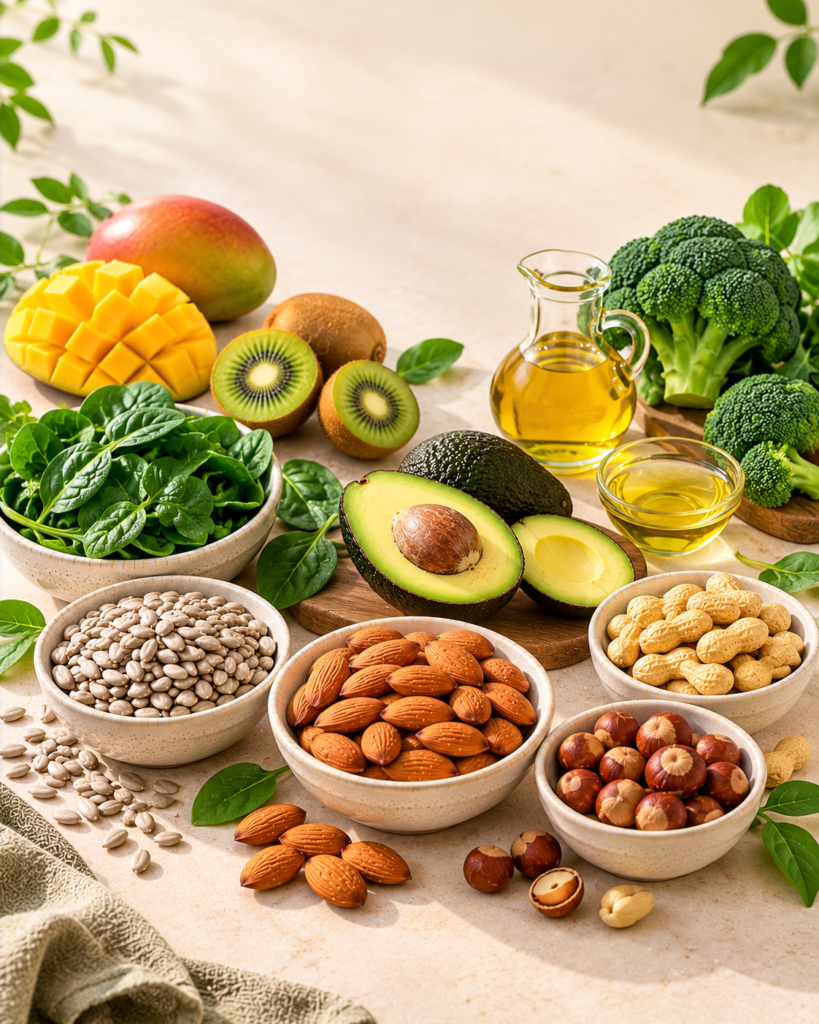
Best Vitamin E-Rich Foods by Food Group
1. Nuts and Seeds
Nuts and seeds are among the most practical sources of vitamin E because they are easy to add to meals and snacks.
Good options include:
- Sunflower seeds: A concentrated source that can be sprinkled over salads, soups, and oatmeal.
- Almonds: Provide vitamin E, unsaturated fats, fiber, and other nutrients.
- Hazelnuts: Offer vitamin E and healthy fats.
- Peanuts: Supply vitamin E along with protein and other nutrients.
- Pine nuts: Can be added to pesto, pasta, salads, and vegetable dishes.
Practical tip: Keep portions moderate. Nuts and seeds are nutrient-dense, but they also contain a substantial amount of energy.
2. Vegetable Oils
Plant oils can contain substantial vitamin E, although their nutrient profiles differ.
Wheat germ oil is particularly rich in vitamin E. Sunflower and safflower oils are also useful sources. Use oils according to their cooking properties and the needs of your overall diet.
How to use them:
- Measure oil when preparing salad dressings.
- Use an appropriate oil for the cooking temperature.
- Store oils according to the product label and protect them from excessive heat and light.
Wheat germ oil is not suitable for every cooking method, so check the product’s recommended use.
3. Fruits That Provide Vitamin E
Most fruits contain less vitamin E per serving than nuts, seeds, or certain oils. Nevertheless, fruit can contribute to your overall intake.
Useful choices include:
- Avocado: Provides vitamin E and predominantly unsaturated fats.
- Kiwi: Offers vitamin E alongside vitamin C and fiber.
- Mango: Adds vitamin E, vitamin C, and carotenoids to meals.
- Blackberries: Provide small amounts of vitamin E alongside fiber and other plant compounds.
Pair fruit with nuts or seeds for a snack that includes several nutrients.
4. Vegetables That Contain Vitamin E
Vegetables can contribute smaller amounts of vitamin E while providing fiber, minerals, and other vitamins.
Examples include:
- Spinach
- Turnip greens
- Broccoli
- Red bell peppers
- Asparagus
Including vegetables in different colors helps diversify your diet. Because vitamin E is fat-soluble, eating vegetables as part of a meal containing some dietary fat can help with absorption.
How Much Vitamin E Do You Need Each Day?
Vitamin E needs vary by age and life stage. The following figures are the recommended dietary allowances (RDAs) used in the United States.
| Age or life stage | Recommended daily amount |
|---|---|
| Birth–6 months | 4 mg (adequate intake) |
| 7–12 months | 5 mg (adequate intake) |
| 1–3 years | 6 mg |
| 4–8 years | 7 mg |
| 9–13 years | 11 mg |
| 14 years and older | 15 mg |
| Pregnancy, ages 14 and older | 15 mg |
| Breastfeeding, ages 14 and older | 19 mg |
These figures are general nutrition references, not individual medical advice. Requirements can differ in people with certain health conditions.
For the complete recommendations and safety information, read the NIH Vitamin E fact sheet.
How to Reach Your Daily Vitamin E Target Through Food
For most adults, the target is 15 mg per day. A practical approach is to combine several foods instead of relying on a single ingredient.
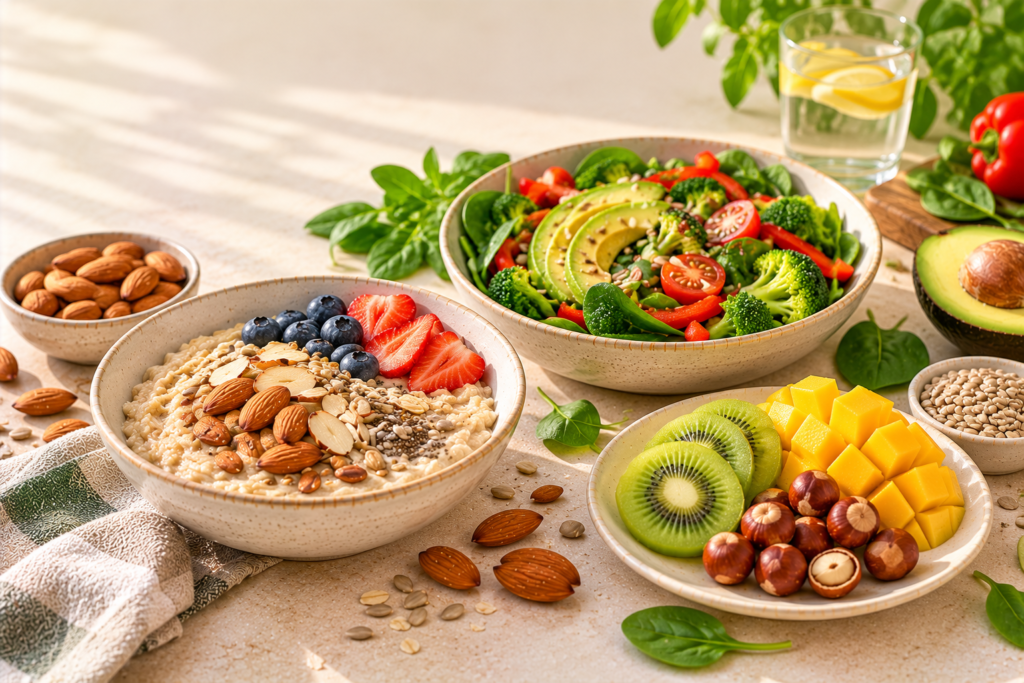
For example, you could add almonds or sunflower seeds to breakfast, include spinach or avocado with lunch, and use a measured amount of vegetable oil when preparing dinner. The exact total depends on portion sizes and the products you choose.
Remember: The example is a meal-planning idea, not a guaranteed 15 mg menu. Use nutrition labels or a trusted nutrient database to estimate your actual intake.
Easy Ways to Add More Vitamin E to Your Diet
You do not need to make major changes to eat more vitamin E-rich foods. Start with small additions that fit your normal routine.
Breakfast
- Add sunflower seeds or chopped almonds to oatmeal.
- Mix almond butter into whole-grain toast or porridge.
- Add kiwi or mango to yogurt.
Lunch
- Top a salad with sunflower seeds or avocado.
- Add spinach and red bell pepper to a sandwich or wrap.
- Make a dressing with a measured amount of suitable plant oil.
Dinner
- Serve cooked spinach or broccoli alongside your main dish.
- Add pesto made with nuts or seeds to whole-grain pasta.
- Include a variety of vegetables with your usual protein source.
- https://fdc.nal.usda.gov/?utm_source=chatgpt.com
Snacks
- Eat a small handful of almonds or sunflower seeds.
- Pair fruit with nut butter.
- Choose unsalted nuts when you want to limit sodium.
Can You Get Enough Vitamin E From Food?
Many people can meet their vitamin E needs through a varied diet that includes nuts, seeds, plant oils, and vegetables. Whether you get enough depends on your food choices, portions, and individual circumstances.
Because vitamin E is fat-soluble, the body absorbs it along with dietary fat. Including some healthy fat in meals containing vegetables can support absorption.
People with conditions that affect fat absorption may have a higher risk of vitamin E deficiency and may need professional guidance.
Should You Take a Vitamin E Supplement?
Food is generally the best starting point for meeting nutritional needs. High-dose vitamin E supplements are not necessary for everyone and can increase the risk of bleeding, especially when combined with certain medicines, including anticoagulants.
If you suspect a deficiency or are considering a high-dose supplement, consult a qualified healthcare professional before starting one.
Vitamin E Benefits: What This Essential Nutrient Does for Your Body
Vitamin E Deficiency: Signs, Causes, and Food Sources
The figures below are supported by the NIH Office of Dietary Supplements; keep the servings consistent to avoid misleading comparisons.
| Vitamin E food | Serving size | Vitamin E | Approx. adult Daily Value |
|---|---|---|---|
| Wheat germ oil | 1 tablespoon | 20.3 mg | 135% |
| Sunflower seeds, dry-roasted | 1 oz | 7.4 mg | 49% |
| Almonds, dry-roasted | 1 oz | 6.8 mg | 45% |
| Sunflower oil | 1 tablespoon | 5.6 mg | 37% |
| Safflower oil | 1 tablespoon | 4.6 mg | 31% |
| Hazelnuts, dry-roasted | 1 oz | 4.3 mg | 29% |
| Peanut butter | 2 tablespoons | 2.9 mg | 19% |
| Peanuts, dry-roasted | 1 oz | 2.2 mg | 15% |
| Corn oil | 1 tablespoon | 1.9 mg | 13% |
| Spinach, boiled | ½ cup | 1.9 mg | 13% |
| Soybean oil | 1 tablespoon | 1.1 mg | 7% |
| Kiwi | 1 medium | 1.1 mg | 7% |
| Broccoli, boiled | ½ cup | 1.2 mg | 8% |
| Mango, sliced | ½ cup | 0.7 mg | 5% |
| Tomato, raw | 1 medium | 0.7 mg | 5% |
| Spinach, raw | 1 cup | 0.6 mg | 4% |
Daily Value is based on 15 mg for adults and children aged four years and older. Percentages are rounded.
2. Add a Vitamin E Meal Plan for One Day
This section targets searches such as how to get enough vitamin E from food and vitamin E-rich meal ideas.
Breakfast
Prepare oatmeal with a tablespoon of almond butter and a small serving of fruit. Check the almond butter’s nutrition label, as vitamin E content varies by product.
Morning snack
Enjoy a small handful of almonds or sunflower seeds. Choose unsalted options if you are trying to reduce sodium.
Lunch
Prepare a spinach salad with avocado, red bell pepper, and a measured amount of sunflower oil dressing. This combines vegetables with a source of dietary fat.
Afternoon snack
Pair kiwi or mango with a small portion of nuts or seeds.
Dinner
Serve broccoli or spinach with your usual protein source and a balanced portion of grains or starchy vegetables. Use an appropriate cooking oil in moderation.
Important: This is an example of how to incorporate vitamin E-rich foods, not a calculated meal plan that guarantees 15 mg. Actual intake depends on portion sizes, ingredients, and preparation.
3. Add This Section: Vitamin E Foods for Different Dietary Needs
Best Vitamin E Foods for Vegetarians
Vegetarians can obtain vitamin E from almonds, sunflower seeds, hazelnuts, peanut butter, avocado, spinach, and vegetable oils. These foods can fit into meals without requiring meat or fish.
Best Vitamin E Foods for Vegans
Many naturally vitamin E-rich foods are plant-based. Try nuts, seeds, avocado, green leafy vegetables, and plant oils. Check fortified food labels when choosing cereals or other packaged foods.
Vitamin E Foods for Children
Age-appropriate portions of nut butters, finely ground nuts or seeds, avocado, and cooked vegetables can contribute vitamin E to children’s diets. Whole nuts are a choking hazard for young children, so use safe textures and follow age-appropriate feeding guidance.
Vitamin E Foods on a Budget
You do not need expensive specialty foods to increase vitamin E intake. Consider peanuts, peanut butter, sunflower seeds, spinach, and suitable vegetable oils. Compare package labels and prices per serving to find options that fit your budget.
4. Add a Comparison: Natural Vitamin E Foods vs. Supplements
| Feature | Food sources | Supplements |
|---|---|---|
| Examples | Nuts, seeds, oils, spinach | Capsules, softgels, multivitamins |
| Additional nutrients | Often provide fiber, healthy fats, and other nutrients | Usually provide selected nutrients |
| Portion flexibility | Can be included in meals and snacks | Dose depends on the product |
| Main consideration | Balance portions with overall dietary needs | High doses may interact with medicines and increase bleeding risk |
For most people, food is a sensible starting point. High-dose vitamin E supplements should not be used routinely without an appropriate reason and professional guidance.
5. Add These SEO-Friendly FAQs
What is the best vitamin E foods chart for adults?
A useful vitamin E foods chart lists each food’s serving size and approximate vitamin E content. Sunflower seeds, almonds, wheat germ oil, and sunflower oil are among the more concentrated sources.
Which foods contain at least 2 mg of vitamin E per serving?
Examples include dry-roasted sunflower seeds, almonds, hazelnuts, peanut butter, and dry-roasted peanuts, although the exact amount depends on the serving size and food preparation.
Are vitamin E-rich foods good for everyday meals?
Yes. Nuts, seeds, vegetables, and suitable plant oils can contribute vitamin E as part of a balanced diet. Portion size and overall dietary variety remain important.
Does cooking reduce vitamin E in food?
Vitamin E retention can vary with cooking method, temperature, exposure to air, and storage. Avoid assuming every cooked food has the same nutrient content as its raw form. Use reliable food-composition data when precise amounts matter.
Can I get vitamin E from vegetables alone?
Vegetables such as spinach and broccoli contribute vitamin E, but they generally provide less per serving than concentrated sources such as nuts, seeds, and certain oils. Eating several food groups can make it easier to meet daily needs.
What is the recommended daily intake of vitamin E?
The recommended amount for adults is 15 mg per day, while breastfeeding adults need 19 mg. These recommendations refer to alpha-tocopherol and may not apply identically to every medical situation.
Conclusion
A vitamin E foods chart is a simple way to compare nutrient-rich foods and make informed choices for everyday meals. Sunflower seeds, almonds, hazelnuts, vegetable oils, avocado, spinach, and other vegetables can all contribute to your vitamin E intake.
For a practical approach, include a variety of nuts and seeds, use plant oils in moderate amounts, and eat different fruits and vegetables throughout the week. You do not need to rely on one food or automatically take supplements to build a vitamin E-rich diet.
Use the chart as a guide, pay attention to serving sizes, and focus on a balanced eating pattern that meets your overall nutritional needs.