
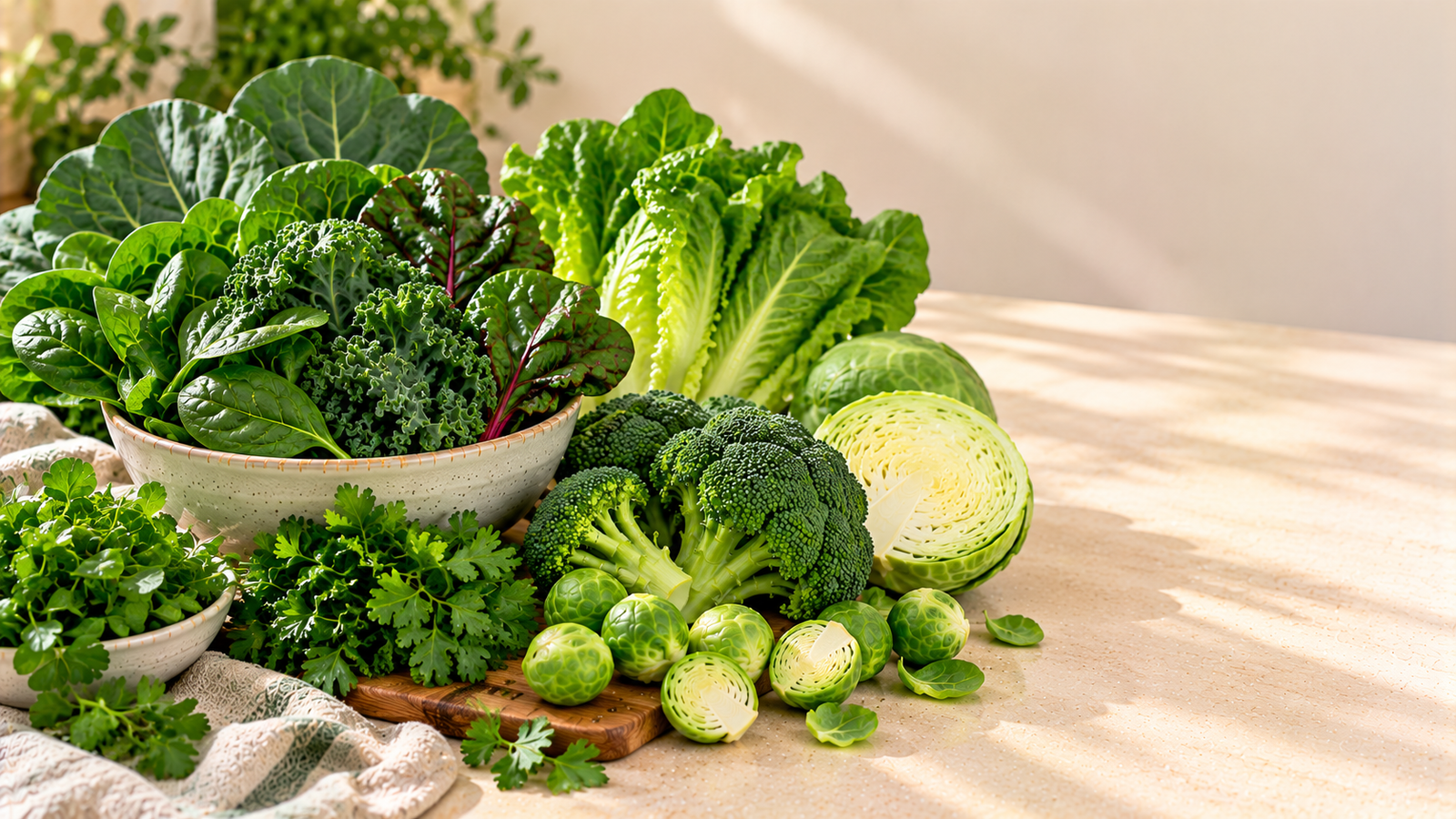
Green vegetables high in vitamin K are among the best foods to include in a balanced diet. Leafy greens such as spinach, kale, collard greens, and Swiss chard can provide substantial amounts of vitamin K, a nutrient your body needs for normal blood clotting and the function of proteins involved in bone health.
The good news is that these vegetables are versatile, affordable, and easy to add to everyday meals. You can enjoy them raw in salads, blend them into smoothies, or cook them in soups, curries, stir-fries, and side dishes.
In this guide, you will discover 15 green vegetables high in vitamin K, compare their approximate nutrient content, and learn simple ways to include them in your diet.
Most Important Points
- Spinach, kale, collard greens, and Swiss chard are particularly rich sources of vitamin K.
- Most green leafy vegetables provide vitamin K1, also known as phylloquinone.
- Cooking changes a vegetable’s volume and serving size, so nutrient amounts per cup can differ between raw and cooked foods.
- Vitamin K supports normal blood clotting and vitamin K-dependent proteins involved in bone metabolism.
- Most healthy adults can meet their vitamin K needs through a varied diet.
- People taking warfarin should keep their vitamin K intake consistent and consult their healthcare professional before making major dietary changes.
Why Are Green Vegetables High in Vitamin K Important?
Vitamin K is a fat-soluble vitamin. It helps activate proteins involved in blood clotting and supports proteins involved in normal bone metabolism.
Green leafy vegetables are especially useful sources of vitamin K1. Including them regularly can help you meet your daily nutritional needs while also providing other nutrients, including folate, fiber, and carotenoids.
According to the U.S. National Institutes of Health, the adequate intake for vitamin K is 120 micrograms (mcg) daily for adult men and 90 mcg for adult women. These are adequate intake values, not Recommended Dietary Allowances (RDAs). Read the NIH vitamin K fact sheet.
How Much Vitamin K Do You Need Per Day?
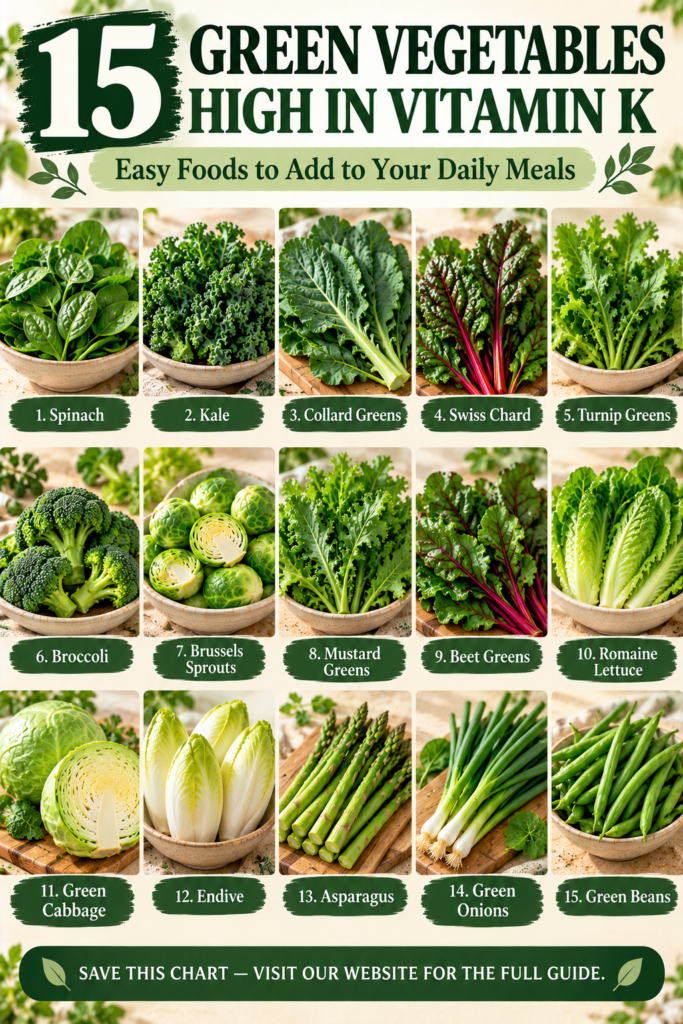
15 Best Green Vegetables High in Vitamin K
The vegetables below are useful options for increasing dietary vitamin K. Their nutrient content varies by serving size, variety, and whether they are raw or cooked.
Vitamin K content chart
| Green vegetable | Serving size | Approximate vitamin K |
|---|---|---|
| Collard greens, cooked | ½ cup | 530 mcg |
| Turnip greens, cooked | ½ cup | 426 mcg |
| Spinach, raw | 1 cup | 145 mcg |
| Kale, raw | 1 cup | 113 mcg |
| Broccoli, cooked | ½ cup | 110 mcg |
| Endive, raw | 1 cup | 116 mcg |
| Brussels sprouts, cooked | ½ cup | 109 mcg |
| Green onions, raw | ½ cup | 104 mcg |
| Romaine lettuce, raw | 1 cup, shredded | 48 mcg |
| Asparagus, cooked | ½ cup | 46 mcg |
| Okra, cooked | ½ cup | 32–44 mcg |
| Green cabbage, cooked with oil | ½ cup | 62 mcg |
| Celery, cooked | ½ cup | 28 mcg |
| Parsley, raw | 1 tablespoon | 62 mcg |
| Green beans | ½ cup | Varies by preparation |
Values are approximate and drawn from published food composition tables. The exact value for green beans depends on the serving and preparation. Some entries are for cooked foods and others for raw foods, so compare serving sizes carefully.
1. Spinach

Spinach is one of the easiest ways to add vitamin K to your diet. One cup of raw spinach provides approximately 145 mcg. Add it to salads, omelets, lentil dishes, soups, or smoothies.
2. Kale

Kale supplies vitamin K along with fiber and carotenoids. Use it in salads, sautéed vegetable dishes, soups, or oven-roasted vegetable mixes.
3. Collard greens
Collard greens are particularly rich in vitamin K when cooked. A half-cup serving of cooked collards provides approximately 530 mcg in the NIH food table. Add them to soups, stews, or lightly seasoned vegetable sides.
4. Swiss chard
Swiss chard has broad green leaves and colorful stems. It provides vitamin K and can be sautéed with garlic or added to curries, soups, and grain bowls.
5. Turnip greens
The leafy tops of turnips are a nutrient-rich vegetable. Cook them into soups or serve them as a side dish. Their vitamin K content can be substantial.
6. Broccoli
Broccoli is versatile, widely available, and easy to prepare. Half a cup of boiled, chopped broccoli provides approximately 110 mcg of vitamin K. Steam it, roast it, or add it to stir-fries.
7. Brussels sprouts
These small green vegetables contain vitamin K as well as fiber. Roast them with a little olive oil or steam them until tender.
8. Mustard greens
Mustard greens have a distinctive peppery flavor and provide vitamin K. They work well in cooked vegetable dishes, soups, and curries.
9. Beet greens
The leafy tops of beets are edible and rich in nutrients. Wash them well, then sauté or simmer them as you would other leafy greens.
10. Romaine lettuce
Romaine lettuce provides vitamin K in a crunchy, easy-to-use form. Add it to salads, wraps, and sandwiches.
11. Green cabbage
Green cabbage contributes vitamin K and fiber. Use it in slaws, stir-fries, soups, or lightly cooked vegetable dishes.
12. Endive
Endive has crisp leaves and a slightly bitter taste. Use it in salads or serve the leaves as a base for simple vegetable appetizers.
13. Asparagus
Asparagus contains vitamin K and can be steamed, roasted, or grilled. Serve it alongside eggs, fish, beans, or other everyday meals.
14. Green onions
Green onions add flavor and some vitamin K to soups, salads, omelets, and rice dishes. Their nutrient contribution depends on how much you use.
15. Green beans
Green beans provide a range of nutrients and can help add variety to a vegetable-rich diet. Steam, boil, or stir-fry them, and combine them with leafy greens for a meal with more vitamin K.
How to Add Vitamin K-Rich Green Vegetables to Your Daily Diet
You do not need to eat the same vegetables every day. A simple rotation of leafy greens and other green vegetables can help you enjoy different flavors while meeting your nutritional needs.
Easy meal ideas
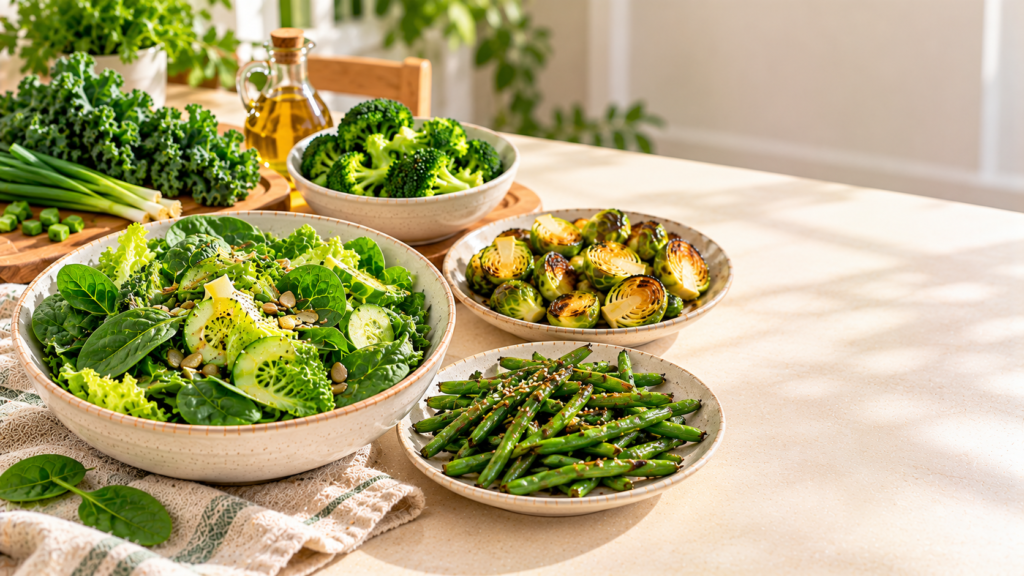
- Breakfast: Add spinach to scrambled eggs or an omelet.
- Lunch: Make a romaine, kale, or spinach salad with a light olive-oil dressing.
- Dinner: Serve steamed broccoli, asparagus, or Brussels sprouts with your main meal.
- Soups and curries: Stir collard greens, mustard greens, or spinach into a vegetable soup or curry.
- Snacks and sides: Prepare green beans or cabbage as a simple side dish.
Does cooking reduce vitamin K?
Cooking changes the volume and weight of vegetables, which can make vitamin K appear more concentrated per cup in cooked food. The amount you eat, the cooking method, and the water lost or retained all affect the final amount.
You can enjoy green vegetables raw or cooked. Choose preparation methods you enjoy and can maintain consistently.
Does dietary fat help vitamin K absorption?
Yes. Vitamin K is fat-soluble, so having some dietary fat with your meal can support absorption. For example, add a modest amount of olive oil to a spinach salad or serve vegetables with another food containing healthy fats.
How Much Vitamin K Do You Need Per Day?
The U.S. adequate intake for vitamin K is:
| Group | Daily adequate intake |
|---|---|
| Adult men, 19+ | 120 mcg |
| Adult women, 19+ | 90 mcg |
| Pregnancy, ages 19+ | 90 mcg |
| Breastfeeding, ages 19+ | 90 mcg |
Children and teenagers have different age-based requirements. These figures are adequate intake values, not RDAs.
A serving of spinach, kale, or cooked broccoli can supply a substantial amount of vitamin K. You do not need to hit an exact number at every meal; focus on a varied diet over time.
Important Safety Note: Vitamin K and Warfarin
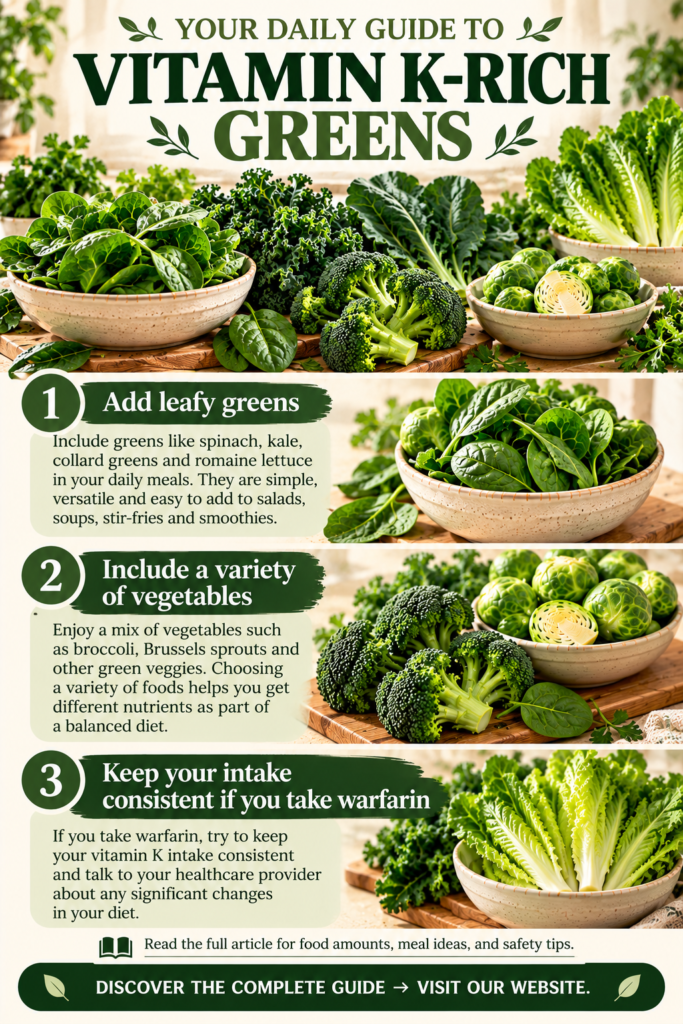
If you take warfarin, do not suddenly increase or eliminate green vegetables that contain vitamin K. You usually do not need to avoid these nutritious foods, but keeping your intake consistent helps your healthcare professional manage your medication safely.
Talk to your clinician before making major dietary changes or starting vitamin K supplements. This is particularly important if you have a clotting disorder, a condition affecting nutrient absorption, or a medication that interacts with vitamin K.
NIH Office of Dietary Supplements — Vitamin K Fact Sheet
Vitamin K Benefits: What Does Vitamin K Do?”
Frequently Asked Questions
1. Which green vegetable has the most vitamin K?
Cooked collard greens, turnip greens, and spinach are among the richest options in commonly referenced food tables. Exact amounts depend on serving size and preparation.
2. Is spinach higher in vitamin K than broccoli?
Per the NIH food table, one cup of raw spinach contains about 145 mcg, while half a cup of boiled broccoli contains about 110 mcg. Because the serving sizes and preparation differ, these values are not a direct equal-portion comparison.
3. Are green vegetables high in vitamin K good for bone health?
Vitamin K supports proteins involved in normal bone metabolism. Eating vitamin K-rich vegetables contributes to a balanced diet, but no single vegetable can guarantee stronger bones or prevent osteoporosis.
4. Can you eat green vegetables every day?
Most healthy people can enjoy green vegetables daily as part of a varied diet. If you take warfarin, maintain a consistent intake and discuss significant dietary changes with your healthcare professional.
5. Are frozen green vegetables good sources of vitamin K?
Yes. Frozen vegetables can be convenient sources of vitamin K. Nutrient amounts vary with the vegetable, processing, serving size, and preparation.
6. What is the easiest way to get more vitamin K from vegetables?
Add spinach to breakfast, eat a leafy green salad at lunch, or serve broccoli or Brussels sprouts with dinner. Small, repeatable habits can help you include these foods regularly.
Conclusion
The best green vegetables high in vitamin K include spinach, kale, collard greens, turnip greens, Swiss chard, and broccoli. They provide vitamin K alongside other valuable nutrients and can fit easily into everyday meals.
For most healthy adults, regularly eating a variety of vegetables is a practical way to meet vitamin K needs. Choose vegetables you enjoy, vary your preparation methods, and remember that consistency matters if you take warfarin.
1 thought on “Best Green Vegetables High in Vitamin K”