
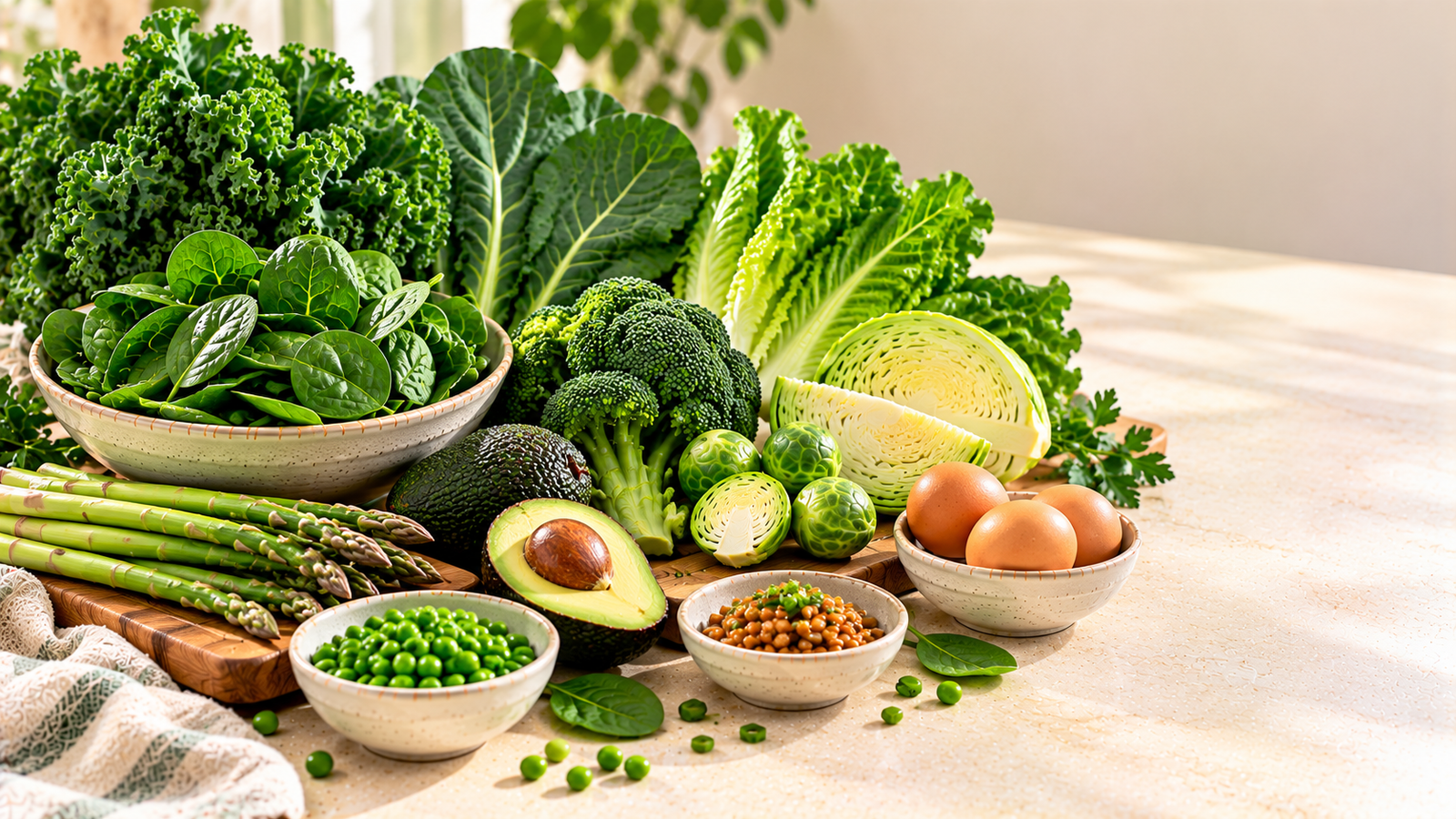
A vitamin K foods chart makes it easier to identify foods that provide this essential nutrient and understand how to include them in everyday meals. From leafy green vegetables to fermented soybeans and selected animal foods, vitamin K is available from several natural sources.
Vitamin K plays an important role in normal blood clotting and helps support healthy bones. Because the amount of vitamin K varies considerably between foods, knowing which sources provide the most can help you build a balanced, nutrient-rich diet.
In this guide, you’ll find a vitamin K food chart, a list of foods rich in vitamin K1 and K2, practical serving suggestions, and tips for getting enough vitamin K from everyday meals.
Key Takeaways
- Leafy green vegetables such as kale, spinach, collard greens, and Swiss chard are among the richest sources of vitamin K1.
- Vitamin K1 is found mainly in green vegetables and some plant oils.
- Vitamin K2 occurs in fermented foods such as natto and in certain animal-derived foods.
- Vitamin K supports normal blood clotting and contributes to bone health.
- Cooking, serving size, and food preparation affect how much vitamin K you consume.
- People taking warfarin or similar vitamin K–antagonist anticoagulants should keep their vitamin K intake consistent and follow their clinician’s advice.
What Is Vitamin K?
Vitamin K is a fat-soluble vitamin that the body needs to produce proteins involved in blood clotting and bone metabolism. It occurs naturally in several forms, with vitamin K1 and vitamin K2 being the most relevant dietary forms.
Vitamin K1 (Phylloquinone)
Vitamin K1 is the primary form found in plant foods, especially green leafy vegetables. Excellent dietary sources include kale, spinach, collard greens, Swiss chard, broccoli, and lettuce.
Vitamin K2 (Menaquinones)
Vitamin K2 refers to a group of compounds found in fermented foods and some animal-derived products. Natto, a traditional Japanese fermented soybean food, is particularly rich in certain forms of vitamin K2. Cheese, eggs, and some meats can also contribute, although their amounts vary.
Both forms contribute to vitamin K nutrition, but their concentrations and absorption can differ by food and form.
Vitamin K Foods Chart: 20 Natural Food Sources
Use this vitamin K foods chart to compare common natural food sources. The values below are approximate amounts per 100 grams of food, generally using raw-food reference data where available. Actual amounts vary with variety, preparation, and serving size. These figures are not intended to represent the amount you would normally eat in one sitting.
| Food source | Approx. vitamin K per 100 g | Main type |
|---|---|---|
| Parsley, fresh | 1,640 mcg | K1 |
| Swiss chard | 830 mcg | K1 |
| Spinach | 483 mcg | K1 |
| Collard greens | 437 mcg | K1 |
| Kale | 390 mcg | K1 |
| Basil, fresh | 415 mcg | K1 |
| Turnip greens | 368 mcg | K1 |
| Watercress | 250 mcg | K1 |
| Green onions | 207 mcg | K1 |
| Brussels sprouts | 177 mcg | K1 |
| Romaine lettuce | 126 mcg | K1 |
| Arugula (rocket) | 109 mcg | K1 |
| Broccoli | 102 mcg | K1 |
| Green cabbage | 76 mcg | K1 |
| Prunes | 60 mcg | K1 |
| Pine nuts | 54 mcg | K1 |
| Soybeans | 47 mcg | K1 |
| Avocado | About 21 mcg | K1 |
| Blueberries | About 19 mcg | K1 |
| Eggs | Small, variable amount | K1 and other dietary contributions |
Source basis: USDA-derived food composition data and published nutrition references. Values are rounded estimates; the exact figures depend on the specific food entry and preparation. Natto, a fermented soybean food, is a particularly notable source of vitamin K2 and is not ranked in this K1-focused comparison.
How to use this chart: Prioritize leafy greens if you want foods that provide substantial vitamin K in relatively small portions. Herbs such as parsley can also contribute meaningful amounts, even when used as a garnish.
Best Green Vegetables High in Vitamin K
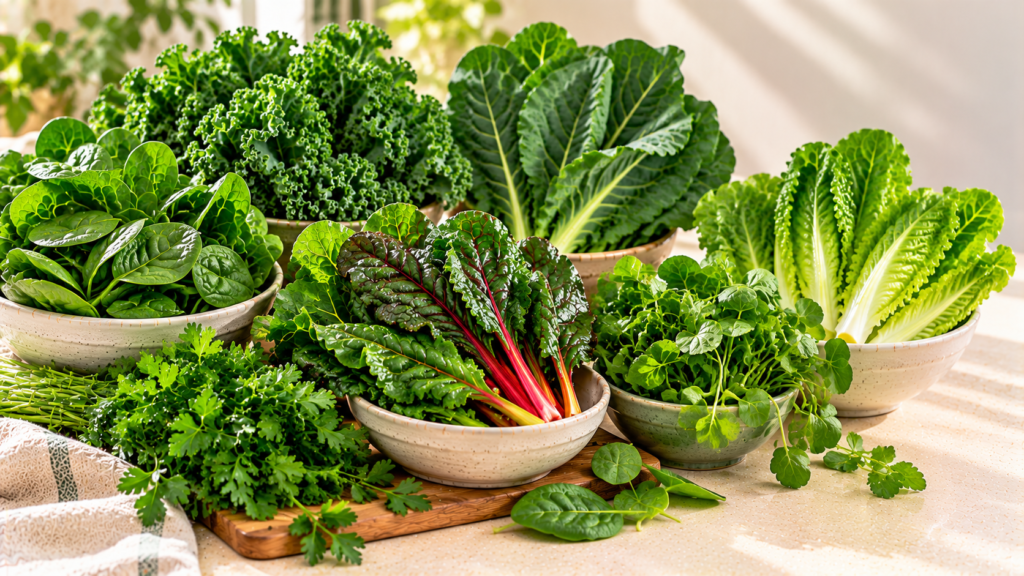
1. Leafy Green Vegetables High in Vitamin K
Leafy green vegetables are among the best natural sources of vitamin K1. Including a variety of greens in salads, soups, curries, and cooked side dishes is a practical way to obtain this nutrient.

Spinach
Spinach is a versatile source of vitamin K. Use it in omelets, lentil dishes, soups, salads, or sautéed vegetable sides. Both raw and cooked spinach can contribute substantial amounts.

Kale
Kale is rich in vitamin K1 and also supplies other nutrients, including beta-carotene and vitamin C. Add chopped kale to soups, grain bowls, or lightly cooked vegetable dishes.

Collard Greens and Swiss Chard
These leafy vegetables can provide substantial amounts of vitamin K. Steam, sauté, or cook them into soups and stews for a nutritious addition to your meals.

Romaine Lettuce and Watercress
These greens are useful for salads, sandwiches, and wraps. Combining different leafy vegetables adds variety to both your nutrient intake and your meals.
2. Cruciferous Vegetables That Provide Vitamin K
Cruciferous vegetables are another useful group to include in a vitamin K foods chart. They offer a combination of vitamin K, fiber, and other beneficial nutrients.
Broccoli
Broccoli contains vitamin K1 and can be steamed, roasted, or added to stir-fries. Light cooking helps preserve its texture and makes it easy to serve alongside rice, beans, fish, or chicken.
Brussels Sprouts
Brussels sprouts are a notable vitamin K source. Roast them with a small amount of olive oil, or steam them and season with garlic, pepper, and lemon.
Green Cabbage
Green cabbage provides vitamin K and is easy to incorporate into everyday meals. Use it in salads, vegetable stir-fries, soups, or lightly cooked cabbage dishes.
Asparagus
Asparagus provides vitamin K along with folate and other nutrients. Grill, roast, or steam it as a side dish, or add it to an egg-based breakfast.
Practical tip: You do not need to eat every vegetable on this list daily. Rotate the options you enjoy and choose portions that fit your normal eating pattern.
3. Fruits That Contain Vitamin K
Although green vegetables are generally more concentrated sources, some fruits also contribute vitamin K. They can add variety, fiber, and other nutrients to a balanced diet.
- Prunes: A convenient source of vitamin K that can be added to oatmeal or eaten as a snack.
- Blueberries: Provide smaller amounts of vitamin K alongside fiber and other plant compounds.
- Blackberries: A fruit option that contributes some vitamin K.
- Avocado: Supplies vitamin K as well as unsaturated fats.
- Kiwi: Contains a modest amount and provides vitamin C.
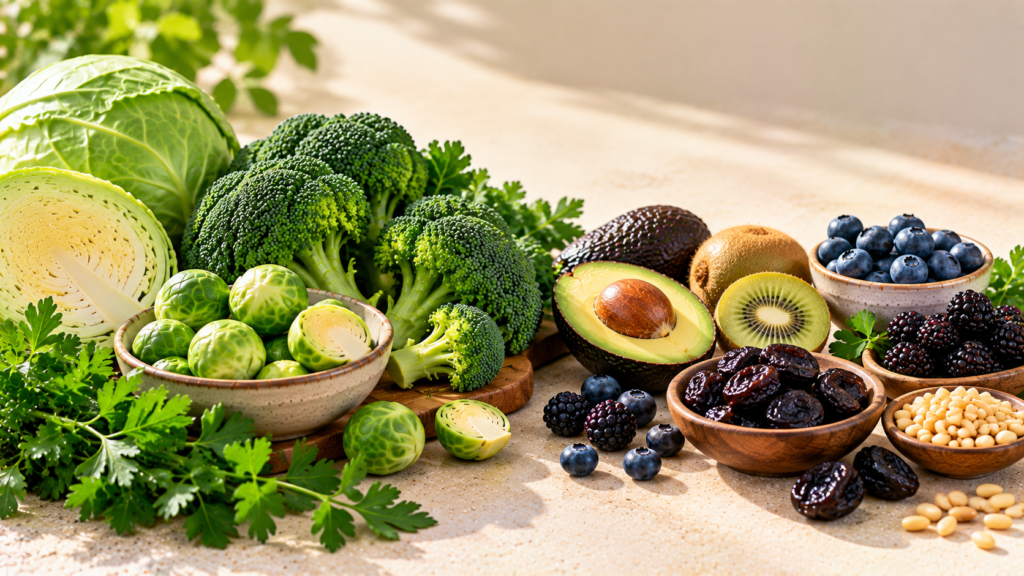
Fruit is useful for variety, but if your goal is to increase vitamin K intake through food, leafy greens generally provide more per typical serving.
4. Foods That Provide Vitamin K2
Vitamin K2 consists of several menaquinones found in selected fermented foods and animal-derived foods. Their amounts vary considerably, so a food’s category alone does not guarantee a particular vitamin K2 content.
Natto
Natto is made by fermenting soybeans and is well known for its high vitamin K2 content, particularly menaquinone-7 (MK-7). It is a traditional Japanese food with a distinctive flavor and sticky texture.
Cheese
Some cheeses, particularly certain fermented and aged varieties, contain vitamin K2. The amount depends on the type of cheese, fermentation process, and production method.
Eggs
Egg yolks provide small amounts of vitamin K and other nutrients, including protein, choline, and vitamin B12. They can be included in a balanced diet, although they are not comparable to leafy greens as a source of vitamin K1.
Meat and Liver
Some meat products and liver contain vitamin K in varying amounts. Liver can be nutrient-dense, but its vitamin A content is also high, so it should not automatically be treated as an everyday food.
Soybeans and Other Soy Foods
Soybeans supply vitamin K1, while fermentation can substantially change the vitamin K profile of soy foods. Ordinary tofu, soybeans, and natto should not be assumed to contain equivalent amounts of vitamin K2.
Important distinction: A food can contain vitamin K without being especially rich in it. If you specifically want more vitamin K2, check reliable food composition data for the exact product rather than relying on broad food categories.
NIH Office of Dietary Supplements: Vitamin K food sources and health information
5. How Much Vitamin K Do You Need Per Day?
Your vitamin K needs depend on your age and life stage. In the United States, the National Institutes of Health (NIH) lists the following adequate intake levels. These are reference values, not a personalized prescription.
| Age group | Daily adequate intake |
|---|---|
| Infants 0–6 months | 2 mcg |
| Infants 7–12 months | 2.5 mcg |
| Children 1–3 years | 30 mcg |
| Children 4–8 years | 55 mcg |
| Children 9–13 years | 60 mcg |
| Teens 14–18 years | 75 mcg |
| Adult men | 120 mcg |
| Adult women | 90 mcg |
| Pregnant or breastfeeding teens | 75 mcg |
| Pregnant or breastfeeding adults | 90 mcg |
For most healthy adults, a varied diet that includes vegetables and other vitamin K sources can help meet these needs. You do not necessarily need to count every microgram or eat the same vegetable every day.
Note: Vitamin K recommendations differ between countries. Use the appropriate national guidance if you are following a local nutrition program.
6. How to Improve Vitamin K Absorption
Vitamin K is fat-soluble, meaning dietary fat helps the body absorb it. You can make vitamin K-rich foods part of a balanced meal with a few simple strategies.
- Add a little healthy fat: Combine spinach or kale with olive oil, avocado, or a dressing containing unsaturated fats.
- Use gentle cooking methods: Steaming and sautéing can make vegetables easier to eat and incorporate into meals.
- Vary your vegetables: Alternate spinach, broccoli, cabbage, and other greens throughout the week.
- Avoid excessive cooking: Prolonged boiling can cause some nutrients to leach into cooking water. Use the cooking liquid in soups when practical.
- Build balanced meals: Pair vegetables with beans, eggs, fish, whole grains, or other protein sources.
Vitamin K absorption can also be affected by certain digestive conditions and medications. If you have a medical condition that affects fat absorption, ask your healthcare professional whether your vitamin K intake needs assessment.
7. Easy Ways to Add Vitamin K Foods to Your Daily Diet
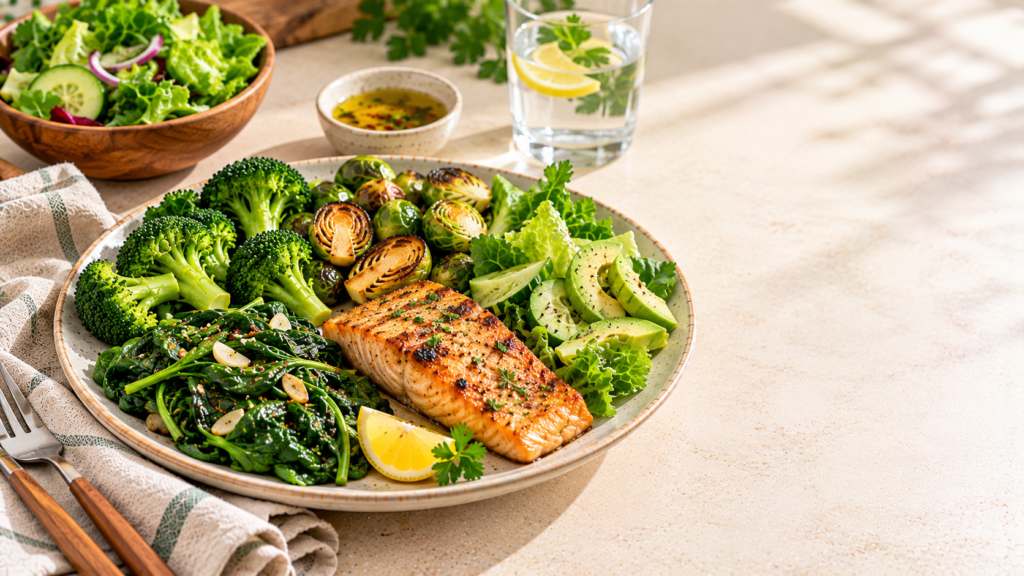
You can use the vitamin K foods chart to make simple changes to your usual meals without following a restrictive diet.

Breakfast
Add spinach to scrambled eggs or an omelet. Serve with whole-grain toast and a piece of fruit.

Lunch
Prepare a green salad with romaine lettuce, avocado, parsley, chickpeas, and a simple olive-oil dressing.

Dinner
Stir spinach into lentil curry or serve broccoli and cabbage alongside rice, beans, fish, or chicken.

Snacks
Enjoy blueberries, prunes, or a small portion of nuts for variety. Remember that these foods generally provide less vitamin K than leafy greens.
8. Can You Get Enough Vitamin K From Food?
Many healthy people can obtain sufficient vitamin K from a varied diet. Leafy greens, cruciferous vegetables, selected plant foods, and certain fermented or animal-derived foods all contribute.
However, food requirements can differ depending on age, diet, digestive health, and medication use. Supplements are not automatically necessary simply because you want to improve your nutrient intake.
If you suspect a deficiency or have a condition that affects nutrient absorption, consult a qualified healthcare professional rather than self-diagnosing based on symptoms.
Vitamin K and Blood-Thinning Medication
Vitamin K has an important interaction with warfarin and similar vitamin K–antagonist anticoagulants. If you take one of these medicines, aim to keep your vitamin K intake consistent instead of suddenly increasing or eliminating leafy greens. Major changes to your diet or supplements should be discussed with your anticoagulation team or prescribing clinician.
Frequently Asked Questions About Vitamin K Foods
1. What foods are highest in vitamin K?
Parsley, Swiss chard, spinach, collard greens, kale, and turnip greens are among the foods with high vitamin K1 concentrations. Natto is particularly notable for vitamin K2.
2. Which vegetables are rich in vitamin K?
Spinach, kale, Swiss chard, collard greens, broccoli, Brussels sprouts, parsley, and green cabbage are useful sources. Leafy greens generally provide more vitamin K than most other vegetables.
3. Which fruits contain vitamin K?
Prunes, blueberries, blackberries, kiwi, and avocado provide varying amounts of vitamin K. However, most fruits are less concentrated sources than leafy green vegetables.
4. Are eggs a good source of vitamin K?
Eggs provide small amounts of vitamin K, but they are not among the richest sources. Leafy green vegetables are generally a more effective dietary source of vitamin K1.
5. What is the difference between vitamin K1 and vitamin K2 foods?
Vitamin K1 is found mainly in green vegetables and some plant oils. Vitamin K2 occurs in certain fermented foods, such as natto, and in some cheeses and animal-derived products. Both forms contribute to vitamin K nutrition.
6. How much vitamin K do adults need daily?
According to US NIH guidance, adult men need an adequate intake of 120 mcg daily and adult women need 90 mcg. Pregnancy and breastfeeding recommendations for adults are also 90 mcg daily.
7. Does cooking reduce vitamin K in vegetables?
The effect depends on the cooking method, water loss, and serving size. Vitamin K is relatively stable during ordinary cooking, but some nutrients can be lost into cooking water. Both raw and cooked vegetables can be useful sources.
8. Can I eat vitamin K-rich foods while taking warfarin?
Often, yes, but consistency matters. Sudden changes in vitamin K intake can affect warfarin’s action. Follow the advice of your prescribing clinician and anticoagulation team.
Conclusion
A vitamin K foods chart is a simple way to identify natural food sources and make informed choices about your daily diet. Leafy green vegetables such as spinach, kale, Swiss chard, collard greens, and parsley are excellent sources of vitamin K1, while natto and certain fermented and animal-derived foods provide vitamin K2.
The best approach is to eat a varied, balanced diet and include vitamin K-rich foods in meals you already enjoy. You can add spinach to breakfast, broccoli to dinner, or fresh parsley to salads and curries without making complicated dietary changes.
Remember that consistency is especially important if you take warfarin or a similar anticoagulant. Speak with your healthcare professional before making significant changes to your vitamin K intake.
Use this chart as a practical reference, revisit it when planning meals, and explore other nutrient-rich foods to build a balanced eating routine.