
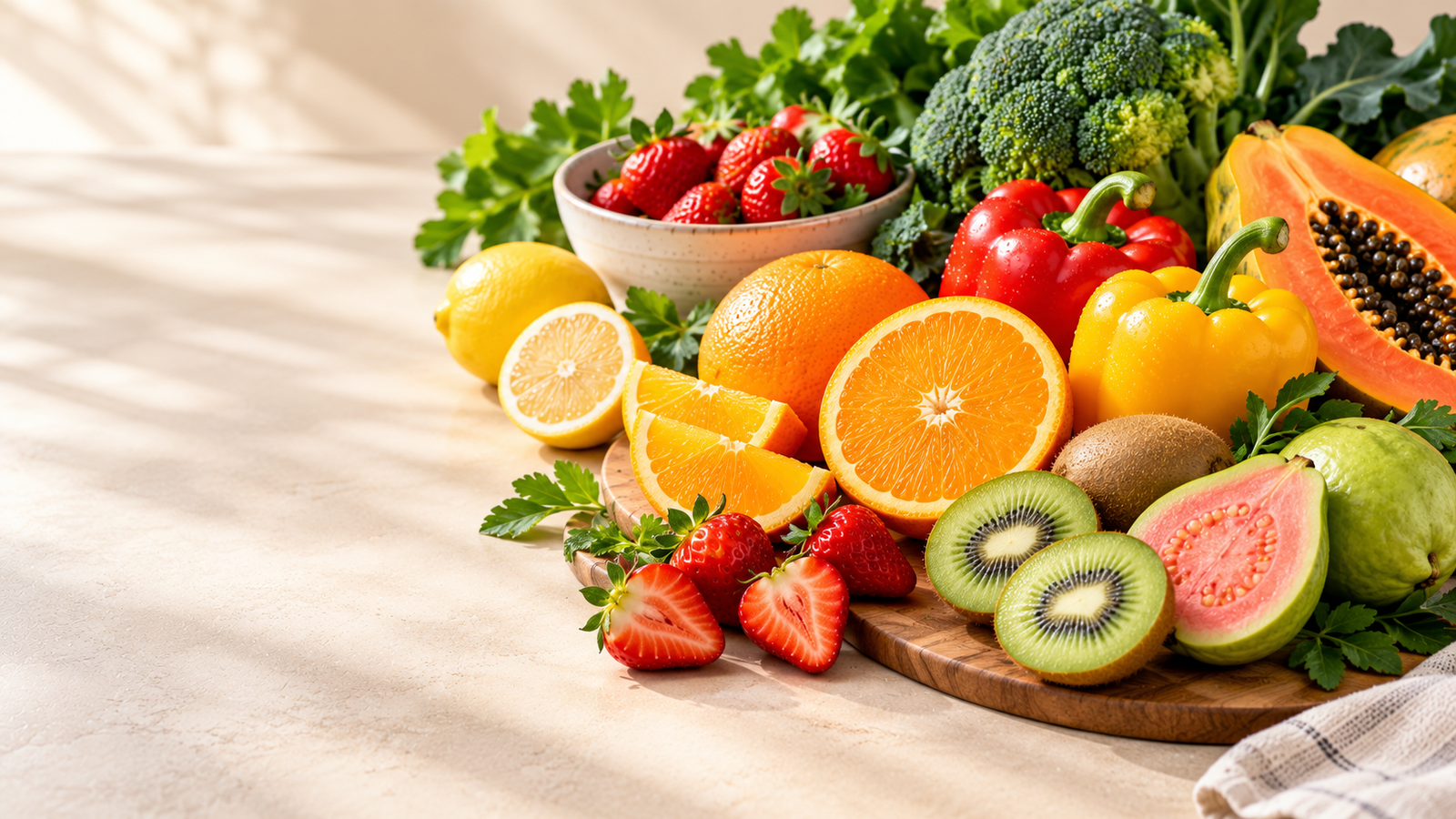
Vitamin C deficiency foods rich in vitamin C are important to understand because vitamin C supports collagen production, wound healing, immune function, and the absorption of iron from plant-based foods. Also known as ascorbic acid, vitamin C is an essential nutrient that your body cannot make on its own, so you need to obtain it from food or, when appropriate, supplements.
Fresh fruits and vegetables are among the best sources of vitamin C. Oranges, guava, kiwi, strawberries, bell peppers, broccoli, and papaya can all help you meet your daily needs. However, a diet consistently low in vitamin C can eventually cause deficiency and, in severe cases, scurvy.
The good news is that many affordable, everyday foods contain vitamin C. In this guide, you will learn which foods provide the most, how much you need each day, which symptoms may indicate deficiency, and how to protect vitamin C content when preparing meals.
Key Takeaways
- Vitamin C is needed for collagen formation, wound healing, antioxidant protection, and iron absorption.
- Guava, sweet peppers, kiwi, citrus fruits, strawberries, and broccoli are useful vitamin C sources.
- Most adults need 75–90 mg of vitamin C daily; needs vary by age, life stage, and smoking status.
- Prolonged severe deficiency can cause scurvy, which requires medical attention.
- Eating a variety of fruits and vegetables is usually the best way to obtain vitamin C.
- Cooking, prolonged storage, and exposure to water can reduce vitamin C in some foods.
What Is Vitamin C Deficiency?
Vitamin C deficiency happens when the body does not receive enough vitamin C over time. Because this vitamin is water-soluble and the body stores only limited amounts, regular dietary intake matters.
Vitamin C plays several important roles:
- Collagen production: Helps maintain healthy skin, blood vessels, gums, cartilage, and connective tissue.
- Wound healing: Supports the repair of damaged tissues.
- Iron absorption: Improves absorption of non-heme iron, the form found in plant foods and iron-fortified products.
- Antioxidant activity: Helps protect cells from oxidative damage.
- Normal immune function: Supports the body’s natural defense systems.
A low intake does not always mean a person already has a clinical deficiency. However, if intake remains very low for weeks or months, symptoms can develop.
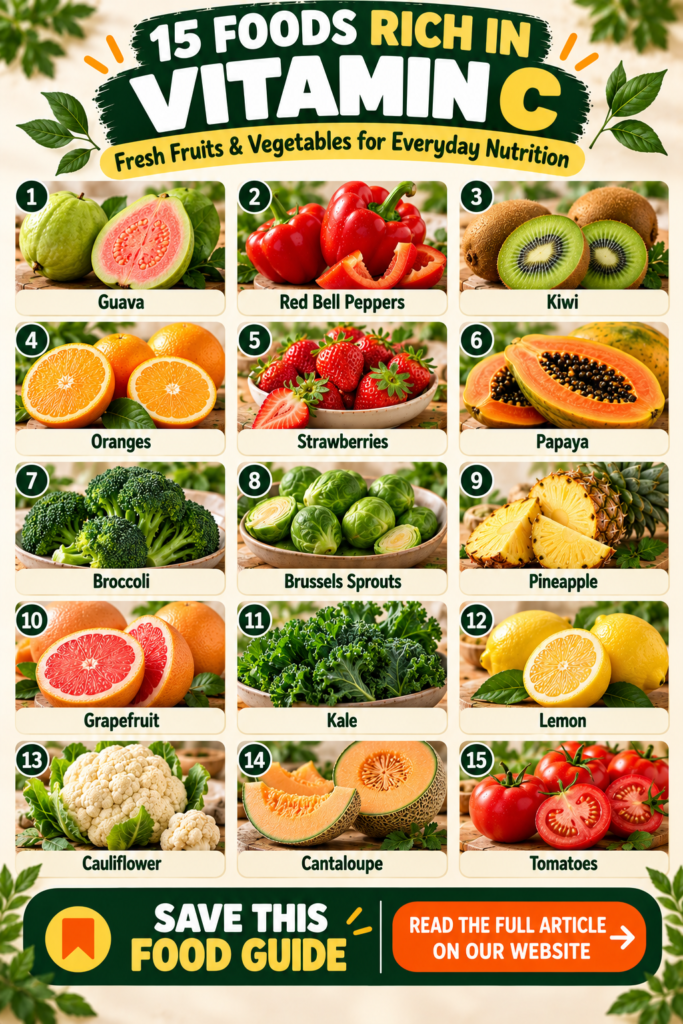
15 Foods Rich in Vitamin C
The following foods are excellent choices for increasing vitamin C intake. Values are approximate and can vary with variety, ripeness, storage, serving size, and preparation.
| Food | Typical serving | Approx. vitamin C |
|---|---|---|
| Guava, raw | 1 cup | 376 mg |
| Red sweet bell pepper, raw | ½ cup | 95 mg |
| Kiwi, green | 1 medium fruit | 64 mg |
| Orange | 1 medium fruit | 70 mg |
| Strawberries | 1 cup, sliced | 98 mg |
| Papaya | 1 cup, cubed | 88 mg |
| Broccoli, cooked | ½ cup | 51 mg |
| Brussels sprouts, cooked | ½ cup | 48 mg |
| Pineapple | 1 cup | 79 mg |
| Grapefruit | ½ medium fruit | 38 mg |
| Kale, cooked | ½ cup | About 27 mg |
| Lemon juice | 1 tablespoon | About 6 mg |
| Cauliflower, raw | 1 cup | About 46 mg |
| Cantaloupe | 1 cup | About 17 mg |
| Tomato, raw | 1 medium | About 17 mg |
These are rounded food-composition estimates; values vary by source and preparation. For nutrient reference data, see the USDA FoodData Central database linked below.
1. Guava
Guava is one of the most vitamin C-rich fruits. A cup of raw guava can provide several times the daily requirement for most adults.
Enjoy fresh guava as a snack, add it to a fruit salad, or blend it into a smoothie. Wash the fruit before eating, and choose portions that fit your overall diet.
2. Red Bell Peppers
Red bell peppers are an excellent non-citrus source of vitamin C. They can be eaten raw in salads, served with dips, or added to sandwiches and wraps.
Because vitamin C can decline with prolonged heating, adding some raw pepper to meals is a simple way to preserve more of its content.
3. Kiwi
Kiwi provides vitamin C along with fiber and other nutrients. Slice it into oatmeal, yogurt, or a fruit bowl, or enjoy it on its own.
Green and gold varieties differ in their nutrient composition, so the exact amount depends on the type and size of the fruit.
4. Oranges
Oranges are a convenient, widely available source of vitamin C. They can be eaten whole, packed as a snack, or added to salads.
Whole oranges also provide fiber, which is reduced when fruit is strained into juice.
5. Strawberries
Strawberries provide vitamin C and fiber while adding natural sweetness to meals. Add sliced strawberries to yogurt, oatmeal, or a fruit salad.
Fresh or frozen strawberries can be useful options. Choose frozen varieties without added sugar when possible.
6. Papaya
Papaya supplies vitamin C and can be enjoyed fresh at breakfast or as a snack. Combine it with other fruits for a colorful, nutrient-rich fruit bowl.
7. Broccoli
Broccoli provides vitamin C as well as fiber and other nutrients. Steam it briefly or cook it with a small amount of water to help limit nutrient losses.
8. Brussels Sprouts
Brussels sprouts are a useful vegetable source of vitamin C. Roast, steam, or sauté them until tender while avoiding unnecessarily long cooking times.
9. Pineapple
Pineapple contributes vitamin C and makes a refreshing snack. Add fresh pineapple to fruit salads or serve it alongside a balanced meal.
10. Grapefruit
Grapefruit contains vitamin C, although its amount per serving is generally lower than that of guava or some sweet peppers. Be aware that grapefruit can interact with certain medicines; check with a pharmacist or healthcare professional if you take prescription medication.
11. Kale
Kale provides vitamin C and other nutrients. Use it raw in salads or cook it briefly in soups and stir-fries.
12. Lemon Juice
Lemon juice can add flavor and a modest amount of vitamin C to water, dressings, and meals. It is useful as part of a varied diet but usually is not as concentrated a source per ordinary serving as guava or bell peppers.
13. Cauliflower
Cauliflower contains vitamin C and can be eaten raw, steamed, or roasted. Try adding it to mixed vegetable dishes to increase the variety of nutrients in your meals.
14. Cantaloupe
Cantaloupe provides vitamin C along with water and other nutrients. Serve it fresh at breakfast or as part of a fruit plate.
15. Tomatoes
Tomatoes contribute vitamin C and can be used in salads, sandwiches, sauces, and soups. Cooking changes their nutrient profile, so including both fresh and cooked tomatoes can add variety to your diet.
Vitamin C Rich Foods Chart: Serving Size and Daily Value
Knowing how much vitamin C a food provides per serving makes it easier to choose suitable foods throughout the day. The following values are from the NIH Office of Dietary Supplements. Percentages use the U.S. adult Daily Value of 90 mg. 【turn177588search2】
| Food | Serving size | Vitamin C | Approx. Daily Value |
|---|---|---|---|
| Red bell pepper, raw | ½ cup | 95 mg | 106% |
| Orange juice | ¾ cup | 93 mg | 103% |
| Orange | 1 medium | 70 mg | 78% |
| Kiwi | 1 medium | 64 mg | 71% |
| Green bell pepper, raw | ½ cup | 60 mg | 67% |
| Broccoli, cooked | ½ cup | 51 mg | 57% |
| Strawberries, sliced | ½ cup | 49 mg | 54% |
| Brussels sprouts, cooked | ½ cup | 48 mg | 53% |
| Grapefruit | ½ medium | 39 mg | 43% |
| Broccoli, raw | ½ cup | 39 mg | 43% |
| Tomato juice | ¾ cup | 33 mg | 37% |
| Cantaloupe | ½ cup | 29 mg | 32% |
| Cauliflower, raw | 1 cup | 26 mg | 29% |
| Baked potato | 1 medium | 17 mg | 19% |
| Tomato, raw | 1 medium | 17 mg | 19% |
Food composition varies by variety, size, storage, and cooking method. These are reference estimates, not guaranteed values for every serving. 【turn177588search2】
What Does the Vitamin C Food Chart Show?
- Bell peppers are particularly concentrated sources: A half-cup of raw red bell pepper can provide more than the adult daily value.
- Fruit can contribute substantially: An orange or kiwi can supply a meaningful amount of vitamin C.
- Vegetables count too: Broccoli and Brussels sprouts can contribute significantly to daily intake.
- Several foods can add up: You can meet your needs through a varied eating pattern rather than relying on one specific food.
Vitamin C Food Chart: Which Foods Provide the Most?
Not all vitamin C foods provide the same amount per serving. Comparing common foods can help you choose options that fit your budget, preferences, and daily routine.
| Food | Approx. vitamin C | Practical serving idea |
|---|---|---|
| Guava | 376 mg per cup | Eat fresh as a snack |
| Red bell pepper | 95 mg per ½ cup | Add to salads or wraps |
| Strawberries | 98 mg per cup | Mix into oatmeal |
| Kiwi | 64 mg per medium fruit | Eat at breakfast |
| Orange | 70 mg per medium fruit | Pack as a snack |
| Papaya | 88 mg per cup | Serve in a fruit bowl |
| Broccoli, cooked | 51 mg per ½ cup | Serve with lunch or dinner |
Values are approximate; see the USDA FoodData Central database for food-specific nutrient data.
How Much Vitamin C Do You Need Per Day?
Vitamin C requirements vary by age and life stage. The following are U.S. recommended dietary allowances (RDAs).
| Age or life stage | Recommended daily intake |
|---|---|
| Infants 0–6 months | 40 mg (adequate intake) |
| Infants 7–12 months | 50 mg (adequate intake) |
| Children 1–3 years | 15 mg |
| Children 4–8 years | 25 mg |
| Children 9–13 years | 45 mg |
| Teen boys 14–18 years | 75 mg |
| Teen girls 14–18 years | 65 mg |
| Adult men | 90 mg |
| Adult women | 75 mg |
| Pregnancy, adults | 85 mg |
| Breastfeeding, adults | 120 mg |
People who smoke need an additional 35 mg per day above the usual recommendation. These values are general guidelines; individual medical circumstances may differ.
For more information, consult the NIH Office of Dietary Supplements Vitamin C Fact Sheet.
Vitamin C Deficiency Symptoms
Vitamin C deficiency can cause symptoms that develop gradually. Early signs may be nonspecific, meaning they can also occur with other health conditions.
Possible symptoms include:
- Fatigue and unusual weakness
- Swollen, tender, or bleeding gums
- Easy bruising
- Small red or purple spots under the skin
- Slow wound healing
- Dry or rough skin
- Joint or muscle pain
- Corkscrew-shaped body hairs in more advanced cases
- Anemia, which may have several contributing causes
Severe, prolonged vitamin C deficiency can cause scurvy, a condition that needs medical treatment. Untreated scurvy can lead to serious complications.
These symptoms alone cannot confirm vitamin C deficiency. If you have unexplained bleeding gums, unusual bruising, persistent fatigue, or slow wound healing, seek medical advice instead of assuming that a dietary change will solve the problem.
What Causes Vitamin C Deficiency?
Vitamin C deficiency can develop when a person consistently consumes too little vitamin C or has circumstances that increase nutritional risk.
Common risk factors include:
- Eating very few fruits and vegetables
- Having a highly restrictive or unbalanced diet
- Food insecurity or limited access to fresh produce
- Smoking
- Certain medical conditions that affect eating or nutrient absorption
- Heavy alcohol use or other circumstances associated with poor nutrition
A varied diet is usually the best prevention strategy. People with symptoms or significant risk factors may need a healthcare assessment.
How to Increase Vitamin C Intake Through Food
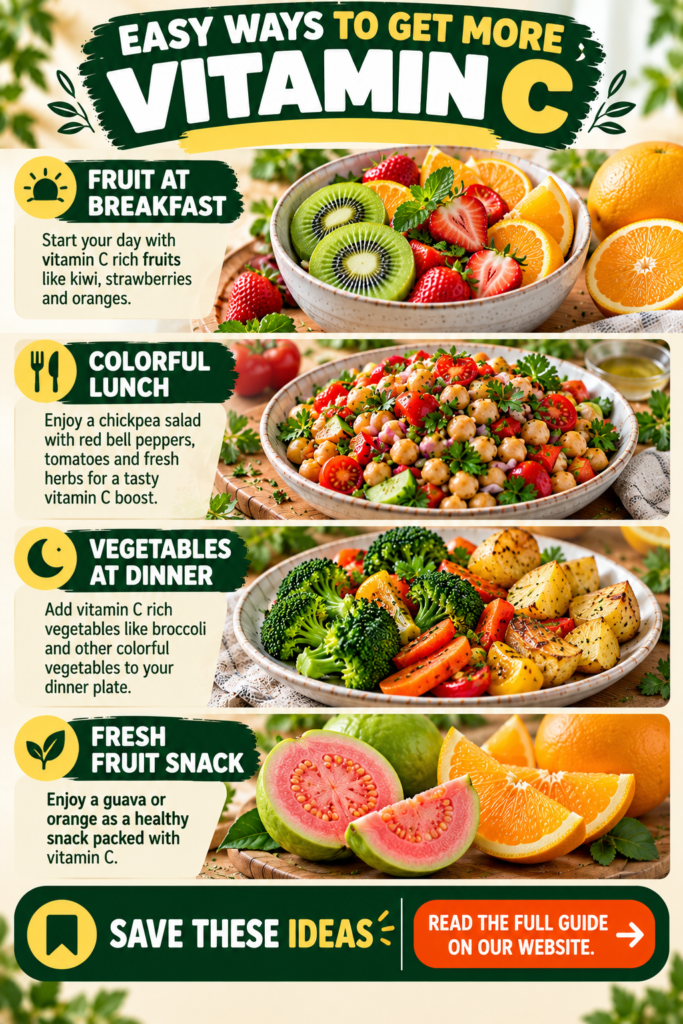
You do not need an expensive diet or exotic ingredients to eat more vitamin C. A few consistent food choices can make a meaningful difference.
1. Include Fruit Every Day
Choose fruits such as oranges, kiwi, guava, strawberries, or papaya. Keep washed fruit visible and accessible so it is easy to include with breakfast or snacks.
2. Add Vegetables to Main Meals
Include red bell peppers, broccoli, tomatoes, or cauliflower in lunch and dinner. Combining different fruits and vegetables helps provide a broader range of nutrients.
3. Choose Whole Fruit More Often Than Juice
Whole fruit provides fiber and can be more filling than juice. Juice can contain vitamin C, but portions and processing matter, and some products contain added sugar.
4. Avoid Overcooking Vegetables
Vitamin C is sensitive to heat and can dissolve into cooking water. To reduce losses:
- Steam vegetables briefly rather than boiling them for a long time.
- Use a small amount of water when cooking.
- Avoid repeatedly reheating vegetables unnecessarily.
- Include some raw fruits and vegetables when safe and suitable.
5. Store Produce Properly
Long storage can reduce vitamin C in some foods. Refrigerate produce that requires chilling and follow appropriate food-safety guidance. Frozen fruits and vegetables can be convenient alternatives and can retain substantial nutrients.
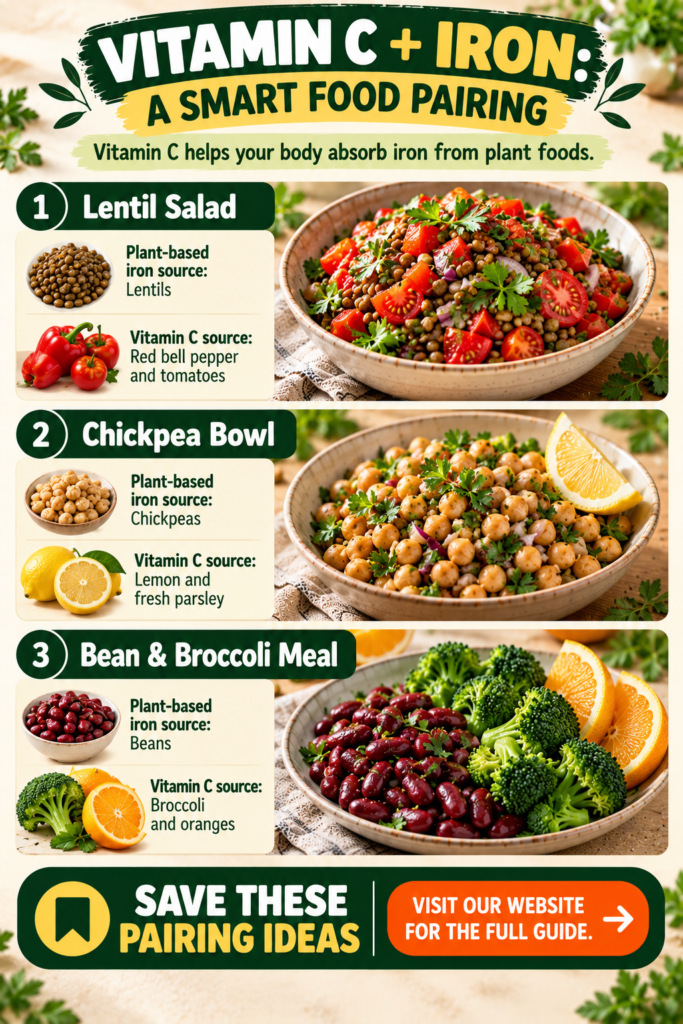
6. Pair Vitamin C Foods With Plant-Based Iron Sources
Vitamin C helps the body absorb non-heme iron from foods such as lentils, beans, chickpeas, tofu, and iron-Iron-Rich Foods: Best Sources and Tips to Improve Iron Absorption
A Simple One-Day Meal Plan Rich in Vitamin C
This sample menu shows how you can include vitamin C foods throughout the day without relying on one fruit or vegetable.

Breakfast
Plain yogurt with sliced kiwi and strawberries, served with oats.
Vitamin C sources: kiwi and strawberries.

Lunch
Lentil and chickpea salad with red bell pepper, tomatoes, and lemon dressing.
Vitamin C sources: bell pepper and tomatoes. Lentils and chickpeas provide plant-based iron.

Snack
Fresh orange or guava.
Vitamin C source: choose the fruit you enjoy and can access.

Dinner
Briefly steamed broccoli and bell peppers served with a protein source and whole grains.
Vitamin C sources: broccoli and bell peppers.
This menu is an example, not a prescribed diet. You can adapt it to your preferences, budget, and nutritional needs. The amount of vitamin C you obtain will depend on the portions, food varieties, and preparation methods.
Can Vitamin C Supplements Replace Vitamin C Foods?
For most people, food is the preferred way to obtain vitamin C because fruits and vegetables also provide fiber, water, and other beneficial nutrients.
Vitamin C supplements may be useful in certain circumstances, but they are not automatically necessary for everyone. High supplemental doses can cause digestive side effects such as diarrhea, nausea, or abdominal cramps. People with certain medical conditions, including a history of kidney stones or iron-overload disorders, should ask a healthcare professional before taking high doses.
If a vitamin C deficiency is suspected, seek medical assessment. A healthcare professional can evaluate your symptoms, dietary intake, and whether treatment is needed. Severe deficiency should not be managed through food changes alone without appropriate medical advice.
External link: NIH Office of Dietary Supplements — Vitamin C: Consumer Fact Sheet
This authoritative resource explains vitamin C functions, recommended intakes, food sources, deficiency, and supplement safety.
Frequently Asked Questions About Vitamin C Deficiency Foods
What foods are best for vitamin C deficiency?
Guava, red bell peppers, kiwi, strawberries, oranges, papaya, and broccoli are excellent sources. A varied diet that includes fruits and vegetables can help meet daily vitamin C needs.
Which fruit has the most vitamin C?
Guava is one of the richest commonly eaten fruits in vitamin C. Some varieties provide several times the daily requirement in a one-cup serving, although the exact amount varies.
Can vitamin C deficiency cause bleeding gums?
Yes. Bleeding or swollen gums can occur in severe vitamin C deficiency, including scurvy. However, gum disease and other conditions can also cause bleeding, so medical or dental assessment is important.
How much vitamin C do adults need daily?
The U.S. RDA is 90 mg per day for adult men and 75 mg per day for adult women. People who smoke need an additional 35 mg daily. Requirements differ for children, pregnancy, and breastfeeding.
Does cooking destroy vitamin C?
Heat and water can reduce vitamin C in some foods. Brief steaming, shorter cooking times, and including some raw produce when appropriate can help preserve more of it.
Can vitamin C help the body absorb iron?
Yes. Vitamin C improves absorption of non-heme iron found in plant foods, such as beans, lentils, chickpeas, and iron-fortified grains. Pairing these foods with peppers, tomatoes, citrus fruits, or broccoli is a practical strategy.
Can vitamin C foods cure scurvy?
Vitamin C-rich foods can help prevent and treat inadequate intake, but suspected scurvy requires medical assessment and appropriate treatment. Do not delay care if you have symptoms such as unexplained bleeding, bruising, or poor wound healing.
Conclusion
Eating vitamin C deficiency foods rich in vitamin C is a practical way to support healthy collagen production, wound healing, iron absorption, and normal immune function. Guava, red bell peppers, kiwi, strawberries, oranges, papaya, and broccoli are excellent options to include in everyday meals.
Focus on variety rather than relying on a single “superfood.” Add fruit to breakfast, include vegetables at lunch and dinner, and combine vitamin C-rich produce with plant-based iron sources when possible. If you have symptoms that may indicate deficiency, consult a healthcare professional for assessment rather than Vitamin C Benefits: How This Essential Nutrient Supports Your Health