

Learning how to build a balanced lunch can make healthy eating simpler, more affordable, and easier to maintain. Instead of following complicated meal plans or eliminating your favorite foods, focus on combining vegetables, protein, whole grains, healthy fats, and fruit in practical portions.
A balanced lunch helps provide the nutrients your body needs throughout the day. The right combination of foods can also make a meal more satisfying and provide a source of energy for work, study, exercise, and everyday activities.
You do not need expensive ingredients or elaborate recipes. A homemade meal of lentils, whole-wheat roti, vegetables, and plain yogurt can be just as practical as a lunch bowl made with brown rice, grilled chicken, and salad.
Key Takeaways
- Fill approximately half your plate with vegetables and fruit, when practical.
- Include a protein source such as eggs, beans, lentils, fish, chicken, tofu, or yogurt.
- Choose whole grains more often than refined grains.
- Add small amounts of healthy fats from nuts, seeds, olive oil, or avocado.
- Adapt portions to your appetite, activity level, preferences, and nutritional needs.
- Plan simple meals and use affordable seasonal ingredients to save time and money.
What Is a Balanced Lunch?
A balanced lunch combines several food groups to provide protein, carbohydrates, fats, fiber, vitamins, and minerals. No single meal needs to contain every nutrient in a specific amount. Instead, aim for variety and balance across your day and week.
A useful starting point is the plate method: approximately half the plate for vegetables and fruit, one-quarter for protein-rich foods, and one-quarter for whole grains or other minimally processed carbohydrate sources. This is a flexible visual guide rather than a strict medical prescription.
For more guidance, see the Harvard Healthy Eating Plate.
The Main Components of a Healthy Lunch
| Food group | What to include | Why it matters |
|---|---|---|
| Vegetables and fruit | Spinach, carrots, tomatoes, broccoli, cucumber, apples, oranges | Provide fiber, vitamins, minerals, and other beneficial plant compounds |
| Protein foods | Eggs, lentils, beans, chicken, fish, tofu, plain yogurt | Support muscles and other body tissues and contribute to fullness |
| Whole grains | Oats, brown rice, whole-wheat bread, whole-wheat roti, barley | Supply carbohydrates, fiber, and other nutrients |
| Healthy fats | Nuts, seeds, olive oil, avocado | Provide essential fatty acids and help absorb fat-soluble vitamins |
| Dairy or fortified alternatives | Milk, plain yogurt, calcium-fortified soy milk | Can provide calcium, protein, and other nutrients, depending on the product |
| Water | Plain drinking water | Helps maintain hydration |
You can combine these groups in a single plate, a lunchbox, a wrap, a soup-and-sandwich meal, or a bowl.
How to Build a Balanced Lunch Step by Step
1. Start With Vegetables
Vegetables are an excellent foundation for a healthy lunch because they contribute fiber, vitamins, minerals, and color without requiring complicated preparation.
Choose two or more varieties when possible. For example, combine cucumber and tomatoes in a salad, add spinach to an omelet, or serve cooked carrots and broccoli alongside rice and beans.
Fresh, frozen, and appropriately stored canned vegetables can all be useful. Frozen vegetables are particularly convenient when fresh produce is expensive or unavailable.
Easy ways to add vegetables:
- Add chopped vegetables to eggs, lentils, or chickpeas.
- Keep washed cucumber and carrots ready for lunchboxes.
- Include a side salad with rice, roti, or sandwiches.
- Add frozen vegetables to soups, pasta, or stir-fries.
2. Include a Protein Source
Protein is an important part of a balanced lunch. It supports muscle maintenance, tissue repair, and many normal body functions. Including protein-rich foods can also make a meal more satisfying.
Choose from both animal and plant sources based on your budget, dietary preferences, and availability.
| Protein food | Simple lunch idea |
|---|---|
| Eggs | Vegetable omelet with whole-wheat toast |
| Lentils (dal) | Dal with roti and cucumber salad |
| Chickpeas | Chickpea salad or chana bowl |
| Chicken | Chicken and vegetable whole-wheat wrap |
| Fish | Fish with brown rice and cooked vegetables |
| Beans | Bean bowl with tomatoes and whole grains |
| Tofu | Tofu and vegetable stir-fry |
| Plain yogurt | Yogurt served with a bean or grain-based meal |
You do not need meat at every lunch. Lentils, beans, chickpeas, tofu, and other plant proteins can make nutritious and economical choices.
3. Choose Whole Grains More Often
Carbohydrates are an important source of energy. The goal is not to remove carbohydrates from lunch but to choose appropriate sources and pair them with protein, vegetables, and other nutrient-rich foods.
Whole grains retain more of their original grain components than refined grains and generally provide more fiber.
Examples include:
- Whole-wheat roti or chapati
- Whole-grain bread
- Brown rice
- Oats
- Barley
- Whole-wheat pasta
You can still enjoy white rice, regular roti, or other refined grains. Try to include whole grains more often when they suit your preferences, digestion, budget, and cultural eating habits.
4. Add Healthy Fats in Practical Portions
Fat is an essential nutrient. It contributes to cell function and helps the body absorb vitamins A, D, E, and K.
Useful sources include nuts, seeds, olive oil, and avocado. Peanut butter or other nut butters can also be convenient additions, provided allergies are considered.
Try sprinkling pumpkin seeds over a salad, adding a small handful of nuts to a lunchbox, or using a modest amount of oil when cooking vegetables.
Healthy fats are nutritious, but they are energy-dense. The amount you need depends on your overall diet and individual requirements.
5. Add Fruit or Another Nutrient-Rich Side
Fruit can add fiber, water, vitamins, and natural sweetness to lunch. Choose whole fruit more often than juice because whole fruit generally provides more fiber and tends to be more filling.
Easy options include:
- An apple or pear
- An orange or seasonal citrus fruit
- A banana
- Guava
- A small bowl of berries when affordable
- Seasonal melon
Fruit is optional at lunch if you already include it elsewhere in your day. The broader goal is to eat a variety of fruits and vegetables regularly.
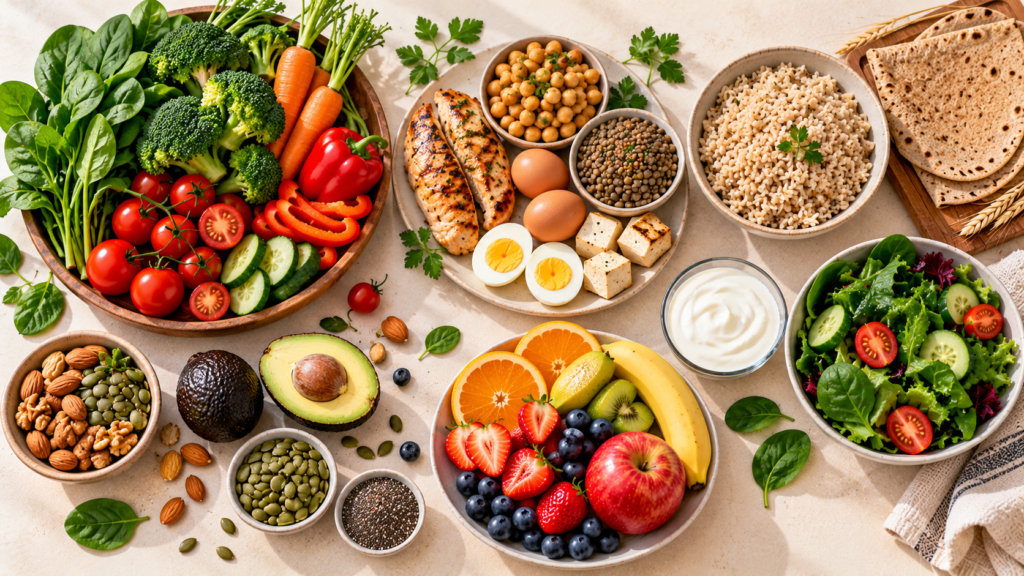
What Does a Balanced Lunch Plate Look Like?
The plate method is a simple way to plan lunch without weighing every ingredient or counting calories.

Half the plate: Vegetables and fruit
Prioritize non-starchy vegetables, then add fruit according to your appetite and preferences. Fresh, frozen, and cooked produce can all contribute.

One-quarter: Protein
Include chicken, fish, eggs, lentils, beans, chickpeas, tofu, or another protein-rich food.

One-quarter: Whole grains
Choose whole-wheat roti, brown rice, whole-grain bread, barley, or another grain you enjoy.
Water can accompany the meal, and a small amount of unsaturated fat can be included in cooking or as a topping. Yogurt or a calcium-fortified alternative may also fit, depending on your nutritional needs.
These proportions are a starting point, not a rigid rule. You may need larger or smaller portions depending on hunger, physical activity, age, health conditions, and individual energy requirements.
10 Easy Balanced Lunch Ideas
Knowing how to build a balanced lunch becomes easier when you have a few reliable meal combinations. Use these examples as starting points and swap ingredients according to availability and taste.
| Lunch idea | Protein | Vegetables or fruit | Grain or carbohydrate |
|---|---|---|---|
| 1. Dal and roti | Lentils | Cucumber and tomato salad | Whole-wheat roti |
| 2. Chicken bowl | Grilled chicken | Broccoli, carrots, and peppers | Brown rice |
| 3. Chickpea salad | Chickpeas | Cucumber, tomatoes, and leafy greens | Whole-grain bread |
| 4. Egg sandwich | Eggs | Lettuce, tomatoes, and cucumber | Whole-grain bread |
| 5. Fish plate | Grilled or baked fish | Cooked greens and carrots | Brown rice or whole-wheat roti |
| 6. Bean bowl | Kidney beans or black beans | Tomatoes, corn, and peppers | Brown rice |
| 7. Vegetable omelet | Eggs | Spinach, onions, and tomatoes | Whole-wheat toast or roti |
| 8. Tofu stir-fry | Tofu | Mixed vegetables | Brown rice or whole-grain noodles |
| 9. Yogurt and grain bowl | Plain Greek-style yogurt or another protein-rich yogurt | Fruit and optional seeds | Oats or whole-grain cereal |
| 10. Leftover lunchbox | Leftover chicken, beans, or dal | Leftover vegetables or fresh salad | Roti, rice, or whole grains |
Choose combinations that fit your budget and appetite. For example, dal with roti and seasonal vegetables can be a balanced everyday lunch without relying on expensive specialty foods.
A Practical Lunch Formula
Use this simple formula when planning meals:
Protein + vegetables + grain or starchy food + optional healthy fat + water
Examples:
- Chickpeas + cucumber and tomato salad + whole-wheat roti + a few nuts.
- Eggs + sautéed spinach + whole-grain toast + an orange.
- Chicken + mixed vegetables + rice + a small amount of olive oil.
- Beans + tomatoes and peppers + brown rice + water.
The formula is flexible. A nutritious lunch does not need to look like a restaurant meal or contain every food group in exactly the same proportions.
How to Build a Balanced Lunch on a Budget
Healthy eating does not have to be expensive. Many affordable staples supply protein, fiber, vitamins, and minerals.
Choose Affordable Everyday Foods
- Lentils and beans: Economical sources of plant protein, fiber, and several minerals.
- Eggs: Versatile protein for sandwiches, wraps, or vegetable omelets.
- Seasonal produce: Often a practical way to vary vegetables and fruit.
- Oats and whole-wheat roti: Useful grain choices for everyday meals.
- Frozen vegetables: Convenient when fresh produce is costly or spoils quickly.
- Plain yogurt: Can provide protein and calcium, depending on the type.
- Peanuts and seeds: Concentrated sources of nutrients and unsaturated fats.
Save Money With Simple Meal Planning
- Plan three or four lunch combinations before shopping.
- Prepare a batch of lentils, beans, or another protein-rich ingredient.
- Wash and cut vegetables in advance, storing them safely.
- Use leftovers promptly in wraps, grain bowls, or lunchboxes.
- Buy only the amount of fresh produce you can use before it spoils.
- Compare unit prices and choose store brands where appropriate.
For food storage and safe handling guidance, consult the USDA Food Safety and Inspection Service.

How to Build a Balanced Lunch for Work or School
A packed lunch can be just as nutritious as a meal prepared at home or purchased outside. The key is choosing foods that travel well and storing them safely.
Pack a Lunch That Stays Satisfying
Consider combining:
- A protein source, such as boiled eggs, chicken, beans, chickpeas, or tofu.
- A grain, such as whole-wheat bread, roti, or brown rice.
- Vegetables, such as carrots, cucumber, tomatoes, or cooked greens.
- A fruit, such as an apple, orange, or banana.
- Water, plus plain yogurt if you have a way to keep it chilled.
If you do not have access to a refrigerator, use an insulated lunch bag with adequate cold packs for perishable foods. Do not leave cooked meat, eggs, dairy foods, or other perishable foods at room temperature for extended periods. Follow local food-safety guidance, particularly in hot weather.
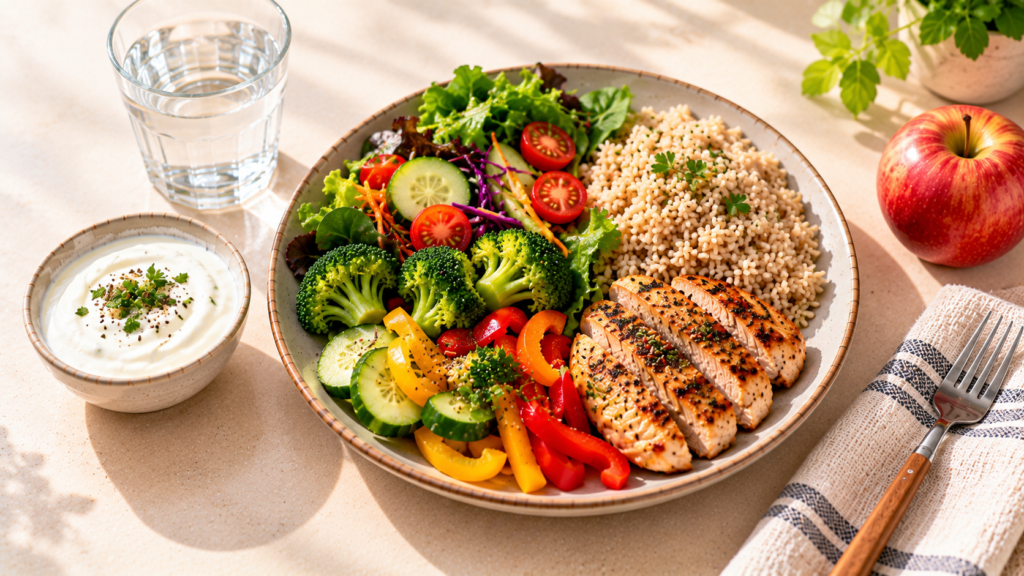
Healthy Lunch Options When Eating Out
Restaurant and takeaway meals can also fit into a balanced eating pattern.
- Choose a grilled, baked, or bean-based protein when available.
- Add vegetables or a side salad.
- Select whole grains when offered and appealing to you.
- Ask for rich sauces or dressings on the side if you want more control over the amount.
- Choose water or another suitable drink based on your preferences.
- Consider portion size and save leftovers safely when servings are larger than you need.
You do not have to avoid your favorite foods. Balance is about the overall pattern of eating, not making every meal perfect.
How to Adjust Lunch Portions to Your Needs
The best balanced lunch depends on your body, lifestyle, and circumstances. There is no single portion size that is right for everyone.
If You Have a Physically Active Day
You may need more food overall, particularly energy-rich carbohydrates and protein. Add a larger serving of grains, another protein-rich food, or a snack if your hunger and activity level call for it.
If You Prefer Smaller Meals
Build a smaller plate with a protein source, vegetables, and a grain or starchy food. You can eat again later if you become hungry; there is no need to force yourself to finish a large meal.
If You Eat a Vegetarian or Vegan Diet
Combine different plant foods throughout the day, including lentils, beans, chickpeas, tofu, nuts, seeds, vegetables, and whole grains. If you follow a vegan diet, choose reliable vitamin B12-fortified foods or discuss an appropriate supplement with a qualified healthcare professional, since unfortified plant foods are not reliable sources of vitamin B12.
If You Have a Medical Dietary Requirement
Conditions such as diabetes, kidney disease, food allergies, or digestive disorders can affect meal planning. If you have specific dietary restrictions, work with a qualified healthcare professional or registered dietitian to tailor portions and food choices.
For more nutrition guidance, explore the NIH Office of Dietary Supplements fact sheets for information on specific vitamins and minerals.
Common Mistakes to Avoid When Building a Balanced Lunch
A healthy lunch does not require perfection. A few simple changes can help make your usual meals more balanced.
- Eating only refined carbohydrates: Bread, rice, or roti can be part of lunch, but adding protein and vegetables improves variety and nutritional balance.
- Skipping protein: Include beans, lentils, eggs, fish, chicken, tofu, or another suitable protein source.
- Forgetting vegetables: Keep easy options available, including frozen vegetables, carrots, cucumber, and tomatoes.
- Relying on sugary drinks: Water is a practical everyday choice for hydration.
- Assuming healthy food must be expensive: Affordable staples such as lentils, eggs, seasonal vegetables, and whole-wheat roti can form nutritious meals.
- Following rigid portion rules: Use the plate method as a guide and adjust to your hunger, activity, and individual needs.
- Ignoring food safety: Refrigerate perishable leftovers promptly and transport packed lunches safely.f
A Simple One-Day Lunch Planning Example
Use this sample plan for inspiration rather than as a rigid prescription. Adjust the amount of food to your appetite and nutritional requirements.
| Meal | Example | Nutritional highlights |
|---|---|---|
| Lunch | Dal, whole-wheat roti, cucumber-tomato salad, and plain yogurt | Plant protein, fiber, carbohydrates, and calcium |
| Optional afternoon snack | Fruit with a small handful of peanuts | Fiber, energy, and unsaturated fats |
| Dinner | Eggs, chicken, tofu, or beans with vegetables and rice | Protein, vegetables, and carbohydrates |
The rest of your day’s meals matter too. Aim for variety across the day instead of expecting lunch to meet every nutritional need by itself.
Healthy Foods to Keep in Your Kitchen
How to Build a Nutrient-Rich Breakfast
Frequently Asked Questions
1. How do you build a balanced lunch?
Include a protein source, vegetables, and a grain or other carbohydrate food. Add fruit, healthy fats, or dairy and fortified alternatives according to your preferences and nutritional needs. The plate method is a helpful starting point.
2. What is the healthiest lunch to eat every day?
There is no single healthiest lunch for everyone. Meals made with vegetables, beans or lentils, whole grains, eggs, fish, chicken, tofu, or other nutrient-rich foods can all contribute to a balanced diet. Varying ingredients helps provide a broader range of nutrients.
3. What should a balanced lunch plate look like?
A common visual guide is half vegetables and fruit, one-quarter protein-rich foods, and one-quarter whole grains. Treat these proportions as flexible guidance rather than strict requirements.
4. How can I make a balanced lunch cheaply?
Use affordable staples such as lentils, chickpeas, beans, eggs, seasonal vegetables, whole-wheat roti, and rice. Prepare ingredients in batches and use leftovers safely to reduce waste.
5. What is a balanced lunch for work or school?
Try a whole-wheat sandwich with eggs or chicken, vegetables, and fruit. Other options include a chickpea salad, a lentil-and-roti lunchbox, or a rice bowl with protein and vegetables. Keep perishable ingredients at safe temperatures.
6. Can rice and roti be part of a balanced lunch?
Yes. Rice and roti provide carbohydrates that supply energy. Combine them with protein-rich foods and vegetables, and choose whole-grain versions more often when practical.
7. Is it okay to eat the same balanced lunch every day?
You can repeat convenient meals, but regularly varying your vegetables, fruits, protein sources, and grains helps increase dietary variety. Small ingredient swaps can keep familiar meals interesting.
8. How do I build a balanced vegetarian lunch?
Combine lentils, chickpeas, beans, tofu, or eggs if you eat them with vegetables and a grain such as whole-wheat roti or brown rice. Include nuts, seeds, and suitable fortified foods as part of your overall diet.
Conclusion: Make Balanced Lunches Simple and Sustainable
Learning how to build a balanced lunch is about creating satisfying meals from foods you enjoy, not following strict rules. Start with vegetables, include a source of protein, choose a suitable grain or carbohydrate, and add fruit or healthy fats when they fit your needs.
You can build a nutritious lunch with simple ingredients such as dal, roti, eggs, chickpeas, seasonal vegetables, rice, and yogurt. Planning a few reliable combinations in advance can make healthier choices easier at home, work, or school.
Start with one small change at your next lunch. Add a vegetable, include a protein source, or swap in a whole grain. Consistent, practical habits matter more than achieving a perfect plate every time.
3 thoughts on “How to Build a Balanced Lunch”