
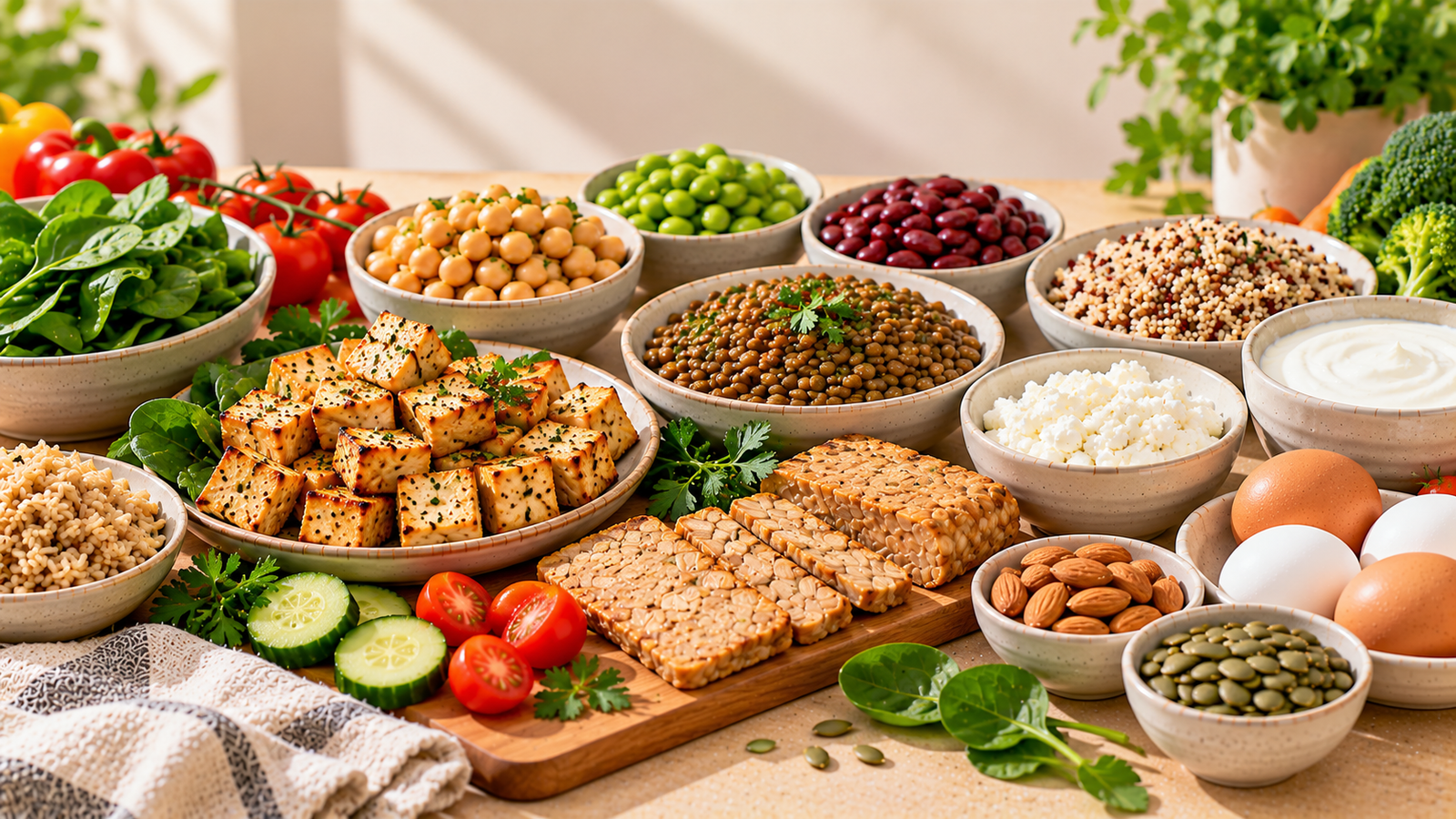
High protein vegetarian foods make it easier to meet your daily protein needs without relying on meat, chicken, or fish. Whether you follow a vegetarian diet, want to eat more plant-based meals, or are simply looking for affordable ways to add protein to your plate, there are plenty of nutritious options to choose from.
Foods such as lentils, chickpeas, beans, tofu, tempeh, edamame, dairy products, eggs, nuts, and seeds can all contribute protein to a balanced diet. Some provide additional nutrients, including fiber, iron, calcium, healthy fats, and B vitamins.
The best approach is to include a variety of protein sources throughout the day rather than depending on a single food. This guide compares 25 high protein vegetarian foods, explains how much protein they provide, and shares practical meal ideas to help you use them.
Key Takeaways
- Soy foods such as tempeh, tofu, and edamame are useful vegetarian protein sources.
- Lentils, chickpeas, and beans provide protein along with fiber and other nutrients.
- Greek yogurt, cottage cheese, milk, and eggs are options for lacto-ovo vegetarians.
- Nuts and seeds add protein, healthy fats, and minerals, although their calories can add up quickly.
- Protein amounts vary with serving size, cooking method, and product brand.
- Eating a variety of protein-rich foods throughout the day helps provide essential amino acids and other nutrients.
What Are High Protein Vegetarian Foods?
High protein vegetarian foods are foods that provide meaningful amounts of protein without requiring meat, poultry, or fish. Depending on the type of vegetarian diet, they may include plant foods, dairy products, and eggs.
Protein is needed to build and maintain muscles, support tissue repair, produce enzymes and hormones, and maintain normal immune function. Your overall protein needs depend on factors such as body weight, age, activity level, health, and personal goals.
Vegetarian protein sources fall into several broad groups:
- Legumes: Lentils, chickpeas, peas, and beans.
- Soy foods: Tofu, tempeh, and edamame.
- Dairy products: Greek yogurt, cottage cheese, milk, and certain cheeses.
- Eggs: A versatile source for people who include eggs in their diet.
- Nuts and seeds: Almonds, peanuts, pumpkin seeds, chia seeds, and others.
- Whole grains and related foods: Quinoa, oats, and whole-wheat pasta.
Not every vegetarian follows the same dietary pattern. Vegans avoid all animal-derived foods, while lacto-ovo vegetarians may eat dairy products and eggs. The best choices depend on which foods fit your diet.
25 High Protein Vegetarian Foods and Their Protein Content
The following chart compares approximate protein amounts in common vegetarian foods. Values are estimates rather than exact figures for every brand or preparation method.
| No. | Vegetarian food | Approximate protein |
|---|---|---|
| 1 | Tempeh, cooked | 18–20 g per 100 g |
| 2 | Firm tofu | 10–17 g per 100 g |
| 3 | Edamame, cooked | 11–12 g per 100 g |
| 4 | Seitan | 20–25 g per 100 g |
| 5 | Lentils, cooked | 9 g per 100 g |
| 6 | Chickpeas, cooked | 8–9 g per 100 g |
| 7 | Kidney beans, cooked | 8–9 g per 100 g |
| 8 | Black beans, cooked | 8–9 g per 100 g |
| 9 | Split peas, cooked | About 8 g per 100 g |
| 10 | Green peas, cooked | About 5 g per 100 g |
| 11 | Greek yogurt | 15–20 g per 170 g |
| 12 | Cottage cheese | 11–13 g per 100 g |
| 13 | Parmesan cheese | 9–10 g per 28 g |
| 14 | Milk | About 8 g per 240 ml |
| 15 | Eggs | 6–7 g per large egg |
| 16 | Soy milk | About 6–8 g per 240 ml |
| 17 | Peanuts | About 7 g per 28 g |
| 18 | Almonds | About 6 g per 28 g |
| 19 | Pumpkin seeds | About 8–9 g per 28 g |
| 20 | Hemp seeds | About 9–10 g per 30 g |
| 21 | Chia seeds | About 4–5 g per 28 g |
| 22 | Quinoa, cooked | About 4–5 g per 100 g |
| 23 | Oats, dry | About 5 g per 40 g |
| 24 | Whole-wheat pasta, cooked | About 5–7 g per 100 g |
| 25 | Peanut butter | About 7–8 g per 2 tablespoons |
Important: Protein content differs between brands and varieties. Seitan, for example, is made primarily from wheat gluten and is unsuitable for people who must avoid gluten. Check product labels for the most accurate information.
1. Best Plant-Based Vegetarian Protein Sources
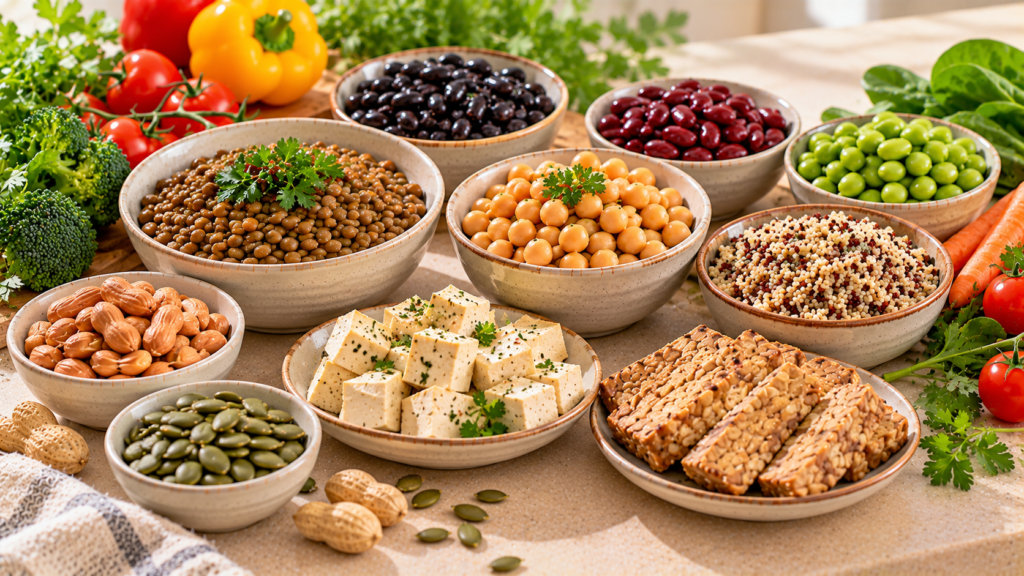
Plant-based foods can provide substantial protein along with fiber, vitamins, minerals, and other beneficial nutrients. These options are especially useful for vegetarians who want to build meals without meat or dairy.
1. Tempeh

Tempeh is a fermented soy food with a firm texture and nutty flavor. It typically contains around 18–20 grams of protein per 100 grams, depending on the product.
How to eat it:
- Slice and pan-sear it with vegetables.
- Add it to grain bowls with quinoa or brown rice.
- Marinate it with garlic, lemon, and spices before baking.
Tempeh can be a particularly convenient option for people who want a protein-rich main ingredient in a vegetarian dinner.
2. Tofu

Tofu is made from soybeans and comes in different textures, including silken, soft, firm, and extra-firm. Firm tofu generally provides more protein per serving than silken tofu because it contains less water.
Easy ways to use tofu:
- Scramble it with onions, tomatoes, and spinach.
- Add it to stir-fries, curries, or noodle bowls.
- Bake seasoned cubes for salads and wraps.
- Blend silken tofu into sauces or smoothies.
Choose a firm variety when you want a higher-protein centerpiece, and check the label because protein content varies considerably by product.
3. Edamame
Edamame are young soybeans that are commonly served steamed or boiled. One cooked cup can provide roughly 18–19 grams of protein, depending on the serving size.
Add shelled edamame to salads, soups, rice bowls, or pasta. Frozen edamame is often easy to store and prepare, making it a convenient option for quick meals.
4. Seitan
Seitan is a wheat-based food made primarily from gluten. Its protein content can be high, often around 20–25 grams per 100 grams, although products vary.
It can be grilled, sautéed, or added to wraps and stir-fries. Seitan is not suitable for people with celiac disease or those who need to avoid gluten.
5. Lentils
Lentils are affordable, versatile, and rich in fiber. One cooked cup provides approximately 18 grams of protein, though the exact amount depends on the variety and how much water it absorbs.
Try lentils in:
- Lentil soup with vegetables.
- Daal served with whole-grain roti or rice.
- Lentil and quinoa bowls.
- Lentil patties or vegetarian wraps.
Lentils are especially practical for meal preparation because a large batch can be cooked and used in several dishes.
6. Chickpeas
Chickpeas provide approximately 14–15 grams of protein per cooked cup. They also contain fiber, folate, and several minerals.
Use chickpeas in chana masala, hummus, roasted snacks, salads, or vegetable curries. Pair them with whole grains when you want a more varied amino acid profile across your meal.
7. Beans and Split Peas
Kidney beans, black beans, white beans, and split peas all contribute protein to vegetarian meals. They also provide fiber and can be purchased dried or canned.
For convenience, rinse canned beans to remove some of the added sodium. If cooking dried kidney beans, follow reliable food-safety instructions and cook them thoroughly; raw or undercooked kidney beans can cause illness.
Meal idea: Combine kidney beans, tomatoes, onions, spices, and brown rice for a filling vegetarian lunch.
2. High Protein Vegetarian Foods From Dairy and Eggs
If you eat dairy products or eggs, these foods can make it easier to increase your protein intake without meat.
8. Greek Yogurt
Greek yogurt is strained to remove some of the liquid whey, which generally gives it a thicker texture and more protein per serving than many regular yogurts. A 170-gram serving may provide around 15–20 grams, depending on the brand.
Enjoy it with oats, fruit, nuts, or seeds. Plain, unsweetened Greek yogurt is a useful choice if you want to limit added sugar.
9. Cottage Cheese
Cottage cheese is a versatile protein source that can be eaten sweet or savory. It often provides around 11–13 grams of protein per 100 grams.
Use it in sandwiches, vegetable dips, salads, stuffed peppers, or breakfast bowls. Compare labels if you are watching sodium, since the amount can vary between brands.
10. Eggs
One large egg provides roughly 6–7 grams of protein, along with nutrients such as vitamin B12 and choline.
Eggs can be boiled, scrambled, poached, or combined with vegetables in an omelet. For a more substantial meal, serve them with whole-grain toast, beans, or vegetables.
11. Milk and Fortified Soy Milk
Cow’s milk provides about 8 grams of protein per 240 ml cup. Soy milk often provides around 6–8 grams per cup, although some products contain less.
For a vegan diet, choose soy milk that is fortified with calcium, vitamin D, and vitamin B12 when available. Many almond, rice, and oat drinks contain substantially less protein than soy milk, so compare nutrition labels.
12. Cheese
Some cheeses, including Parmesan, provide concentrated protein in small portions. Cheese can add flavor to salads, pasta, soups, and vegetable dishes.
However, cheese can also be high in saturated fat and sodium. Treat it as one part of a varied diet rather than your only protein source.
3. Nuts, Seeds, and Whole Grains That Add Protein
Nuts, seeds, and grains usually contain less protein per serving than concentrated sources such as tempeh, seitan, or Greek yogurt. Nevertheless, they help increase the protein content of meals and contribute other nutrients.
13. Peanuts and Peanut Butter
Peanuts provide about 7 grams of protein per 28-gram serving. Peanut butter can contribute around 7–8 grams per two tablespoons, depending on the brand.
Spread peanut butter on whole-grain toast, mix it into oatmeal, or add a small amount to a smoothie. Because nuts and nut butters are energy-dense, serving size matters if you are managing total calorie intake.
14. Almonds
Almonds provide protein, fiber, vitamin E, and unsaturated fats. Add a small handful to oatmeal, yogurt, salads, or homemade trail mix.
Almonds are best viewed as a protein supplement to a meal rather than the main protein source when you need a large amount of protein.
15. Pumpkin Seeds and Hemp Seeds
Pumpkin seeds provide roughly 8–9 grams of protein per 28 grams, while hemp seeds can provide around 9–10 grams per 30 grams.
Sprinkle them over:
- Yogurt or oatmeal.
- Vegetable soups.
- Grain bowls and salads.
- Homemade energy bites.
16. Chia Seeds
Chia seeds contain protein, fiber, and alpha-linolenic acid, a plant-based omega-3 fat. They provide about 4–5 grams of protein per 28 grams.
Mix chia seeds with milk or fortified soy milk to make chia pudding. Because they absorb liquid and swell, allow them to hydrate before eating.
17. Quinoa
Quinoa is a seed commonly used like a grain. One cooked cup typically provides around 8 grams of protein. It is also notable because it supplies all nine essential amino acids.
Use quinoa as a base for salads, bowls, stuffed vegetables, or as an alternative to rice. Although nutritious, quinoa alone may not provide as much protein as tofu, tempeh, or legumes in a typical meal.
18. Oats and Whole-Wheat Pasta
Oats offer protein, fiber, and a type of soluble fiber called beta-glucan. Whole-wheat pasta contributes protein as well as carbohydrates for energy.
Increase their protein contribution by pairing them with Greek yogurt, milk, soy milk, lentils, beans, tofu, or seeds.
4. How to Build a Balanced High Protein Vegetarian Meal
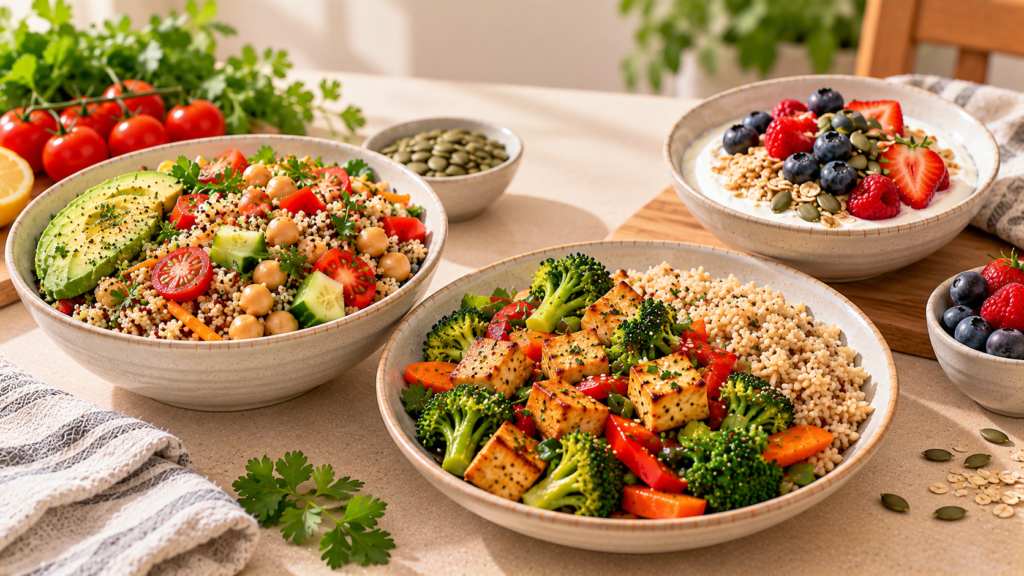
Choosing high protein vegetarian foods is only part of eating well. A balanced meal should also include vegetables or fruit, sources of fiber-rich carbohydrates, and suitable fats.
A practical plate can include:
- Protein: Lentils, beans, tofu, tempeh, eggs, Greek yogurt, or another preferred protein source.
- Vegetables: Spinach, broccoli, carrots, tomatoes, peppers, or seasonal vegetables.
- Whole grains or starchy foods: Brown rice, whole-wheat roti, oats, potatoes, or quinoa.
- Healthy fats: Nuts, seeds, avocado, or olive oil in suitable amounts.
The proportions can vary with your energy needs, appetite, activity level, and cultural food preferences.
Easy High Protein Vegetarian Meal Combinations
| Meal | Example combination | Protein contribution |
|---|---|---|
| Breakfast | Greek yogurt, oats, nuts, and berries | Yogurt supplies most of the protein |
| Breakfast | Eggs with whole-grain toast and spinach | Eggs are the main protein source |
| Lunch | Lentil daal with whole-wheat roti and vegetables | Lentils contribute protein and fiber |
| Lunch | Chickpea and quinoa salad with pumpkin seeds | Several plant sources contribute protein |
| Lunch | Tofu and vegetable wrap | Tofu is the main protein source |
| Dinner | Tempeh stir-fry with brown rice and broccoli | Tempeh provides concentrated protein |
| Dinner | Kidney bean chili with vegetables | Beans provide protein and fiber |
| Dinner | Baked tofu with quinoa and roasted vegetables | Tofu provides the largest share of protein |
| Snack | Roasted chickpeas | Chickpeas provide protein and fiber |
| Snack | Cottage cheese with fruit | Cottage cheese provides concentrated protein |
Actual protein totals depend on the portions used. If you are aiming for a particular amount per meal, add the protein from each ingredient using its package label or a reliable food database.
5. Are Plant Proteins Complete Proteins?
A complete protein provides all nine essential amino acids in sufficient proportions. These amino acids are called essential because the body cannot make enough of them on its own.
Soy foods, such as tofu, tempeh, and edamame, provide all nine essential amino acids. Quinoa is another plant food that supplies all nine. Many other plant proteins also contribute essential amino acids, but the amounts differ.
You do not need to combine specific plant foods in the same meal to create a complete protein. Eating a varied diet across the day — including legumes, grains, nuts, seeds, and soy foods — can help provide the amino acids your body needs.
Vegetarian Protein Pairings
- Lentils with rice or whole-wheat roti.
- Hummus with whole-grain bread.
- Beans with corn or whole-grain tortillas.
- Peanut butter with whole-grain toast.
- Tofu with brown rice and vegetables.
These combinations are useful because they offer variety and can provide complementary nutrients. They are not the only combinations that work.
6. How Much Protein Do You Need on a Vegetarian Diet?
Protein requirements vary from person to person. For many healthy adults, the general recommended dietary allowance is approximately 0.8 grams of protein per kilogram of body weight per day. This is a baseline for healthy adults, not a personalized target for every individual.
For example, a healthy adult weighing 60 kg would calculate a baseline of about 48 grams per day using that guideline. Athletes, older adults, people recovering from illness, and those with particular medical needs may require different amounts.
A simple way to improve protein intake is to include a meaningful protein source at each main meal rather than trying to get all your protein at dinner.
If you have kidney disease or another condition that affects protein requirements, consult a qualified healthcare professional or registered dietitian before making major dietary changes.
Harvard T.H. Chan School of Public Health — Protein
7. Tips for Eating More High Protein Vegetarian Foods
Plan Protein Before You Cook
Choose the main protein source first — such as lentils, tofu, beans, eggs, or yogurt — then add vegetables and grains around it. This makes meals easier to plan and helps avoid relying on side dishes alone.
Keep Convenient Protein Foods Available
Useful staples include canned beans, dried lentils, frozen edamame, tofu, oats, peanut butter, nuts, seeds, eggs, and plain yogurt if you eat dairy. Choose products that suit your budget, storage space, and dietary needs.
Prepare Ingredients in Batches
Cook a pot of lentils or beans, prepare a grain such as quinoa or brown rice, and wash or chop vegetables ahead of time. Store cooked foods safely and refrigerate them promptly.
Check Labels Instead of Guessing
Protein levels can vary widely between brands, especially for plant-based burgers, yogurt, milk alternatives, and packaged meat substitutes. Compare serving sizes and protein amounts rather than assuming all products in a category are equivalent.
Add Protein to Foods You Already Enjoy
- Add lentils to vegetable soup.
- Stir edamame into rice.
- Top oats with peanut butter or seeds.
- Add chickpeas to salads.
- Serve tofu with curry or stir-fried vegetables.
- Mix plain Greek yogurt into dips or breakfast bowls.
Best Nutrient-Dense Foods for Everyday Meals
8. A 7-Day High Protein Vegetarian Meal Plan
This sample plan shows how to use high protein vegetarian foods across a week. Adjust portion sizes to your appetite, energy requirements, and dietary preferences.
| Day | Breakfast | Lunch | Dinner |
|---|---|---|---|
| Monday | Greek yogurt with oats and seeds | Lentil daal with whole-wheat roti | Tofu and vegetable stir-fry |
| Tuesday | Scrambled eggs with whole-grain toast | Chickpea and quinoa salad | Kidney bean chili with brown rice |
| Wednesday | Peanut butter oatmeal with soy milk | Tofu and vegetable wrap | Tempeh with roasted vegetables |
| Thursday | Cottage cheese with fruit and nuts | Lentil soup with whole-grain bread | Chickpea curry with quinoa |
| Friday | Greek yogurt with nuts and oats | Black bean and vegetable bowl | Baked tofu with brown rice |
| Saturday | Vegetable omelet, if you eat eggs | Hummus and chickpea wrap | Split pea soup with whole-grain bread |
| Sunday | Fortified soy milk smoothie with peanut butter | Bean salad with quinoa | Lentil and vegetable curry with roti |
For a vegan version: Replace eggs and dairy with tofu, tempeh, legumes, or fortified plant-based alternatives. Check the protein content of plant milks and yogurts because some contain much less protein than soy-based options.
This plan is a starting point, not a personalized nutrition prescription. Add snacks such as edamame, roasted chickpeas, nuts, or yogurt if needed to meet your individual energy and protein requirements.
9. Common Mistakes to Avoid
Even a vegetarian diet full of nutritious foods can fall short of individual protein needs if meals are not planned thoughtfully.
- Relying mostly on vegetables: Vegetables are essential, but many contain relatively little protein per serving. Include legumes, soy foods, dairy, eggs, or other substantial protein sources.
- Assuming every plant milk is high in protein: Almond and rice drinks, for example, may contain much less protein than soy milk.
- Ignoring portion sizes: A small sprinkle of seeds adds nutrients, but it usually provides less protein than a serving of tofu, beans, or Greek yogurt.
- Depending on processed substitutes alone: Meat alternatives can be convenient, but compare their protein, sodium, saturated fat, and ingredient information.
- Forgetting dietary variety: Eating different legumes, grains, nuts, seeds, and other protein foods can help provide a broader range of nutrients.
- Overlooking vitamin B12 on a vegan diet: Unfortified plant foods are not reliable sources of vitamin B12. Vegans need a dependable source, such as appropriately fortified foods or a suitable supplement.
10. Frequently Asked Questions About High Protein Vegetarian Foods
What are the highest protein vegetarian foods?
Seitan, tempeh, firm tofu, edamame, Greek yogurt, and cottage cheese can provide substantial protein per serving. Seitan is particularly protein-dense, but it is unsuitable for people who need to avoid gluten. The best choice depends on your dietary pattern and the nutrition information for the specific product.
Which vegetarian food has the most protein per 100 grams?
Seitan often provides around 20–25 grams of protein per 100 grams, while tempeh commonly provides around 18–20 grams. Values vary by brand, moisture content, and preparation, so compare nutrition labels before choosing.
How can vegetarians get 20 grams of protein in a meal?
You can combine foods such as a serving of tempeh with grains and vegetables, a substantial bowl of lentils with yogurt if you eat dairy, or a tofu-based stir-fry. The exact total depends on the portions and product labels.
Are vegetarian protein sources good for muscle building?
Yes. Vegetarian foods can support muscle growth and recovery when overall protein and energy intake are adequate and combined with appropriate resistance training. Soy foods, dairy, eggs, legumes, and seitan can all contribute protein. People with specific performance goals may benefit from individualized nutrition guidance.
Can you get enough protein from a vegan diet without dairy or eggs?
Yes. A well-planned vegan diet can provide sufficient protein through tofu, tempeh, edamame, lentils, chickpeas, beans, seitan, nuts, seeds, and grains. Eating a variety of foods throughout the day is helpful.
Are beans and lentils complete proteins?
Beans and lentils contain all nine essential amino acids, but some are present in lower proportions than in certain other protein foods. Eating a varied diet that includes grains, legumes, nuts, seeds, and soy foods can help meet amino acid needs. You do not have to combine complementary foods at every meal.
What are affordable high protein vegetarian foods?
Dried lentils, beans, chickpeas, split peas, oats, peanuts, and some soy foods are often budget-friendly. Buying dried legumes in bulk, preparing meals at home, and using leftovers can help reduce costs.
What are good high protein vegetarian snacks?
Options include roasted chickpeas, edamame, Greek yogurt, cottage cheese, peanut butter on whole-grain toast, and a small serving of nuts or seeds. Choose options that suit your dietary requirements and desired portion size.
11. Final Thoughts on High Protein Vegetarian Foods
High protein vegetarian foods can make everyday eating nutritious, satisfying, and versatile. From lentils and chickpeas to tofu, tempeh, Greek yogurt, eggs, nuts, and seeds, there are many ways to include protein without meat.
The most useful strategy is to build meals around a protein source, add vegetables and fiber-rich carbohydrates, and vary your choices throughout the week. Use food labels to compare protein amounts, plan convenient staples ahead of time, and choose options that fit your budget and dietary preferences.
You do not need complicated recipes or expensive products to eat well. With a little planning, vegetarian meals can provide protein alongside the other nutrients needed for a balanced diet.