
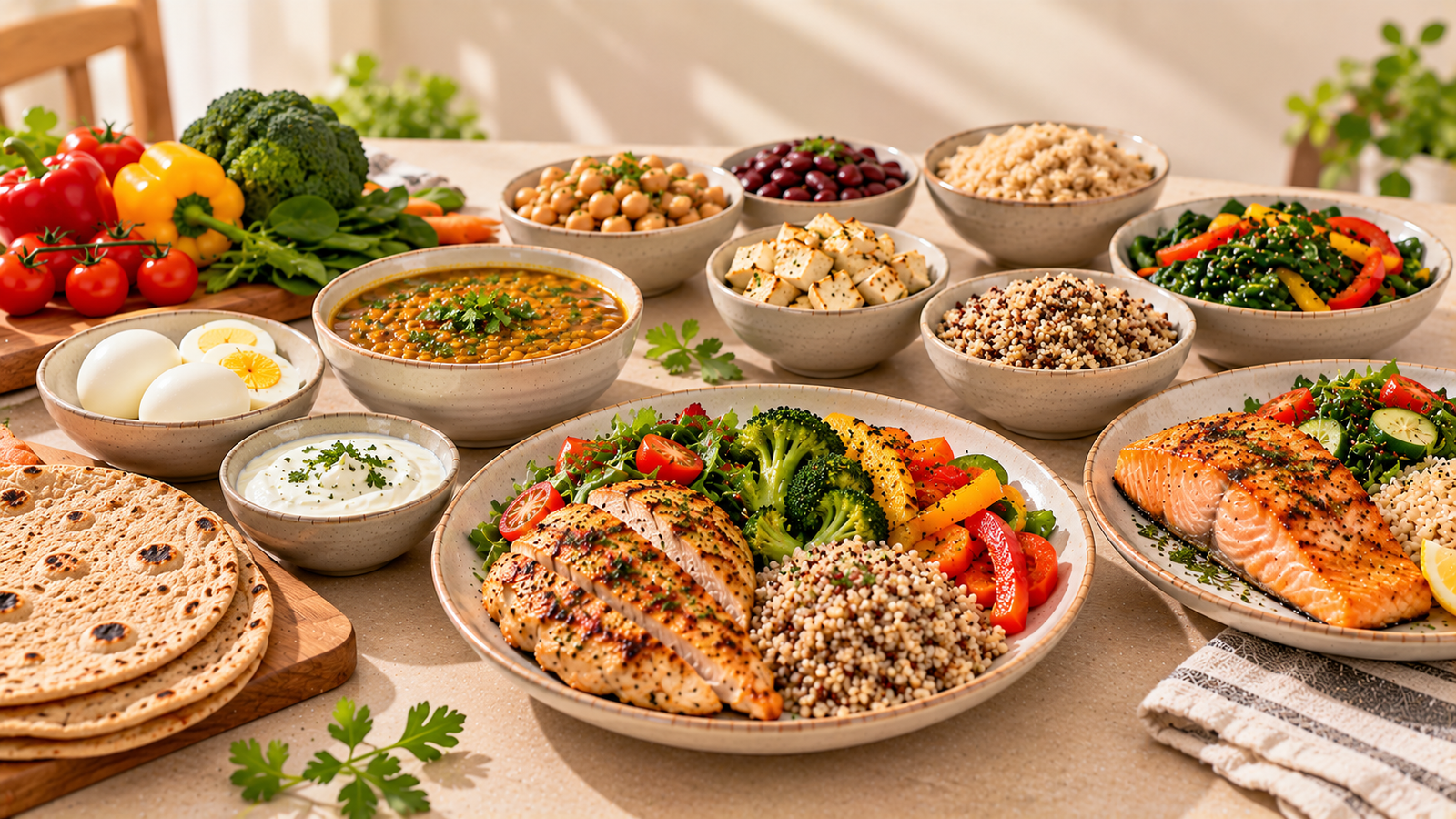
High protein foods for lunch and dinner can help you build balanced meals that support muscle maintenance, tissue repair, and normal body functions. Protein is an essential nutrient, and including a suitable source in your main meals can make meal planning easier.
You can get protein from chicken, fish, eggs, dairy products, lentils, chickpeas, beans, tofu, and other everyday foods. You do not need expensive ingredients or protein supplements to prepare nutritious meals.
This guide covers 25 protein-rich foods, approximate protein amounts, affordable plant-based choices, easy lunch and dinner combinations, and practical tips for preparing meals ahead of time.
Key Takeaways
- Choose a protein source at each main meal: Examples include chicken, fish, eggs, beans, lentils, yogurt, and tofu.
- Combine protein with other food groups: Vegetables, whole grains, fruit, and suitable fats help make meals more balanced.
- Plant protein counts: Lentils, chickpeas, kidney beans, tofu, and edamame can contribute meaningfully to daily protein intake.
- Check serving sizes: Protein content varies by food, product, and preparation.
- Plan for convenience: Cooked legumes, boiled eggs, and prepared proteins can make weekday meals easier.
- Personalize your intake: Protein needs differ with body size, age, activity level, and health conditions.
How Much Protein Do You Need at Lunch and Dinner?
Protein requirements vary from person to person. For many healthy adults, the general recommended dietary allowance is approximately 0.8 grams of protein per kilogram of body weight per day. This is a baseline recommendation, not necessarily the best target for every individual.
For example, a person weighing 70 kg would calculate the general daily baseline as:
\[ 70 \times 0.8 = 56\text{ g protein per day} \]
This is the total for the day, not the amount required at each meal. Protein can be distributed across breakfast, lunch, dinner, and snacks according to personal preferences and needs.
People who train intensely, older adults, and individuals recovering from illness may need individualized guidance. People with kidney disease or certain medical conditions should discuss their protein requirements with a qualified healthcare professional.
For further guidance, see the MedlinePlus — Protein in Diet.
25 High Protein Foods for Lunch and Dinner
The following chart compares 25 useful protein sources. Amounts are approximate and refer to the stated serving; actual values depend on the food variety, brand, cooking method, and water content.
| # | Food | Approximate protein | Typical serving |
|---|---|---|---|
| 1 | Chicken breast, cooked | 31 g | 100 g |
| 2 | Turkey breast, cooked | 29 g | 100 g |
| 3 | Lean beef, cooked | 26 g | 100 g |
| 4 | Salmon, cooked | 22–25 g | 100 g |
| 5 | Tuna, cooked | 25–29 g | 100 g |
| 6 | Sardines | 20–25 g | 100 g |
| 7 | Shrimp, cooked | 24 g | 100 g |
| 8 | Eggs | 6–7 g | 1 large egg |
| 9 | Plain Greek yogurt | 15–20 g | 170 g |
| 10 | Cottage cheese | 11–13 g | 100 g |
| 11 | Firm tofu | 10–17 g | 100 g |
| 12 | Tempeh | 18–20 g | 100 g |
| 13 | Edamame, cooked | 11–12 g | 100 g |
| 14 | Lentils, cooked | About 9 g | 100 g |
| 15 | Chickpeas, cooked | 8–9 g | 100 g |
| 16 | Kidney beans, cooked | 8–9 g | 100 g |
| 17 | Black beans, cooked | 8–9 g | 100 g |
| 18 | Split peas, cooked | About 8 g | 100 g |
| 19 | Quinoa, cooked | 4–5 g | 100 g |
| 20 | Whole-wheat pasta, cooked | 5–7 g | 100 g |
| 21 | Peanuts | About 7 g | 28 g |
| 22 | Almonds | About 6 g | 28 g |
| 23 | Pumpkin seeds | 8–9 g | 28 g |
| 24 | Plain milk | About 8 g | 240 ml |
| 25 | Parmesan cheese | 9–10 g | 28 g |
Protein amounts are estimates, not guarantees. Cooked and dry weights are not interchangeable, and processed products may contain different amounts of sodium and other nutrients.
1. Chicken Breast: A Versatile High-Protein Choice

Cooked chicken breast provides approximately 31 g of protein per 100 g, making it a concentrated protein source for lunch or dinner. It can be grilled, baked, poached, or cooked in a curry.
Easy meal ideas
- Grilled chicken with brown rice and vegetables.
- Chicken and chickpea salad with a yogurt dressing.
- Chicken curry with whole-wheat roti and a side of vegetables.
- Shredded chicken in a whole-wheat wrap with lettuce and tomatoes.
Choose cooking methods that suit your preferences, and vary the seasonings to keep meals interesting. Chicken does not need to be dry or bland to be nutritious.
2. Fish: Salmon, Tuna, and Sardines
Fish provides protein, and oily fish such as salmon and sardines can also supply omega-3 fats. Fish is a useful way to add variety to a weekly meal plan.
Salmon
Salmon typically provides about 22–25 g of protein per 100 g cooked. It also supplies vitamin B12 and may provide vitamin D.
Meal idea: Serve baked salmon with sweet potato and broccoli.
Tuna
Tuna provides concentrated protein, although the exact amount depends on the species and preparation. Canned tuna can be convenient for lunches, but sodium levels vary.
Meal idea: Mix tuna with chickpeas, chopped vegetables, and lemon juice, then serve with whole-grain bread.
Sardines
Sardines provide protein and vitamin B12. When eaten with their soft bones, they also provide calcium.
Meal idea: Serve sardines with whole-wheat roti, tomatoes, and cucumber salad.
Choose a variety of fish and follow local guidance on fish consumption, especially during pregnancy.
3. Eggs and Dairy Foods
Eggs, plain yogurt, cottage cheese, and milk can help increase protein intake without complicated cooking.
Eggs
One large egg provides approximately 6–7 g of protein. Eggs are easy to add to vegetable dishes, sandwiches, salads, and rice meals.
Meal idea: Prepare a two-egg vegetable omelet with whole-wheat roti and a side salad.
Plain Greek yogurt
A 170 g serving of plain Greek yogurt may provide around 15–20 g of protein, depending on the brand. It also contributes calcium and vitamin B12.
Meal idea: Use plain yogurt as a side with chickpea curry or as the base for a cucumber and herb sauce.
Cottage cheese
Cottage cheese provides roughly 11–13 g of protein per 100 g. It can be added to salads, wraps, and vegetable dishes.
Meal idea: Combine cottage cheese with tomatoes, cucumber, and whole-grain toast for a light meal.
Milk
A 240 ml serving of cow’s milk generally supplies around 8 g of protein. It can be used in soups, sauces, or other recipes, although it may not be the main protein source in a full lunch or dinner.
4. Lentils, Chickpeas, and Beans
Legumes are some of the most practical high protein foods for lunch and dinner, especially when you want affordable, plant-based meals. They provide protein, fiber, folate, and minerals.
Lentils
Cooked lentils contain approximately 9 g of protein per 100 g. They are ideal for dal, soups, and stews.
Meal idea: Cook lentils with tomatoes and spinach and serve with whole-wheat roti or rice.
Chickpeas
Cooked chickpeas provide around 8–9 g of protein per 100 g. They work well in curries, salads, and roasted vegetable bowls.
Meal idea: Combine chickpeas with brown rice, roasted vegetables, and a yogurt dressing.
Kidney beans and black beans
Both provide around 8–9 g of protein per 100 g cooked. They can be used in soups, curries, rice dishes, and wraps.
Meal idea: Make a bean bowl with tomatoes, peppers, rice, and fresh herbs.
Food safety note: Dried kidney beans must be soaked and boiled thoroughly according to recognized food-safety guidance. Do not rely on a slow cooker alone to make raw kidney beans safe.
5. Tofu, Tempeh, and Edamame
Soy foods are useful protein sources for vegetarians and anyone who wants to eat fewer animal products.
- Firm tofu: Usually around 10–17 g protein per 100 g, depending on firmness and brand.
- Tempeh: Commonly around 18–20 g per 100 g.
- Edamame: Approximately 11–12 g per 100 g cooked.
Easy soy-based meals
- Tofu stir-fried with broccoli, peppers, and rice.
- Tempeh with roasted vegetables and quinoa.
- Edamame added to a noodle or grain bowl.
- Tofu curry with spinach and whole-wheat roti.
Choose seasonings and sauces that fit your taste, and check labels for sodium if you use packaged or marinated products.
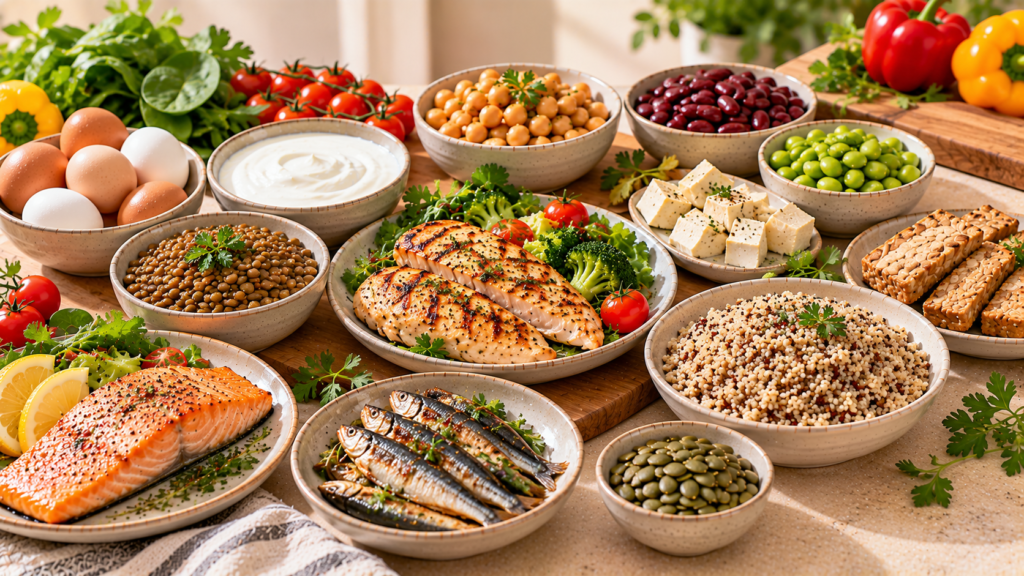
6. Nuts, Seeds, and Whole Grains
Nuts, seeds, and whole grains contribute protein, but their role in a meal is often complementary. Pair them with a more concentrated protein source such as legumes, tofu, dairy, fish, or chicken.
Nuts and seeds
Peanuts, almonds, pumpkin seeds, and other seeds provide protein alongside unsaturated fats and minerals. They are easy to add to salads, grain bowls, or yogurt-based sauces.
Meal idea: Top a chickpea and vegetable salad with pumpkin seeds, or add chopped peanuts to a tofu stir-fry.
Quinoa
Cooked quinoa supplies approximately 4–5 g of protein per 100 g. It can form the base of a balanced bowl with beans, tofu, chicken, or fish.
Whole-wheat pasta
Cooked whole-wheat pasta provides around 5–7 g of protein per 100 g, depending on the product. Add lentils, chickpeas, lean meat, or tofu to make the meal more protein-rich.
Build a balanced plate
For lunch and dinner, aim to include:
- A protein source such as fish, chicken, eggs, tofu, beans, or lentils.
- Vegetables or fruit for fiber, vitamins, and minerals.
- A carbohydrate source such as rice, potatoes, whole-wheat roti, or whole-grain pasta.
- Suitable fats from foods such as nuts, seeds, avocado, or cooking oils.
The right proportions depend on your appetite, activity level, health, and overall energy needs.
7. Ten High-Protein Lunch Ideas
Lunch can be quick, filling, and nutritious without requiring specialty ingredients. These meals combine protein sources with vegetables and carbohydrates.
| Lunch idea | Main protein source | Simple combination |
|---|---|---|
| 1. Chicken rice bowl | Chicken breast | Chicken, rice, broccoli, and carrots |
| 2. Lentil dal and roti | Lentils | Dal, whole-wheat roti, and spinach |
| 3. Chickpea salad | Chickpeas | Chickpeas, tomatoes, cucumber, and lemon |
| 4. Tuna sandwich | Tuna | Tuna, whole-grain bread, and salad |
| 5. Egg and bean bowl | Eggs and beans | Boiled eggs, beans, rice, and vegetables |
| 6. Tofu stir-fry | Tofu | Tofu, peppers, broccoli, and noodles |
| 7. Fish and potatoes | Fish | Baked fish, potatoes, and green vegetables |
| 8. Cottage cheese plate | Cottage cheese | Cottage cheese, whole-grain toast, and tomatoes |
| 9. Bean curry | Kidney beans or black beans | Beans, rice, and mixed vegetables |
| 10. Greek yogurt chickpea bowl | Yogurt and chickpeas | Chickpeas, cucumber, herbs, and yogurt sauce |
How to make lunch more protein-rich
If your usual lunch consists mainly of rice, roti, bread, or vegetables, add a protein source such as lentils, beans, eggs, chicken, fish, tofu, or yogurt. You do not need to remove carbohydrates; they can be part of a balanced meal.
How to Build a Balanced Lunch.
8. Ten High-Protein Dinner Ideas
Dinner is another opportunity to include protein, vegetables, and a suitable carbohydrate source. These options can be adjusted for vegetarian diets, family meals, and different budgets.
| Dinner idea | Main protein source | Simple combination |
|---|---|---|
| 1. Grilled chicken plate | Chicken | Chicken, sweet potato, and broccoli |
| 2. Baked salmon dinner | Salmon | Salmon, rice, and green vegetables |
| 3. Lentil and spinach curry | Lentils | Dal, spinach, and whole-wheat roti |
| 4. Chickpea curry | Chickpeas | Chickpeas, tomatoes, and brown rice |
| 5. Tofu vegetable stir-fry | Tofu | Tofu, mixed vegetables, and noodles |
| 6. Lean beef and vegetables | Beef | Lean beef, vegetables, and potatoes |
| 7. Egg and vegetable curry | Eggs | Eggs, tomato-based curry, and roti |
| 8. Tempeh grain bowl | Tempeh | Tempeh, quinoa, and roasted vegetables |
| 9. Sardines with whole grains | Sardines | Sardines, whole-wheat bread, and salad |
| 10. Bean and vegetable soup | Beans | Beans, vegetables, and whole-grain toast |
These are meal ideas rather than fixed recipes. Adjust portions and seasonings to your nutritional needs, preferences, and available ingredients.
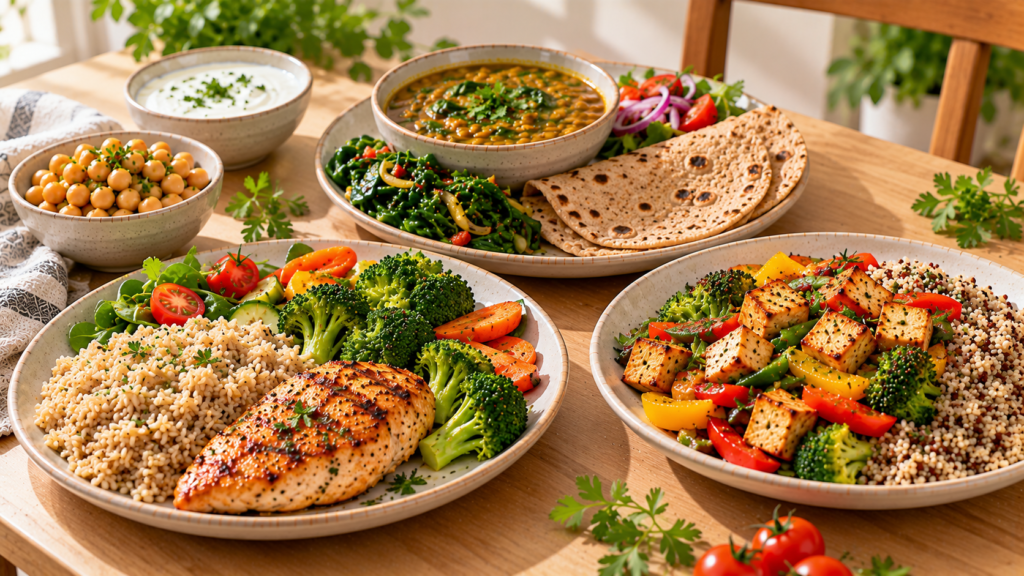
9. How to Prepare High-Protein Meals Ahead of Time
Meal preparation can make it easier to include protein at lunch and dinner, particularly on busy weekdays.
A simple meal-prep routine
- Choose two or three protein sources. For example, prepare lentils, chicken, and tofu for different meals.
- Prepare vegetables. Wash and chop vegetables or use frozen vegetables when convenient.
- Cook suitable carbohydrates. Prepare rice, quinoa, potatoes, or whole-wheat pasta.
- Store ingredients safely. Refrigerate cooked foods promptly in shallow containers and use them within recommended food-safety time limits.
- Combine meals in different ways. Use chicken in a rice bowl one day and a wrap the next, or serve lentils with roti at lunch and as soup another day.
Example three-day meal-prep plan
| Day | Lunch | Dinner |
|---|---|---|
| Day 1 | Chicken and rice bowl | Lentil dal with spinach and roti |
| Day 2 | Chickpea salad with yogurt dressing | Baked fish with potatoes and vegetables |
| Day 3 | Leftover lentil bowl with vegetables | Tofu stir-fry with brown rice |
Refrigerate perishable foods promptly, follow local food-safety recommendations, and reheat leftovers thoroughly. Freeze portions that you will not use within the recommended refrigerated storage period.
10. Affordable High-Protein Foods for Everyday Meals
You can prepare protein-rich meals without buying expensive cuts of meat or specialty products.
| Affordable option | Why it is useful | Easy use |
|---|---|---|
| Lentils | Shelf-stable and rich in protein and fiber | Dal, soup, or curry |
| Chickpeas | Versatile plant protein | Salad, curry, or grain bowl |
| Beans | Protein and fiber | Bean curry, soup, or rice dish |
| Eggs | Convenient and easy to cook | Omelet, boiled eggs, or egg curry |
| Plain yogurt | Protein and calcium | Side dish or sauce |
| Tofu | Plant-based protein | Stir-fry or curry |
| Peanuts | Protein and unsaturated fats | Snack or sauce |
| Canned fish | Convenient and often shelf-stable | Sandwich or rice bowl |
| Oats and whole grains | Add some protein and carbohydrates | Use alongside a concentrated protein source |
Budget tip: Compare the cost per serving rather than the price of the entire package. Dried legumes can be economical when cooked safely, and frozen vegetables can help reduce waste.
11. Common Mistakes When Choosing High-Protein Foods
Eating protein without enough variety
Protein is important, but your body also needs carbohydrates, fats, vitamins, minerals, and fiber. Pair protein foods with vegetables, fruits, and suitable grains.
Relying too heavily on processed meats
Processed meats may contain high levels of sodium and are best limited. Rotate fresh poultry, fish, eggs, legumes, tofu, and other minimally processed options.
Assuming all plant-based foods have the same protein content
Tofu, tempeh, lentils, beans, nuts, and grains vary considerably in protein concentration. Combine foods according to your needs rather than assuming equal portions provide equal protein.
Ignoring cooking and storage safety
Cook animal foods thoroughly, handle raw meat separately from ready-to-eat foods, refrigerate leftovers promptly, and prepare dried kidney beans safely.
Eating far more protein than you need
More protein does not automatically mean more muscle or better health. Physical activity, adequate energy intake, recovery, and overall dietary quality also matter. People with kidney disease or other conditions affecting protein needs should obtain personalized guidance.
Frequently Asked Questions About High Protein Foods for Lunch and Dinner
1. What are the best high protein foods for lunch and dinner?
Chicken, fish, eggs, Greek yogurt, cottage cheese, lentils, chickpeas, beans, tofu, and tempeh are useful options. Choose a variety that suits your preferences, budget, and nutritional needs.
2. What are some easy high-protein lunch ideas?
Try a chicken rice bowl, lentil dal with roti, chickpea salad, tuna sandwich, tofu stir-fry, or bean bowl. Adding vegetables and a suitable carbohydrate source helps create a more balanced meal.
3. What should I eat for a high-protein dinner?
A dinner of chicken or fish with vegetables and rice, lentil curry with roti, or tofu stir-fry with whole grains can provide protein and other important nutrients. Portions should reflect your appetite and needs.
4. What are the best vegetarian high-protein foods for lunch and dinner?
Lentils, chickpeas, kidney beans, black beans, tofu, tempeh, edamame, and dairy products such as Greek yogurt and cottage cheese are useful choices. Combining different plant foods throughout the day can help provide the essential amino acids you need.
5. Can I get enough protein from affordable foods?
Yes. Lentils, chickpeas, beans, eggs, plain yogurt, peanuts, and tofu can help you increase protein intake without expensive products. Compare serving costs and use ingredients that are locally available.
6. Do I need protein powder to build muscle?
Not necessarily. Many people can meet their protein needs through regular foods. Muscle development also depends on appropriate resistance exercise, sufficient energy intake, recovery, and consistency.
7. Is it healthy to eat protein at both lunch and dinner?
For many people, including a protein source at both meals is a practical way to distribute protein intake throughout the day. The appropriate amount depends on your total daily needs and individual health circumstances.
Conclusion: Build Balanced Meals With High Protein Foods
The best high protein foods for lunch and dinner include chicken, fish, eggs, dairy products, lentils, chickpeas, beans, tofu, tempeh, nuts, and seeds. Each provides a different combination of protein and other nutrients, giving you plenty of options for everyday meals.
Start with simple changes: add lentils to lunch, include chicken or tofu in a rice bowl, serve fish with vegetables, or prepare chickpea curry with whole-wheat roti. Plan a few ingredients ahead of time to make nutritious meals easier during busy days.
You do not need expensive products or complicated recipes. Choose a variety of protein sources, combine them with vegetables and other nourishing foods, and build a meal routine that fits your lifestyle and nutritional needs.