
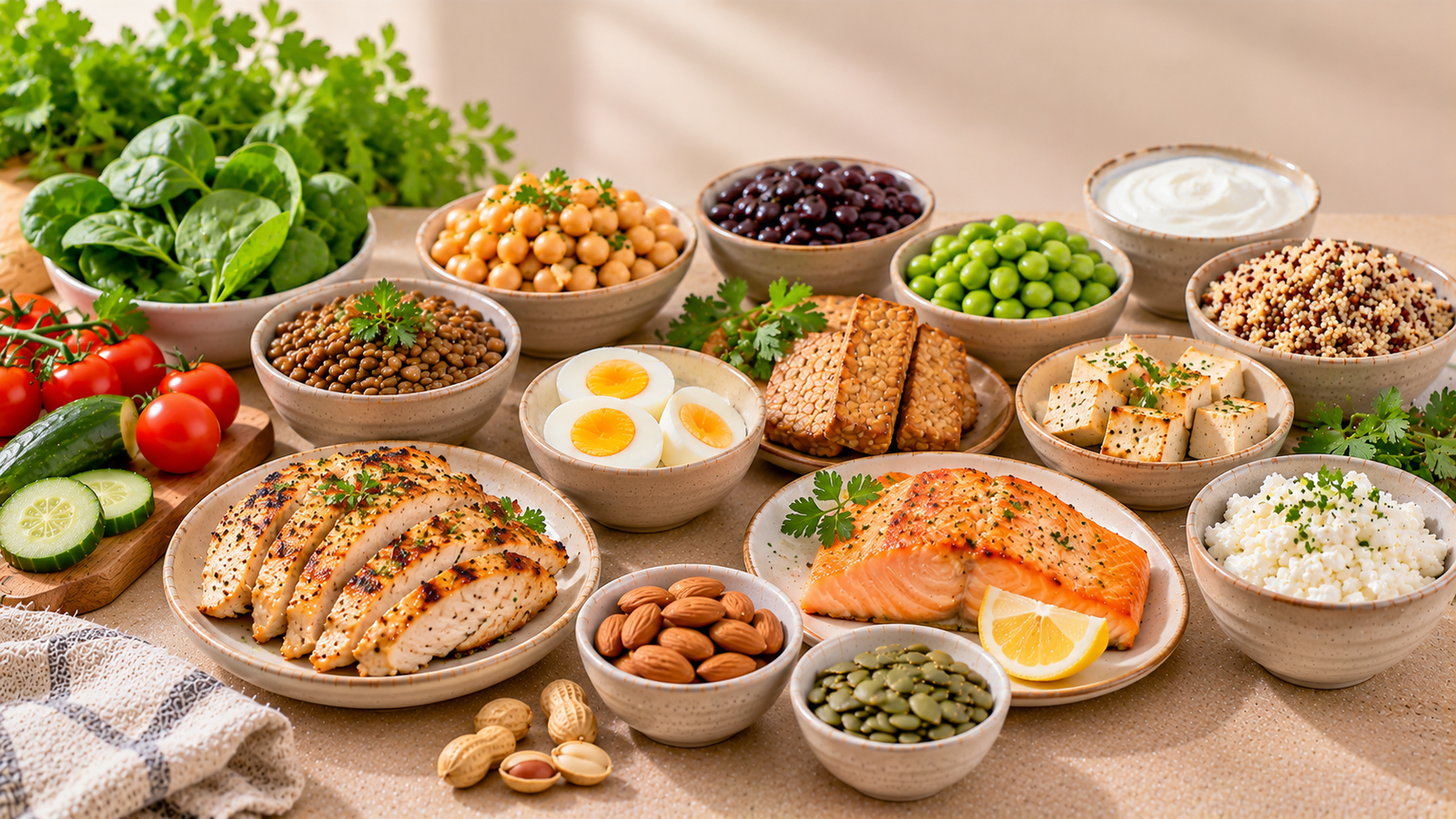
Eating enough protein does not have to mean preparing complicated recipes or cooking a separate meal every day. Many high protein foods that are easy to add to meals are everyday ingredients you can mix into breakfast, lunch, dinner, and snacks with very little extra effort.
Protein supports muscle maintenance, tissue repair, enzyme production, and many other important functions in the body. Including protein-rich ingredients in regular meals can also make meals more satisfying and help you build a balanced eating pattern.
You can increase the protein in familiar dishes by adding eggs to breakfast, beans to salads, Greek yogurt to snacks, tofu to stir-fries, or lentils to soups and curries. Small additions can make a meaningful difference over the course of a day.
This guide covers 25 convenient protein foods, their approximate protein content, and practical ways to use them without making your cooking routine complicated.
Key Takeaways
- Eggs, Greek yogurt, cottage cheese, beans, lentils, tofu, and canned fish are convenient protein choices.
- Adding protein to meals can be as simple as mixing beans into soup or topping oatmeal with yogurt and seeds.
- Keep easy options such as canned beans, frozen edamame, yogurt, eggs, and tofu available.
- Combine protein foods with vegetables, whole grains, and healthy fats for balanced meals.
- Protein amounts vary by portion size, brand, and preparation method.
- You do not need special recipes or expensive products to make everyday meals more protein-rich.
What Makes a Protein Food Easy to Add to Meals?
A convenient protein food is one that requires little preparation, fits into familiar recipes, stores well, or can be used in several different dishes.
For example, cooked lentils can be added to soup, curry, salads, or rice. Greek yogurt works as a breakfast food, snack, dip, or creamy sauce. Eggs can be boiled ahead of time and used in sandwiches or salads.
When choosing protein foods for everyday use, consider these factors:
- Preparation time: Can you use the food quickly, or prepare it in batches?
- Versatility: Does it work in breakfast, lunch, dinner, or snacks?
- Availability: Can you find it easily in local grocery stores?
- Nutrition: Does it provide protein alongside other useful nutrients?
- Cost: Does it fit your regular food budget?
The most practical choices are usually ingredients you already enjoy and can use in several ways.
25 High Protein Foods That Are Easy to Add to Meals
The following foods can fit into familiar recipes without requiring major changes to your cooking routine. Protein amounts are approximate and depend on serving size, variety, brand, and preparation.
Quick Protein Food Chart
| No. | Food | Approximate protein |
|---|---|---|
| 1 | Cooked chicken breast | 31 g per 100 g |
| 2 | Cooked turkey breast | 29 g per 100 g |
| 3 | Canned tuna, drained | 20–25 g per 100 g |
| 4 | Cooked salmon | 22–25 g per 100 g |
| 5 | Cooked shrimp | About 24 g per 100 g |
| 6 | Eggs | 6–7 g per large egg |
| 7 | Greek yogurt | 15–20 g per 170 g |
| 8 | Cottage cheese | 11–13 g per 100 g |
| 9 | Milk | About 8 g per 240 ml |
| 10 | Firm tofu | 10–17 g per 100 g |
| 11 | Tempeh | 18–20 g per 100 g |
| 12 | Edamame, cooked | 11–12 g per 100 g |
| 13 | Lentils, cooked | About 9 g per 100 g |
| 14 | Chickpeas, cooked | 8–9 g per 100 g |
| 15 | Kidney beans, cooked | 8–9 g per 100 g |
| 16 | Black beans, cooked | 8–9 g per 100 g |
| 17 | Split peas, cooked | About 8 g per 100 g |
| 18 | Quinoa, cooked | 4–5 g per 100 g |
| 19 | Oats, dry | About 5 g per 40 g |
| 20 | Peanut butter | 7–8 g per 2 tbsp |
| 21 | Peanuts | About 7 g per 28 g |
| 22 | Almonds | About 6 g per 28 g |
| 23 | Pumpkin seeds | 8–9 g per 28 g |
| 24 | Hemp seeds | 9–10 g per 30 g |
| 25 | Parmesan cheese | 9–10 g per 28 g |
These figures are estimates, not guaranteed values for every product. Check food labels or a reliable food database when you need precise amounts.
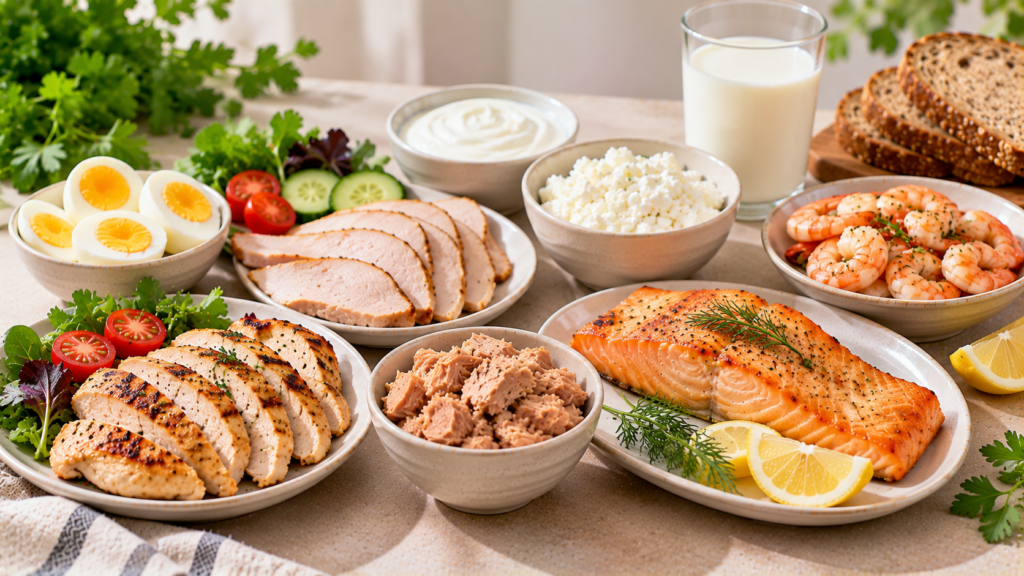
1. Easy Animal-Based Protein Foods
These options work well for people who eat meat, fish, eggs, or dairy. Many require little preparation or can be cooked ahead of time.
1. Chicken Breast
Chicken breast is a versatile source of lean protein, providing approximately 31 grams per 100 grams when cooked.
Easy ways to add chicken to meals:
- Add sliced chicken to wraps and sandwiches.
- Mix shredded chicken into vegetable soup.
- Top a salad or grain bowl with cooked chicken.
- Add leftover chicken to whole-wheat pasta.
- Prepare chicken pieces in advance for quick lunches.
For convenience, cook several portions at once and refrigerate them promptly in covered containers. Use refrigerated cooked chicken within a safe storage period and reheat leftovers thoroughly.
2. Turkey Breast
Cooked turkey breast provides approximately 29 grams of protein per 100 grams. It can be used in many of the same ways as chicken.
Add cooked turkey to sandwiches, salads, wraps, or rice bowls. If choosing packaged deli turkey, compare labels because some products contain considerable sodium.
3. Canned Tuna
Canned tuna is convenient because it is already cooked and can be added directly to meals. Depending on the type and preparation, drained tuna commonly provides around 20–25 grams of protein per 100 grams.
Try it in:
- Tuna and cucumber sandwiches.
- Whole-wheat pasta salads.
- Tuna and bean bowls.
- Stuffed tomatoes or peppers.
- Quick tuna wraps with yogurt-based dressing.
Choose varieties that fit your sodium preferences. Also vary your seafood choices and follow local guidance on fish consumption, particularly during pregnancy, because mercury levels differ between species.
4. Salmon
Cooked salmon provides approximately 22–25 grams of protein per 100 grams. It also supplies omega-3 fats.
Add leftover cooked salmon to salads, grain bowls, wraps, or scrambled eggs. You can also bake a few portions with lemon and herbs to use in meals over the next couple of days.
5. Shrimp
Cooked shrimp provides around 24 grams of protein per 100 grams. Frozen, peeled shrimp can be especially convenient because it cooks quickly.
Add shrimp to vegetable stir-fries, soups, whole-wheat pasta, or rice dishes. Cook it thoroughly and avoid leaving cooked seafood at room temperature for extended periods.
6. Eggs
One large egg provides approximately 6–7 grams of protein. Eggs are easy to prepare and work in almost every meal.
Simple additions:
- Add a boiled egg to a salad.
- Make a vegetable omelet for breakfast.
- Put sliced eggs into a sandwich.
- Add scrambled eggs to a rice bowl.
- Prepare boiled eggs in advance for quick snacks.
Eggs also supply vitamin B12 and choline. If you eat eggs regularly, combine them with vegetables and whole grains for a more balanced meal.
7. Greek Yogurt
Greek yogurt is a convenient way to add protein without cooking. A 170-gram serving may contain around 15–20 grams, depending on the brand and type.
Use plain Greek yogurt as:
- A topping for oats or fruit.
- A base for smoothies.
- A replacement for some mayonnaise or sour cream in dips.
- A creamy dressing with lemon, garlic, and herbs.
- A snack with nuts or seeds.
Choose plain, unsweetened varieties if you want to limit added sugar.
8. Cottage Cheese
Cottage cheese generally provides around 11–13 grams of protein per 100 grams.
It can be added to toast, salads, baked potatoes, omelets, or savory bowls. Blend it into a smooth spread or use it as a filling for sandwiches. Check the label for sodium content, which varies by brand.
9. Milk
A cup of cow’s milk provides about 8 grams of protein. Add it to oatmeal, smoothies, porridge, or homemade sauces.
If you use plant-based milk, compare labels. Soy milk often provides more protein than almond, rice, or oat drinks, although individual products vary.
2. Easy Plant-Based Protein Foods
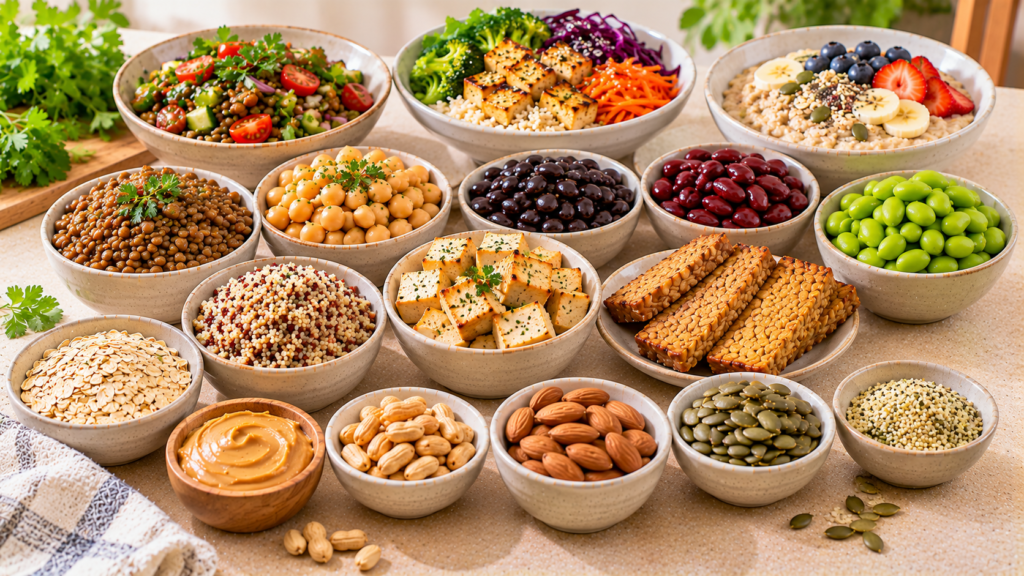
Plant-based protein foods are useful whether you follow a vegetarian diet or simply want to eat more meals without meat. Beans, lentils, soy foods, and seeds can be mixed into dishes you already prepare.
10. Firm Tofu
Firm tofu provides approximately 10–17 grams of protein per 100 grams, depending on its water content and brand.
Ways to use tofu:
- Add cubes to vegetable curry.
- Crumble it into a breakfast scramble.
- Bake seasoned tofu for salads.
- Stir-fry it with broccoli and carrots.
- Add it to noodles or rice bowls.
Tofu absorbs flavors well, so marinating it with garlic, ginger, lemon, or spices can make it more appealing.
11. Tempeh
Tempeh is a fermented soy food that typically provides around 18–20 grams of protein per 100 grams.
Slice and pan-sear it, crumble it into sauces, or add it to wraps and grain bowls. Its firm texture makes it a useful alternative to meat in many recipes.
12. Edamame
Edamame are young soybeans. Cooked edamame provides approximately 11–12 grams of protein per 100 grams.
Keep frozen shelled edamame available for quick meals. Add it to:
- Rice and noodle bowls.
- Vegetable soups.
- Pasta salads.
- Mixed green salads.
- Homemade vegetable fried rice.
13. Lentils
Cooked lentils provide approximately 9 grams of protein per 100 grams and are also a good source of dietary fiber.
Lentils are especially easy to add to everyday meals because they cook into a soft texture and absorb the flavor of spices and sauces.
Try adding them to:
- Daal with roti.
- Vegetable soup.
- Tomato-based pasta sauce.
- Stuffed peppers.
- Rice and grain bowls.
You can cook a larger batch and refrigerate or freeze portions for later use.
14. Chickpeas
Cooked chickpeas provide around 8–9 grams of protein per 100 grams.
Canned chickpeas are particularly convenient. Drain and rinse them before use, then add them to salads, curries, wraps, or soups.
For a quick snack, roast cooked chickpeas with a little oil and your favorite spices until crisp.
15. Kidney Beans
Kidney beans contain approximately 8–9 grams of protein per 100 grams when cooked.
Mix them into chili, vegetable curry, rice dishes, or salads. Canned beans are convenient, but dried beans are often economical when bought in larger quantities.
Food-safety note: Dried kidney beans must be soaked and boiled thoroughly according to reliable food-safety guidance. Do not eat raw or undercooked kidney beans.
16. Black Beans
Black beans provide around 8–9 grams of protein per 100 grams when cooked.
Add them to:
- Rice bowls.
- Vegetable wraps.
- Bean salads.
- Soups and stews.
- Homemade bean patties.
Their mild flavor makes them easy to combine with tomatoes, onions, peppers, herbs, and spices.
17. Split Peas
Cooked split peas provide approximately 8 grams of protein per 100 grams. They are useful in thick soups, stews, and traditional dishes.
Prepare split pea soup with carrots, onions, tomatoes, and spices. It can be made in a large batch and portioned for several meals.
3. Small Protein Additions: Nuts, Seeds, and Grains
Nuts, seeds, and grains may not provide as much protein per serving as chicken, tofu, or Greek yogurt, but they are easy to sprinkle, stir, or blend into meals.
18. Quinoa
Cooked quinoa provides approximately 4–5 grams of protein per 100 grams. It is also a source of fiber and contains all nine essential amino acids.
Use quinoa instead of some or all of the rice in a meal, or add it to salads, soups, and stuffed vegetables.
19. Oats
A 40-gram serving of dry oats provides around 5 grams of protein.
Increase the protein in oatmeal by preparing it with milk or soy milk and adding Greek yogurt, peanut butter, or seeds. This creates a more substantial breakfast without requiring a separate recipe.
20. Peanut Butter
Two tablespoons of peanut butter typically provide around 7–8 grams of protein.
Easy additions include:
- Spread it on whole-grain toast.
- Stir it into oatmeal.
- Blend it into a smoothie.
- Mix it into a peanut dressing.
- Serve it with apple slices.
Choose a product with a simple ingredient list when possible. Peanut butter is energy-dense, so a measured serving can help keep portions appropriate.
21. Peanuts
A 28-gram serving of peanuts provides around 7 grams of protein.
Add chopped peanuts to oatmeal, salads, vegetable stir-fries, or homemade trail mix. Unsalted or lightly salted varieties can help you manage sodium intake.
22. Almonds
A 28-gram serving of almonds contains approximately 6 grams of protein.
Use them as a snack or add chopped almonds to yogurt, oatmeal, salads, and homemade breakfast mixes. Almonds also provide vitamin E and unsaturated fats.
23. Pumpkin Seeds
Pumpkin seeds provide around 8–9 grams of protein per 28 grams.
Sprinkle them over soups, salads, yogurt, or roasted vegetables. They are also easy to carry as a snack.
24. Hemp Seeds
Hemp seeds provide approximately 9–10 grams of protein per 30 grams, depending on the product.
Their mild, nutty taste makes them easy to add to smoothies, oatmeal, yogurt, and grain bowls. They do not usually need cooking.
25. Parmesan Cheese
Parmesan provides around 9–10 grams of protein per 28-gram serving. It has a strong flavor, so a small amount can add taste and some protein to meals.
Sprinkle it over whole-wheat pasta, soups, roasted vegetables, or salads. Because it can be high in sodium and saturated fat, use a suitable portion as part of a varied diet.
Easy Ways to Add Protein to Breakfast, Lunch, and Dinner
You do not need to change your entire diet to eat more protein. Start by adding one protein-rich ingredient to meals you already enjoy.
High Protein Breakfast Ideas
Breakfast is a good opportunity to include protein because many simple foods can be prepared quickly.
| Everyday breakfast | Easy protein addition |
|---|---|
| Oatmeal | Milk, Greek yogurt, peanut butter, or hemp seeds |
| Toast | Eggs, cottage cheese, or peanut butter |
| Smoothie | Greek yogurt, soy milk, or silken tofu |
| Breakfast sandwich | Eggs, cottage cheese, or leftover chicken |
| Fruit bowl | Greek yogurt, nuts, or seeds |
| Vegetable omelet | Eggs with beans or a little cheese |
Quick idea: Prepare overnight oats with milk or fortified soy milk, then add Greek yogurt and pumpkin seeds before serving.
High Protein Lunch Ideas
Lunch can become more filling with simple additions to salads, sandwiches, soups, and rice dishes.
- Add chickpeas or kidney beans to a vegetable salad.
- Put cooked chicken, tuna, or boiled eggs in a whole-grain sandwich.
- Mix lentils into vegetable soup.
- Add tofu or edamame to a rice bowl.
- Use cottage cheese or Greek yogurt as a sandwich spread or dressing.
Quick idea: Combine cooked lentils, cucumber, tomatoes, onions, lemon juice, and herbs for an easy lentil salad.
High Protein Dinner Ideas
At dinner, choose a protein source first and build the rest of the meal around it.
| Dinner | Protein-rich addition |
|---|---|
| Vegetable curry | Lentils, chickpeas, or tofu |
| Fried rice | Eggs, chicken, shrimp, or edamame |
| Pasta | Lentils, tuna, chicken, or cottage cheese |
| Rice and vegetables | Beans, tofu, tempeh, or salmon |
| Homemade soup | Split peas, lentils, chicken, or beans |
| Baked potatoes | Cottage cheese, beans, or Greek yogurt |
Quick idea: Make a tofu and vegetable stir-fry, then serve it with brown rice. It provides protein, vegetables, and carbohydrates in one practical meal.
High Protein Snack Ideas
Snacks can help you add protein between meals, especially when your main meals are small.
- Greek yogurt with fruit.
- Boiled eggs.
- Roasted chickpeas.
- Edamame.
- Cottage cheese with cucumber.
- Peanut butter on whole-grain toast.
- A small portion of almonds or pumpkin seeds.
- Milk or fortified soy milk.
Choose snacks based on your appetite and daily needs. You do not need to eat between meals if you are already comfortably meeting your nutritional requirements.
How to Add More Protein Without Complicated Cooking
A few simple habits can make protein-rich eating easier and more consistent.
1. Keep Ready-to-Use Ingredients
Store convenient options such as canned beans, canned tuna, frozen edamame, eggs, plain yogurt, tofu, oats, and nuts. These foods can turn a basic meal into a more protein-rich one.
2. Cook Protein Foods in Batches
Prepare lentils, beans, chicken, or tofu ahead of time. Divide cooked food into meal-sized portions and refrigerate or freeze it safely.
Batch preparation is especially useful when you have limited time during the week.
3. Upgrade Familiar Recipes
You can increase protein without learning new cooking techniques:
- Add lentils to your regular daal or soup.
- Mix beans into rice dishes.
- Add eggs to vegetable fried rice.
- Use Greek yogurt in place of some creamy sauces.
- Add tofu to your usual curry.
- Sprinkle seeds over breakfast or salads.
4. Use More Than One Protein Source
Combining foods can make meals more varied and nutritious. For example, a chickpea and quinoa bowl with pumpkin seeds provides protein from several plant sources.
You do not need to combine particular plant proteins at every meal to obtain all essential amino acids. Eating a varied diet throughout the day is generally sufficient for healthy adults.
5. Compare Nutrition Labels
The protein content of similar products can vary. Check the serving size and protein amount on packages, especially for:
- Yogurts and plant-based drinks.
- Packaged meat alternatives.
- Canned beans and fish.
- Nut butters.
- Ready-made meals.
Also compare sodium, added sugar, and saturated fat when choosing packaged foods.
How Much Protein Do You Need Each Day?
Protein requirements depend on age, body weight, activity level, health, and life stage.
For many healthy adults, the general recommended dietary allowance is 0.8 grams of protein per kilogram of body weight per day. This is a baseline guideline rather than a personalized target for everyone.
For example:
| Body weight | Approximate baseline protein amount |
|---|---|
| 50 kg | 40 g per day |
| 60 kg | 48 g per day |
| 70 kg | 56 g per day |
| 80 kg | 64 g per day |
| 90 kg | 72 g per day |
People who regularly perform intense exercise, older adults, pregnant or breastfeeding people, and those recovering from illness may have different requirements. If you have kidney disease or another condition affecting protein needs, ask a healthcare professional or registered dietitian for individual advice.
Helpful external resources:
High Protein Foods for Breakfast
High Protein Foods for Lunch and Dinner
A Simple 7-Day Plan for Adding Protein to Meals
Use this sample plan to put the ideas into practice. It includes animal-based and plant-based options; adjust it to your dietary preferences.
| Day | Breakfast | Lunch | Dinner |
|---|---|---|---|
| Monday | Greek yogurt, oats, and pumpkin seeds | Chicken and vegetable wrap | Lentil daal with roti |
| Tuesday | Eggs with whole-grain toast | Chickpea salad | Salmon with rice and vegetables |
| Wednesday | Peanut butter oatmeal with milk | Tofu rice bowl | Kidney bean curry |
| Thursday | Cottage cheese and fruit | Tuna sandwich | Chicken and vegetable soup |
| Friday | Soy milk smoothie with hemp seeds | Lentil and quinoa salad | Tempeh stir-fry |
| Saturday | Vegetable omelet | Black bean and rice bowl | Shrimp with whole-wheat pasta |
| Sunday | Greek yogurt with almonds | Chickpea and vegetable wrap | Tofu curry with rice |
How to use this plan: Swap foods according to availability, budget, allergies, and dietary preferences. For a vegetarian version, replace meat and fish with tofu, tempeh, beans, lentils, eggs, or dairy products as appropriate. For a vegan version, use plant-based alternatives and ensure you have a reliable source of vitamin B12.
Common Mistakes When Adding Protein to Meals
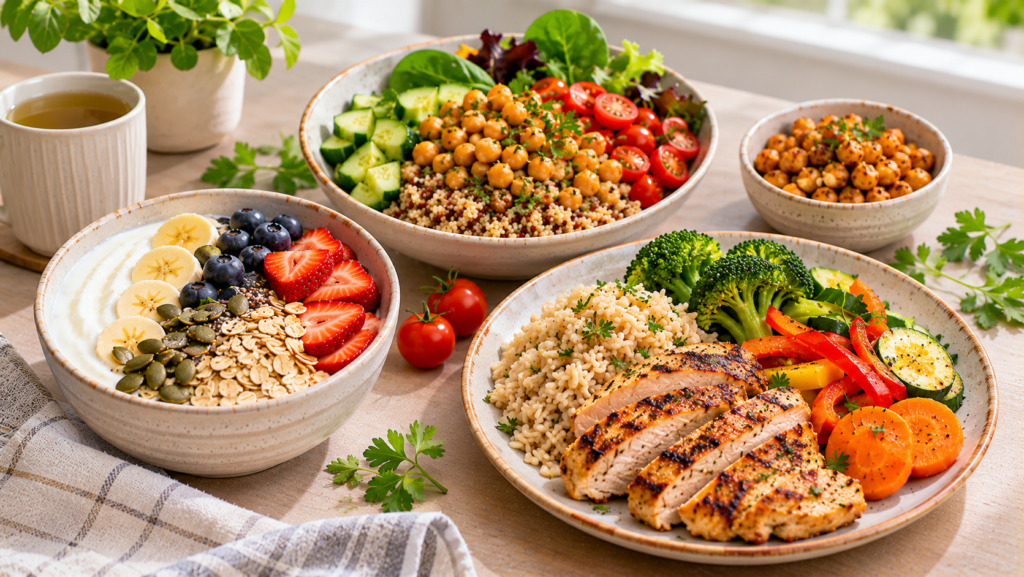
Even small changes can help, but avoid these common mistakes when planning protein-rich meals.
- Adding protein without considering the whole meal: Include vegetables, fruit, and fiber-rich carbohydrates as well.
- Relying only on protein bars or powders: Everyday foods can provide protein alongside a wider range of nutrients. Supplements are not automatically necessary.
- Underestimating serving sizes: A small amount of nuts or seeds contributes protein, but may not provide as much as a full serving of beans, tofu, or yogurt.
- Ignoring sodium in packaged foods: Canned foods, deli meats, cheeses, and ready-made meals can contain substantial sodium. Compare labels and choose lower-sodium options when appropriate.
- Forgetting variety: Rotate between animal and plant protein sources, or between different plant foods, to make meals more interesting and nutritionally varied.
- Making too many changes at once: Start with one or two easy additions and build from there.
Frequently Asked Questions
What are the easiest high protein foods to add to meals?
Eggs, Greek yogurt, cottage cheese, canned tuna, cooked chicken, tofu, canned beans, lentils, and edamame are among the easiest options. Most can be added to meals with little preparation.
How can I add protein to meals without cooking?
Use Greek yogurt, cottage cheese, canned tuna, canned beans, roasted chickpeas, nuts, seeds, or ready-to-eat cooked chicken. Check packaged foods for sodium and other nutritional details.
What are cheap high protein foods for everyday meals?
Lentils, dried beans, chickpeas, split peas, eggs, peanuts, oats, and some soy foods are often budget-friendly. Buying dried legumes in bulk and preparing them at home can reduce costs.
How can I add more protein to breakfast?
Add Greek yogurt to oatmeal, prepare eggs with whole-grain toast, use milk or soy milk in smoothies, or top breakfast bowls with peanut butter, nuts, and seeds.
What are the best high protein foods to add to salads?
Chicken, tuna, boiled eggs, chickpeas, lentils, tofu, edamame, cottage cheese, and pumpkin seeds are practical salad additions. Choose one main protein source and add other ingredients for variety.
Can I get enough protein without eating meat?
Yes. Dairy products, eggs, tofu, tempeh, lentils, chickpeas, beans, edamame, nuts, seeds, and whole grains can all contribute protein. A varied vegetarian or vegan diet can meet protein needs when planned appropriately.
Are high protein foods useful for building muscle?
Protein provides amino acids needed for muscle repair and growth. However, muscle development also depends on resistance training, adequate overall food intake, recovery, and sleep. No single protein food guarantees muscle growth.
Is it better to eat protein at every meal?
Including a protein source in each main meal is a practical way to spread protein intake throughout the day. It is not essential to eat exactly the same amount at every meal; total daily intake and individual needs matter.
Conclusion: Make Protein an Easy Part of Everyday Eating
The best high protein foods that are easy to add to meals are often simple ingredients you can use in several different ways. Eggs, chicken, tuna, Greek yogurt, cottage cheese, lentils, chickpeas, beans, tofu, tempeh, nuts, and seeds can all help increase the protein content of everyday meals.
Start with foods you already enjoy. Add beans to soup, yogurt to breakfast, eggs to sandwiches, tofu to curry, or seeds to salads. Prepare a few ingredients ahead of time and keep convenient protein options in your kitchen.
You do not need complicated recipes or expensive products to eat more protein. Consistent, practical additions can help you build balanced meals that suit your preferences, budget, and daily routine.