
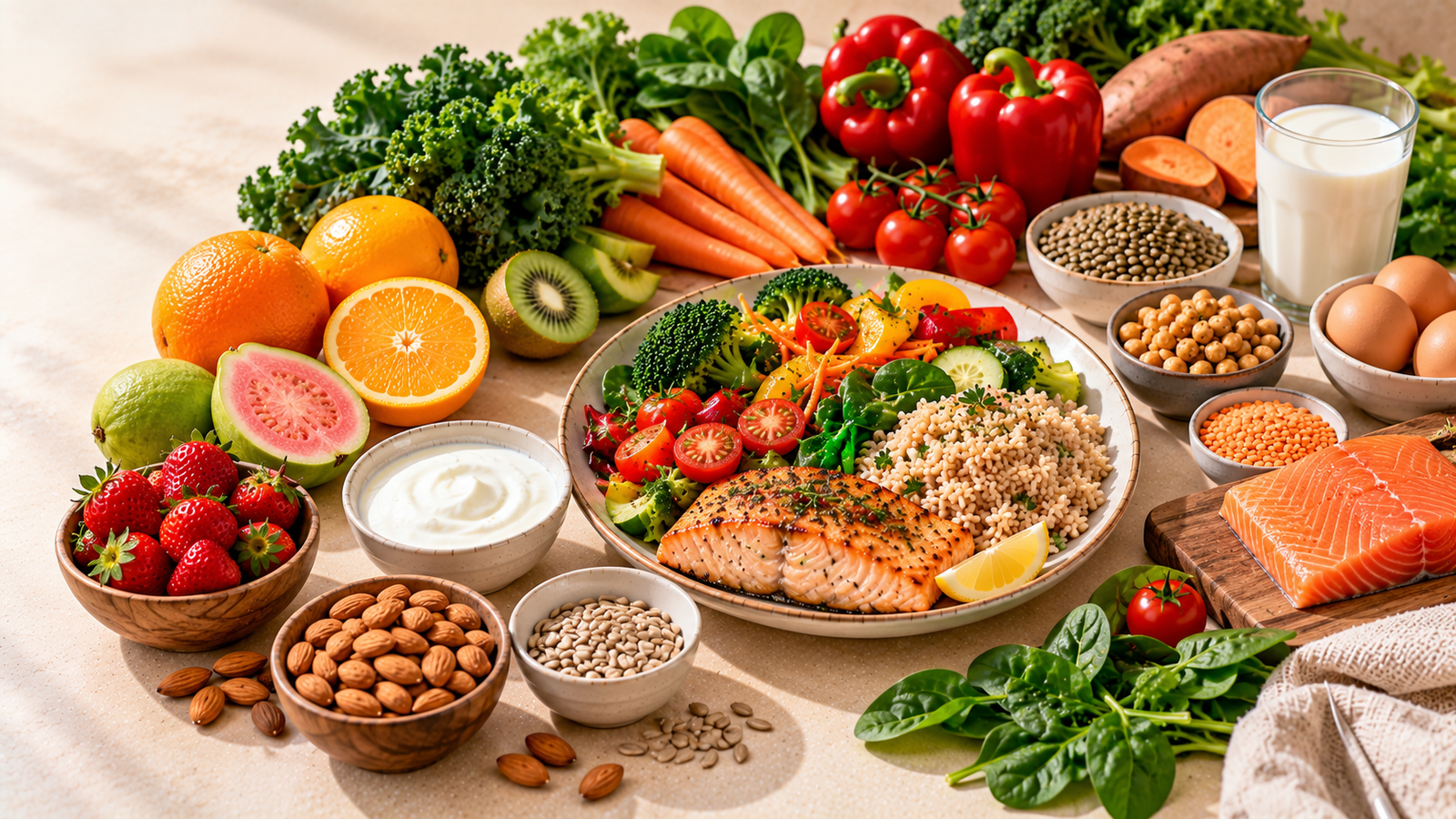
Eating a variety of vitamin rich foods is one practical way to support a nutrient-dense diet. Vitamins help your body perform essential functions, including energy metabolism, immune function, vision, blood formation, and maintaining healthy bones and tissues.
You do not need expensive superfoods or a complicated meal plan to get more vitamins. Everyday ingredients such as leafy greens, citrus fruits, eggs, beans, dairy foods, nuts, seeds, and fish can all contribute valuable nutrients. The key is to eat a varied diet because no single food provides every vitamin in the amounts your body needs.
This guide covers 30 vitamin-rich foods, the vitamins they provide, how to include them in meals, and practical tips for getting more nutritional value from your everyday diet.
Key Takeaways
- Eat a variety of fruits, vegetables, whole grains, legumes, nuts, seeds, and protein foods.
- Colorful fruits and vegetables are especially useful sources of vitamin C, carotenoids, folate, and other nutrients.
- Eggs, dairy foods, and fish can supply vitamins that are less abundant in many plant foods.
- Fortified foods can provide nutrients such as vitamins B12 and D, depending on the product.
- Cooking methods, storage, serving size, and food variety affect vitamin intake.
- Supplements are not a substitute for a varied diet, although some people may need them for specific nutritional reasons.
What Are Vitamin-Rich Foods?
Vitamin-rich foods are foods that contribute meaningful amounts of one or more vitamins relative to the amount eaten. They can be plant-based, animal-based, or fortified foods.
Vitamins are generally grouped into two categories:
- Fat-soluble vitamins: Vitamins A, D, E, and K. The body absorbs these with dietary fat and can store them.
- Water-soluble vitamins: Vitamin C and the B vitamins. Most are not stored in large amounts, although vitamin B12 can be stored in the liver for years.
Each vitamin has different roles. Vitamin C supports collagen formation and helps the body absorb non-heme iron from plant foods. Vitamin A supports vision and immune function. B vitamins contribute to normal energy metabolism, while vitamin D supports calcium absorption and bone health.
For detailed information about individual nutrients, see the NIH Office of Dietary Supplements fact sheets.
30 Vitamin Rich Foods to Add to Your Diet
The following foods offer a practical starting point for building a varied, nutrient-dense eating pattern. The vitamins listed are notable contributions, not a complete nutrient analysis. Exact amounts depend on variety, portion size, preparation, and fortification.
1. Vitamin-Rich Fruits
Fruits provide a mix of vitamins, fiber, water, and other beneficial plant compounds. Eating a variety is more useful than relying on one “best” fruit.
| No. | Food | Notable vitamins | Easy way to eat it |
|---|---|---|---|
| 1 | Oranges | Vitamin C, folate | Eat whole or add segments to a salad |
| 2 | Guava | Vitamin C, some folate | Eat fresh after washing |
| 3 | Kiwi | Vitamin C, vitamin K | Add to breakfast or a fruit bowl |
| 4 | Strawberries | Vitamin C, folate | Mix into plain yogurt or oats |
| 5 | Papaya | Vitamin C, provitamin A carotenoids | Serve fresh as a snack |
| 6 | Mango | Provitamin A carotenoids, vitamin C | Add to a fruit bowl or smoothie |
| 7 | Avocado | Vitamin E, vitamin K, folate | Add to toast or salads |
| 8 | Banana | Vitamin B6, small amounts of other vitamins | Pair with oats or plain yogurt |
Why These Fruits Are Useful
Citrus fruits, guava, kiwi, and strawberries are especially helpful sources of vitamin C. Papaya and mango provide carotenoids that the body can convert to vitamin A, while avocado contributes vitamin E, vitamin K, and folate.
Whole fruit is generally preferable to juice because it retains more fiber and can be more filling. Fresh, frozen, and unsweetened canned fruit can all fit into a balanced diet.
2. Vitamin-Rich Vegetables
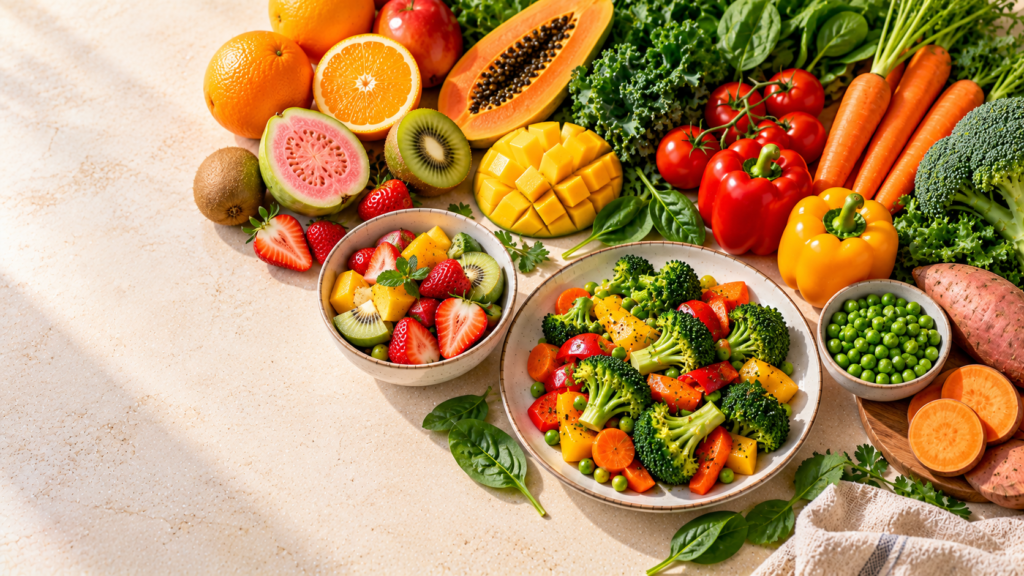
Vegetables are among the most useful foods for increasing vitamin intake because different varieties supply different nutrients. Dark leafy greens, orange vegetables, and brightly colored peppers are particularly valuable additions to everyday meals.
| No. | Food | Notable vitamins | Easy way to eat it |
|---|---|---|---|
| 9 | Spinach | Vitamin K, folate, provitamin A carotenoids | Add to dal, eggs, soups, or curries |
| 10 | Carrots | Provitamin A carotenoids | Roast, steam, or eat raw |
| 11 | Red bell peppers | Vitamin C, provitamin A carotenoids | Add to salads and stir-fries |
| 12 | Broccoli | Vitamins C and K, folate | Steam or lightly sauté |
| 13 | Sweet potatoes | Provitamin A carotenoids, vitamin B6 | Bake, roast, or mash |
| 14 | Kale | Vitamins K, C, and provitamin A carotenoids | Add to soups or sautéed vegetables |
| 15 | Tomatoes | Provitamin A carotenoids and small amounts of vitamin C | Use in salads, sauces, and curries |
| 16 | Green peas | Vitamins C and K, folate, some B vitamins | Add to rice, soups, and mixed vegetables |
How to Get More Vitamins From Vegetables
- Eat a variety of colors throughout the week.
- Use fresh or frozen vegetables depending on cost and availability.
- Avoid overcooking vegetables in large amounts of water when practical.
- Use cooking methods such as steaming, roasting, or quick sautéing to suit the vegetable.
- Pair plant foods containing iron with vitamin C-rich foods, such as lentils with tomatoes or peppers.
Some vitamins are sensitive to heat and water, while cooking can make other nutrients easier to access. For example, cooking carrots and tomatoes can improve the availability of some carotenoids. There is no single cooking method that preserves every nutrient best.
3. Vitamin-Rich Protein Foods
Protein foods can provide vitamins as well as protein and minerals. Animal foods supply certain vitamins naturally, while legumes, nuts, and seeds provide a range of nutrients from plant sources.
| No. | Food | Notable vitamins | Easy way to eat it |
|---|---|---|---|
| 17 | Eggs | Vitamins B12, B2, A, and D in variable amounts | Boil, scramble, or make an omelet |
| 18 | Salmon | Vitamins D and B12, plus B6 | Bake or grill with vegetables |
| 19 | Sardines | Vitamins B12 and D in variable amounts | Serve with whole-grain toast or roti |
| 20 | Chicken | Vitamins B3 and B6 | Add to soups, wraps, or grain bowls |
| 21 | Beef | Vitamins B12, B3, and B6 | Serve in moderate portions with vegetables |
| 22 | Plain yogurt | Vitamin B2 and B12; vitamin D if fortified | Serve with fruit or alongside meals |
| 23 | Milk | Vitamins B2 and B12; vitamins A and D may be added | Drink or use in oatmeal |
| 24 | Lentils | Folate and other B vitamins | Make dal, soup, or lentil patties |
Why Protein Foods Matter for Vitamin Intake
Eggs, fish, meat, and dairy foods provide several B vitamins, and some provide vitamin D. The amount of vitamin D in fish and eggs varies, so these foods should not all be assumed to be equally rich sources.
Lentils are particularly useful for folate, a B vitamin needed for normal cell division and red blood cell formation. They also provide plant protein and fiber.
If you do not eat animal foods, build meals around legumes, soy foods, whole grains, nuts, seeds, vegetables, and suitable fortified foods. People following vegan diets need a reliable source of vitamin B12, usually through fortified foods or supplements.
4. Nuts, Seeds, and Other Nutrient-Dense Foods
Nuts, seeds, and selected everyday staples can contribute vitamins alongside healthy fats, minerals, fiber, and other nutrients.
| No. | Food | Notable vitamins | Easy way to eat it |
|---|---|---|---|
| 25 | Almonds | Vitamin E, some B vitamins | Add to oatmeal or eat as a snack |
| 26 | Sunflower seeds | Vitamin E, vitamin B6 | Sprinkle over salads or yogurt |
| 27 | Peanuts | Niacin (vitamin B3), some folate | Add to snacks or sauces |
| 28 | Oats | Thiamin (vitamin B1), other B vitamins | Make porridge or overnight oats |
| 29 | Whole-grain bread | B vitamins, including thiamin and niacin | Use for sandwiches or toast |
| 30 | Fortified breakfast cereal | Depends on the product; may contain B vitamins, folic acid, and vitamins A, C, or D | Check the nutrition label and serve with milk or a fortified alternative |
Choosing Fortified Foods
Fortified foods have certain nutrients added during manufacturing. They can help fill nutritional gaps, but products differ widely.
When choosing breakfast cereal, plant-based milk, or other fortified foods:
- Check which vitamins are actually listed on the nutrition label.
- Compare added sugar and sodium where relevant.
- Check serving sizes, because nutrient amounts are often reported per serving.
- Remember that not all plant-based drinks or cereals are fortified.
Fortification can be particularly important for nutrients that are difficult to obtain from some dietary patterns, such as vitamin B12 for people who avoid animal products.
How to Combine Vitamin-Rich Foods for Better Nutrition
Eating vitamin-rich foods works best as part of a varied overall diet. You do not need to combine every vitamin at every meal. Instead, choose foods that complement one another.
Pair Vitamin C With Plant Sources of Iron
Vitamin C improves the absorption of non-heme iron found in foods such as lentils, beans, and leafy greens.
Try these combinations:
- Lentil dal with tomatoes or lemon.
- Chickpeas with red bell peppers.
- Beans with a side of citrus fruit.
- Leafy greens with a tomato-based sauce.
These combinations are practical ways to improve the nutritional value of familiar meals.
Include Some Dietary Fat With Vegetables
Vitamins A, D, E, and K are fat-soluble. Eating vegetables with a source of dietary fat can help the body absorb carotenoids and other fat-soluble compounds.
Examples include:
- Spinach cooked with a modest amount of oil.
- Carrots served with a meal containing nuts or seeds.
- Salad dressed with olive oil.
- Vegetables served with avocado or a suitable seed-based dressing.
You do not need a large amount of fat. A normal mixed meal often provides enough to support absorption.
Eat a Variety of Foods Throughout the Week
Rather than trying to identify one food that contains every vitamin, rotate your choices. Eat leafy greens on some days, orange vegetables on others, and vary protein sources between legumes, eggs, fish, and other suitable foods.
Simple Ways to Add More Vitamins and Minerals to Your Diet
A Simple Daily Meal Plan Using Vitamin-Rich Foods
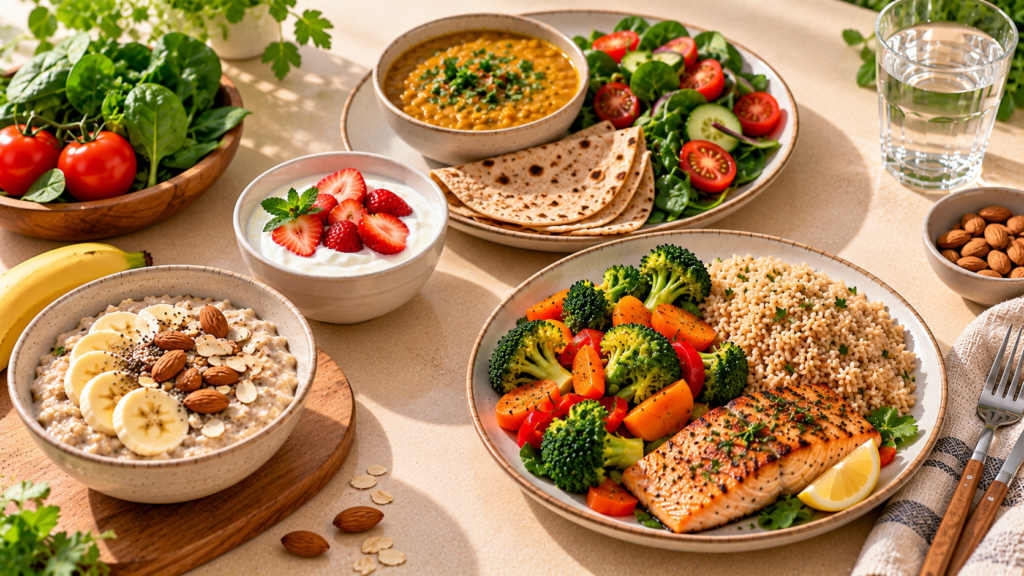
You can include many of the 30 foods without changing your diet completely. Here is an example of how they might fit into a typical day.
| Meal | Example | Vitamins and other nutrients |
|---|---|---|
| Breakfast | Oats with milk, banana, and almonds | B vitamins, vitamin B12 from milk, vitamin E, and other nutrients |
| Morning snack | Guava or an orange | Vitamin C and fiber |
| Lunch | Lentil dal, whole-wheat roti, spinach, and tomato salad | Folate, vitamin K, B vitamins, and other nutrients |
| Afternoon snack | Plain yogurt with strawberries | Vitamin B12 and B2 from yogurt; vitamin C from strawberries |
| Dinner | Salmon or chickpeas with broccoli, carrots, and brown rice | Depending on choices, vitamins D, B12, C, K, and provitamin A carotenoids |
This is an illustration, not a personalized meal plan. Portions and food choices should reflect your appetite, energy needs, dietary preferences, allergies, and health circumstances.
An Affordable South Asian Approach
You can build a vitamin-rich eating pattern using familiar, accessible foods:
- Breakfast: Eggs with whole-wheat roti, or oats with milk and fruit.
- Lunch: Dal with spinach, tomatoes, and roti.
- Snack: Guava, orange, banana, or plain yogurt.
- Dinner: Chickpea curry with vegetables and rice, or fish with seasonal vegetables.
- Optional additions: Peanuts, seeds, or fortified foods according to your nutritional needs.
Seasonal produce and frozen vegetables can be practical options when some fresh foods are expensive or unavailable. You do not need to purchase all 30 foods at once.
How Cooking and Storage Affect Vitamins
The nutritional value of foods can change during preparation and storage. The effect depends on the vitamin, food, temperature, cooking time, and amount of water used.
Practical Tips for Preserving Nutrients
- Wash produce before cutting it when practical, and avoid soaking cut vegetables for long periods.
- Store perishable foods at appropriate temperatures.
- Refrigerate or freeze produce and leftovers when needed to reduce spoilage.
- Steam vegetables or cook them in a small amount of water when that suits the recipe.
- Use cooking liquid in soups, stews, or curries when appropriate, since some water-soluble vitamins can move into it.
- Avoid assuming raw is always better; cooking can improve the availability of some nutrients and make certain foods easier to eat.
Vitamin C and some B vitamins are sensitive to heat and water. Fat-soluble vitamins and carotenoids behave differently, so variety in both food choices and cooking methods is a sensible approach.
For broader guidance on balanced eating, see the Harvard Healthy Eating Plate.
Do You Need Vitamin Supplements?
Most people should aim to meet their vitamin needs primarily through a varied diet. However, supplements can be useful when a person has a documented deficiency, increased requirements, limited dietary intake, or another reason identified by a qualified healthcare professional.
Some examples include:
- Vitamin B12: People following vegan diets need a reliable source, often fortified foods or a supplement.
- Vitamin D: Some people may need supplementation depending on age, diet, sun exposure, location, and individual risk factors.
- Folate: People who could become pregnant are commonly advised to take folic acid before conception and during early pregnancy; follow current local medical guidance.
- Other nutrients: Certain medical conditions, medications, or restricted diets can affect nutrient needs.
More is not always better. High doses of some vitamins can cause harm, particularly fat-soluble vitamins such as A and D. Ask a healthcare professional before using high-dose supplements, combining several products, or treating suspected deficiency yourself.
If you are concerned about a deficiency, symptoms alone cannot reliably identify which vitamin is low. A healthcare professional can assess your diet, symptoms, risk factors, and whether testing is appropriate.
Common Mistakes to Avoid When Choosing Vitamin-Rich Foods
- Relying on just one food: No single fruit or vegetable supplies all essential vitamins.
- Assuming every colorful food is high in every vitamin: Different foods contain different nutrient profiles.
- Replacing whole fruit with juice all the time: Whole fruit usually offers more fiber.
- Ignoring food fortification labels: Vitamin content can differ substantially between brands and products.
- Taking high-dose supplements without advice: Excessive intake can be harmful.
- Forgetting dietary variety: Rotate fruits, vegetables, protein foods, and grains over time.
- Expecting instant results: Healthy eating supports normal body function, but it is not a guaranteed treatment for fatigue, illness, or a diagnosed deficiency.
Frequently Asked Questions
1. What are the best vitamin-rich foods to eat every day?
There is no single best food for everyone. Leafy greens, citrus fruits, berries, carrots, legumes, eggs, whole grains, nuts, seeds, and suitable dairy or fortified alternatives can contribute different vitamins. Choose a varied combination across the week.
2. Which fruits are highest in vitamins?
Guava, oranges, kiwi, strawberries, and papaya are useful vitamin C sources. Mango contributes provitamin A carotenoids, while avocado provides vitamin E, vitamin K, and folate. Exact amounts depend on variety and serving size.
3. Which vegetables contain the most vitamins?
Spinach, kale, broccoli, red bell peppers, carrots, and sweet potatoes provide a range of vitamins. They are not interchangeable, so eating several types is more useful than relying on one vegetable.
4. What foods contain vitamins A, C, D, E, and K?
- Vitamin A: Carrots, sweet potatoes, spinach, and other orange or dark green vegetables provide provitamin A carotenoids.
- Vitamin C: Guava, citrus fruits, kiwi, strawberries, and bell peppers.
- Vitamin D: Fatty fish and some eggs; fortified foods can also contribute.
- Vitamin E: Almonds and sunflower seeds.
- Vitamin K: Leafy greens such as spinach and kale, and broccoli.
5. Can I get all my vitamins from food?
Many people can meet most vitamin needs through a varied diet, but requirements differ. Vitamin B12 needs particular attention in vegan diets, and some people may require supplements because of medical circumstances, life stage, or limited intake.
6. Are frozen fruits and vegetables still nutritious?
Yes. Frozen produce can retain many vitamins and is a convenient alternative to fresh food. Nutrient levels depend on the food, processing, storage, and cooking method.
7. What are affordable vitamin-rich foods in Pakistan?
Useful options include seasonal guava and citrus fruits, tomatoes, carrots, spinach, peas, lentils, chickpeas, eggs, milk or yogurt, peanuts, and fortified foods when available. Prices and nutrient content vary by season and product.
8. Do vitamin-rich foods help prevent vitamin deficiencies?
A varied diet helps reduce the risk of inadequate vitamin intake, but it cannot prevent every deficiency. Absorption problems, some medications, medical conditions, and specific life stages can affect nutrient status. Seek professional advice if you suspect a deficiency.
Conclusion: Build a More Nutrient-Dense Diet With Vitamin-Rich Foods
Adding more vitamin rich foods to your daily diet does not have to mean changing everything you eat. Start with familiar ingredients such as leafy greens, carrots, citrus fruits, guava, eggs, lentils, yogurt, nuts, and whole grains. Each offers a different combination of vitamins and other nutrients.
The most effective approach is to eat a variety of foods, choose seasonal ingredients when practical, prepare meals in ways you enjoy, and pay attention to specific nutritional needs. Fortified foods or supplements may be appropriate in certain circumstances, but high-dose supplements should not replace professional advice.
Start with one simple change this week: add a vitamin C-rich fruit to breakfast, include leafy greens with lunch, or serve another vegetable at dinner. Small, consistent choices can help you build a more varied and nutrient-dense eating pattern over time.
1 thought on “30 Vitamin Rich Foods for a Nutrient-Dense Diet”