
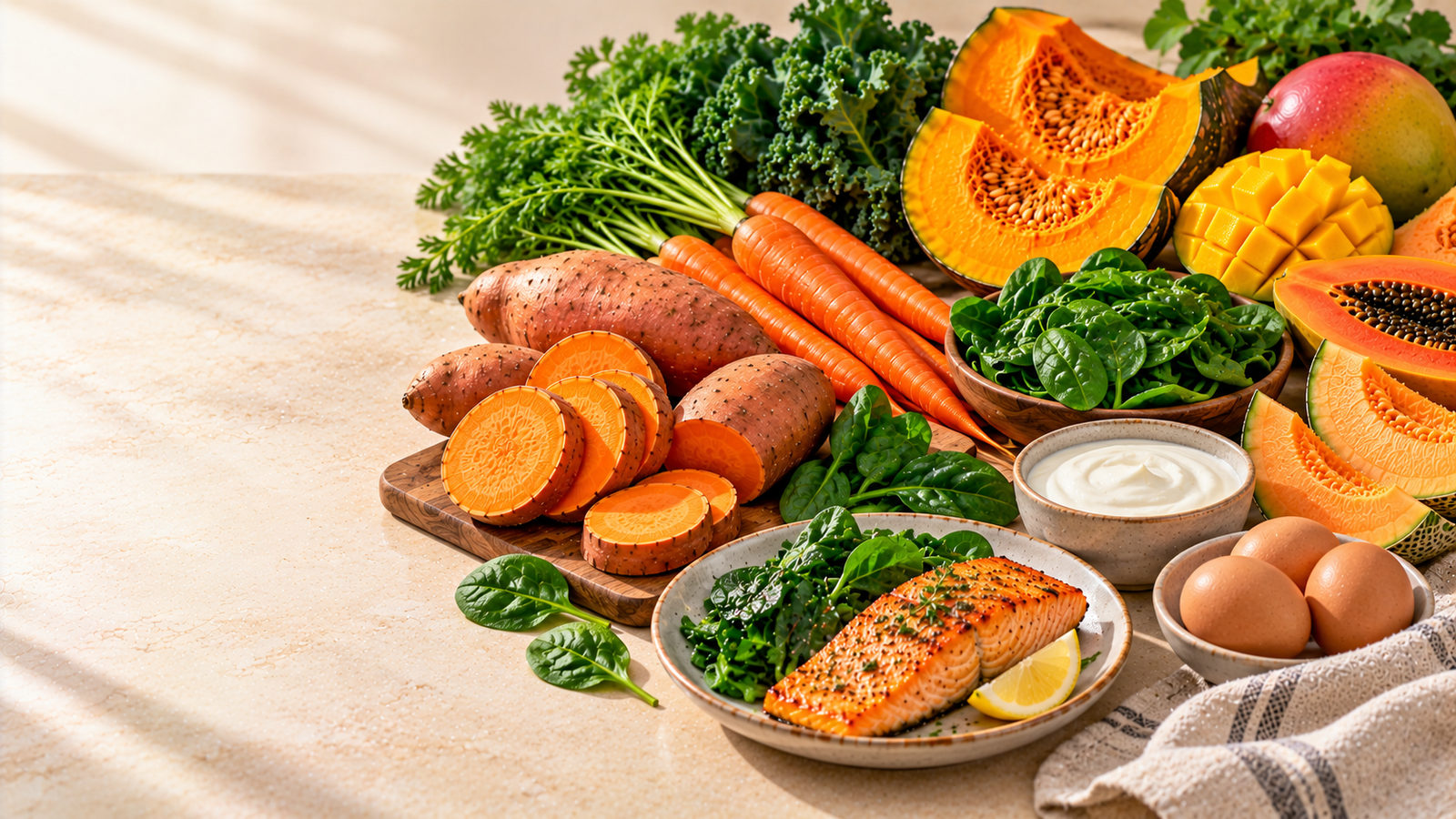
A vitamin A foods chart makes it easier to identify natural food sources that help you meet your daily nutritional needs. Vitamin A is an essential nutrient that supports normal vision, immune function, healthy skin, and growth. It is available in animal foods as preformed vitamin A and in colorful plant foods as carotenoids that the body can convert into vitamin A.
Some of the most useful sources include sweet potatoes, carrots, spinach, pumpkin, and other dark leafy greens. Eggs, dairy products, and certain fish also provide preformed vitamin A. Understanding the differences between these foods can help you build balanced meals without relying unnecessarily on supplements.
This guide includes a practical vitamin A foods chart, a comparison of plant and animal sources, daily intake recommendations, and simple ways to incorporate these foods into your routine.
Most Important Points
- Sweet potatoes, carrots, pumpkin, and dark leafy greens are valuable plant sources of provitamin A carotenoids.
- Eggs, dairy products, and certain fish supply preformed vitamin A in varying amounts.
- Your body converts some beta-carotene from plant foods into active vitamin A.
- Vitamin A supports normal vision, immune defenses, and the maintenance of healthy tissues.
- Pairing carotenoid-rich vegetables with a little dietary fat can help improve absorption.
- Vitamin A needs vary by age, sex, pregnancy, and breastfeeding status.
- High-dose vitamin A supplements can be harmful, especially during pregnancy; food and supplements are not interchangeable.
What Is Vitamin A?
Vitamin A is a fat-soluble nutrient involved in important functions throughout the body. It is found in two main dietary forms.
1. Preformed vitamin A
Preformed vitamin A includes retinol and related compounds found in animal-derived foods. Examples include liver, fish, eggs, and dairy products.
Your body can use preformed vitamin A directly after digestion and processing. Liver is particularly concentrated in this nutrient, so it should be eaten cautiously, especially during pregnancy.
2. Provitamin A carotenoids
Provitamin A carotenoids are plant compounds that your body can convert into vitamin A. Beta-carotene is one of the best-known examples.
Common sources include:
- Carrots
- Orange-fleshed sweet potatoes
- Pumpkin
- Spinach
- Kale
- Mangoes
- Cantaloupe
- Papaya
The conversion rate varies with the food, preparation method, and individual factors. Therefore, the amount of beta-carotene in a food is not identical to the amount of active vitamin A your body obtains from it.
Vitamin A Foods Chart: 20 Natural Food Sources
The chart below groups foods by their main contribution to vitamin A intake. It is a practical guide rather than a precise ranking because nutrient content varies by portion, variety, and preparation.
| Food source | Type of vitamin A | Practical serving idea |
|---|---|---|
| Sweet potato | Provitamin A carotenoids | One baked or roasted potato |
| Carrots | Provitamin A carotenoids | Raw sticks or cooked carrots |
| Spinach | Provitamin A carotenoids | Cooked spinach or curry |
| Pumpkin | Provitamin A carotenoids | Roasted wedges or soup |
| Kale | Provitamin A carotenoids | Sautéed greens |
| Butternut squash | Provitamin A carotenoids | Roasted squash |
| Collard greens | Provitamin A carotenoids | Cooked leafy greens |
| Mustard greens | Provitamin A carotenoids | Sarson ka saag |
| Swiss chard | Provitamin A carotenoids | Sautéed leaves |
| Red bell pepper | Carotenoids | Salad or stir-fry |
| Mango | Provitamin A carotenoids | Fresh fruit |
| Papaya | Provitamin A carotenoids | Fruit bowl |
| Cantaloupe | Provitamin A carotenoids | Breakfast fruit |
| Apricots | Provitamin A carotenoids | Fresh or dried |
| Eggs | Preformed vitamin A | Boiled or cooked eggs |
| Milk | Preformed vitamin A | A glass of milk |
| Yogurt | Preformed vitamin A | Plain yogurt |
| Cheese | Preformed vitamin A | Moderate portions |
| Salmon | Preformed vitamin A | Baked fish |
| Beef liver | Preformed vitamin A | Occasional, carefully portioned serving |
Important: This table identifies useful sources, not equivalent amounts of vitamin A. Beef liver, for example, can contain vastly more preformed vitamin A per serving than most other foods in this list. Plant foods vary in carotenoid content and conversion efficiency.
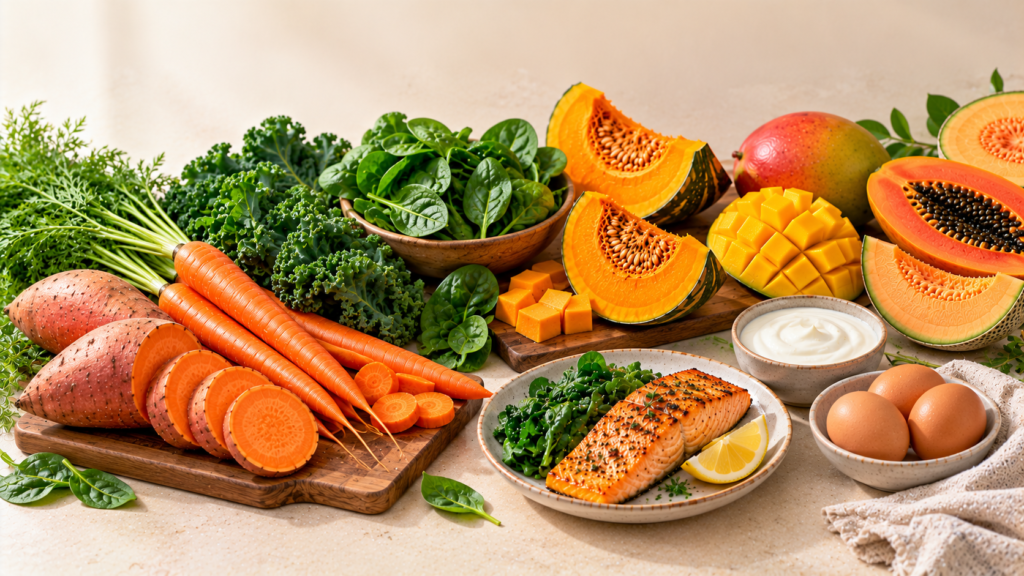
Best Plant-Based Sources of Vitamin A
Plant foods are particularly useful for people who want to obtain vitamin A precursors from a varied diet. Their orange, yellow, and dark green colors often indicate the presence of carotenoids.
1. Sweet potatoes
Orange-fleshed sweet potatoes are among the richest common plant sources of beta-carotene. They are also versatile, affordable, and easy to prepare.
How to eat them: Bake, roast, steam, or mash sweet potatoes. Pair them with lentils, beans, or another protein source for a balanced meal.
2. Carrots
Carrots provide beta-carotene, which the body can convert into vitamin A.
How to eat them: Enjoy carrot sticks, grate carrots into salads, or add cooked carrots to soups, curries, and vegetable dishes.
3. Spinach and other leafy greens
Spinach, kale, mustard greens, and collard greens supply provitamin A carotenoids. They also provide other vitamins, minerals, and fiber.
How to eat them: Add leafy greens to omelets, lentil dishes, soups, and vegetable curries. In Pakistan and neighboring regions, mustard greens can be prepared as sarson ka saag.
4. Pumpkin and squash
Orange pumpkin and butternut squash provide beta-carotene and can be used in both savory and mildly sweet recipes.
How to eat them: Roast the flesh, prepare homemade soup, or add cooked pumpkin to vegetable curries.
5. Mango, papaya, and cantaloupe
These fruits offer a refreshing way to increase your intake of carotenoids. Their vitamin A contribution varies by variety and serving size.
How to eat them: Serve fresh fruit at breakfast, add mango to plain yogurt, or combine papaya and cantaloupe in a fruit bowl.
Natural Animal Sources of Vitamin A
Animal foods provide preformed vitamin A, although the amount differs considerably between foods.
Eggs
Eggs contain vitamin A, primarily in the yolk, and are an easy ingredient for everyday meals. Boiled eggs, omelets, and egg-based vegetable dishes are convenient options.
Milk, yogurt, and cheese
Dairy products can contribute vitamin A. The amount depends on the product, fat content, and whether it has been fortified.
Choose plain yogurt and moderate portions of cheese as part of a balanced eating pattern. If you use fortified milk, check the nutrition label to confirm its vitamin A content.
Fish
Some fish provide vitamin A, but amounts vary by species and preparation. Fatty fish such as salmon can contribute vitamin A as well as other important nutrients, including omega-3 fatty acids and vitamin D.
Liver: A concentrated source that requires caution
Beef liver and other animal livers can contain exceptionally high amounts of preformed vitamin A. They are not necessary for everyone to meet vitamin A needs.
Eating liver frequently or taking high-dose vitamin A supplements can lead to excessive intake. People who are pregnant or may become pregnant should avoid liver and liver products because excessive preformed vitamin A can harm fetal development.
How Much Vitamin A Do You Need Daily?
Vitamin A requirements depend on age and life stage. The following recommended dietary allowances are established by the U.S. National Institutes of Health and expressed in micrograms of retinol activity equivalents (mcg RAE).
| Group | Recommended daily amount |
|---|---|
| Adult men, age 19 and older | 900 mcg RAE |
| Adult women, age 19 and older | 700 mcg RAE |
| Pregnancy, ages 19 and older | 770 mcg RAE |
| Breastfeeding, ages 19 and older | 1,300 mcg RAE |
| Children, ages 1–3 | 300 mcg RAE |
| Children, ages 4–8 | 400 mcg RAE |
| Children, ages 9–13 | 600 mcg RAE |
| Teen boys, ages 14–18 | 900 mcg RAE |
| Teen girls, ages 14–18 | 700 mcg RAE |
These are general U.S. reference values, not individualized medical advice. Requirements may differ under other national guidelines.
NIH Office of Dietary Supplements — Vitamin A and Carotenoids Fact Sheet
Understanding micrograms of RAE
RAE accounts for the fact that the body absorbs and converts different forms of vitamin A differently.
For example, beta-carotene from food does not provide the same amount of usable vitamin A per microgram as preformed retinol. This is why a food’s beta-carotene content should not be treated as equivalent to its vitamin A activity.
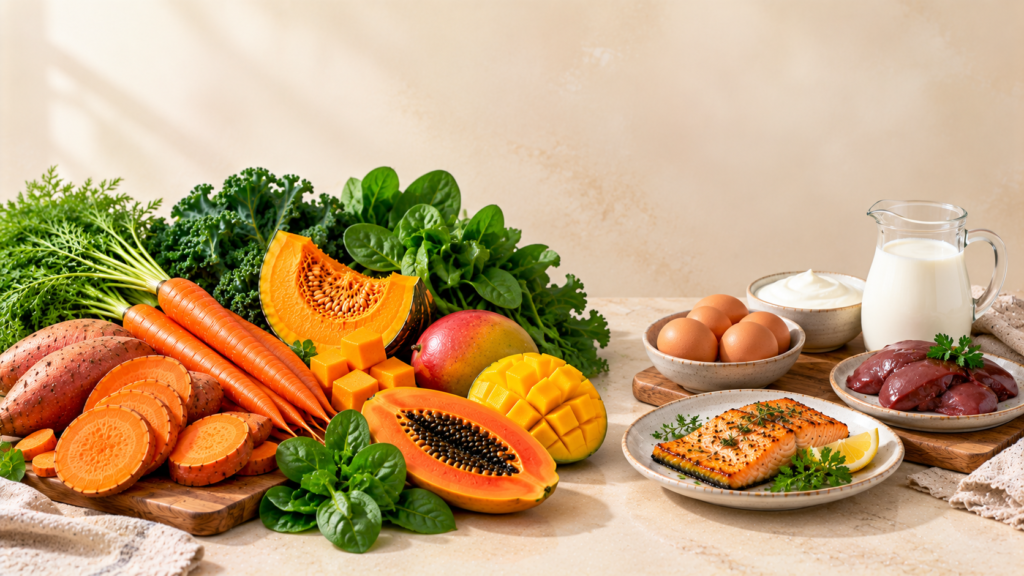
How to Improve Vitamin A Absorption
Getting vitamin A from food is not only about which foods you choose. Food preparation and meal composition can also affect the availability of carotenoids.
Pair carotenoid-rich foods with dietary fat
Vitamin A is fat-soluble, and some dietary fat helps the body absorb carotenoids from plant foods.
Simple combinations include:
- Carrots with hummus or tahini.
- Spinach cooked with a little olive oil.
- Roasted sweet potato with olive oil.
- Leafy-green salad with an oil-based dressing.
- Pumpkin served with nuts or seeds.
You do not need to add large quantities of fat. Small amounts can fit comfortably into a balanced meal.
Cook vegetables appropriately
Steaming, roasting, and lightly sautéing can soften plant tissues and improve the availability of beta-carotene in some vegetables.
Cooking can also reduce certain heat-sensitive nutrients, so including both raw and cooked vegetables is a sensible approach.
Eat a variety of colorful foods
Rotate orange vegetables, dark leafy greens, and colorful fruits instead of relying on one food every day. This approach provides a wider range of nutrients and makes meals more enjoyable.
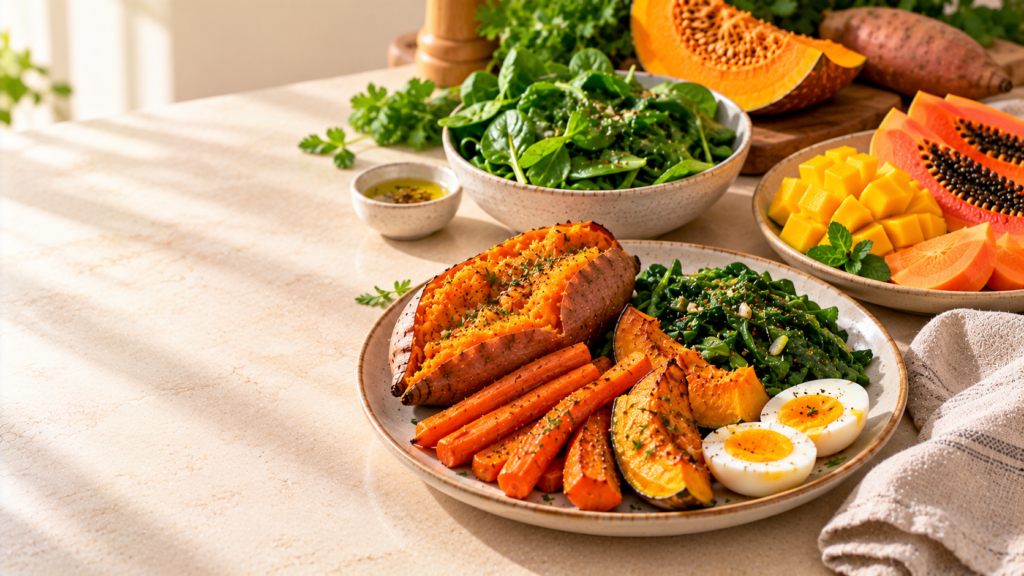
Sample One-Day Meal Plan Using Vitamin A Foods
This simple example illustrates how you can include several natural sources of vitamin A in your meals. Portions should be adjusted to your appetite, age, nutritional needs, and any relevant medical advice.
| Meal | Food idea | Vitamin A contribution |
|---|---|---|
| Breakfast | Eggs with spinach and whole-wheat toast | Preformed vitamin A from eggs and carotenoids from spinach |
| Morning snack | Fresh mango or papaya | Provitamin A carotenoids |
| Lunch | Lentil curry with carrots and leafy greens | Beta-carotene from vegetables |
| Afternoon snack | Plain yogurt with fruit | Vitamin A from yogurt, depending on the product, plus carotenoids from fruit |
| Dinner | Baked sweet potato with cooked vegetables and fish or beans | Beta-carotene from sweet potato and vegetables; preformed vitamin A if fish is included |
This is an example rather than a prescribed diet. You can substitute seasonal produce and locally available foods to suit your budget and preferences.
For more ideas, add relevant internal links to your nutrition content:
Can You Get Too Much Vitamin A?
Yes. Excessive intake of preformed vitamin A can be harmful, particularly when it comes from high-dose supplements or frequent consumption of very concentrated sources such as liver.
Potential effects of excessive preformed vitamin A include headaches, nausea, liver problems, and birth defects during pregnancy.
Beta-carotene from ordinary foods behaves differently. Eating large amounts of beta-carotene-rich produce may cause carotenemia, a yellow-orange tint to the skin, but this is not the same as vitamin A toxicity.
Practical advice: Prioritize a varied diet, avoid unnecessary high-dose supplements, and consult a healthcare professional if you have a diagnosed deficiency or concerns about your vitamin A intake.
Frequently Asked Questions About Vitamin A Food Sources
1. What is the best natural source of vitamin A?
Orange-fleshed sweet potatoes, carrots, pumpkin, and dark leafy greens are excellent plant sources of provitamin A carotenoids. Liver is a concentrated source of preformed vitamin A but requires caution because excessive intake can be harmful.
2. Which fruits contain the most vitamin A?
Mangoes, papaya, cantaloupe, and apricots are useful fruit sources of provitamin A carotenoids. Their exact contribution depends on variety, ripeness, and serving size.
3. Which vegetables are highest in vitamin A?
Sweet potatoes, carrots, pumpkin, spinach, and kale are particularly useful choices. Orange vegetables and dark leafy greens are good options to rotate through your meals.
4. Can I get enough vitamin A from vegetables alone?
Plant foods can help many people meet their vitamin A needs because the body converts beta-carotene into vitamin A. Conversion varies between individuals, so people with absorption problems or specific nutritional needs may require professional advice.
5. Are eggs a good source of vitamin A?
Yes. Egg yolks contain preformed vitamin A. Eggs can contribute to your daily intake, although the amount depends on egg size and other factors.
6. Does cooking destroy vitamin A in vegetables?
Cooking does not simply destroy all vitamin A-related nutrients. It can improve carotenoid availability in some vegetables, although prolonged cooking may reduce other nutrients. Steaming, roasting, and light sautéing are useful methods.
7. What vitamin A foods are suitable for children?
Age-appropriate portions of cooked carrots, sweet potatoes, pumpkin, spinach, mango, and papaya can contribute to children’s vitamin A intake. Children have different nutritional requirements from adults, so avoid giving them adult-dose supplements without professional guidance.
8. Should I take supplements if my diet is low in vitamin A?
Not automatically. Start by reviewing your dietary intake and discussing concerns with a healthcare professional. Supplements may be appropriate in certain situations, but excessive preformed vitamin A can be harmful.
Conclusion: Use This Vitamin A Foods Chart to Plan Healthier Meals
A vitamin A foods chart is a practical tool for choosing nutritious foods and building a varied diet. Sweet potatoes, carrots, pumpkin, spinach, kale, mangoes, and papaya provide provitamin A carotenoids, while eggs, dairy products, and certain fish contribute preformed vitamin A.
The best approach is to include a variety of these foods throughout the week, prepare vegetables in ways that support nutrient absorption, and combine them with other nutritious foods. You do not need expensive ingredients or supplements to make meaningful improvements to your everyday meals.
Use this chart as a starting point, explore seasonal produce, and choose food combinations that suit your nutritional needs, budget, and lifestyle.