
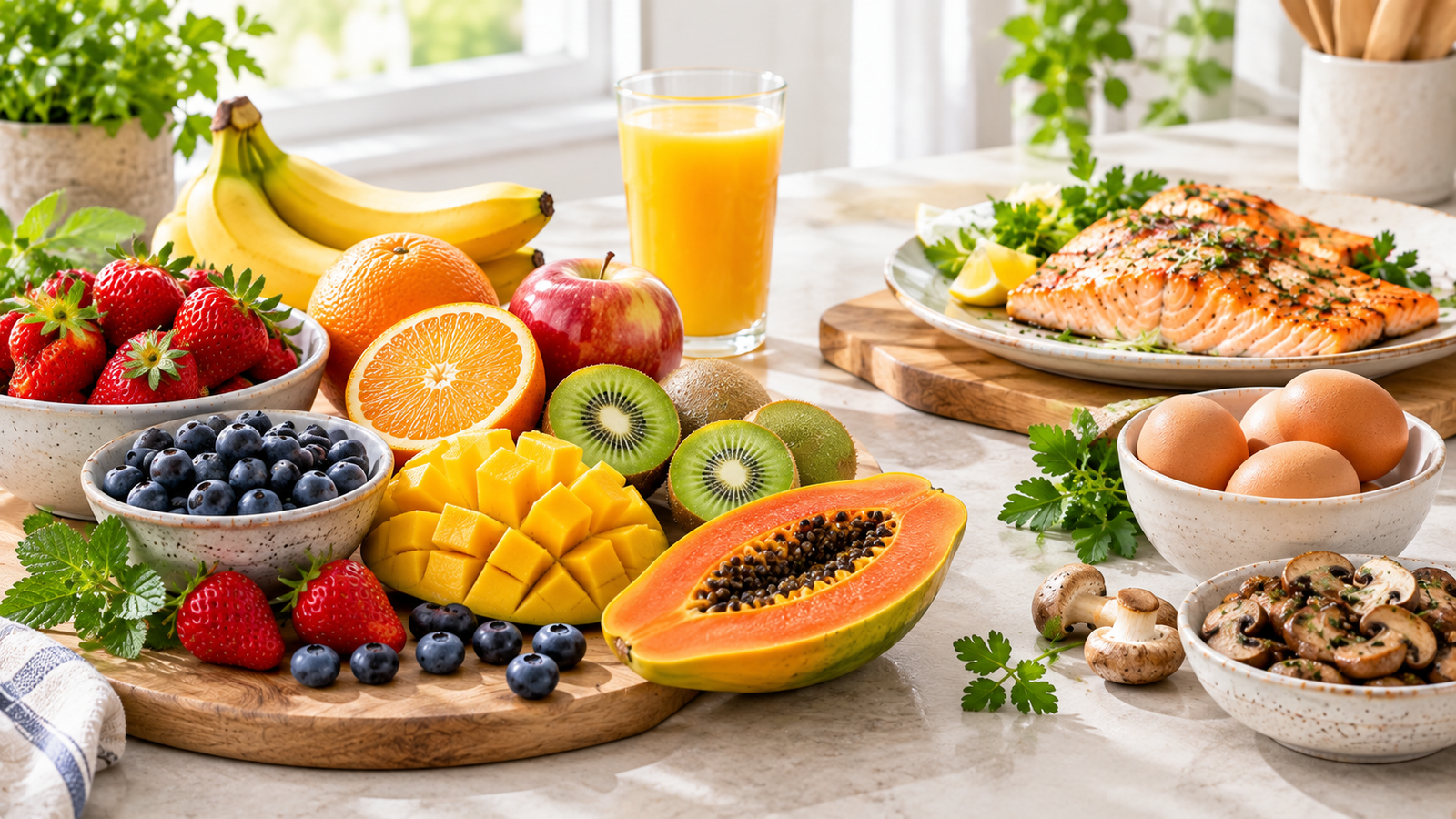
If you’ve ever wondered whether there are fruits high in vitamin D, the answer may be surprising: most fruits are not naturally significant sources of vitamin D.
Fruits are extremely nutritious and provide fiber, vitamin C, potassium, folate, antioxidants, and many other beneficial compounds. But vitamin D is different. Naturally occurring vitamin D is found in relatively few foods, and most whole fruits aren’t among the major sources.
There is one important exception to know about: some fruit-based products, especially fortified juices, may have vitamin D added to them. That means a glass of fortified orange juice can contribute vitamin D even though the orange itself isn’t naturally rich in the vitamin.
Understanding this distinction can help you build a diet that includes plenty of fruit while relying on more appropriate foods for vitamin D.
Key Takeaways
- Most whole fruits are not naturally high in vitamin D.
- Oranges, bananas, berries, apples, mangoes, and other fruits are nutritious but aren’t significant natural vitamin D sources.
- Some fruit juices may be fortified with vitamin D.
- Fortified orange juice can provide vitamin D depending on the product.
- Vitamin D is naturally more abundant in foods such as fatty fish, egg yolks, certain mushrooms, and fish liver oils.
- Fortified milk and plant-based beverages can also provide vitamin D.
- Eating fruit is still important for overall health even though fruit isn’t a major vitamin D source.
- Always check nutrition labels when looking for vitamin D in fruit-based products.
Are There Fruits High in Vitamin D?
In practical terms, there are no common whole fruits that naturally provide substantial amounts of vitamin D.
This is one reason searches for “vitamin D rich fruits” can be confusing.
People sometimes see lists online that include oranges, bananas, strawberries, avocados, or other fruits as vitamin D sources. While these foods can be excellent choices for many other nutrients, they generally shouldn’t be counted on to provide meaningful amounts of vitamin D.
Why Doesn’t Fruit Contain Much Vitamin D?
Vitamin D occurs naturally in a relatively limited number of foods.
Unlike vitamin C, which is abundant in many fruits, vitamin D is more commonly associated with:
- Fatty fish
- Egg yolks
- Certain mushrooms exposed to ultraviolet light
- Fish liver oils
Vitamin D is also commonly added to certain foods through fortification.
So, if your goal is specifically to increase dietary vitamin D, eating more fruit is healthy—but it isn’t usually the most effective strategy.
What Fruits Are Highest in Vitamin D?
When people search for fruits high in vitamin D, they’re often expecting a list of fruits ranked by their vitamin D content.
The reality is simpler: most common whole fruits contain little to no meaningful vitamin D.
Here are some popular fruits and what you should know about them.
Oranges
Oranges are excellent sources of vitamin C, but the whole fruit isn’t naturally high in vitamin D.
However, some orange juice is fortified with vitamin D.
This makes an important distinction:
Orange: Naturally nutritious, but not a significant vitamin D source.
Fortified orange juice: May contain added vitamin D.
Always check the nutrition label to determine whether vitamin D has been added.
Bananas
Bananas provide carbohydrates, potassium, vitamin B6, and other nutrients, but they aren’t considered a significant natural source of vitamin D.
They’re still an excellent food to include in a balanced diet.
Pair a banana with vitamin D-fortified yogurt or milk for a more nutrient-dense snack.
Strawberries
Strawberries are rich in vitamin C and provide fiber and beneficial plant compounds.
However, they aren’t naturally high in vitamin D.
Add them to fortified yogurt or a bowl of fortified cereal to combine vitamin D-containing foods with nutrient-rich fruit.
Blueberries
Blueberries provide fiber and antioxidant compounds but aren’t a meaningful natural source of vitamin D.
They’re an excellent addition to oatmeal, yogurt, smoothies, and breakfast bowls, even though their vitamin D contribution is minimal.
Mangoes
Mangoes provide vitamin C, carotenoids, and other nutrients.
But like most fruits, mangoes don’t naturally provide significant amounts of vitamin D.
Kiwi
Kiwi is particularly well known for its vitamin C content and also provides fiber and other nutrients.
It isn’t considered a significant source of vitamin D.
Avocado
Avocado is nutritionally different from many fruits because it provides healthy unsaturated fats, fiber, potassium, and other nutrients.
Despite these benefits, avocado isn’t a significant natural source of vitamin D.
Papaya
Papaya provides vitamin C, carotenoids, and other beneficial nutrients.
It should not, however, be relied upon as a dietary source of vitamin D.
Apples
Apples provide fiber and a variety of plant compounds but contain little meaningful vitamin D.
They’re still a convenient and nutritious everyday fruit.
Grapes
Grapes provide water, carbohydrates, and various plant compounds but aren’t a significant source of vitamin D.
Does Orange Juice Have Vitamin D?
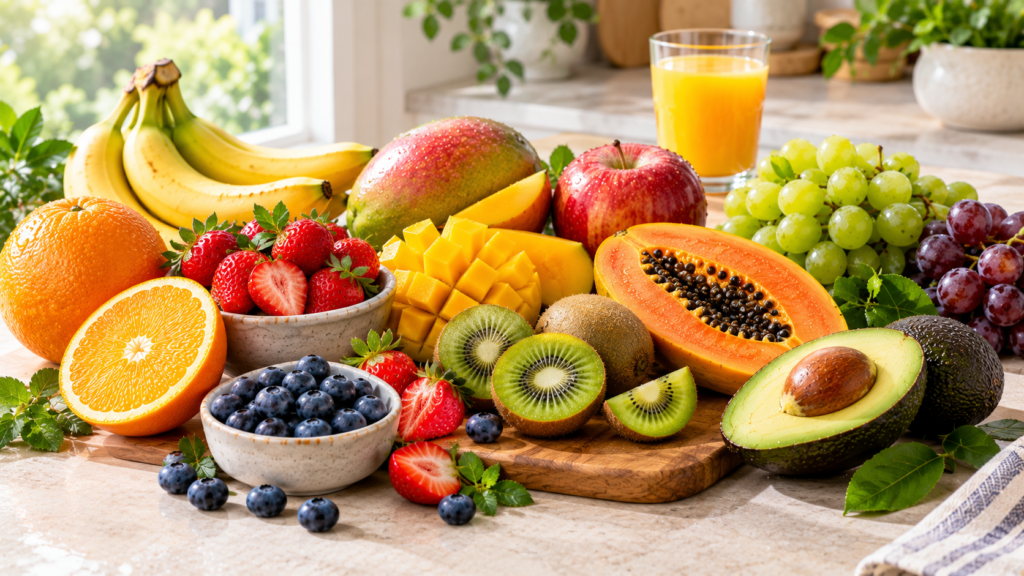
This is one of the most important distinctions when discussing fruits with vitamin D.
Oranges themselves aren’t a significant natural source of vitamin D.
However, some orange juice products are fortified with vitamin D.
Fortification means a manufacturer adds a nutrient to a food or beverage that may not naturally contain much of it.
Therefore, two orange juice products can have very different vitamin D content.
How to Tell if Orange Juice Contains Vitamin D
Check the nutrition label.
Look for:
- Vitamin D in the nutrition facts
- The amount per serving
- Serving size
- Whether calcium is also added
- Added sugar
If vitamin D isn’t listed, don’t assume the product contains it.
What About Other Fruit Juices?
Orange juice gets the most attention, but other fruit-based beverages may also be fortified depending on the country and manufacturer.
Potential examples include:
- Fruit blends
- Apple-based beverages
- Mixed fruit juices
- Smoothie-style fortified drinks
However, fortification is product-specific, not something you can assume from the type of fruit.
A juice made from a fruit naturally lacking vitamin D won’t automatically contain vitamin D unless the manufacturer adds it.
Learn more about vitamin D food sources and fortified foods
Why Is Vitamin D Different From Vitamin C?
The confusion between fruit and vitamin D may come from the fact that fruits are strongly associated with vitamins.
Vitamin C, for example, is abundant in many fruits.
Vitamin D is different.
Vitamin C
Common food sources include:
- Oranges
- Kiwi
- Strawberries
- Guava
- Bell peppers
- Broccoli
Vitamin D
Important food sources include:
- Salmon
- Trout
- Sardines
- Mackerel
- Egg yolks
- UV-exposed mushrooms
- Fortified milk
- Fortified plant-based beverages
- Some fortified cereals and juices
So while fruit can help you obtain many essential nutrients, it generally isn’t the food group to prioritize when specifically trying to increase vitamin D intake.
Best Natural Foods High in Vitamin D
If you’re looking beyond fruits high in vitamin D, several foods are much more useful.
1. Salmon
Salmon is one of the most practical dietary sources of vitamin D.
It also provides protein and omega-3 fatty acids.
Try baked salmon with vegetables and a whole grain for a balanced meal.
2. Trout
Rainbow trout can provide vitamin D along with protein and beneficial fats.
Its mild flavor makes it an easy option for many people.
3. Sardines
Sardines are small oily fish that can contribute vitamin D and omega-3 fatty acids.
Canned sardines are particularly convenient.
4. Mackerel
Mackerel is another oily fish that can provide vitamin D.
Because different species have different mercury profiles, follow current seafood-safety recommendations.
5. Egg Yolks
Egg yolks contain vitamin D, making whole eggs a convenient food source.
6. UV-Exposed Mushrooms
Some mushrooms exposed to ultraviolet light can contain meaningful amounts of vitamin D.
Not every mushroom has the same vitamin D content, so check the product information.
7. Fortified Milk
Many milk products are fortified with vitamin D.
Check the nutrition label for the actual amount.
8. Fortified Plant-Based Beverages
Soy, oat, almond, and other plant-based beverages may be fortified with vitamin D.
Look at the label rather than assuming all brands contain it.
9. Fortified Breakfast Cereals
Some cereals provide added vitamin D and can be paired with fortified milk for an easy breakfast.
10. Fortified Yogurt
Some yogurt products contain added vitamin D.
Again, fortification varies, so check the label.
Best vitamin D rich foods to add to your diet
Can Fruit Still Be Part of a Vitamin D Diet?
Absolutely.
The fact that fruit isn’t naturally rich in vitamin D doesn’t make it less valuable.
In fact, fruit can complement vitamin D-rich foods extremely well.
For example:
Breakfast
Fortified cereal + fortified milk + strawberries
Snack
Fortified yogurt + blueberries + banana
Lunch
Salmon + leafy greens + avocado + orange slices
Dinner
Grilled trout + vegetables + whole grains + fresh fruit
The goal is to combine foods that contribute different nutrients rather than expecting one food to provide everything.
Vitamin D and Calcium Work Together
When thinking about vitamin D, it’s also useful to consider calcium.
Vitamin D helps the body absorb calcium, making both nutrients important for normal bone health.
Calcium-rich foods can include:
- Milk
- Yogurt
- Cheese
- Calcium-fortified plant beverages
- Certain tofu products
- Some leafy greens
- Foods made with calcium-containing ingredients
A meal containing both vitamin D and calcium can therefore be a practical part of a bone-supportive dietary pattern.
Is Fortified Fruit Juice a Good Source of Vitamin D?
Fortified juice can contribute vitamin D, but whether it is a good choice depends on the overall diet.
Potential Benefits
Fortified juice can:
- Provide vitamin D
- Provide vitamin C
- Be convenient
- Help people who don’t consume dairy obtain some vitamin D
Things to Consider
Juice generally contains less fiber than whole fruit.
It can also be easy to consume large amounts quickly.
For that reason, whole fruit should generally remain an important part of a balanced diet, with fortified juice used appropriately rather than treated as a replacement for fruit.

How to Read a Food Label for Vitamin D
If you’re specifically looking for vitamin D food sources, nutrition labels are one of your best tools.
Don’t judge a food by its name alone.
For example:
“Orange juice” does not automatically mean “vitamin D.”
Instead, check whether vitamin D appears in the nutrition information.
Look For:
Vitamin D: Is it listed?
Amount per serving: How much does one serving provide?
Serving size: Is the amount based on a realistic serving?
Added sugars: Especially important for sweetened beverages.
Calcium: Useful when you’re building a diet focused on bone health.
This is particularly important with fortified foods because fortification levels can vary by manufacturer and country.
Can Sunlight Provide Vitamin D?
The body can produce vitamin D when skin is exposed to ultraviolet B radiation.
However, vitamin D production varies significantly based on:
- Season
- Geographic location
- Time of day
- Skin pigmentation
- Age
- Clothing
- Sunscreen use
- Amount of exposed skin
It’s not advisable to deliberately seek excessive sun exposure as a vitamin D strategy because ultraviolet radiation can damage skin and increase skin-cancer risk.
Food and medically appropriate supplementation can be important parts of maintaining adequate vitamin D status.
Who May Be at Risk of Low Vitamin D?
Vitamin D status varies from person to person.
Some people may have a higher risk of inadequate vitamin D because of factors such as:
- Limited sun exposure
- Spending most of their time indoors
- Older age
- Darker skin pigmentation
- Certain digestive conditions
- Conditions affecting nutrient absorption
- Certain medications
- Limited dietary sources of vitamin D
If you suspect low vitamin D, a healthcare professional can determine whether testing is appropriate.
What About Vitamin D Supplements?
Supplements can be useful for some people, but they shouldn’t automatically replace a healthy diet.
Vitamin D is fat-soluble, so taking excessive amounts can lead to toxicity.
If you’re considering supplementation, especially high-dose vitamin D, discuss it with a healthcare professional.
This is particularly important for children, pregnant people, older adults, and anyone with a medical condition affecting nutrient absorption or metabolism.
Simple Ways to Get More Vitamin D Without Giving Up Fruit
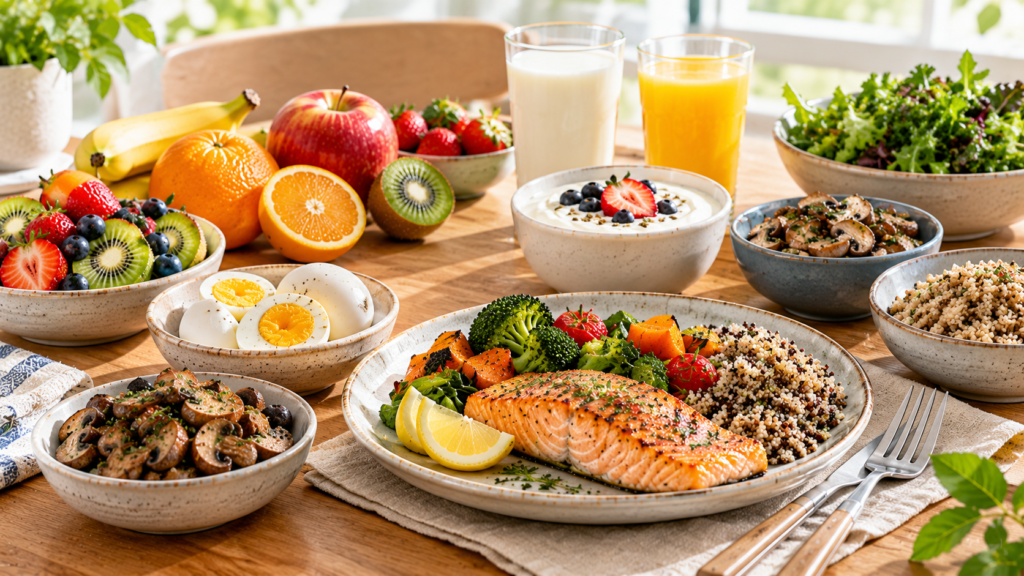
You don’t need to choose between fruit and vitamin D-rich foods.
Instead, combine them.
Try These Combinations
Fortified yogurt + berries
A simple breakfast or snack.
Fortified milk + banana
An easy smoothie combination.
Fortified cereal + strawberries + fortified milk
A convenient breakfast.
Salmon + avocado + orange slices
A nutrient-dense lunch.
Eggs + whole-grain toast + fruit
A simple breakfast or light meal.
Trout + vegetables + fresh fruit
A balanced dinner.
This approach allows fruit to contribute its own valuable nutrients while other foods provide vitamin D.
Common Myths About Fruits and Vitamin D
Myth 1: Oranges Are Naturally High in Vitamin D
Fact: Oranges are nutritious and rich in vitamin C, but they aren’t naturally significant sources of vitamin D.
Myth 2: All Fruit Juice Contains Vitamin D
Fact: Some juices are fortified with vitamin D, while others aren’t.
Myth 3: Bananas Are High in Vitamin D
Fact: Bananas provide potassium, carbohydrates, vitamin B6, and other nutrients but aren’t a significant source of vitamin D.
Myth 4: Eating Lots of Fruit Prevents Vitamin D Deficiency
Fact: Fruit is an important part of a healthy diet, but most fruits don’t provide enough vitamin D to be relied upon for this nutrient.
Myth 5: You Need to Avoid Fruit Because It Doesn’t Contain Vitamin D
Fact: Absolutely not. Fruit remains an important source of fiber, vitamins, minerals, and beneficial plant compounds.
Frequently Asked Questions
Are there any fruits naturally high in vitamin D?
Most common whole fruits are not naturally high in vitamin D. Vitamin D is much more abundant in foods such as fatty fish, egg yolks, certain mushrooms, and fortified foods.
What fruits contain vitamin D?
Common fruits generally contain little or no meaningful vitamin D. However, fruit-based products such as fortified orange juice may contain added vitamin D.
Is orange high in vitamin D?
No. Oranges are excellent sources of vitamin C but aren’t naturally high in vitamin D. Some orange juice products are fortified with vitamin D.
Is orange juice a good source of vitamin D?
Some fortified orange juices can provide vitamin D. Check the nutrition label because not all orange juice is fortified.
Are bananas high in vitamin D?
No. Bananas aren’t a significant source of vitamin D, although they provide potassium, vitamin B6, carbohydrates, and other nutrients.
Are strawberries high in vitamin D?
Strawberries aren’t naturally high in vitamin D. They are nutritious sources of vitamin C, fiber, and other plant compounds.
What fruit has the most vitamin D?
There isn’t a common whole fruit that can be considered a significant natural vitamin D source. Fortified fruit products may contain vitamin D because the nutrient has been added.
What should I eat instead of fruit for vitamin D?
If your goal is specifically to increase vitamin D intake, consider fatty fish such as salmon and trout, egg yolks, UV-exposed mushrooms, and vitamin D-fortified foods such as milk and certain plant-based beverages.
Can I get enough vitamin D from fruit?
Generally, fruit alone is not a reliable way to obtain enough vitamin D because most whole fruits contain very little of the vitamin.
Conclusion
So, are there fruits high in vitamin D? For most common whole fruits, the answer is no. Oranges, bananas, berries, apples, mangoes, kiwi, and other fruits are highly nutritious, but they shouldn’t be considered major natural sources of vitamin D.
The important exception is fortified fruit products, particularly certain orange juices. Because vitamin D is added during processing, the only reliable way to know whether a product contains it is to check the nutrition label.
If increasing vitamin D is your goal, focus on foods that naturally provide the nutrient—especially fatty fish, egg yolks, and certain UV-exposed mushrooms—along with appropriate fortified foods.
And don’t leave fruit off your plate. Fruit still plays an important role in a balanced diet. The key is simply to let each food group do what it does best: enjoy fruit for its fiber and plant nutrients, and choose appropriate vitamin D-rich foods to help meet your vitamin D needs.