
Are There Vegetables High in Vitamin D?
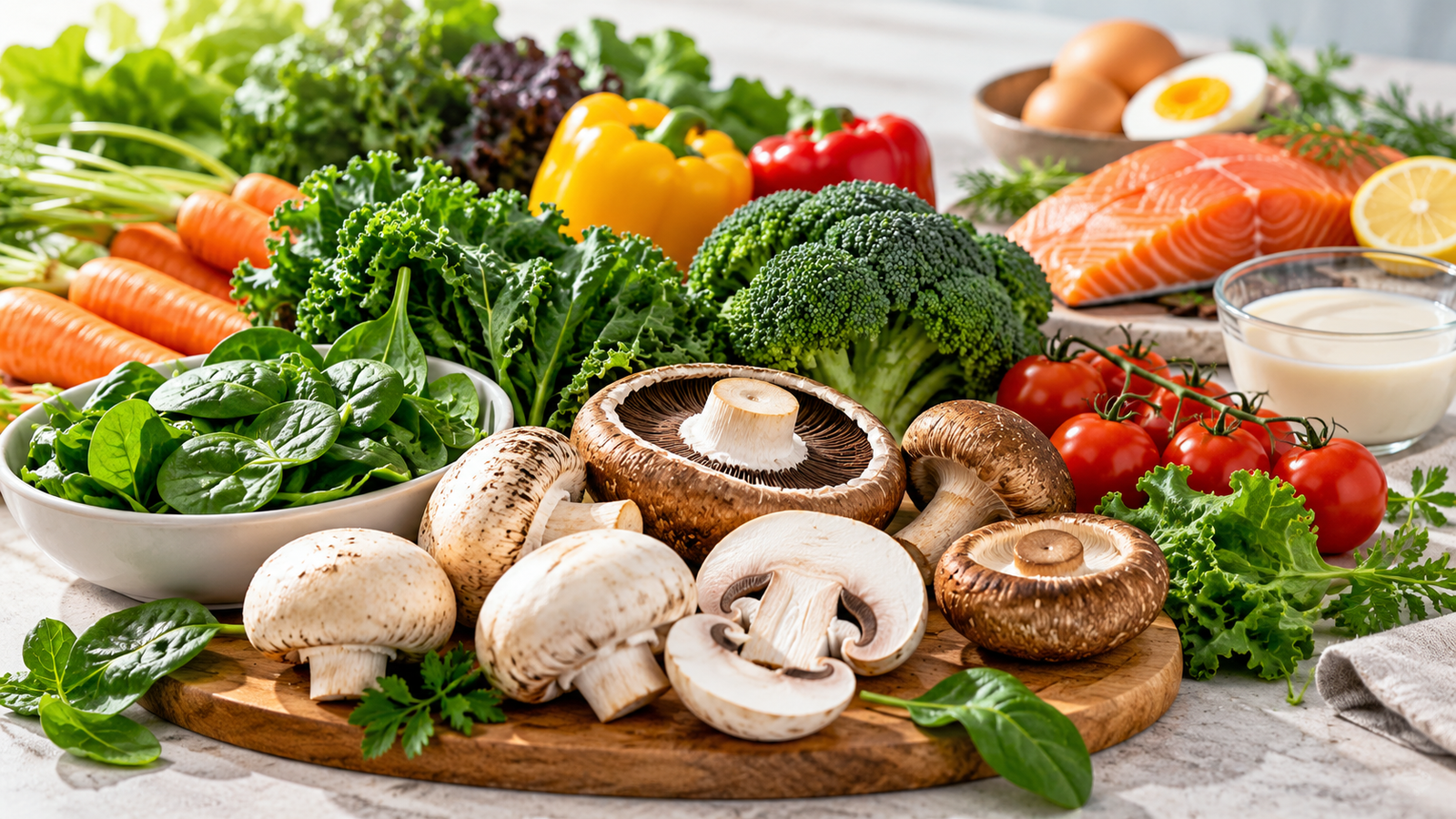
If you’re trying to increase your vitamin D intake through vegetables, there’s an important fact to know: most vegetables are not naturally high in vitamin D.
Vitamin D occurs naturally in relatively few foods. Fatty fish, fish liver oils, egg yolks, beef liver, and some dairy foods provide vitamin D, while fortified foods can provide additional amounts. Mushrooms are unusual among plant foods because some can contain vitamin D2, particularly when they have been exposed to ultraviolet (UV) light.
So, are there vegetables high in vitamin D? The short answer is very few. UV-exposed mushrooms are the main food in this category worth knowing about.
That doesn’t mean vegetables are unimportant. Vegetables provide fiber, potassium, folate, vitamin C, vitamin K, carotenoids, and many other nutrients. The key is to combine a varied vegetable-rich diet with reliable vitamin D sources.
Key Takeaways
- Most vegetables naturally contain little or no vitamin D.
- UV-exposed mushrooms can provide meaningful vitamin D2.
- Regular mushrooms may contain much less vitamin D than UV-treated varieties.
- Leafy greens, broccoli, carrots, tomatoes, peppers, and similar vegetables are nutritious but aren’t major vitamin D sources.
- Fortified foods can be useful when you need more dietary vitamin D.
- Fatty fish such as salmon and trout are among the richest natural food sources.
- Always check the nutrition label because vitamin D content can vary substantially between products.
- A balanced diet can include vegetables for overall nutrition while obtaining vitamin D from several appropriate sources.
Why Are Vegetables Usually Low in Vitamin D?
Vitamin D is different from many other vitamins because relatively few foods naturally contain substantial amounts of it.
Plants generally aren’t major natural sources of vitamin D. Instead, vitamin D is found naturally in certain animal foods and can also be added to fortified foods.
According to the National Institutes of Health Office of Dietary Supplements, very few foods naturally contain vitamin D. Mushrooms can provide vitamin D2, and some mushrooms are deliberately exposed to UV light to increase their vitamin D content.
This explains why eating plenty of vegetables doesn’t necessarily mean you’re getting enough vitamin D.
Vegetables should still be an important part of your diet, but they shouldn’t be considered your primary vitamin D strategy.
The Vegetable Most Notable for Vitamin D: Mushrooms
When discussing vegetables high in vitamin D, mushrooms deserve special attention.
Technically, mushrooms are fungi rather than vegetables, but they are commonly grouped with vegetables in everyday cooking and nutrition discussions.
Some mushrooms can produce vitamin D2 after exposure to ultraviolet light. This is similar in principle to how UV exposure triggers vitamin D production in human skin.
UV-Exposed Mushrooms
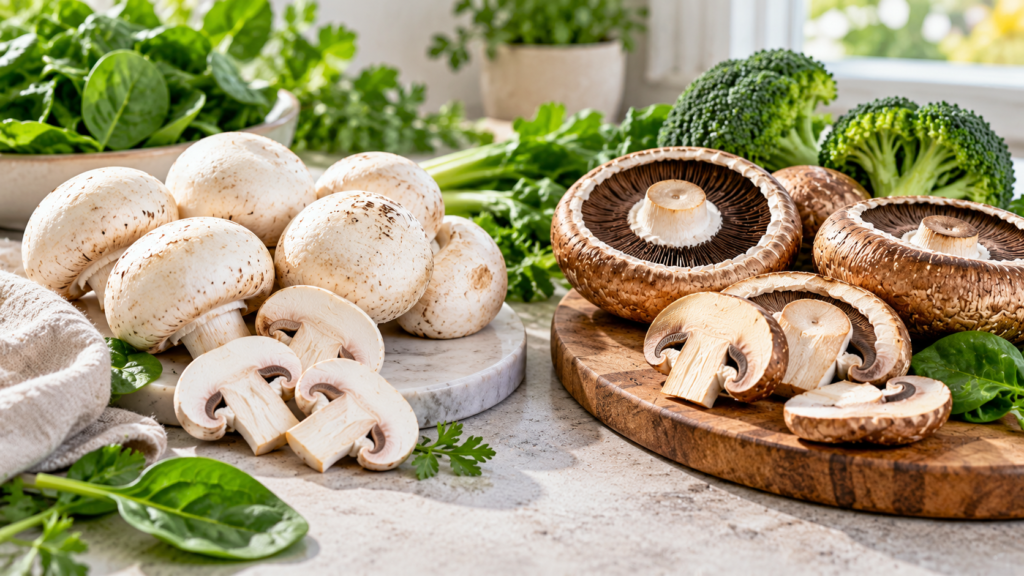
UV-treated mushrooms can contain considerably more vitamin D than ordinary mushrooms.
For example, the NIH lists ½ cup of sliced white mushrooms exposed to UV light as providing about 9.2 mcg (366 IU) of vitamin D. By comparison, the same reference lists ordinary portabella mushrooms at only about 0.1 mcg (4 IU) per ½ cup.
That’s a major difference.
However, not every package of mushrooms contains the same amount of vitamin D. The amount depends on factors such as mushroom variety, growing conditions, and UV exposure.
Practical tip: If you’re specifically buying mushrooms for vitamin D, look for products that state they have been exposed to UV light or that provide vitamin D information on the nutrition label.
How Much Vitamin D Do Mushrooms Provide?
The amount varies considerably.
Some mushrooms contain only trace amounts of vitamin D, while UV-exposed varieties can provide substantially more. This makes it difficult to give one universal vitamin D number for all mushrooms.
The NIH specifically notes that mushrooms provide variable amounts of vitamin D2 and that some commercially available mushrooms are treated with UV light to increase their vitamin D2 content.
This is why checking the nutrition label is more useful than assuming all mushrooms are high in vitamin D.
If the package doesn’t provide vitamin D information, don’t automatically assume the mushrooms contain a large amount.
What About Other Vegetables?
Many vegetables are excellent sources of other nutrients but aren’t significant sources of vitamin D.
Examples include:
Spinach
Spinach provides folate, vitamin K, carotenoids, and other nutrients, but it isn’t a meaningful natural source of vitamin D.
Broccoli
Broccoli is rich in vitamin C, vitamin K, fiber, and several beneficial plant compounds. However, it does not provide significant natural vitamin D.
Kale
Kale is a nutrient-dense leafy green containing vitamin K, carotenoids, vitamin C, and other nutrients, but it isn’t a major source of vitamin D.
Carrots
Carrots are well known for beta-carotene and other nutrients, but they don’t provide meaningful amounts of vitamin D.
Bell Peppers
Bell peppers are particularly useful for vitamin C and carotenoids, but they aren’t a significant source of vitamin D.
Tomatoes
Tomatoes contribute vitamin C, potassium, and carotenoid compounds such as lycopene, but they aren’t naturally high in vitamin D.
The important takeaway is that nutritious doesn’t automatically mean high in vitamin D.
Can Leafy Green Vegetables Help With Vitamin D?
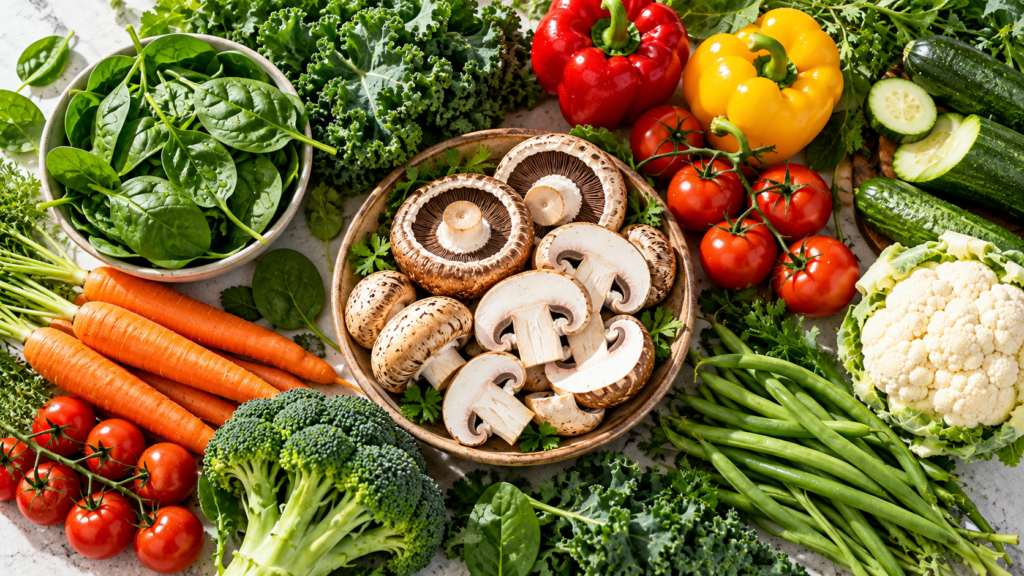
Leafy greens aren’t major vitamin D sources, but they can still be an important part of a diet designed to support overall bone and metabolic health.
Vitamin D works closely with calcium. Vitamin D helps the body absorb calcium, while calcium is an essential mineral for bones and teeth.
Many vegetables contribute other nutrients that support a balanced dietary pattern.
For example, leafy greens can provide vitamin K, folate, vitamin C, potassium, and other nutrients.
Rather than searching for one vegetable that provides everything, think about dietary combinations.
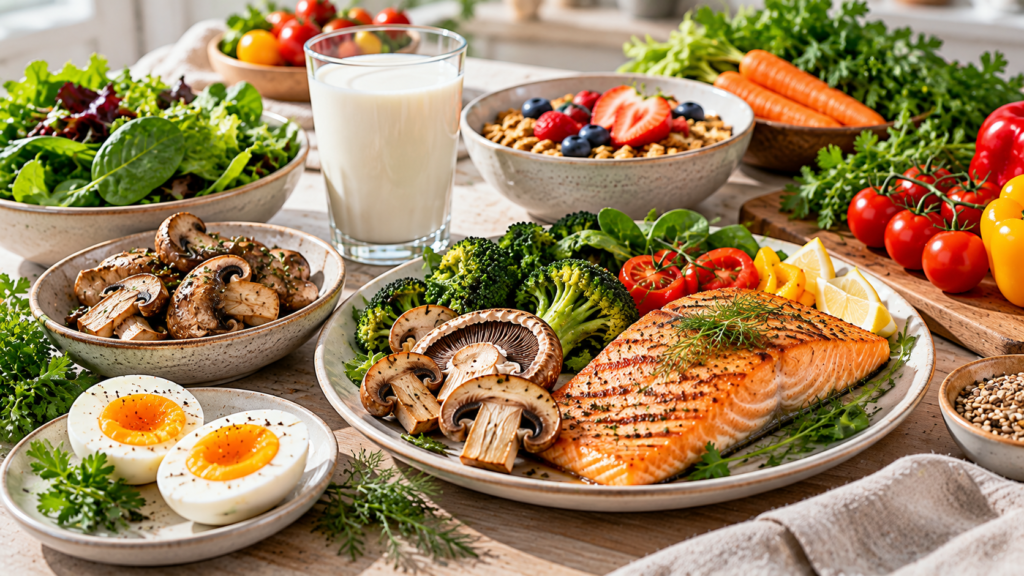
A balanced meal might include:
- UV-exposed mushrooms
- Leafy greens
- Broccoli
- Eggs
- Fortified milk or plant milk
- Salmon or another vitamin-D-rich fish
This approach gives you a broader range of nutrients than relying on a single food.
Best Non-Vegetable Food Sources of Vitamin D
If your goal is specifically to increase vitamin D intake, other foods are generally more reliable than vegetables.
Fatty Fish
Fatty fish are among the best natural food sources of vitamin D.
Examples include:
- Salmon
- Rainbow trout
- Mackerel
- Tuna
- Sardines
- Herring
For example, NIH data lists about 16.2 mcg (645 IU) of vitamin D in 3 ounces of cooked farmed rainbow trout and about 14.2 mcg (570 IU) in 3 ounces of cooked sockeye salmon.
Eggs
Egg yolks contain vitamin D, although the amount is much lower than that found in fatty fish.
Eggs can nevertheless be useful as part of a varied diet.
Fortified Milk
Many milk products are fortified with vitamin D.
In the U.S., for example, fortified milk commonly provides around 3 mcg (120 IU) per cup, although amounts can vary by product and country.
Fortified Plant-Based Milk
Soy, almond, and oat beverages may also be fortified with vitamin D.
Because fortification practices vary, check the nutrition label rather than assuming a plant-based beverage contains vitamin D.
Fortified Breakfast Cereals
Some breakfast cereals contain added vitamin D.
Pairing fortified cereal with fortified milk can create a convenient vitamin D-containing breakfast.
Fortified Orange Juice
Some orange juice products are fortified with vitamin D.
Again, the key is to check the label because not every orange juice product contains added vitamin D.
How to Build a Vitamin D-Friendly Vegetable Meal
You don’t need to abandon vegetables simply because they’re low in vitamin D.
Instead, combine vegetables with foods that naturally contain or are fortified with vitamin D.
Breakfast
Try:
- Fortified milk or fortified plant milk
- Fortified whole-grain cereal
- Eggs
- Fresh fruit
Lunch
Consider:
- Salmon or tuna
- Large leafy green salad
- UV-exposed mushrooms
- Whole grains
- Colorful vegetables
Dinner
A simple combination could include:
- Grilled trout
- Roasted UV-exposed mushrooms
- Broccoli
- Sweet potato
- Leafy greens
The goal isn’t to make every vegetable a vitamin D source. It’s to create a dietary pattern where different foods contribute different nutrients.
Natural Vitamin D vs. Fortified Vitamin D
Understanding the difference between natural and fortified sources makes food shopping easier.
Natural sources contain vitamin D without it being added during food processing. Examples include fatty fish, egg yolks, and some mushrooms.
Fortified foods have vitamin D added during manufacturing. Examples can include milk, plant-based beverages, breakfast cereals, and certain orange juices.
Because fortification differs by brand and country, reading the nutrition label is essential.
NIH vitamin D food sources guide
Can You Get Enough Vitamin D From Vegetables Alone?
For most people, relying entirely on vegetables for vitamin D would be difficult.
The NIH notes that very few foods naturally contain vitamin D, and obtaining sufficient vitamin D from natural nonfortified foods alone can be challenging.
UV-exposed mushrooms can contribute, but they shouldn’t be treated as a universal replacement for all other vitamin D sources.
A more practical approach is to combine:
- Vitamin-D-containing foods
- Fortified foods when appropriate
- A balanced overall diet
- Appropriate sunlight exposure
- Supplements when recommended for an individual situation
Vitamin D needs also vary by age and individual circumstances.
For adults ages 19–70, the NIH lists a recommended amount of 15 mcg (600 IU) per day, while adults 71 and older are listed at 20 mcg (800 IU).
What About Sunlight?
Your body can produce vitamin D when UVB radiation from sunlight reaches exposed skin.
However, vitamin D production varies based on factors including season, location, skin pigmentation, age, clothing, cloud cover, and other circumstances.
Sun exposure also carries skin-cancer risk, so deliberately seeking excessive sun exposure isn’t a good substitute for a balanced dietary approach.
If you’re concerned about vitamin D status, particularly if you have risk factors for deficiency, discuss your situation with a healthcare professional.
Do You Need Vitamin D Supplements?
Not necessarily.
Some people can meet their vitamin D needs through a combination of food, fortified foods, and sunlight. Others may need supplementation depending on their diet, health status, life stage, or vitamin D levels.
It’s better not to assume that taking a high-dose supplement is necessary simply because vegetables contain little vitamin D.
The NIH notes that vitamin D supplements are available as vitamin D2 and D3, and both forms can raise blood vitamin D levels.
If you suspect a deficiency or are considering high-dose supplementation, speak with a qualified healthcare professional rather than self-prescribing large doses.
How to Choose Foods for More Vitamin D
When shopping, use these simple strategies.
1. Look for UV-exposed mushrooms
If mushrooms are your plant-based choice for vitamin D, look specifically for products indicating UV treatment or providing vitamin D on the nutrition label.
2. Check fortified foods
Look at the vitamin D amount listed on milk, plant beverages, cereals, yogurt, or juice.
3. Include fatty fish
Adding salmon, trout, sardines, or other appropriate fish to meals can substantially increase dietary vitamin D.
4. Don’t judge a food by its category
A food can be exceptionally nutritious without being a vitamin D source.
Broccoli, spinach, carrots, and peppers are all valuable foods even though they aren’t major vitamin D contributors.
5. Think about the whole meal
Combining several nutrient-rich foods is usually more useful than searching for one “superfood.”
Common Myths About Vegetables and Vitamin D
Myth 1: All green vegetables contain vitamin D
Not true. Green vegetables can be rich in many nutrients, but they generally aren’t significant natural sources of vitamin D.
Myth 2: All mushrooms are high in vitamin D
Not necessarily. Vitamin D levels vary considerably. UV-exposed mushrooms can contain much more vitamin D than ordinary mushrooms.
Myth 3: Eating a lot of vegetables guarantees enough vitamin D
Vegetables are essential to a healthy dietary pattern, but vitamin D is one nutrient that may require additional food sources or fortification.
Myth 4: Fruit and vegetables are interchangeable vitamin D sources
Most fruits and vegetables naturally contain little or no vitamin D. Some fortified foods, such as certain beverages, are exceptions.
Are There Vegetables High in Vitamin D? The Bottom Line
So, are there vegetables high in vitamin D?
There are very few.
The most important exception is UV-exposed mushrooms, which can provide vitamin D2 in amounts substantially higher than ordinary mushrooms. Most common vegetables—including spinach, broccoli, carrots, peppers, tomatoes, and kale—are nutritious but are not meaningful natural sources of vitamin D.
Rather than trying to get all your vitamin D from vegetables, build a varied eating pattern that includes vitamin-D-rich foods, fortified products when appropriate, and plenty of nutrient-dense vegetables.
The best diet isn’t built around one nutrient or one “superfood.” It’s built around variety, balance, and foods that work together.
Frequently Asked Questions
Are there vegetables naturally high in vitamin D?
Very few vegetables naturally contain meaningful vitamin D. Mushrooms are the main plant-associated food to consider, particularly varieties exposed to UV light.
Which vegetable has the most vitamin D?
Mushrooms exposed to UV light can provide substantially more vitamin D2 than many ordinary vegetables. However, mushrooms are fungi rather than botanically classified vegetables.
Do spinach and broccoli contain vitamin D?
Spinach and broccoli are nutritious vegetables but are not significant natural sources of vitamin D.
Are mushrooms a good source of vitamin D?
Some mushrooms can be a useful source, particularly when they have been exposed to UV light. Vitamin D levels vary by product, so check the nutrition label when available.
Can you get enough vitamin D from plant foods?
It can be difficult to obtain enough vitamin D from naturally occurring plant foods alone. UV-exposed mushrooms and fortified plant-based foods can help, but dietary patterns often need to include other vitamin D sources as appropriate.
What foods are better sources of vitamin D than vegetables?
Fatty fish such as salmon and trout are among the strongest natural food sources. Fortified milk, fortified plant beverages, cereals, and some other fortified foods can also contribute vitamin D.
How can vegetarians get more vitamin D?
Vegetarians can consider UV-exposed mushrooms and vitamin-D-fortified foods such as fortified dairy or plant-based beverages and cereals. Depending on individual needs, a healthcare professional may also recommend supplementation.