

Iron is an essential mineral that helps your body produce hemoglobin, the protein in red blood cells responsible for carrying oxygen. It also supports normal energy metabolism, growth, and other important bodily functions.
Finding good dietary sources of iron does not have to be complicated. Meat, seafood, beans, lentils, tofu, seeds, and iron-fortified cereals can all contribute to your daily intake. The challenge is knowing which foods contain iron, how much they provide, and how to combine them for better absorption.
This iron foods chart makes it easier to compare common food sources, explore plant-based and animal-based options, and plan balanced meals. Whether you are trying to improve your everyday diet, follow a vegetarian eating pattern, or understand iron-rich foods for your family, this guide offers practical information to help you get started.
Key Takeaways
- Iron is found in animal foods, plant foods, and fortified products.
- Meat and seafood provide heme iron, which is generally absorbed more efficiently than plant-based non-heme iron.
- Lentils, beans, tofu, seeds, and fortified cereals are useful sources of non-heme iron.
- Vitamin C-rich foods, including tomatoes, citrus fruits, strawberries, and bell peppers, help improve non-heme iron absorption.
- Iron needs vary by age, sex, and life stage.
- Food choices can support adequate iron intake, but suspected iron deficiency may require medical assessment.
Iron Foods Chart: Dietary Sources at a Glance
The following chart provides approximate iron amounts for common foods. Values are illustrative estimates based on typical food composition data and can vary with the product, variety, preparation method, and serving size.
Iron Content in Common Foods
| Food | Typical serving | Approximate iron |
|---|---|---|
| Cooked lentils | ½ cup | 3.3 mg |
| Cooked spinach | ½ cup | 3.2 mg |
| Cooked beef | 3 oz (85 g) | 2–3 mg |
| Firm tofu | ½ cup | 3 mg |
| Cooked chickpeas | ½ cup | 2.4 mg |
| Cooked kidney beans | ½ cup | 2 mg |
| Pumpkin seeds | 1 oz (28 g) | 2.5 mg |
| Cooked quinoa | 1 cup | 2.8 mg |
| Cooked oatmeal | 1 cup | 1.5–2 mg |
| Cooked green peas | ½ cup | 1.2 mg |
| Egg | 1 large | About 0.9 mg |
| Sardines, canned | 3 oz (85 g) | About 2 mg |
| Cooked chicken | 3 oz (85 g) | About 1 mg |
| Iron-fortified cereal | 1 serving | Varies widely; check the label |
| Whole-wheat bread | 1 slice | About 0.7–1 mg |
How to use this chart: Compare the serving sizes as well as the iron amounts. A food with a high iron concentration may be eaten in a smaller portion, while other foods contribute iron through larger or more frequent servings.
For more precise values, search for the exact food and preparation method in USDA FoodData Central. For fortified products, use the nutrition label on the package.
Best Animal-Based Sources of Iron
Animal foods contain heme iron, non-heme iron, or a combination of both. Heme iron is generally more readily absorbed by the body than non-heme iron.
1. Lean Beef
Beef is a useful source of heme iron and protein. The iron content depends on the cut and cooking method.
Easy meal ideas:
- Lean beef with vegetables and rice.
- Minced beef in tomato-based pasta sauce.
- Tender beef added to a bean or vegetable stew.
2. Seafood
Some seafood provides meaningful amounts of iron. Shellfish such as clams can be particularly rich sources, while sardines and other fish contribute varying amounts.
Easy meal ideas:
- Sardines served with whole-grain toast.
- Cooked seafood with vegetables.
- Fish with quinoa and broccoli.
Iron content varies significantly by species, so check a reliable nutrient database when exact amounts matter.
3. Chicken and Turkey
Poultry supplies protein and some iron, although it generally provides less iron per serving than many iron-rich red meats or certain seafood.
Easy meal ideas:
- Shredded chicken in a bean wrap.
- Turkey with lentils and vegetables.
- Chicken and chickpea soup.
4. Eggs
Eggs contain some iron and provide protein and other nutrients. They can contribute to an iron-containing diet but should not be treated as the sole source.
Easy meal ideas:
- Scrambled eggs with tomatoes.
- Eggs with iron-containing whole-grain toast.
- An omelet with spinach and bell peppers.

Best Plant-Based Sources of Iron
Plant foods provide non-heme iron. Although this form is generally less readily absorbed than heme iron, plant-based foods can make valuable contributions to daily iron intake.
1. Lentils
Lentils are versatile sources of iron, fiber, and plant protein. They are suitable for soups, curries, salads, and family meals.
Try: Lentil dal with tomatoes and a squeeze of lemon.
2. Beans and Chickpeas
Kidney beans, black beans, and chickpeas contribute iron, fiber, and protein.
Try: A chickpea salad with red bell peppers, or kidney beans served with tomato salsa.
3. Tofu
Tofu provides plant protein and can be a useful iron source. The exact amount depends on the product and how it is made.
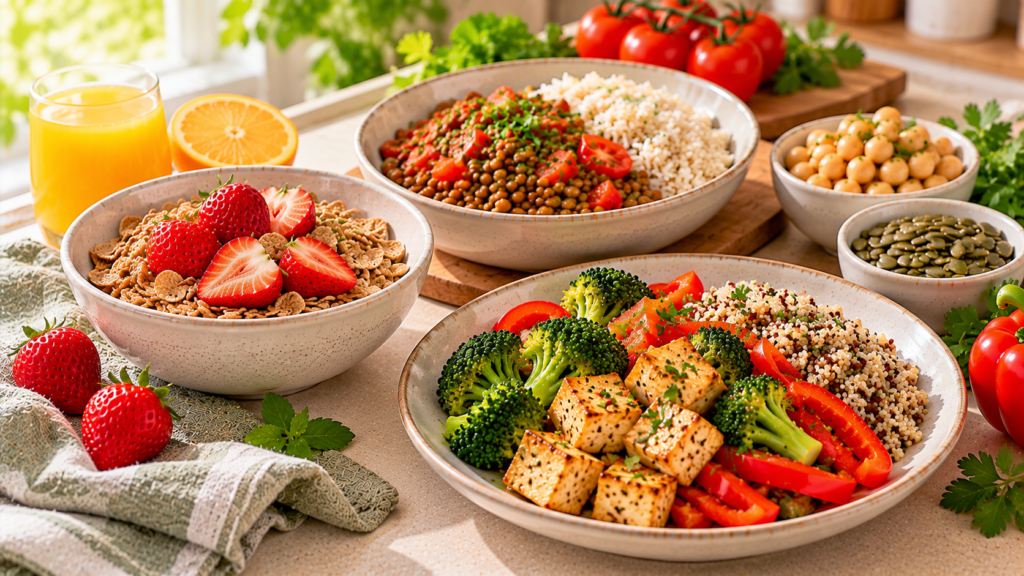
Try: Tofu stir-fried with broccoli and bell peppers.
4. Pumpkin Seeds
Pumpkin seeds provide iron and healthy fats. Their iron contribution depends on the portion eaten.
Try: Add ground pumpkin seeds to oatmeal or a suitable yogurt bowl. Whole seeds are not appropriate for young children who may choke on them.
5. Spinach and Other Vegetables
Spinach contains iron, but the amount absorbed can be limited by compounds naturally present in the plant. It is still a nutritious addition to a varied diet.
Try: Combine cooked spinach with lentils, tomatoes, or other vitamin C-rich vegetables.
6. Quinoa and Oats
Quinoa and oats provide non-heme iron and can form the base of breakfast bowls, grain salads, and warm meals.
Try: Serve quinoa with beans and broccoli or oatmeal with strawberries.
7. Iron-Fortified Foods
Some breakfast cereals, breads, and other grain products have iron added during manufacturing. These products can be useful, particularly for people who eat little or no meat.
Always compare nutrition labels because iron content varies substantially between brands.
Iron Rich Foods for Vegetarians
Iron-Rich Foods That Work Well With Vitamin C
Vitamin C helps the body absorb non-heme iron from plant foods and fortified products. Combining these foods in the same meal is a practical way to improve iron absorption.
| Iron source | Vitamin C pairing | Meal idea |
|---|---|---|
| Lentils | Tomatoes | Lentil curry with tomatoes |
| Chickpeas | Red bell peppers | Chickpea and pepper salad |
| Kidney beans | Tomato salsa | Bean wrap with salsa |
| Tofu | Broccoli | Tofu and broccoli stir-fry |
| Iron-fortified cereal | Strawberries | Cereal topped with fresh fruit |
| Oatmeal | Kiwi | Oatmeal with sliced kiwi |
| Spinach | Bell peppers | Spinach and pepper omelet |
| Quinoa | Broccoli | Quinoa bowl with vegetables |
Why Food Pairing Matters
Vitamin C helps keep non-heme iron in a form that is easier for the body to absorb. This is particularly useful for vegetarians and vegans, whose iron comes mainly from plant sources.
You do not need to follow complicated rules. Adding tomatoes to lentils, serving fruit with fortified cereal, or including bell peppers in a bean dish are simple ways to combine the nutrients.
Iron and Vitamin C: Foods That Work Well Together
NIH Office of Dietary Supplements: Vitamin C Fact Sheet
Iron Foods Chart for Vegetarians and Vegans
People following vegetarian or vegan diets can get iron from legumes, soy foods, whole grains, seeds, and fortified products.
| Food group | Examples | Practical tip |
|---|---|---|
| Legumes | Lentils, chickpeas, kidney beans | Add tomatoes or peppers |
| Soy foods | Tofu, selected soy products | Check product labels |
| Seeds | Pumpkin seeds, sesame seeds | Use appropriate portions and safe textures |
| Whole grains | Oats, quinoa, whole-grain bread | Combine with fruit or vegetables |
| Fortified foods | Iron-fortified cereal and bread | Check iron per serving |
| Vegetables | Spinach, peas, broccoli | Include a variety of vegetables |
Tips for Getting Enough Iron on a Plant-Based Diet
- Eat iron-containing foods regularly rather than relying on one ingredient.
- Include vitamin C-rich fruit and vegetables in meals.
- Check the iron content of fortified foods.
- Use varied protein sources such as lentils, beans, chickpeas, and tofu.
- Seek professional guidance if you have increased iron requirements or a history of iron deficiency.
A well-planned plant-based diet can provide iron, but the overall pattern matters. People following restrictive diets may benefit from advice from a registered dietitian.

How Much Iron Do You Need Per Day?
Iron requirements vary according to age, sex, and life stage. The following values are U.S. National Institutes of Health reference recommendations for generally healthy people; other countries may use different guidance.
| Group | Recommended daily iron intake |
|---|---|
| Infants, birth–6 months | 0.27 mg (adequate intake) |
| Infants, 7–12 months | 11 mg |
| Children, 1–3 years | 7 mg |
| Children, 4–8 years | 10 mg |
| Children, 9–13 years | 8 mg |
| Teen boys, 14–18 years | 11 mg |
| Teen girls, 14–18 years | 15 mg |
| Adult men, 19–50 years | 8 mg |
| Adult women, 19–50 years | 18 mg |
| Adults, 51 years and older | 8 mg |
| Pregnancy, ages 14–50 | 27 mg |
| Breastfeeding teens | 10 mg |
| Breastfeeding adults | 9 mg |
These recommendations refer to total daily intake, not the amount that must come from a single food. Iron requirements can differ for people with medical conditions or particular nutritional needs.
NIH Office of Dietary Supplements: Iron Fact Sheet for Consumers
Foods That May Reduce Iron Absorption
Some dietary compounds can reduce non-heme iron absorption, especially when consumed with an iron-rich meal.
Tea and Coffee
Tea and coffee contain polyphenols that can reduce non-heme iron absorption when consumed with meals. If you are concerned about your iron intake, consider drinking them between meals.
Phytates in Whole Grains and Legumes
Phytates occur naturally in legumes, seeds, and whole grains. They can reduce non-heme iron absorption, but these foods remain valuable sources of fiber, protein, and other nutrients.
Soaking, sprouting, fermenting, and suitable cooking methods can reduce phytate levels in some foods.
Calcium
Calcium may affect iron absorption under some conditions, but its long-term effect on overall iron status is less clear. Do not eliminate calcium-rich foods simply to improve iron absorption; calcium remains important for bone health.
If you have iron deficiency and take calcium supplements, ask your healthcare professional whether adjusting the timing is appropriate.
Simple Ways to Add More Iron to Your Diet
You can use this iron foods chart to make small, practical changes without completely changing your eating habits.
At Breakfast
- Choose an iron-fortified cereal and check the nutrition label.
- Add strawberries, kiwi, or another vitamin C-rich fruit.
- Try oatmeal with ground pumpkin seeds.
At Lunch
- Add chickpeas or beans to salads and wraps.
- Combine lentils with tomatoes.
- Choose a protein source that fits your dietary preferences.
At Dinner
- Serve lean beef with vegetables if you eat meat.
- Prepare lentil curry with tomatoes.
- Try tofu with broccoli and bell peppers.
- Add beans to soups, stews, or rice dishes.
For Snacks
- Try hummus with suitable vegetable pieces.
- Choose fruit alongside an iron-containing meal or snack.
- Add iron-containing ingredients to homemade dishes where appropriate.
Iron Deficiency: When Should You Seek Advice?
Iron deficiency occurs when the body’s iron stores become too low. If deficiency becomes severe enough to affect red blood cell production, it can lead to iron-deficiency anemia.
Possible symptoms include:
- Persistent tiredness or weakness.
- Pale skin.
- Headaches or dizziness.
- Shortness of breath during normal activity.
- Difficulty concentrating.
- Reduced exercise tolerance.
These symptoms can have several causes, so they cannot confirm iron deficiency on their own. A healthcare professional may recommend blood tests and assess factors such as diet, blood loss, pregnancy, or digestive conditions.
Food choices can support adequate iron intake, but diagnosed deficiency may require treatment and investigation of its cause. Do not start high-dose iron supplements without professional advice. Excess iron can be harmful, and accidental overdose is especially dangerous for children.
Iron Deficiency: Signs, Causes and Food Sources
Frequently Asked Questions
1. What is the best iron foods chart for everyday meals?
A useful chart includes a variety of sources, such as lentils, beans, beef, seafood, tofu, pumpkin seeds, spinach, and iron-fortified cereals. Compare serving sizes and iron amounts rather than focusing on one food.
2. Which food is highest in iron?
Some shellfish, particularly clams, can contain very high amounts of iron. Iron-fortified cereals can also provide substantial amounts, depending on the product. The highest source for you will depend on the serving size and preparation.
3. What are the best iron-rich foods for vegetarians?
Lentils, chickpeas, kidney beans, tofu, seeds, quinoa, and iron-fortified cereals are useful options. Pair them with vitamin C-rich foods to improve non-heme iron absorption.
4. Do fruits contain iron?
Most fruits are not especially rich in iron, although they may provide small amounts. Vitamin C-rich fruits, such as oranges, kiwi, guava, and strawberries, can help the body absorb non-heme iron from other foods.
5. What foods help the body absorb iron?
Vitamin C-rich foods such as tomatoes, bell peppers, strawberries, citrus fruits, and broccoli help improve non-heme iron absorption. Adding these foods to meals containing beans, lentils, tofu, or fortified cereal is a practical strategy.
6. How can I increase iron intake naturally?
Include a variety of iron-containing foods in regular meals, check fortified-food labels, and pair plant-based iron sources with vitamin C-rich ingredients. If you suspect iron deficiency, seek medical advice.
7. Is spinach a good source of iron?
Spinach contains iron, but its iron is non-heme iron and is not absorbed as efficiently as heme iron from many animal foods. It can still contribute to a balanced diet, especially when paired with vitamin C-rich foods.
8. Can an iron foods chart help treat iron deficiency?
A food chart can help you identify dietary sources and plan balanced meals. However, it cannot diagnose or treat every case of iron deficiency. Confirmed deficiency may require medical treatment and follow-up.
Expanded Iron Foods Chart: 25 Dietary Sources of Iron
An iron foods chart is easier to use when it includes serving sizes, approximate iron content, and practical ways to serve each food. The following expanded table helps readers compare animal-based foods, plant-based foods, and fortified products.
| Iron-rich food | Typical serving | Approximate iron |
|---|---|---|
| Cooked clams | 3 oz (85 g) | 20–24 mg or more |
| Iron-fortified cereal | 1 serving | Varies by brand |
| Cooked lentils | 1 cup | 6.6 mg |
| Cooked spinach | 1 cup | 6.4 mg |
| Firm tofu | ½ cup | About 3 mg |
| Cooked quinoa | 1 cup | 2.8 mg |
| Pumpkin seeds | 1 oz (28 g) | About 2.5 mg |
| Cooked chickpeas | 1 cup | About 4.7 mg |
| Cooked kidney beans | 1 cup | About 3.6 mg |
| Cooked black beans | 1 cup | About 3.6 mg |
| Cooked beef | 3 oz (85 g) | About 2–3 mg |
| Sardines | 3 oz (85 g) | About 2 mg |
| Cooked green peas | 1 cup | About 2.5 mg |
| Cooked oatmeal | 1 cup | About 1.5–2 mg |
| Cooked chicken | 3 oz (85 g) | About 1 mg |
| One large egg | 1 egg | About 0.9 mg |
| Whole-wheat bread | 1 slice | About 0.7–1 mg |
| Cooked broccoli | 1 cup | About 1 mg |
| Raisins | ¼ cup | About 0.8–1 mg |
| Cashews | 1 oz (28 g) | About 1.9 mg |
| Sunflower seeds | 1 oz (28 g) | About 1.4 mg |
| Cooked white beans | 1 cup | About 8 mg |
| Cooked edamame | 1 cup | About 3.5 mg |
| Cooked tempeh | ½ cup | Varies; check food database |
| Fortified bread | 1 serving | Varies by product |
Important: These figures are approximate reference values, not laboratory measurements for every product. Iron content varies with food variety, preparation, serving size, and fortification. Some entries are rounded, and fortified cereal can contain considerably more or less iron depending on the brand. Check product labels and consult USDA FoodData Central for specific foods.
Heme Iron vs. Non-Heme Iron: What Is the Difference?
Understanding the two types of dietary iron helps explain why some foods are absorbed more efficiently than others.
Heme Iron
Heme iron occurs in animal foods such as beef, poultry, seafood, and fish. The body generally absorbs this form more efficiently than non-heme iron.
Examples include:
- Beef and other meats
- Clams and some other shellfish
- Sardines and other seafood
- Chicken and turkey
Non-Heme Iron
Non-heme iron occurs in plant foods and fortified products. Its absorption is more strongly affected by other foods and dietary compounds.
Examples include:
- Lentils, chickpeas, and beans
- Tofu and other soy foods
- Pumpkin seeds and cashews
- Spinach and quinoa
- Iron-fortified cereals and breads
Vitamin C-rich foods can improve non-heme iron absorption. For example, adding tomatoes to lentils or serving strawberries with fortified cereal is a simple way to create a more effective food combination.
Iron-Rich Foods by Daily Dietary Needs
Iron requirements depend on age, sex, and life stage. The table below uses U.S. National Institutes of Health dietary reference values.
| Group | Recommended iron intake per day |
|---|---|
| Infants, birth–6 months | 0.27 mg (adequate intake) |
| Infants, 7–12 months | 11 mg |
| Children, 1–3 years | 7 mg |
| Children, 4–8 years | 10 mg |
| Children, 9–13 years | 8 mg |
| Teen boys, 14–18 years | 11 mg |
| Teen girls, 14–18 years | 15 mg |
| Adult men, 19–50 years | 8 mg |
| Adult women, 19–50 years | 18 mg |
| Adults, 51 years and older | 8 mg |
| Pregnancy | 27 mg |
These are general reference values, not individualized medical advice. People with diagnosed iron deficiency may need a treatment plan beyond dietary changes.
NIH Office of Dietary Supplements: Iron Fact Sheet
A Simple One-Day Meal Plan Using the Iron Foods Chart
You can use the iron foods chart to plan meals around a variety of iron sources without relying on a single ingredient.
| Meal | Example | Iron source |
|---|---|---|
| Breakfast | Iron-fortified cereal with strawberries | Fortified cereal |
| Morning snack | A suitable serving of cashews or another snack | Nuts provide some iron |
| Lunch | Lentil curry with tomatoes and rice | Lentils |
| Afternoon snack | Hummus with suitable bell pepper strips | Chickpeas |
| Dinner | Beef or tofu with broccoli and quinoa | Meat or plant-based iron sources |
This is an example rather than a prescribed diet. Portion sizes, energy needs, allergies, age, and individual nutritional requirements should guide meal planning. Choose safe food textures for young children, and avoid whole nuts for children at risk of choking.
Five Practical Tips for Getting More Iron From Food
- Pair plant-based iron with vitamin C. Combine beans with tomatoes, lentils with bell peppers, or fortified cereal with strawberries.
- Check food labels. Fortified cereals and breads differ considerably in their iron content.
- Eat a variety of iron sources. Rotate legumes, tofu, meat, seafood, seeds, and fortified products according to your preferences.
- Consider tea and coffee timing. Their polyphenols can reduce non-heme iron absorption when consumed with meals. Drinking them between meals may help if iron intake is a concern.
- Get medical advice if you suspect deficiency. Fatigue, weakness, and pale skin can have several causes. A healthcare professional can determine whether testing or treatment is appropriate.
Frequently Asked Questions About the Iron Foods Chart
Which food contains the most iron?
Certain shellfish, particularly clams, can provide very high amounts of iron per serving. Some iron-fortified cereals also provide substantial amounts, depending on the product and serving size.
What are the best plant-based sources of iron?
Lentils, beans, chickpeas, tofu, white beans, seeds, and iron-fortified cereals are useful options. Pair plant-based sources with vitamin C-rich foods to improve non-heme iron absorption.
Are iron-rich foods enough to correct iron deficiency?
Dietary changes can support healthy iron intake, but they may not be enough to treat diagnosed iron deficiency or anemia. Seek professional advice rather than starting high-dose iron supplements on your own.
How can I use an iron foods chart for meal planning?
Compare iron content per serving, select foods you enjoy, and include a range of sources across meals. Add vitamin C-rich fruit or vegetables to plant-based iron sources when practical.
Do vegetables provide enough iron?
Vegetables such as spinach and peas contribute iron, but amounts and absorption vary. For a more reliable dietary pattern, include other sources such as lentils, beans, tofu, meat, or fortified foods as appropriate.
Conclusion
This iron foods chart provides a simple starting point for choosing dietary sources of iron, from beef and seafood to lentils, beans, tofu, seeds, and fortified cereals. Including different sources throughout the week can help you build a balanced eating pattern that meets your nutritional needs.
For plant-based iron, pair foods with vitamin C-rich ingredients such as tomatoes, bell peppers, kiwi, and strawberries to improve absorption. Check nutrition labels, consider your daily requirements, and choose foods that fit your budget and preferences.
Most importantly, use food choices as part of a broader approach to health. If you have persistent symptoms or concerns about iron deficiency, consult a qualified healthcare professional rather than relying on dietary changes alone.
2 thoughts on “Iron Foods Chart: A Simple Guide to Dietary Sources”