
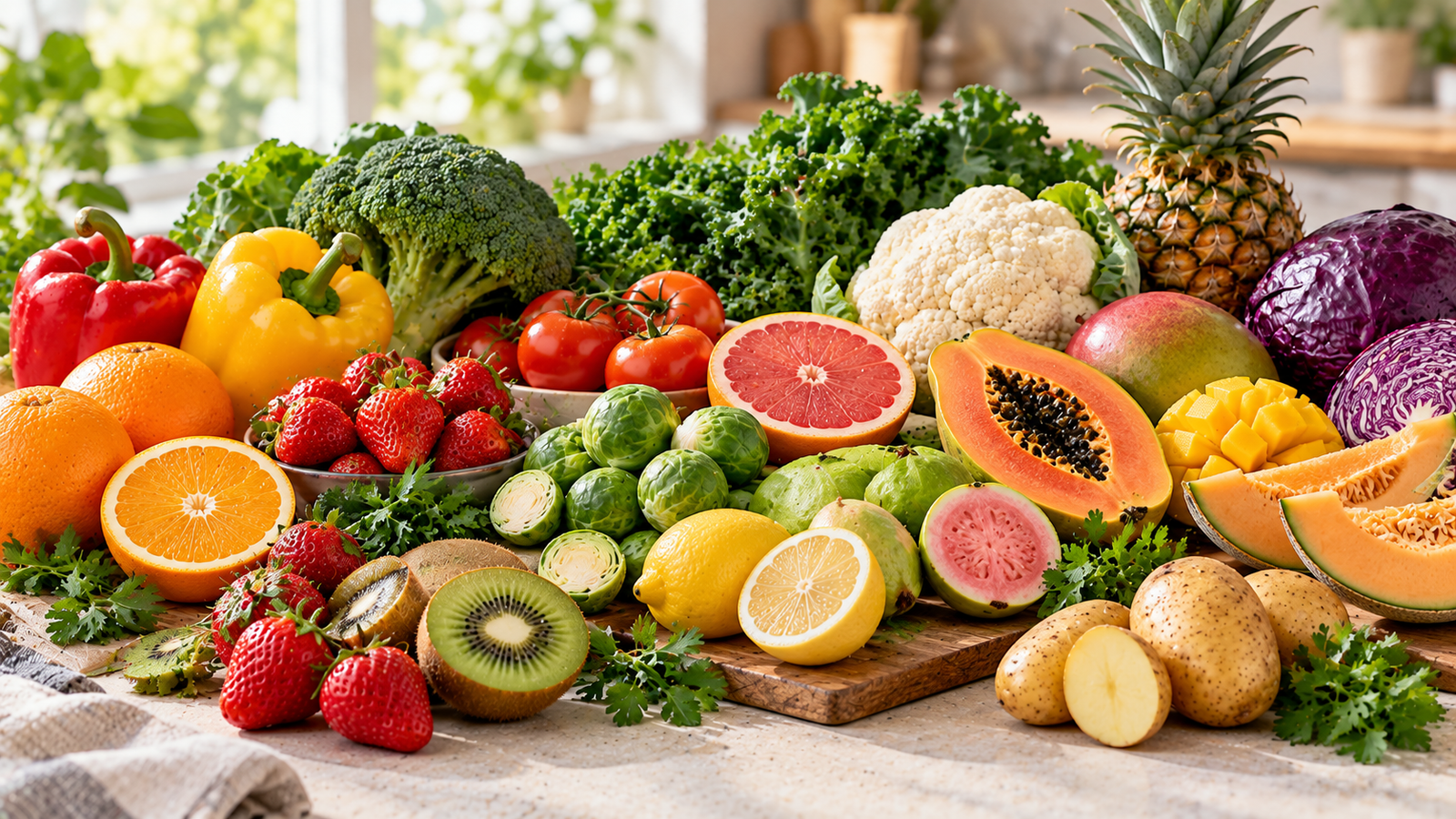
Vitamin C is an essential water-soluble vitamin that your body needs for several important functions.
It contributes to normal collagen production, supports immune function, helps protect cells from oxidative stress, and improves absorption of iron from plant-based foods. Because the body doesn’t store large amounts of vitamin C, regularly eating foods that contain it is an important part of a balanced diet.
The good news is that you don’t need unusual or expensive ingredients to get vitamin C.
Many everyday fruits and vegetables are excellent sources.
This guide highlights 20 vitamin C rich foods and explains how to add them to your meals in simple, realistic ways.
Key Takeaways
- Many fruits and vegetables are excellent sources of vitamin C.
- Bell peppers, guava, citrus fruits, kiwi, strawberries, broccoli, and Brussels sprouts are particularly useful choices.
- Vitamin C content varies according to serving size, variety, ripeness, and preparation.
- Raw or lightly cooked produce can help preserve vitamin C because heat and prolonged storage can reduce its amount.
- Pairing vitamin C foods with plant sources of iron can improve iron absorption.
- A varied diet makes it easier to meet vitamin C needs without relying on supplements.
- Whole fruits and vegetables provide fiber and other nutrients in addition to vitamin C.
20 Vitamin C Rich Foods to Add to Your Diet
1. Guava
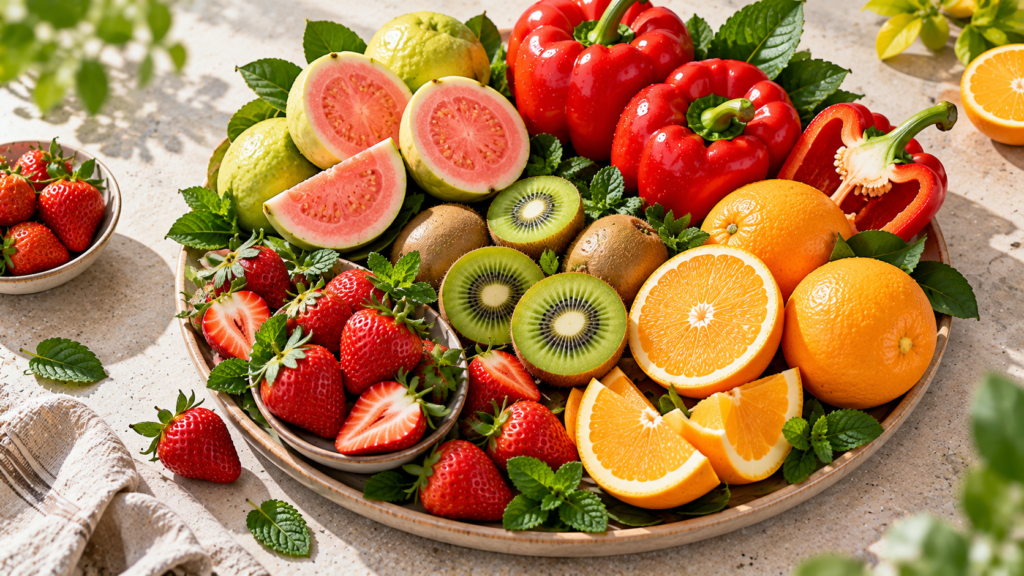
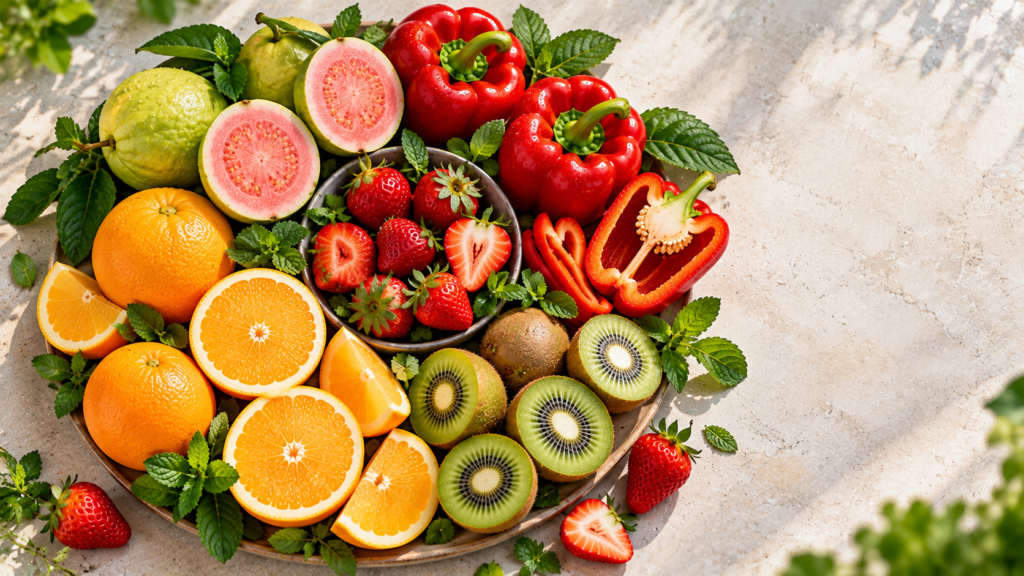
Guava is one of the most impressive fruit sources of vitamin C.
One small guava can provide a substantial amount of vitamin C while also contributing fiber and other beneficial plant compounds.
Its sweet, slightly floral flavor makes it easy to enjoy on its own.
Easy ways to eat guava
- Slice it for breakfast.
- Add it to fruit salad.
- Blend it into a smoothie.
- Dice it over plain yogurt.
- Enjoy it as an afternoon snack.
If you’re looking for vitamin C rich foods that offer a lot of vitamin C in a relatively small serving, guava deserves attention.
2. Red Bell Peppers
Red bell peppers are a versatile vegetable and a particularly useful source of vitamin C.
They can be eaten raw or cooked and provide a naturally sweet flavor.
Red peppers also contain carotenoids and other plant compounds.
Try them in:
- Salads
- Stir-fries
- Omelets
- Wraps
- Grain bowls
- Hummus plates
For maximum crunch and freshness, slice raw bell peppers into strips and keep them ready for snacks.
3. Kiwi
Kiwi is another excellent source of vitamin C.
The bright green flesh, tiny black seeds, and naturally tart flavor make it an easy addition to breakfast or snacks.
Simple ideas
Slice kiwi over oatmeal or yogurt, add it to a smoothie, or combine it with strawberries and oranges for a vitamin C-rich fruit bowl.
4. Oranges
Oranges are among the most familiar vitamin C rich foods.
They are convenient, naturally sweet, and easy to carry as a snack.
One medium orange provides a meaningful amount of vitamin C along with water and fiber.
Get more from oranges
Instead of relying only on juice, eat the whole fruit when possible.
Whole oranges provide fiber that is largely lost when fruit is processed into juice.
5. Strawberries
Strawberries provide vitamin C along with fiber and naturally occurring plant compounds.
Fresh strawberries are particularly easy to incorporate into meals.
Try adding them to:
- Greek yogurt
- Oatmeal
- Smoothies
- Salads
- Whole-grain toast
- Homemade chia pudding
Frozen strawberries can also be useful when fresh berries aren’t available.
6. Broccoli
Broccoli is one of the most versatile vegetables for increasing vitamin C intake.
It can be eaten raw, steamed, roasted, sautéed, or added to soups.
Because prolonged cooking can reduce vitamin C, cooking methods that are shorter and use less water may help preserve more of the vitamin.
Easy broccoli meals
Try roasted broccoli with salmon, steamed broccoli with rice and chicken, or chopped raw broccoli in a crunchy salad.
7. Papaya
Papaya provides vitamin C along with carotenoids, fiber, and other nutrients.
Its soft texture makes it especially convenient for smoothies and fruit bowls.
Serving ideas
- Add diced papaya to breakfast.
- Blend it with yogurt.
- Combine it with lime juice.
- Add it to a tropical fruit salad.
8. Brussels Sprouts
Brussels sprouts are a member of the cruciferous vegetable family.
They provide vitamin C along with fiber and other plant compounds.
Roasting them can bring out a naturally sweet flavor.
Cooking tip
Cut Brussels sprouts in half and roast them until tender with lightly browned edges. Avoid prolonged overcooking.
9. Grapefruit
Grapefruit is a citrus fruit that provides vitamin C and a refreshing combination of sweet and tart flavors.
It can be eaten on its own or added to salads.
Important medication note
Grapefruit can interact with certain medications, including some medicines used for cholesterol, blood pressure, and other conditions.
If you take prescription medication regularly, check with a pharmacist or healthcare professional before making grapefruit a regular part of your diet.
10. Kale
Kale provides vitamin C along with vitamin K, carotenoids, fiber, and other nutrients.
It can be eaten raw in salads or lightly cooked.
Make kale easier to eat
Massage chopped kale with a small amount of olive oil and lemon juice before adding other ingredients. This softens the leaves and improves texture.
11. Pineapple
Pineapple is a flavorful source of vitamin C.
Its natural sweetness makes it an easy way to add fruit to meals without needing added sugar.
Try pineapple with:
- Plain yogurt
- Cottage cheese
- Oatmeal
- Smoothies
- Grilled chicken
- Fruit salads
Fresh and frozen pineapple can both be useful options.
12. Lemon
Lemons are well known for their vitamin C content and their ability to add flavor without many calories.
Although most people don’t eat lemons in large quantities, small amounts can still contribute vitamin C.
Simple uses
Squeeze lemon over:
- Salads
- Fish
- Roasted vegetables
- Lentils
- Chickpeas
- Soups
Lemon juice can also make iron-rich plant foods more appealing while providing vitamin C that helps with nonheme iron absorption.
13. Cabbage
Cabbage is an affordable and versatile vegetable that can contribute vitamin C.
It can be used raw in slaws or lightly cooked in stir-fries, soups, and vegetable dishes.
Red and green cabbage can both add variety to meals.
14. Cauliflower
Cauliflower is another cruciferous vegetable that contributes vitamin C.
It works well as:
- A roasted side dish
- A soup ingredient
- A stir-fry vegetable
- A raw snack
- A mashed potato alternative
Pairing cauliflower with herbs, lemon, garlic, and olive oil can create a flavorful side dish without complicated preparation.
15. Tomatoes
Tomatoes provide vitamin C along with lycopene and other nutrients.
They are particularly easy to eat regularly because they work in everything from sandwiches to curries.
Try tomatoes in:
- Salads
- Soups
- Omelets
- Pasta sauces
- Sandwiches
- Grain bowls
Fresh tomatoes can be particularly useful when combined with other vitamin C rich foods.
16. Mango
Mango provides vitamin C along with carotenoids and other plant compounds.
Its naturally sweet flavor makes it popular in smoothies and fruit bowls.
Easy mango combinations
Pair mango with:
- Kiwi
- Strawberries
- Yogurt
- Chia seeds
- Oats
- Leafy greens
A mango smoothie can be an easy breakfast or snack when you’re short on time.
17. Cantaloupe
Cantaloupe is a refreshing fruit that contributes vitamin C along with water, potassium, and carotenoids.
It can be especially useful during warmer weather because of its high water content.
Serving ideas
Add cubed cantaloupe to:
- Breakfast bowls
- Fruit salads
- Smoothies
- Yogurt
- Chilled summer salads
18. Potatoes
Potatoes don’t usually receive as much attention as fruits and colorful vegetables when vitamin C is discussed, but they can contribute to vitamin C intake.
Their vitamin C content depends on variety, storage, and cooking method.
Eating potatoes with the skin can also provide additional fiber and other nutrients.
Choose preparation methods such as baking, boiling, or roasting rather than relying on heavily fried versions.
19. Snow Peas
Snow peas provide vitamin C along with fiber and other nutrients.
Their crisp texture makes them useful in both raw and cooked dishes.
Try snow peas in:
- Stir-fries
- Salads
- Grain bowls
- Vegetable platters
- Noodle dishes
Quick cooking can help retain their fresh texture.
20. Chili Peppers
Fresh chili peppers can provide vitamin C in addition to their characteristic heat.
Because chili peppers are often consumed in relatively small amounts, they may not be the primary vitamin C source in a meal—but they can still contribute to total intake.
Add chopped fresh chili to:
- Salsas
- Curries
- Soups
- Bean dishes
- Stir-fries
- Homemade sauces
Adjust the amount to your preferred spice level.
How Much Vitamin C Do You Need Every Day?
Vitamin C requirements depend on age and sex.
For adults, the recommended dietary allowance is generally:
- Men 19 and older: 90 mg per day
- Women 19 and older: 75 mg per day
- Pregnancy: 85 mg per day
- Breastfeeding: 120 mg per day
People who smoke require an additional 35 mg of vitamin C per day because smoking increases oxidative stress and can reduce vitamin C concentrations in the body. (ods.od.nih.gov)
These recommendations are a useful guide, but individual nutrition needs can vary.
Why Is Vitamin C Important?
Vitamin C performs several important functions in the body.
Vitamin C Supports Collagen Production
Vitamin C is required for collagen biosynthesis.
Collagen is an important structural protein found throughout the body, including in skin, connective tissue, cartilage, bones, and blood vessels. (ods.od.nih.gov)
Vitamin C Supports Immune Function
Vitamin C contributes to normal immune system function.
This doesn’t mean that eating extremely high amounts of vitamin C prevents every infection, but adequate vitamin C intake is important for normal physiological function.
Vitamin C Helps With Iron Absorption
Vitamin C can improve absorption of nonheme iron, the form of iron primarily found in plant foods.
This makes vitamin C rich foods particularly useful alongside foods such as:
- Lentils
- Beans
- Chickpeas
- Tofu
- Spinach
- Fortified cereals
For example, squeeze lemon juice over lentils or add bell peppers to a bean salad.
foods high in vitamin C and iron
Vitamin C Acts as an Antioxidant
Vitamin C functions as an antioxidant and helps protect cells from oxidative damage.
It’s one reason a diet rich in colorful fruits and vegetables is valuable beyond any single nutrient.
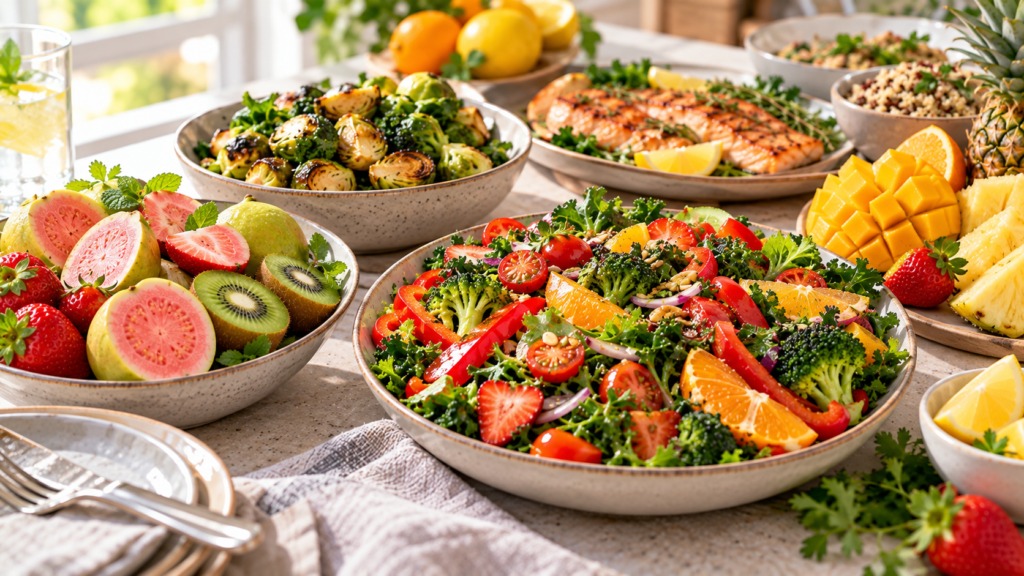
How to Get More Vitamin C From Your Diet
You don’t need to completely change your eating habits to increase vitamin C intake.
A few practical strategies can make a significant difference.
Add Fruit to Breakfast
Try:
- Kiwi with yogurt
- Strawberries with oatmeal
- Orange slices with eggs
- Guava with whole-grain toast
Add a Vitamin C Vegetable to Lunch
Include:
- Red bell pepper
- Broccoli
- Tomatoes
- Cabbage
- Kale
A colorful salad is an easy solution.
Use Citrus as a Flavor Booster
Lemon and lime can add brightness to meals while contributing vitamin C.
Use them on fish, vegetables, beans, lentils, and salads.
Keep Fruit Visible
Store oranges, kiwi, strawberries, or other ready-to-eat fruit where you can easily see them.
Convenience often determines what we actually eat.
Raw vs Cooked: Does Cooking Reduce Vitamin C?
Vitamin C is sensitive to heat and can be lost during cooking.
The amount lost depends on:
- Cooking temperature
- Cooking duration
- Amount of water
- Cooking method
- Food type
- Storage conditions
Boiling vegetables for a long time can cause greater vitamin C losses because the vitamin can move into the cooking water.
Shorter cooking methods, such as steaming or quick sautéing, may help preserve more vitamin C.
However, this doesn’t mean you should avoid cooked vegetables.
The best approach is variety: enjoy some fruits and vegetables raw and others cooked.
How Food Storage Affects Vitamin C
Vitamin C can gradually decline during storage.
Fresh produce that sits for extended periods may contain less vitamin C than it did when first harvested.
This doesn’t mean older produce is unhealthy.
It simply reinforces the value of eating a varied selection of fresh, frozen, or appropriately stored fruits and vegetables.
Frozen produce can be a practical choice because it is often processed relatively soon after harvesting.
Vitamin C Rich Foods and Iron Absorption
One of the most useful nutrition combinations is vitamin C + plant-based iron.
Plant foods contain nonheme iron, which is absorbed less efficiently than heme iron from animal foods.
Vitamin C can improve nonheme iron absorption.
Easy combinations include:
- Lentils + tomatoes
- Chickpeas + lemon
- Beans + bell peppers
- Tofu + broccoli
- Spinach + strawberries
- Fortified cereal + kiwi
- Hummus + red peppers
This is an easy example of how combining foods can make a healthy diet more effective.
Are Vitamin C Supplements Better Than Vitamin C Foods?
For most people, whole foods are an excellent way to obtain vitamin C.
Foods provide vitamin C alongside:
- Fiber
- Water
- Carbohydrates
- Potassium
- Folate
- Carotenoids
- Polyphenols
- Other beneficial plant compounds
Supplements can provide vitamin C in a concentrated form, but they don’t provide the full nutritional package of fruits and vegetables.
High doses of vitamin C supplements can also cause digestive symptoms such as diarrhea, nausea, and stomach cramps. The NIH lists 2,000 mg per day as the tolerable upper intake level for adults from all sources. (ods.od.nih.gov)
For most people, there is little reason to chase extremely high doses.
Can You Get Too Much Vitamin C?
Vitamin C is water-soluble, but that doesn’t mean unlimited amounts are harmless.
Very high supplemental doses can cause:
- Diarrhea
- Nausea
- Abdominal cramps
- Other digestive discomfort
People with certain medical conditions, including a history of kidney stones or disorders involving iron accumulation, may need individualized advice before using high-dose vitamin C supplements.
Food sources are generally a safer and more practical way to increase vitamin C intake.
Vitamin C Rich Foods for Different Diets
For Vegetarians
Excellent choices include:
- Guava
- Bell peppers
- Kiwi
- Strawberries
- Broccoli
- Citrus fruits
- Tomatoes
- Kale
For Vegans
Nearly all of the plant foods in this list can fit into a vegan diet.
Combine vitamin C rich foods with legumes, tofu, tempeh, nuts, seeds, and whole grains for a varied nutritional pattern.
For Kids
Colorful fruits can make vitamin C easier to include in children’s diets.
Try:
- Strawberries
- Orange segments
- Kiwi
- Mango
- Guava
- Bell pepper strips
Cut foods appropriately for the child’s age and eating ability.
For Older Adults
Soft fruits, cooked vegetables, smoothies, soups, and chopped salads can make vitamin C rich foods easier to incorporate when appetite or chewing ability is an issue.
Simple One-Day Vitamin C Meal Plan
Here’s an example of how vitamin C rich foods can fit naturally into one day.
Breakfast
- Oatmeal
- Strawberries
- Kiwi
- Plain yogurt
Lunch
- Chickpea and quinoa bowl
- Red bell peppers
- Tomatoes
- Kale
- Lemon dressing
Snack
- Guava or orange
- A handful of nuts
Dinner
- Grilled salmon
- Roasted broccoli
- Brussels sprouts
- Whole grains
Dessert
- Fresh pineapple or mango
This isn’t a prescription or fixed diet plan. It’s simply an example of how a variety of fruits and vegetables can make vitamin C intake easy.
How to Choose the Best Vitamin C Rich Foods
You don’t have to rank every food to build a healthy diet.
Instead, use a few simple principles.
Choose Variety
Rotate different fruits and vegetables throughout the week.
Prioritize Color
Red, orange, yellow, green, and purple produce can help you naturally diversify your nutrient intake.
Eat Produce Regularly
Consistency matters more than occasionally eating a huge portion of one “superfood.”
Use Fresh and Frozen Options
Both can fit into a healthy eating pattern.
Pair Foods Strategically
Combining vitamin C foods with plant-based iron sources is especially useful.
Common Myths About Vitamin C Foods
Myth 1: Oranges Are the Only Good Source of Vitamin C
Not at all.
Guava, peppers, kiwi, strawberries, broccoli, papaya, Brussels sprouts, and many other foods can provide vitamin C.
Myth 2: More Vitamin C Is Always Better
Your body needs vitamin C, but extremely high supplemental doses aren’t automatically more beneficial.
Adequate intake is the goal.
Myth 3: Cooking Destroys All Vitamin C
Cooking can reduce vitamin C, but it doesn’t necessarily eliminate it.
Cooking method and duration matter.
Myth 4: Vitamin C Only Comes From Fruit
Vegetables can be excellent vitamin C sources.
Bell peppers, broccoli, Brussels sprouts, kale, cabbage, tomatoes, and other vegetables contribute vitamin C.
Myth 5: Vitamin C Supplements Replace Vegetables
Supplements can provide vitamin C but cannot replace the fiber, minerals, carotenoids, and other compounds found in whole fruits and vegetables.
Vitamin C Rich Foods: The Bottom Line
The easiest way to increase your vitamin C intake is to eat a variety of fruits and vegetables consistently.
You don’t need to rely on one particular food.
Guava, red bell peppers, kiwi, oranges, strawberries, broccoli, papaya, Brussels sprouts, kale, citrus fruits, tomatoes, mango, and many other produce choices can all contribute to your daily vitamin C intake.
The best vitamin C rich foods are the ones you enjoy, can access regularly, and can realistically include in balanced meals.
Aim for variety, choose colorful produce, combine vitamin C foods with plant-based sources of iron, and use simple preparation methods that preserve freshness and nutrients.
A colorful plate isn’t just visually appealing—it can be one of the easiest ways to build a nutrient-rich diet.
Frequently Asked Questions
What are the best vitamin C rich foods?
Some particularly useful sources include guava, red bell peppers, kiwi, oranges, strawberries, broccoli, papaya, Brussels sprouts, and kale.
Which fruit is highest in vitamin C?
Guava is an exceptionally rich fruit source of vitamin C. Other excellent options include kiwi, strawberries, citrus fruits, papaya, and some other tropical fruits.
Which vegetables are high in vitamin C?
Red and green bell peppers, broccoli, Brussels sprouts, kale, cabbage, cauliflower, tomatoes, and chili peppers can all contribute vitamin C.
How much vitamin C should adults get each day?
Adult men generally need 90 mg per day, while adult women generally need 75 mg. Pregnancy and breastfeeding increase the recommended intake. People who smoke need an additional 35 mg daily. (ods.od.nih.gov)
Does cooking reduce vitamin C?
Yes. Vitamin C can be reduced by heat, prolonged cooking, and exposure to water. Shorter cooking methods can help retain more vitamin C.
Are vitamin C rich foods good for iron absorption?
Yes. Vitamin C can improve absorption of nonheme iron found in plant foods such as beans, lentils, chickpeas, tofu, and fortified cereals.
Can I get enough vitamin C without supplements?
Most healthy people can obtain adequate vitamin C through a varied diet containing fruits and vegetables. Supplements may be useful in specific circumstances, but they aren’t necessary for everyone.
Are frozen fruits and vegetables good sources of vitamin C?
Yes. Frozen produce can be a convenient part of a healthy diet and may retain substantial nutrients because it is often processed relatively soon after harvesting.
What vitamin C rich foods are good for breakfast?
Kiwi, strawberries, oranges, guava, papaya, and mango can be easily added to oatmeal, yogurt, smoothies, or whole-grain breakfast dishes.
What foods are high in vitamin C and iron?
Lentils, beans, chickpeas, tofu, and fortified cereals provide plant-based iron, while bell peppers, tomatoes, citrus fruits, broccoli, kiwi, and strawberries provide vitamin C that can help improve nonheme iron absorptio
2 thoughts on “20 Vitamin C Rich Foods to Add to Your Diet”