
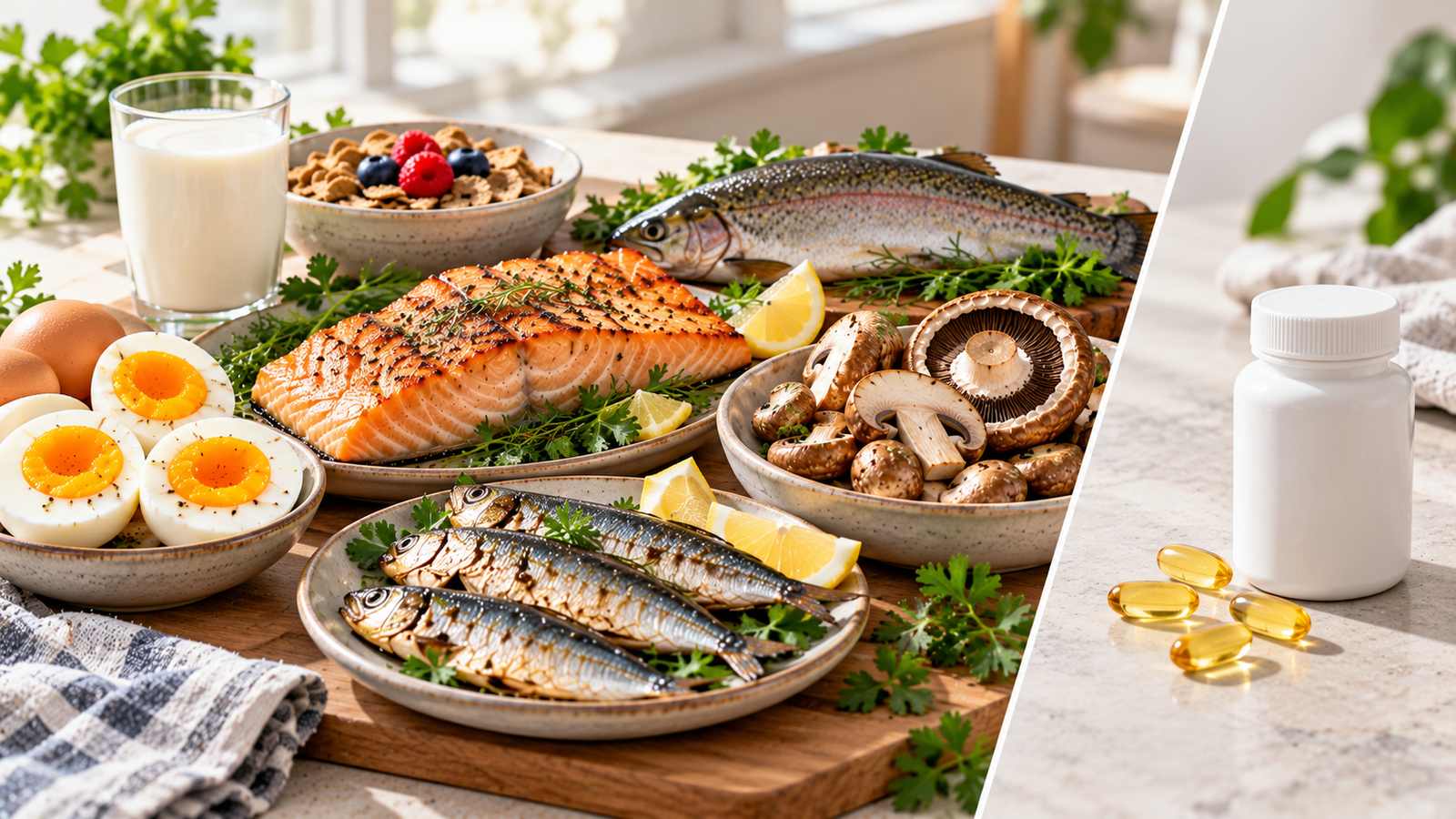
Vitamin D From Food vs Supplements: Why Does the Difference Matter?
Vitamin D is an essential nutrient involved in calcium absorption, bone health, muscle function, and other physiological processes. But unlike many nutrients, relatively few foods naturally contain substantial amounts of vitamin D.
That creates an important question:
Is it better to get vitamin D from food or take a supplement?
The answer isn’t simply one or the other.
For many people, a combination of vitamin-D-containing foods, fortified foods, and appropriate sunlight exposure can contribute to vitamin D intake. Supplements can be useful when dietary intake isn’t enough or when an individual has a higher risk of inadequate vitamin D.
Understanding vitamin D from food vs supplements can help you make more informed decisions without automatically assuming that more vitamin D is better.
Key Takeaways
- Vitamin D occurs naturally in relatively few foods.
- Fatty fish are among the best natural dietary sources.
- Some mushrooms can provide vitamin D2 after UV exposure.
- Fortified milk, plant-based beverages, cereals, and other foods can provide added vitamin D.
- Supplements provide a concentrated, predictable amount of vitamin D.
- Food provides vitamin D alongside protein, fats, minerals, and other nutrients.
- Supplements can be particularly useful when dietary intake is insufficient or supplementation is recommended by a healthcare professional.
- Vitamin D supplements should not be taken in excessive amounts without appropriate medical guidance.
- For most adults through age 70, the U.S. recommended intake is 600 IU (15 mcg) per day; adults over 70 are recommended 800 IU (20 mcg).
What Is Vitamin D?
Vitamin D is a fat-soluble vitamin that plays an important role in maintaining normal calcium and phosphate concentrations in the body.
One of its best-known functions is helping the intestines absorb calcium, which is essential for normal bone mineralization. Vitamin D also contributes to normal muscle function and other biological processes. (ods.od.nih.gov)
Unlike vitamin C or many B vitamins, vitamin D isn’t naturally abundant in a wide variety of foods.
Your body can also produce vitamin D when ultraviolet B radiation from sunlight reaches exposed skin.
However, the amount produced can vary significantly based on factors such as season, geographic location, skin pigmentation, age, clothing, and sunscreen use.
This is why food and supplementation can sometimes become important parts of maintaining adequate vitamin D intake.
Vitamin D From Food: What Does It Mean?
Getting vitamin D from food means obtaining the nutrient through naturally occurring or fortified dietary sources.
There are two broad categories:
Naturally Occurring Vitamin D
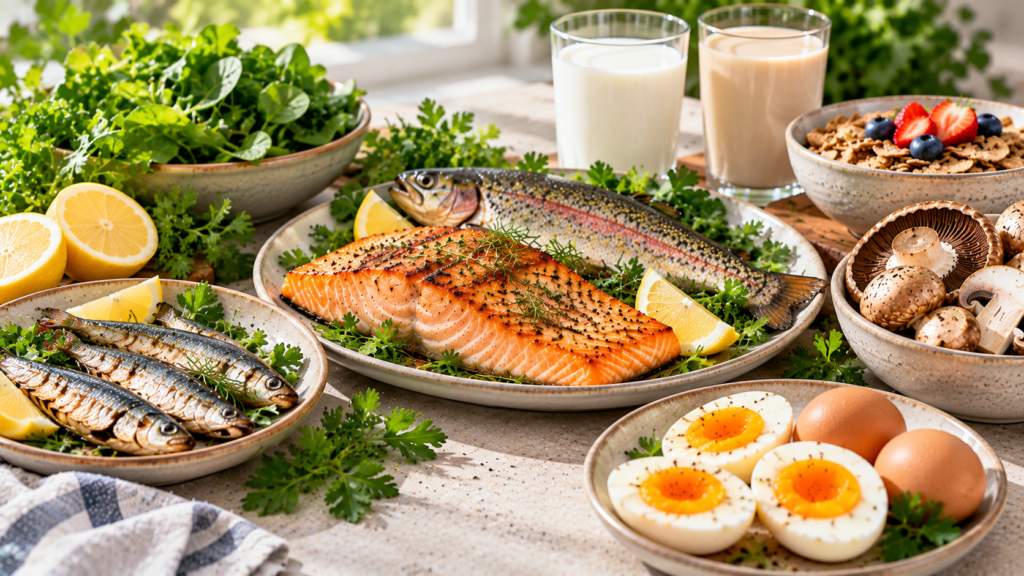
Some foods naturally contain vitamin D, including:
- Salmon
- Rainbow trout
- Sardines
- Mackerel
- Herring
- Certain types of tuna
- Egg yolks
- Some mushrooms
Fatty fish generally provide much more vitamin D than most other natural food sources.
For example, the NIH lists approximately 14.2 mcg (570 IU) of vitamin D in 3 ounces of cooked sockeye salmon and about 16.2 mcg (645 IU) in 3 ounces of cooked farmed rainbow trout. (ods.od.nih.gov)
Fortified Foods
Vitamin D is also added to certain foods.
Depending on the country and product, fortified foods may include:
- Milk
- Plant-based beverages
- Breakfast cereals
- Orange juice
- Yogurt
- Some dairy products
Because fortification varies, always check the nutrition facts panel.
Benefits of Getting Vitamin D From Food
One major advantage of dietary vitamin D is that foods provide much more than a single isolated nutrient.
For example, salmon provides vitamin D alongside:
- High-quality protein
- Omega-3 fatty acids
- Selenium
- Vitamin B12
- Other nutrients
Eggs provide vitamin D along with protein, choline, selenium, and several other nutrients.
Fortified milk can provide vitamin D alongside calcium and protein.
This is an important difference when comparing vitamin D from food vs supplements.
A supplement can deliver vitamin D efficiently, but it generally doesn’t replace the broader nutritional value of a balanced meal.
What Are Vitamin D Supplements?
Vitamin D supplements provide vitamin D in a concentrated form.
They are available in different doses and formulations, including vitamin D2 and vitamin D3.
Vitamin D2 is also called ergocalciferol, while vitamin D3 is called cholecalciferol.
Both forms can increase blood levels of vitamin D, although vitamin D3 generally raises and maintains blood 25-hydroxyvitamin D concentrations more effectively than vitamin D2. (ods.od.nih.gov)
Supplements may be available as:
- Tablets
- Capsules
- Softgels
- Liquid drops
- Chewable products
- Multivitamins containing vitamin D
The appropriate form depends on dietary preferences, age, health circumstances, and professional advice.
Vitamin D From Food vs Supplements: The Main Differences
Understanding the differences can make the decision much clearer.
| Feature | Vitamin D From Food | Vitamin D Supplements |
|---|---|---|
| Concentration | Usually lower and varies by food | Usually concentrated |
| Nutritional benefits | Provides other nutrients | Primarily provides vitamin D |
| Intake predictability | Can vary by food and portion | More consistent dose |
| Convenience | Requires meal planning | Easy to take |
| Fortification | Common in some foods | Not applicable |
| Deficiency treatment | May not be sufficient in some cases | Can provide larger controlled amounts |
| Risk of excessive intake | Generally lower from ordinary foods | Higher if excessive doses are used |
| Best use | Everyday nutrition | Targeted supplementation when appropriate |
Neither option is automatically “better.”
The right choice depends on how much vitamin D you’re getting, your diet, your individual circumstances, and whether a healthcare professional has identified a need for supplementation.
Is Vitamin D From Food Better Than Supplements?
For everyday nutrition, food-first is often a sensible approach.
Food provides vitamin D within a broader nutritional package.
For example, eating salmon doesn’t just provide vitamin D. It also provides protein and beneficial fats.
However, this doesn’t mean supplements are inferior.
A supplement can be useful when someone:
- Has limited dietary sources of vitamin D
- Doesn’t regularly eat fish or fortified foods
- Has a dietary restriction limiting vitamin D sources
- Has a condition that affects nutrient absorption
- Has been identified as having inadequate vitamin D
- Has been advised by a healthcare professional to supplement
The key is to match the strategy to the person’s actual nutritional needs.
Can You Get Enough Vitamin D From Food Alone?
Sometimes—but it can be challenging.
Very few foods naturally contain substantial vitamin D. The NIH notes that fatty fish are among the best natural food sources, while fortified foods can make an important contribution. (ods.od.nih.gov)
For example, a person who regularly eats fatty fish and fortified foods may obtain a meaningful amount of vitamin D from their diet.
Someone who eats little or no fish and rarely consumes fortified foods may have fewer dietary sources.
This is why dietary patterns matter more than one isolated meal.
How Much Vitamin D Do You Need?
According to U.S. dietary reference values:
- Birth to 12 months: 400 IU (10 mcg) daily
- Ages 1–70: 600 IU (15 mcg) daily
- Adults 71 and older: 800 IU (20 mcg) daily
- Pregnancy and breastfeeding: 600 IU (15 mcg) daily
These are recommended dietary allowances for healthy populations, and individual medical circumstances can differ. (ods.od.nih.gov)
It’s important to understand that these values are daily recommended intakes—not instructions to take the same amount as a supplement.
If your diet already provides vitamin D, your supplement needs may be lower or nonexistent.
Why Do Some People Need More Attention to Vitamin D?
Vitamin D status can be influenced by several factors.
People who may need to pay closer attention include those who:
- Have limited sun exposure
- Have darker skin
- Are older adults
- Rarely eat vitamin-D-containing foods
- Follow diets that exclude many vitamin D food sources
- Have certain gastrointestinal conditions
- Have undergone certain bariatric procedures
- Have conditions affecting vitamin D metabolism
- Take certain medications that affect vitamin D metabolism
These factors don’t automatically mean a person needs supplements.
They mean individualized dietary or medical advice may be useful.
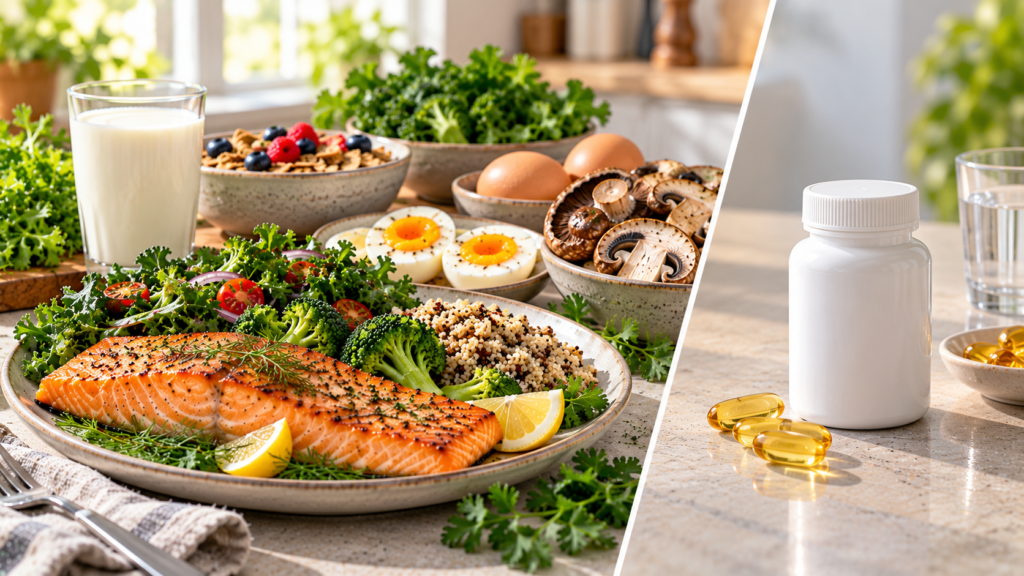
What Are the Advantages of Vitamin D Supplements?
Supplements offer several practical advantages.
Predictable Dosage
A supplement can provide a specific amount of vitamin D, making intake easier to track.
This can be useful when a healthcare professional recommends a particular amount.
Convenience
Taking a supplement can be easier than planning meals around vitamin-D-containing foods every day.
Useful for Restricted Diets
People who avoid fish, dairy, eggs, or other common vitamin D sources may have fewer dietary options.
Helpful When Dietary Intake Is Inadequate
If food and fortified products aren’t providing enough vitamin D, supplementation can help fill the gap when appropriate.
What Are the Downsides of Vitamin D Supplements?
Supplements aren’t risk-free simply because vitamin D is essential.
The most important issue is excessive intake.
Vitamin D toxicity can cause abnormally high blood calcium levels, which may lead to nausea, weakness, confusion, excessive thirst, frequent urination, kidney stones, and other complications. Very high vitamin D levels generally result from excessive supplement use rather than ordinary food intake. (ods.od.nih.gov)
For adults, the NIH lists an upper intake level of 4,000 IU (100 mcg) per day from all sources.
This upper limit is not a target. Some people with medically diagnosed deficiency may temporarily be prescribed higher doses under professional supervision.
That’s why high-dose vitamin D supplementation shouldn’t be self-prescribed.
Can You Get Too Much Vitamin D From Food?
It’s much less common to consume excessive vitamin D from ordinary foods.
Most natural food sources contain relatively modest amounts compared with high-dose supplements.
However, fortified foods can contribute vitamin D from multiple sources, so it’s still useful to consider your overall intake.
The greatest concern generally arises when someone takes high-dose supplements on top of fortified foods and other sources without realizing how much they’re consuming.
Vitamin D2 vs Vitamin D3: Which Is Different?
Vitamin D supplements commonly contain either vitamin D2 or vitamin D3.
Vitamin D2
Vitamin D2 is known as ergocalciferol and is commonly produced from certain fungi or yeast sources.
It can be useful for people who prefer a plant-derived vitamin D supplement.
Vitamin D3
Vitamin D3, or cholecalciferol, is the form produced in human skin following UVB exposure.
It is also available in supplements from various sources, including some products specifically formulated without animal-derived ingredients.
Both forms can increase vitamin D levels, although evidence indicates D3 may raise blood levels more effectively than D2. (ods.od.nih.gov)
Does Vitamin D From Food Absorb Better?
Vitamin D is fat-soluble, meaning dietary fat can help with its absorption.
Research summarized by the NIH indicates that vitamin D absorption is enhanced when consumed with a meal containing some fat. (ods.od.nih.gov)
This applies to dietary vitamin D as well as supplemental vitamin D.
For example, vitamin-D-containing foods can naturally be part of meals containing healthy fats.
If you’re taking a vitamin D supplement, following the product instructions and taking it with a meal when appropriate may support absorption.
What About Sunlight?
Sunlight is another source of vitamin D.
When UVB radiation reaches exposed skin, it can trigger vitamin D production.
However, vitamin D production from sunlight isn’t predictable enough to assign one universal “correct” amount of sun exposure.
Factors include:
- Season
- Latitude
- Time of day
- Cloud cover
- Skin pigmentation
- Age
- Clothing
- Sunscreen use
- Amount of skin exposed
Sun exposure also contributes to skin-cancer risk.
Therefore, deliberately seeking excessive UV exposure isn’t recommended as a vitamin D strategy.
Vitamin D From Food vs Supplements for Vegetarians and Vegans
People following plant-based diets may need to pay particular attention to vitamin D sources.
Potential options include:
- UV-exposed mushrooms
- Fortified plant-based milk
- Fortified cereals
- Fortified orange juice
- Fortified dairy alternatives
- Plant-based vitamin D supplements
However, fortification varies by product.
Always check the nutrition label rather than assuming a plant-based product contains vitamin D.
vitamin D rich foods for adults
Vitamin D From Food vs Supplements for Older Adults
Older adults may have additional reasons to pay attention to vitamin D and bone health.
The recommended vitamin D intake increases to 800 IU (20 mcg) per day after age 70 under U.S. dietary reference values. (ods.od.nih.gov)
Older adults may also consume less food overall, have less sun exposure, or have other health circumstances affecting vitamin D status.
This doesn’t mean everyone over 70 automatically needs a high-dose supplement.
Instead, dietary intake, overall health, medications, and individual risk factors should be considered.
How to Get More Vitamin D From Food
If you’d prefer a food-first approach, start with simple changes.
Add Fatty Fish
Try salmon, trout, sardines, mackerel, or herring regularly if they fit your diet.
Choose Fortified Foods
Check labels for vitamin D in:
- Milk
- Plant-based milk
- Breakfast cereal
- Orange juice
- Yogurt
Include Eggs
Egg yolks can contribute vitamin D and are easy to incorporate into breakfast, salads, or other meals.
Try UV-Exposed Mushrooms
Look for mushrooms specifically treated with UV light if you’re seeking a plant-associated source of vitamin D2.
Build Balanced Meals
Instead of focusing solely on vitamin D, combine vitamin-D-containing foods with vegetables, whole grains, protein, and healthy fats.
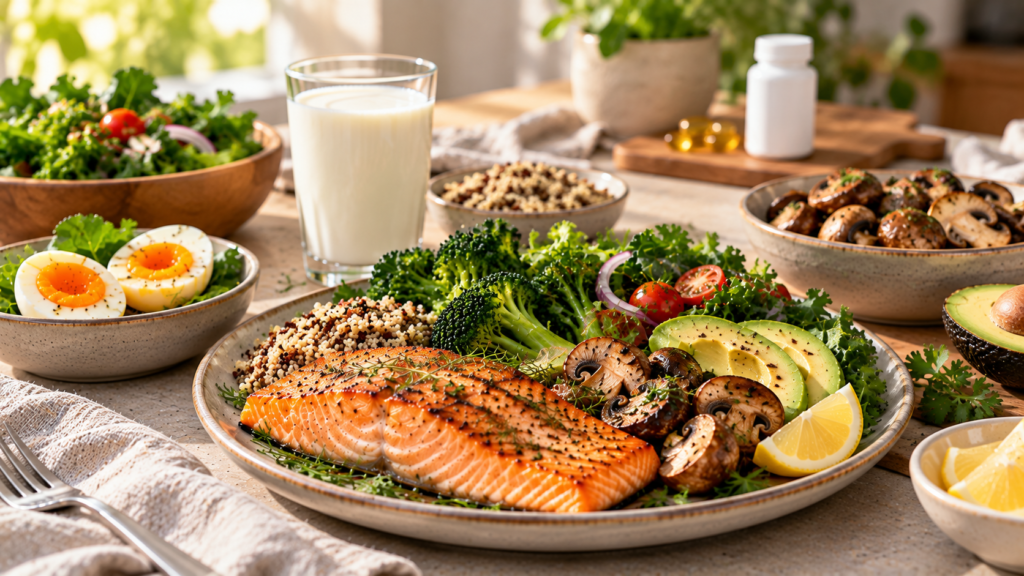
How to Decide Between Food and Supplements
Instead of asking whether food or supplements are universally better, ask these questions:
1. How much vitamin D do you get from your diet?
Look at your usual weekly eating pattern.
Do you eat fatty fish?
Do you consume fortified foods?
Do you eat eggs?
Do you use fortified plant-based beverages?
2. Are you getting enough from food and other sources?
If your intake appears consistently low, you may need to discuss supplementation with a healthcare professional.
3. Do you have risk factors for inadequate vitamin D?
Your healthcare provider can help determine whether testing or supplementation makes sense.
4. Are you already taking a multivitamin?
Check its vitamin D content before adding another supplement.
Taking multiple products can unintentionally increase total intake.
5. Are you taking medications?
Some medications can affect vitamin D metabolism or interact with calcium and vitamin D supplements.
Discuss supplementation with a healthcare professional if you take prescription medications.
Should You Test Your Vitamin D Level?
Testing isn’t automatically necessary for every healthy person.
However, a healthcare professional may recommend testing when symptoms, medical conditions, risk factors, or other circumstances make vitamin D status clinically relevant.
The standard blood test used to assess vitamin D status is 25-hydroxyvitamin D [25(OH)D].
It is important not to interpret vitamin D test results in isolation. Your healthcare provider can consider your results alongside your health history, diet, medications, and other factors.
NIH vitamin D health professional fact sheet
Common Mistakes When Taking Vitamin D Supplements
Taking High Doses Without a Reason
More isn’t automatically better.
Avoid treating high-dose supplements as a shortcut to better health.
Forgetting Other Sources
A multivitamin, fortified cereal, fortified milk, and vitamin D supplement can all contribute to your total intake.
Assuming Everyone Needs the Same Dose
Vitamin D needs can vary by age and individual circumstances.
Ignoring the Nutrition Label
Different products can contain dramatically different amounts of vitamin D.
Replacing Food With Supplements
A vitamin D capsule doesn’t provide the protein, healthy fats, minerals, fiber, and other nutrients found in a balanced meal.
Vitamin D From Food vs Supplements: Which Approach Is Best?
For most people, the answer isn’t strictly food or supplements.
A food-first approach is a strong foundation because it provides vitamin D within a broader nutritional pattern.
However, supplements can be valuable when dietary intake is insufficient or when a healthcare professional identifies a specific need.
A practical strategy is:
Eat vitamin-D-containing foods regularly → use fortified foods when helpful → assess individual needs → supplement when appropriate.
This approach avoids both extremes: assuming food is always enough and assuming everyone needs high-dose supplements.
Frequently Asked Questions
Is vitamin D from food better than supplements?
Food provides vitamin D alongside other nutrients, making it an important part of a balanced diet. Supplements can be useful when dietary intake is insufficient or when supplementation is medically appropriate.
What foods are highest in vitamin D?
Fatty fish such as salmon and trout are among the best natural food sources. Fortified milk, plant-based beverages, cereals, and certain other foods can also provide vitamin D. (ods.od.nih.gov)
Can you get enough vitamin D from food without supplements?
Some people can obtain adequate vitamin D from food and other sources, but it can be difficult because relatively few foods naturally contain substantial amounts. (ods.od.nih.gov)
Is vitamin D3 better than vitamin D2?
Both forms can increase vitamin D levels, but vitamin D3 generally raises blood 25-hydroxyvitamin D concentrations more effectively than vitamin D2. (ods.od.nih.gov)
How much vitamin D should adults take daily?
Under U.S. dietary reference values, adults through age 70 need 600 IU (15 mcg) daily, while adults over 70 need 800 IU (20 mcg). Individual medical needs can differ. (ods.od.nih.gov)
Can you take vitamin D supplements every day?
Vitamin D can be taken daily when appropriate, but the dose matters. Avoid taking high doses routinely unless recommended by a healthcare professional.
Can vitamin D supplements replace vitamin D-rich foods?
Not completely. Supplements can provide vitamin D, but foods offer many additional nutrients that supplements don’t provide.
What is the safest way to increase vitamin D?
A sensible approach is to include dietary sources and fortified foods, maintain appropriate lifestyle habits, and use supplements when there is a clear reason to do so.
Conclusion: Food First, Supplements When Appropriate
Understanding vitamin D from food vs supplements doesn’t have to be complicated.
Foods such as salmon, trout, sardines, eggs, UV-exposed mushrooms, and fortified products can contribute vitamin D while also providing other nutrients. Supplements offer a convenient and concentrated source when food and other sources aren’t enough or when supplementation is recommended.
The important thing is not to treat supplements as automatically better—or assume that food alone is always sufficient.
Instead, look at your entire dietary pattern, consider your individual circumstances, check labels, and avoid unnecessarily high doses.
For most people, the smartest strategy is simple: build a nutrient-rich diet first and use vitamin D supplements strategically when they are actually needed.