
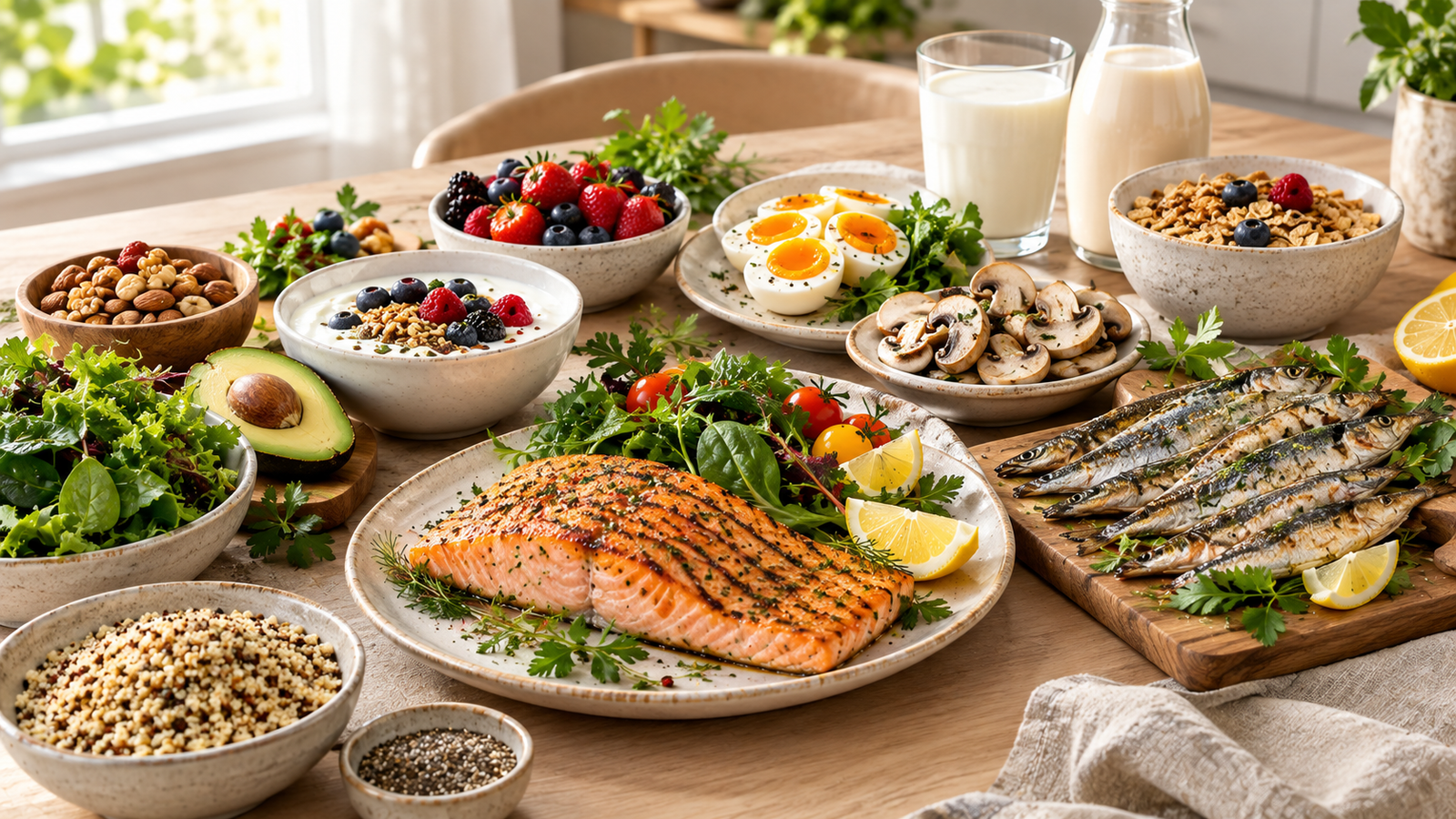
Getting enough vitamin D is important for adults because this nutrient helps the body absorb calcium and supports normal bones, muscles, and immune function. Yet relatively few foods naturally contain substantial amounts of vitamin D.
The good news is that adding a selection of vitamin D rich foods for adults to your regular meals can help increase dietary vitamin D intake. Fatty fish, egg yolks, certain mushrooms, and vitamin D-fortified foods are among the most practical options.
However, food is only one part of the picture. Sunlight exposure, individual health factors, absorption, and supplementation when medically appropriate can also influence vitamin D status.
Key Takeaways
- Fatty fish are among the best natural dietary sources of vitamin D.
- Salmon, trout, sardines, mackerel, and other oily fish can provide meaningful amounts.
- Egg yolks and some mushrooms can contribute vitamin D.
- Fortified milk, plant-based beverages, cereals, and other foods can be useful sources.
- Not every fruit or vegetable naturally contains significant vitamin D.
- Vitamin D content can vary considerably between foods and products.
- A varied diet is generally more useful than relying on one food.
- People with suspected vitamin D deficiency should discuss testing and appropriate treatment with a healthcare professional.
Why Do Adults Need Vitamin D?
Vitamin D is a fat-soluble vitamin with several important functions in the body.
One of its best-known roles is helping the body absorb calcium, which is essential for maintaining normal bones. Vitamin D also contributes to normal muscle function and supports the proper functioning of the immune system.
Adults need vitamin D throughout life, not just during childhood or older age.
However, vitamin D needs can be influenced by factors such as:
- Age
- Sun exposure
- Skin pigmentation
- Geographic location
- Clothing and sunscreen use
- Dietary intake
- Certain medical conditions
- Absorption problems
- Use of certain medications
This is why simply eating one “superfood” isn’t a complete solution to vitamin D status.
Learn more about vitamin D requirements and health
15 Vitamin D Rich Foods for Adults
The best approach is to combine naturally occurring sources with fortified foods where appropriate.
1. Salmon
Salmon is one of the most useful vitamin D rich foods for adults.
Fatty salmon can provide vitamin D along with high-quality protein and omega-3 fatty acids. These nutritional benefits make salmon a particularly valuable choice for a balanced diet.
Try baked salmon with lemon and herbs, add it to a salad, or serve it with vegetables and a whole grain.
2. Rainbow Trout
Rainbow trout is another excellent fish to consider.
It provides protein and can supply vitamin D and omega-3 fatty acids. Its mild flavor makes it easy to incorporate into different meals.
Bake trout with garlic, lemon, dill, and black pepper for a simple nutrient-rich dinner.
3. Sardines
Sardines are small oily fish that can provide vitamin D, protein, and omega-3 fatty acids.
Canned sardines are particularly convenient because they require minimal preparation. Add them to whole-grain toast, salads, pasta, or grain bowls.
When buying canned varieties, check the nutrition label and choose lower-sodium options if appropriate for your diet.
4. Mackerel
Mackerel is a fatty fish that can be a valuable source of vitamin D.
It also contains omega-3 fatty acids and protein. Because mackerel can have a strong flavor, lemon, herbs, tomatoes, and fresh vegetables pair well with it.
Different mackerel species can have different mercury profiles, so follow current seafood-safety guidance when selecting varieties.
5. Herring
Herring is another oily fish that can contribute vitamin D to the diet.
It can be eaten fresh, canned, smoked, or pickled. However, processed versions can contain substantial sodium, so nutrition labels are worth checking.
6. Egg Yolks
Eggs can contribute vitamin D, with the vitamin primarily found in the yolk.
Eggs are also a convenient source of protein and other nutrients. Try boiled eggs with whole-grain toast, vegetable omelets, or eggs served alongside sautéed vegetables.
The vitamin D content of eggs can vary depending on factors such as the hens’ diet.
7. UV-Exposed Mushrooms
Certain mushrooms exposed to ultraviolet light can contain meaningful amounts of vitamin D.
This is an important distinction because not all mushrooms naturally provide the same amount of vitamin D.
Look for mushrooms specifically labeled as vitamin D-enhanced or UV-exposed if you’re purchasing them for this purpose.
8. Fortified Milk
Many types of milk are fortified with vitamin D.
Cow’s milk is a practical option for people who consume dairy, while some plant-based milk alternatives are also fortified.
Always check the nutrition label because fortification levels vary among products.
9. Fortified Plant-Based Milk
Soy, almond, oat, and other plant-based beverages may contain added vitamin D.
Fortified plant-based milk can be especially useful for adults who don’t consume dairy.
When choosing one, compare labels for vitamin D, protein, added sugars, and calcium.
10. Fortified Breakfast Cereals
Some breakfast cereals are fortified with vitamin D.
Pairing fortified cereal with vitamin D-fortified milk or a fortified plant-based beverage can create a convenient breakfast that provides several nutrients.
Look for cereals with lower amounts of added sugar and a useful amount of fiber.
11. Fortified Yogurt
Some yogurt products contain added vitamin D, although the amount varies substantially by brand and product.
Check the nutrition label instead of assuming that every yogurt contains vitamin D.
Plain or lower-added-sugar yogurt can be paired with berries, nuts, seeds, and fortified cereal for a nutrient-dense breakfast.
12. Fortified Orange Juice
Some orange juice products are fortified with vitamin D.
If you use fortified juice as a vitamin D source, check the label and be mindful of portion size because juice can contain significant natural sugar even when no additional sugar is added.
Whole fruit is generally preferable for fiber, but fortified juice can still be one dietary source of vitamin D.
13. Canned Tuna
Certain types of canned tuna can provide vitamin D and are convenient sources of protein.
Tuna can be added to salads, wraps, sandwiches, grain bowls, or vegetable dishes.
Because mercury levels differ among tuna species, vary your seafood choices rather than relying on tuna exclusively.
14. Fortified Foods and Beverages
Fortification can make a significant difference because naturally occurring vitamin D is relatively limited in the food supply.
Depending on where you live, fortified products may include:
- Milk
- Plant-based milk
- Breakfast cereals
- Yogurt
- Orange juice
- Other specially fortified foods
Always read the nutrition label to determine whether vitamin D has been added and how much a serving provides.
15. Cod Liver Oil
Cod liver oil is a concentrated source of certain nutrients, including vitamin D.
However, it should be treated differently from ordinary cooking oils because it can provide substantial amounts of fat-soluble vitamins. More isn’t necessarily better, and excessive vitamin D intake can be harmful.
If you’re considering cod liver oil specifically for vitamin D, follow the product’s directions and discuss supplementation with a healthcare professional when appropriate.
Natural vs. Fortified Vitamin D Foods
One important distinction when choosing vitamin D foods for adults is whether the nutrient occurs naturally or has been added during food processing.
Naturally Occurring Vitamin D
Foods that can naturally provide vitamin D include:
- Fatty fish
- Egg yolks
- Certain mushrooms
- Fish liver oils
Fortified Foods
Common fortified options may include:
- Milk
- Plant-based beverages
- Breakfast cereals
- Yogurt
- Orange juice
- Other fortified foods
Fortification practices vary by country and manufacturer, so always check the nutrition label.

What About Vitamin D Rich Fruits and Vegetables?
A common question is whether fruits and vegetables are naturally high in vitamin D.
The short answer is: most fruits and vegetables are not significant natural sources of vitamin D.
That doesn’t make them less important.
Fruits and vegetables provide fiber, vitamins, minerals, antioxidants, and other beneficial plant compounds. They should still form an important part of a balanced eating pattern.
If your goal is specifically to increase vitamin D through food, focus more heavily on fatty fish, fortified foods, eggs, and appropriate mushroom varieties.
How to Build a Vitamin D Rich Diet
You don’t need to completely redesign your diet to include more vitamin D.
Small changes can make your meals more nutrient-dense.
At Breakfast
Try:
- Fortified cereal with fortified milk
- Eggs with whole-grain toast
- Fortified yogurt with berries
- Fortified plant-based milk blended into a smoothie
At Lunch
Consider:
- Tuna and vegetable salad
- Sardines on whole-grain toast
- Egg and avocado sandwich
- Salmon grain bowl
At Dinner
Try:
- Baked salmon with broccoli and quinoa
- Grilled trout with vegetables
- Mackerel with roasted potatoes and salad
- Sardines with whole-grain pasta and tomatoes
For Snacks
Depending on your dietary pattern, options can include:
- Fortified yogurt
- A boiled egg with vegetables
- Fortified milk
- A small serving of fortified cereal with milk
Healthy vitamin D rich recipes for adults

How Much Vitamin D Do Adults Need?
Vitamin D requirements depend on factors such as age and health circumstances, and recommendations can differ between health authorities.
Rather than trying to calculate your intake from individual foods alone, consider your overall dietary pattern.
Nutrition labels can help you estimate how much vitamin D you’re getting from fortified foods, while reputable food-composition databases can provide estimates for naturally occurring sources.
If you have been diagnosed with vitamin D deficiency or have risk factors for deficiency, your healthcare professional can advise you about appropriate testing, dietary changes, and whether supplementation is necessary.
Can You Get Enough Vitamin D From Food Alone?
For some people, food can make a meaningful contribution to vitamin D intake. However, it may not always be possible to meet individual needs through food alone.
Vitamin D status is also influenced by sunlight exposure and the body’s ability to absorb and use the nutrient.
Factors that may affect vitamin D status include:
- Limited sun exposure
- Spending most of the day indoors
- Covering most of the skin
- Darker skin pigmentation
- Older age
- Certain digestive or absorption disorders
- Some medications
- Certain medical conditions
This is one reason a personalized approach can be more useful than assuming that everyone needs the same amount from food.
Can Cooking Reduce Vitamin D in Foods?
Cooking can alter the nutritional composition of foods, but the effect depends on the food and cooking method.
For everyday meals, there’s generally no need to avoid cooking fish or eggs because of concerns about vitamin D.
Focus instead on practical preparation methods such as:
- Baking
- Grilling
- Broiling
- Steaming
- Light pan-searing
These methods can help you prepare nutritious foods without relying heavily on added saturated fat, sugar, or sodium.
Vitamin D and a Balanced Diet
Vitamin D shouldn’t be viewed in isolation.
A healthy diet should provide a broad range of nutrients from different food groups.
For example, a balanced meal could combine:
Protein: Salmon, eggs, sardines, yogurt
Whole grains: Brown rice, oats, quinoa, whole-grain bread
Vegetables: Broccoli, spinach, carrots, peppers
Fruit: Berries, oranges, kiwi, apples
Healthy fats: Avocado, nuts, seeds, olive oil
This approach provides much more nutritional value than focusing on a single vitamin.
Tips for Choosing Vitamin D Rich Foods
When shopping for foods high in vitamin D for adults, keep these practical tips in mind.
Read the Nutrition Label
Fortified foods vary widely. Look specifically for vitamin D in the nutrition information.
Choose Fatty Fish Regularly
Salmon, trout, sardines, herring, and mackerel are useful options to rotate through your meals.
Don’t Assume Every Mushroom Contains Vitamin D
Choose products specifically identified as vitamin D-enhanced or UV-exposed when you want mushrooms to contribute vitamin D.
Vary Your Seafood
Eating different types of seafood can provide a broader range of nutrients while helping you avoid excessive reliance on any one species.
Watch Added Sugar and Sodium
A food can contain vitamin D and still be less nutritious overall if it contains large amounts of added sugar or sodium.
Think About the Whole Meal
Pair vitamin D foods with vegetables, whole grains, legumes, fruit, and other nutrient-rich foods.
[Image Placeholder 3]
Gemini image-generation prompt:
Create a sophisticated photorealistic overhead composition illustrating smart food choices for a vitamin D rich diet. Arrange salmon, sardines, eggs, UV-exposed mushrooms, fortified milk, fortified plant milk, yogurt, and fortified cereal as the main foods. Surround them with colorful vegetables, leafy greens, berries, whole grains, avocado, nuts, lemon, and fresh herbs to emphasize balanced nutrition. Use realistic everyday portions and elegant but accessible food styling on a warm neutral kitchen surface. Include a small shopping-list notebook and natural wooden utensils subtly in the background, but no readable writing or text. Bright natural window lighting, premium nutrition editorial photography, authentic textures, realistic shadows, clean uncluttered composition, high resolution, 16:9 landscape, no people, no logos, no labels.
What Foods Should Adults Limit or Avoid?
A vitamin D-rich food isn’t automatically a healthy choice in every form.
For example, some prepared or processed foods may provide vitamin D while also containing considerable amounts of:
- Added sugar
- Sodium
- Saturated fat
- Refined carbohydrates
The goal should be to choose foods that contribute vitamin D and fit into your overall dietary needs.
For seafood, food-safety guidance also matters. Some larger predatory fish can contain higher mercury levels, so variety is important.
[External Link: Insert high-authority external URL here with anchor text: Review current seafood safety and mercury recommendations]
Signs You May Need to Discuss Vitamin D With a Doctor
You shouldn’t diagnose vitamin D deficiency based solely on symptoms because many symptoms can have multiple causes.
However, people with risk factors for low vitamin D may benefit from discussing their situation with a healthcare professional.
A clinician can determine whether testing is appropriate and help interpret the results.
Taking very high-dose vitamin D supplements without medical guidance isn’t recommended. Because vitamin D is fat-soluble, excessive intake can cause harmful effects.
Frequently Asked Questions
What are the best vitamin D rich foods for adults?
The best choices include fatty fish such as salmon, trout, sardines, mackerel, and herring, along with vitamin D-fortified milk, plant-based beverages, cereals, and other fortified foods.
What foods are naturally high in vitamin D?
Fatty fish are among the strongest natural food sources. Egg yolks, certain UV-exposed mushrooms, and fish liver oils can also provide vitamin D.
What are the best vitamin D foods for adults who don’t eat fish?
Fortified milk, fortified plant-based beverages, fortified cereals, fortified yogurt, eggs, and UV-exposed mushrooms can help provide dietary vitamin D.
Are fruits high in vitamin D?
Most fruits are not naturally significant sources of vitamin D. Some fruit juices may be fortified with vitamin D, so check the nutrition label.
Are vegetables a good source of vitamin D?
Most vegetables don’t naturally contain substantial amounts of vitamin D. UV-exposed mushrooms are an important exception because they can provide vitamin D.
Can eggs provide enough vitamin D for adults?
Eggs can contribute vitamin D, particularly through the yolk, but relying on eggs alone may not provide enough vitamin D for every adult.
What is the best breakfast for vitamin D?
A breakfast containing fortified cereal with fortified milk, eggs, or fortified yogurt can provide vitamin D. The exact amount depends on the products and serving sizes.
Can you get vitamin D from food without supplements?
Food can provide vitamin D, particularly through fatty fish and fortified products. However, some adults may still require supplementation depending on their vitamin D status and individual circumstances.
Conclusion
Including vitamin D rich foods for adults in your regular diet is a practical way to support adequate nutrient intake. Fatty fish such as salmon, trout, sardines, mackerel, and herring are among the strongest natural food choices, while fortified milk, plant-based beverages, cereals, yogurt, and other fortified products can provide convenient alternatives.
Egg yolks and vitamin D-enhanced mushrooms can add further variety, but most fruits and vegetables are not significant natural sources of vitamin D.
The most effective approach is not to depend on a single food. Instead, build a varied diet that combines vitamin D-containing foods with vegetables, fruits, whole grains, quality protein, and healthy fats.
If you’re concerned about vitamin D deficiency, have risk factors for low vitamin D, or are considering high-dose supplements, speak with a qualified healthcare professional. A personalized approach is safer and more useful than simply adding large amounts of one nutrient to your diet.
4 thoughts on “Vitamin D Rich Foods for Adults: What to Include in Your Diet”