
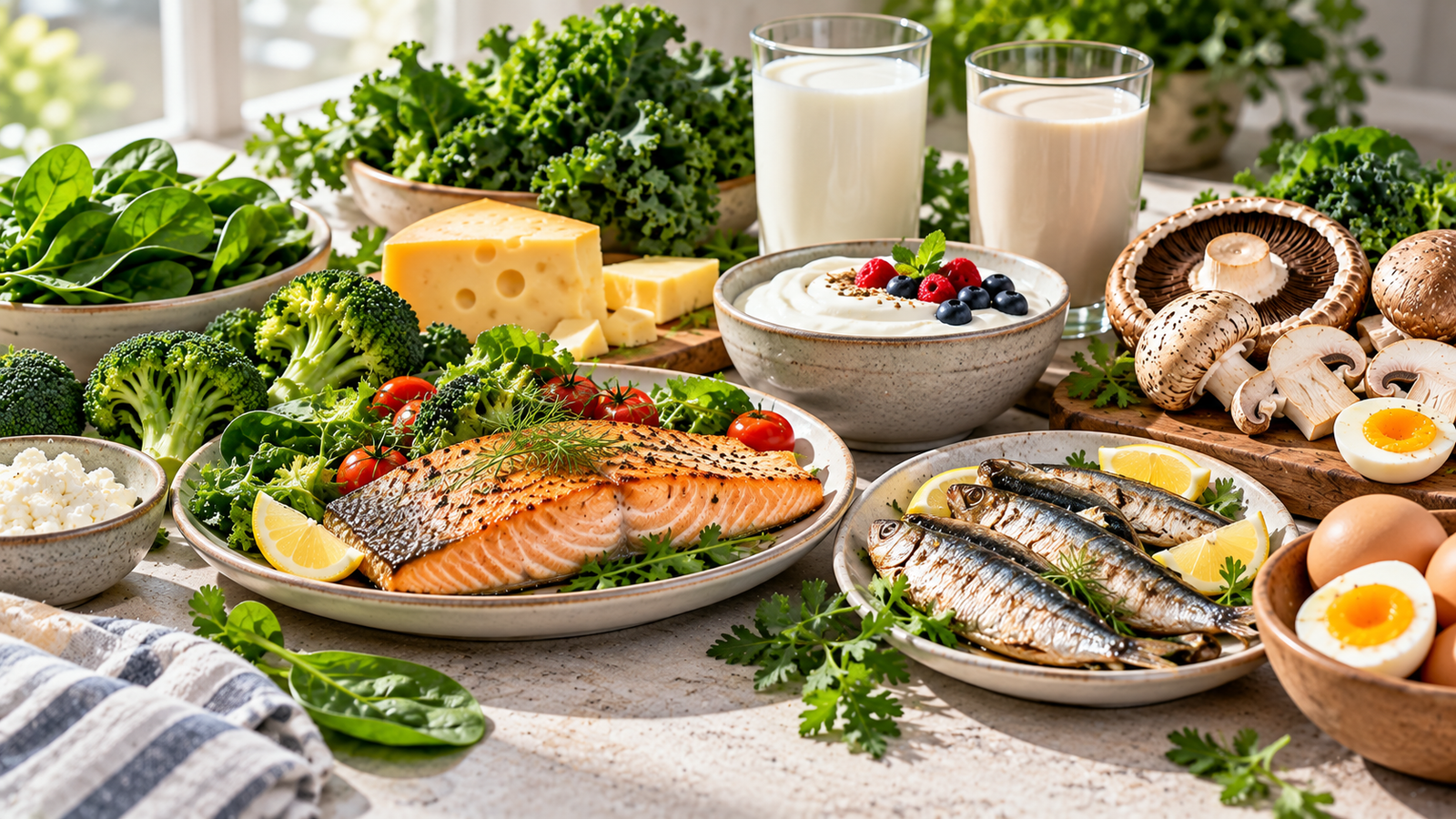
When people think about healthy bones, calcium is often the first nutrient that comes to mind. But calcium doesn’t work alone.
Vitamin D and calcium have complementary roles in maintaining bone health. Calcium provides a major structural component of bones and teeth, while vitamin D helps the body absorb calcium from the digestive tract and supports normal calcium and phosphate levels needed for bone mineralization.
This relationship is one reason it’s useful to consider both nutrients when planning a balanced diet.
Getting enough calcium without adequate vitamin D can make it harder for the body to absorb calcium efficiently. On the other hand, vitamin D is not a substitute for calcium. Your body needs both nutrients, along with protein, other minerals, physical activity, and an overall nutritious diet, to support healthy bones.
Key Takeaways
- Vitamin D helps the body absorb calcium in the intestine.
- Calcium is a major structural mineral in bones and teeth.
- Both nutrients contribute to normal bone development and maintenance.
- Adults generally need 600 IU (15 mcg) of vitamin D daily through age 70 and 800 IU (20 mcg) after age 70 under U.S. dietary reference recommendations.
- Calcium needs vary by age and sex, with adult recommendations generally ranging from 1,000 to 1,200 mg per day.
- Dairy products, fortified foods, leafy greens, and canned fish with edible bones can contribute calcium.
- Fatty fish, fortified foods, eggs, and UV-exposed mushrooms can contribute vitamin D.
- Food-first strategies are usually a practical starting point, while supplements may be appropriate in certain circumstances.
What Does Calcium Do in the Body?
Calcium is the most abundant mineral in the human body.
Most of the body’s calcium is stored in bones and teeth, where it contributes to their structure and strength. But calcium also has important roles beyond the skeleton.
The mineral is involved in:
- Muscle contraction
- Nerve transmission
- Blood clotting
- Hormonal secretion
- Normal blood-vessel function
- Bone formation and remodeling
The body tightly regulates calcium levels in the blood. When dietary calcium is inadequate, the body can draw on calcium stored in bones to help maintain normal blood calcium levels.
That’s one reason consistent calcium intake matters throughout life—not only during childhood.
Calcium and Bone Remodeling
Bone is living tissue.
It is continuously being broken down and rebuilt through a process called bone remodeling. Calcium is deposited into new bone tissue while older bone is removed.
This process occurs throughout adulthood, which means bone nutrition remains relevant even after skeletal growth has stopped.
What Does Vitamin D Do?
Vitamin D is a fat-soluble vitamin that has an especially important relationship with calcium.
One of its key functions is helping the body absorb calcium from the digestive tract. Vitamin D also helps maintain adequate calcium and phosphate concentrations needed for normal bone mineralization.
Vitamin D can come from:
- Food
- Fortified foods
- Dietary supplements
- Sunlight-triggered production in the skin
Very few foods naturally contain substantial amounts of vitamin D, which is why fortified foods can be particularly useful sources.
How Vitamin D Helps Calcium Absorption
Think of the relationship this way:
Calcium = an important building material
Vitamin D = helps your body absorb and use calcium effectively
Vitamin D promotes calcium absorption in the intestine. Without sufficient vitamin D, the body has more difficulty absorbing dietary calcium through its active transport system.
This doesn’t mean that taking large amounts of vitamin D automatically makes bones stronger.
Rather, both nutrients need to be available in appropriate amounts as part of an overall healthy nutritional pattern.

How Much Vitamin D Do You Need?
Vitamin D requirements depend on age.
According to the U.S. National Institutes of Health Office of Dietary Supplements, recommended amounts include:
| Life Stage | Recommended Vitamin D |
|---|---|
| Birth–12 months | 10 mcg (400 IU) |
| 1–70 years | 15 mcg (600 IU) |
| Adults 71+ | 20 mcg (800 IU) |
| Pregnant and breastfeeding teens and women | 15 mcg (600 IU) |
These recommendations are designed for healthy populations and may differ from recommendations used by other countries or for specific medical situations.
For most adults, the commonly cited target is therefore 600 IU per day through age 70 and 800 IU per day after age 70.
How Much Calcium Do You Need?
Calcium needs also change throughout life.
For adults, the current U.S. Recommended Dietary Allowances include:
| Age/Sex | Recommended Calcium |
|---|---|
| Adults 19–50 | 1,000 mg/day |
| Women 51–70 | 1,200 mg/day |
| Men 51–70 | 1,000 mg/day |
| Adults 71+ | 1,200 mg/day |
Teenagers ages 14–18 have a higher recommendation of 1,300 mg per day, reflecting the importance of calcium during the years of rapid skeletal development.
Pregnancy and breastfeeding recommendations vary by age and are also provided in the NIH reference tables.
If you’re planning nutrition for a child, teenager, pregnancy, or older adult, individual needs should be considered rather than applying one adult target to everyone.
Best Foods for Calcium
You don’t need supplements to get calcium if your diet regularly includes calcium-rich foods.
Dairy Foods
Milk, yogurt, and cheese are among the most familiar calcium sources.
Examples include:
- Milk
- Plain yogurt
- Greek yogurt
- Cheese
- Fortified dairy products
Dairy foods can make it relatively simple to add calcium to meals and snacks.
Leafy Green Vegetables
Some vegetables can contribute meaningful calcium.
Good examples include:
- Kale
- Broccoli
- Chinese cabbage
- Bok choy
The amount absorbed varies by vegetable because certain plant compounds can interfere with calcium absorption. For example, calcium absorption from spinach is relatively low because spinach contains substantial oxalic acid.
Canned Fish With Bones
Canned sardines and canned salmon with soft edible bones can provide calcium.
These foods are particularly useful because the bones are soft enough to eat and contribute calcium.
Fortified Foods
Depending on the product, calcium may be added to:
- Plant-based milk
- Orange juice
- Tofu
- Breakfast cereals
- Other fortified foods
Always check the nutrition label because fortification levels vary between products and countries.
Best Foods for Vitamin D
Vitamin D is more difficult to obtain naturally from food because relatively few foods contain significant amounts.
Fatty Fish
Some of the strongest natural dietary sources include:
- Salmon
- Rainbow trout
- Mackerel
- Sardines
- Herring
- Certain types of tuna
For example, NIH data lists approximately 16.2 mcg (645 IU) of vitamin D in 3 ounces of cooked farmed rainbow trout and approximately 14.2 mcg (570 IU) in 3 ounces of cooked sockeye salmon.
Egg Yolks
Egg yolks contain vitamin D, although the amount is considerably lower than what you may find in many fatty fish.
Eggs can still contribute to an overall vitamin-D-containing eating pattern.
UV-Exposed Mushrooms
Certain mushrooms can provide vitamin D2, especially after exposure to ultraviolet light.
The amount can vary substantially, so look for vitamin D information on the package when available.
Fortified Foods
Vitamin D is commonly added to some foods, including:
- Milk
- Plant-based beverages
- Breakfast cereals
- Some orange juices
- Certain other fortified products
Fortified foods can be especially helpful because naturally occurring vitamin D is limited to a relatively small number of foods.
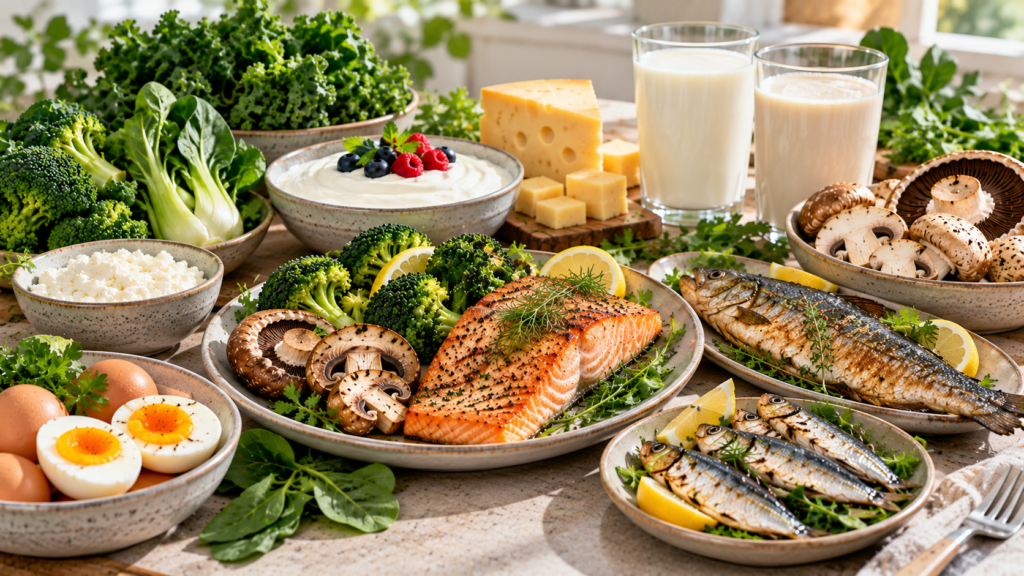
Vitamin D and Calcium Food Pairings
One easy way to make the relationship between these nutrients practical is to build meals that contain sources of both.
Breakfast: Yogurt + Fortified Cereal
Try plain yogurt with fortified cereal and fruit.
The yogurt can provide calcium, while fortified cereal may contribute vitamin D depending on the product.
Lunch: Salmon + Greens
A salmon salad with kale or broccoli can combine a strong vitamin D food with vegetables that contribute calcium and other nutrients.
Dinner: Sardines + Vegetables
Sardines with edible bones can provide both calcium and vitamin D, while vegetables add fiber and a variety of micronutrients.
Snack: Fortified Milk + Fruit
A glass of fortified milk paired with fruit provides a simple way to add calcium and potentially vitamin D.
The important point is that you don’t have to obtain both nutrients from the same food.
A varied diet allows different foods to contribute different nutrients.
Why Calcium Alone Isn’t the Whole Story
It is tempting to think that eating calcium-rich foods automatically solves the problem of bone nutrition.
But calcium is only one piece of the puzzle.
Your body also needs vitamin D to support calcium absorption and normal bone mineralization. Protein, phosphorus, magnesium, vitamin K, and other nutrients also contribute to a healthy overall dietary pattern.
Lifestyle factors matter too.
Weight-bearing physical activity and resistance exercise can support bone health, while smoking and excessive alcohol intake can negatively affect overall bone health.
So, instead of asking:
“Am I eating enough calcium?”
it’s often more useful to ask:
“Does my overall diet and lifestyle provide the nutrients and habits my bones need?”
Can You Get Vitamin D and Calcium From the Same Foods?
Yes, although not every food contains substantial amounts of both.
Some foods can contribute both nutrients.
Sardines
Sardines with edible bones can provide calcium, while sardines also provide vitamin D.
Salmon
Salmon is an excellent vitamin D food, although the calcium content is not as high as that of dairy products or canned fish with bones.
Fortified Milk
Depending on the product and country, fortified milk can provide both calcium and vitamin D.
Fortified Plant-Based Beverages
Some soy, almond, oat, and other plant-based beverages are fortified with both nutrients.
However, formulations differ significantly, so read the nutrition label.

What Happens if You Don’t Get Enough Vitamin D?
Vitamin D deficiency can affect bone health.
In children, severe vitamin D deficiency can cause rickets, which affects normal bone development. In teens and adults, deficiency can cause osteomalacia, a condition involving soft or weakened bones and possible bone pain or muscle weakness.
However, symptoms alone aren’t a reliable way to determine whether someone has inadequate vitamin D.
If you are concerned about your vitamin D status, a healthcare professional can determine whether testing or dietary changes are appropriate.
What Happens if You Don’t Get Enough Calcium?
Long-term inadequate calcium intake can compromise the mineral content and strength of bones.
Because the body carefully regulates calcium in the bloodstream, a blood calcium test does not necessarily tell you whether your dietary calcium intake is adequate. Much of the body’s calcium is stored in the skeleton.
For this reason, meeting calcium needs consistently through food and, when appropriate, supplements is important.
Are Supplements Necessary?
Not everyone needs vitamin D or calcium supplements.
For many people, food is an effective way to obtain nutrients. However, supplementation may be considered when dietary intake is inadequate or when a healthcare professional identifies a specific need.
This is particularly important because more is not always better.
The NIH lists adult upper limits of 4,000 IU (100 mcg) per day for vitamin D and 2,500 mg of calcium per day for adults ages 19–50, falling to 2,000 mg for adults 51 and older. These upper limits include intake from all sources and are not targets to reach.
High-dose supplements can also interact with medications or cause side effects.
If you’re taking prescription medication, have a medical condition affecting calcium or vitamin D metabolism, or are considering high-dose supplementation, discuss it with a healthcare professional.
NIH Vitamin D and Calcium fact sheets
How to Improve Vitamin D and Calcium Intake Naturally
You can make your diet more supportive of both nutrients without completely changing the way you eat.
1. Include a calcium-rich food at meals
Add yogurt, milk, cheese, fortified plant milk, tofu, kale, or another calcium-containing food.
2. Eat vitamin-D-rich fish regularly
Salmon, trout, sardines, mackerel, and other suitable fish can provide vitamin D.
3. Read fortified-food labels
Don’t assume every milk alternative, cereal, or juice contains vitamin D or calcium. Check the nutrition facts.
4. Include vegetables every day
Vegetables aren’t generally major vitamin D sources, but they provide many other nutrients that contribute to an overall healthy diet.
5. Don’t rely on one “superfood”
Bone health is supported by a pattern of adequate nutrition and healthy lifestyle habits—not a single food.
6. Consider your individual needs
Age, diet, sunlight exposure, certain medical conditions, medications, and life stage can influence nutritional requirements.
Vitamin D and Calcium for Different Life Stages
Children and Teenagers
Growing bones require substantial amounts of calcium, and adequate vitamin D is important for calcium absorption and normal bone development.
Teenagers ages 14–18 have a calcium RDA of 1,300 mg per day and a vitamin D RDA of 600 IU (15 mcg) per day under U.S. dietary reference values.
Adults
For most adults, the vitamin D RDA is 600 IU per day through age 70, while calcium needs are generally around 1,000 mg per day, with some women over 50 and adults over 70 needing 1,200 mg.
Older Adults
Adults over 70 have a vitamin D recommendation of 800 IU (20 mcg) per day and a calcium recommendation of 1,200 mg per day under U.S. reference values.
Older adults may also face dietary, absorption, mobility, and medication-related factors that make individualized nutrition advice especially valuable.
Vitamin D, Calcium, and Bone Health: The Bigger Picture
It’s easy to focus on one nutrient when thinking about bone health.
But healthy bones depend on more than vitamin D and calcium.
A broader approach includes:
- Adequate calcium
- Adequate vitamin D
- Sufficient protein
- A varied diet
- Regular weight-bearing activity
- Muscle-strengthening exercise
- Healthy body weight
- Avoiding smoking
- Limiting excessive alcohol
- Appropriate medical care when needed
Vitamin D and calcium are therefore important pieces of the puzzle, not the entire puzzle.
Common Myths About Vitamin D and Calcium
Myth 1: More calcium always means stronger bones
Not necessarily.
The goal is to meet your body’s needs—not to consume excessive amounts. Very high calcium intake, particularly from supplements, can create potential health concerns.
Myth 2: Vitamin D replaces calcium
Vitamin D helps with calcium absorption, but it does not replace calcium.
Both nutrients have distinct roles.
Myth 3: Dairy is the only way to get calcium
No.
Kale, broccoli, bok choy, canned sardines or salmon with bones, fortified plant beverages, tofu, and other foods can contribute calcium.
Myth 4: Everyone needs a calcium supplement
Not necessarily.
Many people can obtain calcium through food. Supplements may be useful for some individuals, but they should not automatically replace a nutrient-rich diet.
Myth 5: Vitamin D supplements are automatically better than food
Supplements can be useful when appropriate, but taking more than needed isn’t necessarily beneficial.
A food-first approach can help provide vitamin D alongside protein, healthy fats, minerals, and other nutrients.
Vitamin D and Calcium: The Bottom Line
Vitamin D and calcium work together, but they are not interchangeable.
Calcium provides essential structural material for bones and teeth and also supports muscle, nerve, blood-clotting, and other functions. Vitamin D helps the body absorb calcium and supports the normal mineralization and remodeling of bone.
The most practical approach is to build a varied diet that regularly includes calcium-rich foods and reliable vitamin D sources.
Choose foods such as yogurt, milk, fortified plant beverages, kale, broccoli, tofu, sardines, salmon, eggs, and UV-exposed mushrooms according to your dietary preferences.
Then consider your overall lifestyle—including physical activity and other bone-supportive habits.
You don’t need a complicated diet. You need a consistent, balanced pattern that provides the nutrients your body needs.
Frequently Asked Questions
Why are vitamin D and calcium important together?
Vitamin D helps the body absorb calcium from the digestive tract, while calcium provides structural material for bones and teeth. Both contribute to normal bone health.
Does vitamin D help your body absorb calcium?
Yes. Vitamin D promotes calcium absorption in the intestine and helps maintain adequate calcium and phosphate levels needed for normal bone mineralization.
What foods contain both vitamin D and calcium?
Some fortified milk and plant-based beverages can provide both. Sardines with edible bones can also contribute both nutrients, while foods such as salmon and yogurt can complement each other in a meal.
How much vitamin D and calcium do adults need daily?
U.S. reference values recommend 600 IU (15 mcg) of vitamin D daily for adults through age 70 and 800 IU (20 mcg) after age 70. Calcium recommendations for adults generally range from 1,000 to 1,200 mg depending on age and sex.
Can you get calcium without dairy?
Yes. Calcium can come from foods such as kale, broccoli, bok choy, canned sardines or salmon with bones, calcium-fortified plant beverages, tofu, and fortified cereals.
What is the best source of vitamin D and calcium?
There isn’t one universal “best” food. Fatty fish are excellent vitamin D sources, while dairy and fortified foods can provide calcium. A combination of foods is often the most practical approach.
Can you take vitamin D and calcium supplements together?
Some supplements combine vitamin D and calcium, but whether you need them depends on your dietary intake and individual circumstances. Speak with a healthcare professional before taking high doses or if you use medications that may interact with calcium.
Does vitamin D deficiency affect calcium absorption?
Yes. Insufficient vitamin D can reduce the body’s ability to absorb calcium through the intestine and can contribute to problems with bone mineralization.
3 thoughts on “Vitamin D and Calcium: Why Do They Work Together?”