
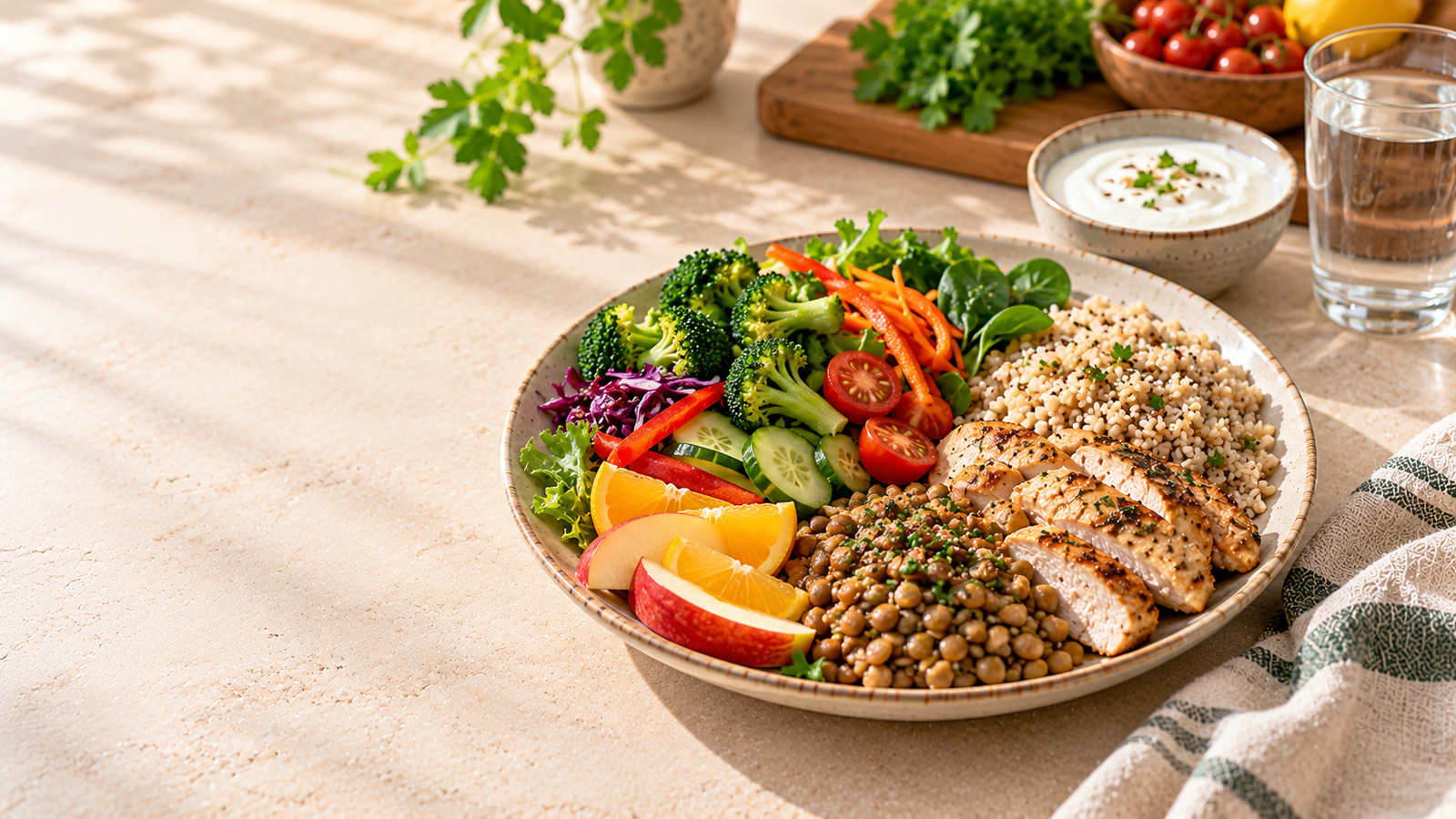
What should a balanced plate look like? A simple starting point is to fill about half your plate with vegetables and fruits, one-quarter with whole grains or other fiber-rich carbohydrates, and one-quarter with protein-rich foods. Add water or another suitable unsweetened drink, and include small amounts of healthy fats where appropriate.
This approach makes healthy eating easier without requiring you to count every calorie or weigh every ingredient. It also allows flexibility: you can build a balanced plate using familiar foods such as vegetables, lentils, beans, whole-wheat roti, brown rice, eggs, fish, chicken, tofu, or yogurt.
The ideal plate will vary according to your age, activity level, appetite, health needs, culture, budget, and food preferences. The goal is not to make every meal perfect. It is to build a practical eating pattern that provides a range of nutrients over time.
Key Takeaways
- Aim for roughly half your plate to be vegetables and fruits, with more vegetables than fruit.
- Fill about one-quarter with whole grains or other fiber-rich carbohydrate foods.
- Use the remaining quarter for protein foods such as beans, lentils, eggs, fish, chicken, or tofu.
- Include healthy fats in moderate amounts and choose water regularly.
- Portion proportions are a guide, not a strict rule for every person or every meal.
- You can use the balanced plate method with traditional foods and meals from many cultures.
What Is the Balanced Plate Method?
The balanced plate method is a visual way to plan meals using broad food-group proportions rather than detailed calorie calculations. It is designed to help people include a variety of foods and create meals that provide fiber, protein, vitamins, minerals, carbohydrates, and fats.
One well-known example is the Healthy Eating Plate developed by nutrition experts at the Harvard T.H. Chan School of Public Health. It recommends approximately half the plate for vegetables and fruits, one-quarter for whole grains, and one-quarter for healthy protein, with healthy oils and water as additional considerations.
The proportions are a useful starting point, not a medical prescription. Some people need larger portions, smaller portions, additional snacks, or a different balance based on individual circumstances.
Read the Harvard T.H. Chan School of Public Health’s Healthy Eating Plate guide
What Should a Balanced Plate Look Like?

dieteticienne-nutritionniste.com
A practical balanced plate can be divided into three main sections.
1. Half the Plate: Vegetables and Fruits
Vegetables and fruits provide fiber, vitamins, minerals, and a variety of beneficial plant compounds. Try to include different colors and types throughout the day.
Examples include:
- Leafy greens, spinach, kale, and lettuce
- Broccoli, cauliflower, carrots, and cabbage
- Tomatoes, cucumber, bell peppers, and okra
- Apples, oranges, bananas, berries, and seasonal fruit
Aim to make vegetables the larger share of this half, with fruit filling the remainder according to your preferences and needs.
Fresh, frozen, and many canned vegetables and fruits can all fit. When choosing canned options, look for lower-sodium vegetables and fruit packed in water or juice rather than heavy syrup when possible.
2. One-Quarter: Whole Grains and Fiber-Rich Carbohydrates
Carbohydrates provide energy, and whole grains often supply more fiber and nutrients than refined grains.
Good options include:
- Whole-wheat roti or chapati
- Brown rice
- Oats
- Whole-grain bread
- Barley
- Whole-wheat pasta
- Other minimally processed whole grains
Refined grains such as white rice and white bread can still fit into a balanced diet. When practical, choosing whole grains more often can help increase fiber intake.
3. One-Quarter: Healthy Protein Foods
Protein helps build and maintain muscles and other tissues. It also supports many normal functions in the body.
Include a variety of protein sources, such as:
- Beans, chickpeas, and lentils
- Eggs
- Fish and seafood
- Chicken and other poultry
- Tofu and other soy foods
- Nuts and seeds
- Plain yogurt and other dairy foods
Plant proteins are valuable choices and can contribute fiber as well. If you eat meat, vary your choices and consider replacing some processed or fatty meats with beans, lentils, fish, or other suitable proteins.
4. Add Healthy Fats and Water
Healthy fats help the body absorb fat-soluble vitamins and provide essential fatty acids. Use moderate amounts of foods such as olive oil, nuts, seeds, avocado, or other unsaturated-fat sources.
Water is a practical everyday drink. Unsweetened tea or coffee may also fit, depending on your preferences and health needs. Sugary drinks do not need to be part of every meal.
Best Food Sources and Benefits
How to Build a Balanced Plate Step by Step
You do not need special ingredients or expensive products to create balanced meals. Start with foods you already eat and adjust the proportions gradually.
- Choose vegetables first. Add a serving of cooked vegetables or a fresh salad.
- Add a protein source. Include lentils, beans, eggs, fish, chicken, tofu, or another protein food.
- Choose a carbohydrate. Add whole-wheat roti, brown rice, oats, potatoes, or another grain or starchy food.
- Include a little healthy fat. Use an appropriate amount of oil, nuts, seeds, or another unsaturated-fat source.
- Choose a drink. Water is a good default.
- Adjust to your appetite. Eat enough to feel satisfied, and add more food when your hunger, activity, or nutritional needs call for it.
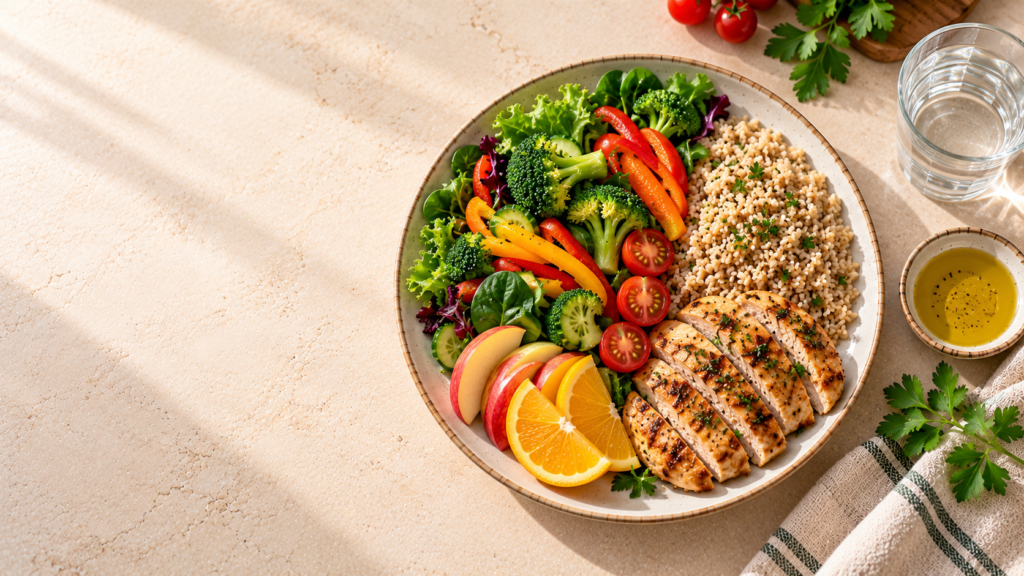
Balanced Plate Examples Using Everyday Foods
A balanced plate does not have to look like a restaurant meal or a social-media recipe. Familiar home-cooked foods can work well when you combine food groups thoughtfully.
| Meal style | Vegetables and fruits | Protein | Grain or carbohydrate |
|---|---|---|---|
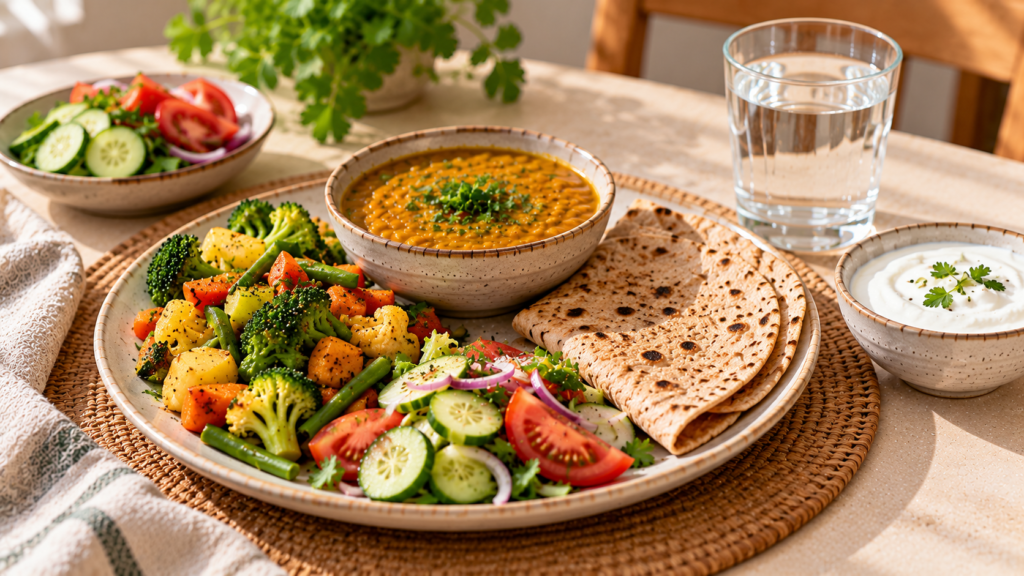
| Traditional South Asian meal | Cabbage, okra, spinach, or mixed vegetables | Dal, chickpeas, fish, chicken, or eggs | Whole-wheat roti or rice |
| Simple Western-style meal | Salad, broccoli, carrots, or green beans | Grilled fish, chicken, tofu, or beans | Brown rice, whole-grain bread, or potatoes |
| Vegetarian meal | Roasted vegetables and a side salad | Lentils, chickpeas, beans, tofu, or tempeh | Whole-wheat roti, quinoa, or brown rice |
| Quick lunch bowl | Mixed vegetables and leafy greens | Beans, eggs, tuna, or tofu | Brown rice or another whole grain |
| Breakfast plate | Tomatoes, fruit, or other vegetables | Eggs, yogurt, or beans | Oats or whole-grain toast |
These are flexible examples rather than exact prescriptions. Some meals, such as soups, mixed curries, sandwiches, and grain bowls, combine several food groups in one dish. You can still use the same principles without separating every ingredient on the plate.
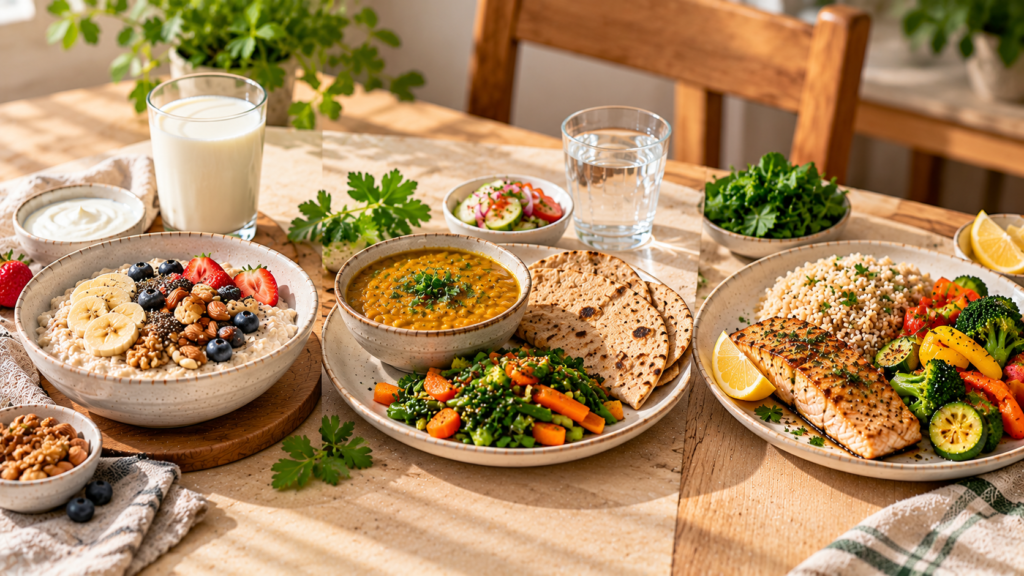
What Should a Balanced Plate Look Like for Breakfast, Lunch, and Dinner?
Breakfast
A balanced breakfast can include a fiber-rich carbohydrate, a protein source, and fruit or vegetables.
Ideas include:
- Oats with plain yogurt, fruit, and a small portion of nuts or seeds
- Eggs with whole-grain toast and tomatoes
- Whole-wheat roti with an omelet and cucumber
- Unsweetened fortified soy milk with oats and fruit
Breakfast does not have to be large, and you do not have to eat the same foods every day. Choose a meal that suits your appetite and routine.
Lunch
Build lunch around vegetables, protein, and a suitable carbohydrate.
Examples include:
- Dal, whole-wheat roti, and a generous serving of vegetables
- Grilled chicken with brown rice and salad
- Chickpea salad with whole-grain bread
- Tofu and vegetable stir-fry with rice
If you eat a curry or stew, include vegetables and a protein-rich ingredient where possible, then serve it with an appropriate portion of roti or rice.
Dinner
Dinner can follow the same balanced plate principle. For example, serve fish with roasted vegetables and potatoes, or lentils with vegetables and whole-wheat roti.
If you are eating a one-pot dish, such as vegetable pulao with beans or chicken, add a side salad or cooked vegetables if the dish itself does not contain much produce.
How Much Should You Eat? Understanding Portion Sizes
The balanced plate method gives you a visual starting point, but it does not determine the exact amount of food every person needs.
Your energy and nutrient requirements can depend on:
- Age and stage of growth
- Body size and activity level
- Pregnancy or breastfeeding
- Health conditions and medications
- Appetite, personal goals, and nutritional status
For example, someone who does physically demanding work or trains intensively may need more total food than someone with a lower energy requirement. Children and teenagers also have changing needs as they grow.
Is the Plate Method the Same as Counting Calories?
No. The plate method focuses on the variety and proportions of foods rather than the exact number of calories.
It can be useful for people who want a straightforward way to plan meals. However, it may need adapting for athletes, people with specific medical nutrition needs, or anyone who has been advised to follow an individualized meal plan.
Practical guidance: Start with the visual proportions, eat slowly enough to notice your hunger and fullness, and adjust serving sizes according to your needs. Avoid treating the plate proportions as strict rules that must be followed at every meal.
How to Make a Balanced Plate on a Budget
Eating well does not require expensive superfoods, imported ingredients, or specialty products. Affordable staples can provide a range of nutrients when combined thoughtfully.
- Use beans and lentils: They offer protein, fiber, and other important nutrients.
- Buy seasonal produce: Seasonal vegetables and fruits may be more affordable.
- Choose practical staples: Oats, whole-wheat flour, rice, potatoes, and beans can form the basis of economical meals.
- Use frozen vegetables: They can be convenient and nutritious, particularly when fresh options are expensive or unavailable.
- Cook extra portions: Preparing lentils, beans, or grains in advance can make balanced meals easier during busy days.
- Reduce food waste: Plan several meals around overlapping ingredients, such as cabbage, carrots, tomatoes, and leafy greens.
In Pakistan, a meal of dal, whole-wheat roti, seasonal sabzi, and cucumber or tomato salad can be a practical starting point. The goal is to vary food groups and portions over time, not to buy a completely different menu.
Common Balanced Plate Mistakes to Avoid
Even with a simple visual guide, a few habits can make it harder to build a balanced meal.
- Filling most of the plate with refined starches. Try adding more vegetables and including a protein source.
- Treating protein as only meat. Beans, lentils, eggs, tofu, fish, and dairy can all contribute protein.
- Forgetting fruits and vegetables. Include a variety across meals and snacks.
- Avoiding all carbohydrates. Carbohydrate-rich foods provide energy; whole grains and other fiber-rich choices can be particularly useful.
- Adding excessive amounts of oil or sauces without noticing. These foods can fit, but portions and overall dietary patterns matter.
- Assuming every meal must be perfectly divided. Balance can be achieved across the day, especially when a particular meal is difficult to plan.
- Following a plate template despite special medical needs. Some health conditions require individualized nutrition advice.
How to Make Your Plate More Nutritious
A balanced plate is about more than dividing foods into sections. The quality and variety of ingredients matter, too.
- Choose whole grains more often. Whole-wheat roti, oats, and brown rice can provide fiber and other nutrients.
- Vary your protein sources. Rotate lentils, beans, eggs, fish, poultry, tofu, and other suitable options.
- Eat different-colored produce. Different vegetables and fruits supply different combinations of nutrients.
- Limit highly processed foods when practical. Foods high in sodium, added sugars, or saturated fat can fit occasionally, but should not crowd out more nutrient-dense choices.
- Stay hydrated. Drink water regularly, adjusting for activity, climate, and medical advice.
- Keep meals enjoyable. Flavorful herbs, spices, and appropriate seasonings can make nutritious foods more appealing.
For additional guidance, see the World Health Organization’s healthy diet recommendations.
Frequently Asked Questions
1. What should a balanced plate look like for healthy eating?
A common visual guide is half vegetables and fruits, one-quarter whole grains or other fiber-rich carbohydrates, and one-quarter protein foods. Include water and moderate amounts of healthy fats as appropriate.
2. What is the 50-25-25 plate method?
It is a simple meal-planning approach that allocates approximately 50% of the plate to vegetables and fruits, 25% to whole grains, and 25% to protein foods. It is a flexible guide rather than a strict nutritional rule.
3. What should a balanced plate look like for weight management?
A plate with plenty of vegetables, a suitable protein source, and a portion of fiber-rich carbohydrates can support a satisfying eating pattern. Weight management also depends on overall food intake, activity, sleep, health, and individual needs.
4. Can rice and roti be part of a balanced plate?
Yes. Rice and roti provide carbohydrates and can fit into balanced meals. Whole-grain options, such as whole-wheat roti and brown rice, can provide more fiber than many refined alternatives.
5. How can I make a balanced plate without meat?
Use lentils, chickpeas, beans, tofu, eggs, dairy products, or other suitable protein sources. Combine them with vegetables, fruits, and grains to create varied meals.
6. Does every meal need to follow the exact plate proportions?
No. The proportions are a starting point. Some meals combine several food groups, and your needs may vary by appetite, activity, age, and health conditions. Aim for balance across your overall eating pattern.
7. What is a balanced plate for children?
Children generally benefit from a variety of fruits, vegetables, grains, protein foods, and appropriate sources of fats. Portions should suit their age, growth, appetite, and activity. Avoid forcing children to finish a fixed portion; seek pediatric nutrition guidance if you have concerns about growth or eating.
8. What is an example of a cheap balanced meal?
Dal with whole-wheat roti, seasonal vegetables, and cucumber or tomato salad is one practical option. Beans, eggs, oats, and seasonal produce can also help create affordable meals.
Conclusion
Knowing what should a balanced plate look like can make everyday healthy eating simpler. Start with vegetables and fruits, add a source of protein, include whole grains or other fiber-rich carbohydrates, and choose water regularly. Build meals from familiar ingredients, including affordable staples such as lentils, beans, seasonal vegetables, whole-wheat roti, and rice.
Remember that the plate method is a guide, not a rigid formula. The best balanced plate is one that meets your nutritional needs, fits your culture and budget, and is practical enough to follow consistently.
5 thoughts on “What Should a Balanced Plate Look Like?”