

Potassium is an essential mineral that helps your body maintain fluid balance, support normal muscle contractions, transmit nerve signals, and regulate a healthy heartbeat. Yet many people do not consistently eat enough potassium-rich foods.
The good news is that you do not need expensive supplements or unusual ingredients to increase your intake. Everyday foods such as potatoes, beans, lentils, bananas, leafy greens, yogurt, and avocados can provide meaningful amounts of potassium.
In this guide, you will discover 20 potassium rich foods, compare their approximate potassium content, learn how much potassium adults generally need, and find practical ways to include these foods in your daily meals.
Key Takeaways
- Potassium is important for normal nerve function, muscle contractions, and fluid balance.
- Potatoes, legumes, leafy greens, dried fruit, bananas, and dairy products are useful potassium sources.
- You can obtain potassium from both plant-based and animal-based foods.
- Eating a variety of foods is generally more practical than relying on one high-potassium food.
- Most healthy adults need approximately 2,600–3,400 mg of potassium daily, depending on sex and age under U.S. reference recommendations.
- People with kidney disease or certain medication-related risks may need individualized potassium guidance.
What Are Potassium Rich Foods?
Potassium rich foods are foods that provide substantial amounts of potassium in a typical serving. They include fruits, vegetables, beans, lentils, nuts, dairy products, meat, and fish.
Potassium is an electrolyte, meaning it helps regulate the movement of fluids and electrical signals in the body. Your body needs it for several essential functions, but the amount you need depends on your age, sex, and life stage.
Unlike sodium, which many people consume in excess, potassium intake can be lower than recommended in some dietary patterns. Eating a varied diet with plenty of fruits, vegetables, legumes, and other nutrient-dense foods can help improve overall potassium intake.
For reliable background information, see the NIH Office of Dietary Supplements potassium fact sheet.
20 Potassium Rich Foods to Add to Your Diet
The following foods offer practical ways to increase your dietary potassium. The amounts are approximate and depend on serving size, variety, preparation, and brand.
1. Potatoes

Potatoes are among the most useful everyday sources of potassium. A medium baked potato can provide approximately 600 mg of potassium, depending on its size and preparation.
Potatoes also supply carbohydrates, vitamin B6, and vitamin C. Eating the skin provides additional fiber.
How to eat them: Bake, roast, or boil potatoes and serve them with vegetables, beans, yogurt, or a protein source.
2. White Beans
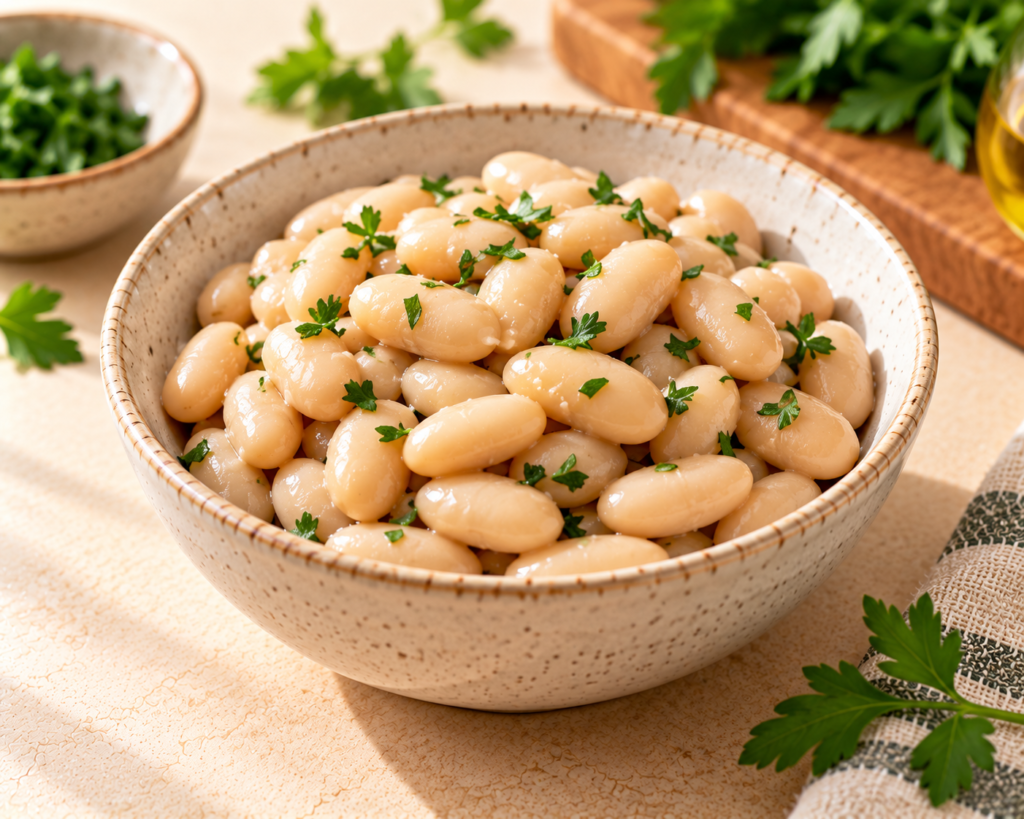
White beans are rich in potassium and provide plant-based protein and dietary fiber. One cup of cooked white beans may provide around 800–1,000 mg or more, depending on the variety.
Their combination of potassium, fiber, and protein makes them a versatile addition to balanced meals.
How to eat them: Add white beans to soups, salads, vegetable stews, and grain bowls.
3. Lentils
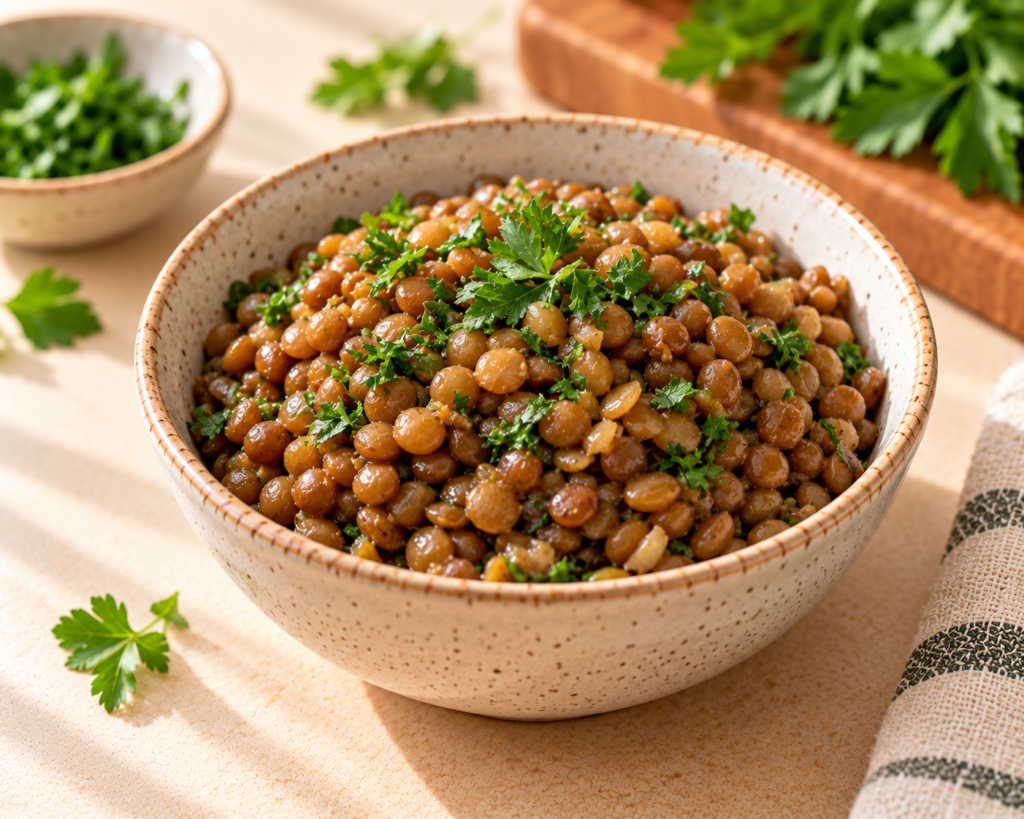
Lentils are affordable, easy to prepare, and rich in plant-based nutrients. One cup of cooked lentils provides approximately 700–750 mg of potassium.
They also provide protein, fiber, folate, and iron, making them a useful choice for vegetarian and vegan diets.
How to eat them: Prepare lentil curry, soup, dal, or lentil salad. Pair them with vegetables and whole grains for a balanced meal.
4. Sweet Potatoes
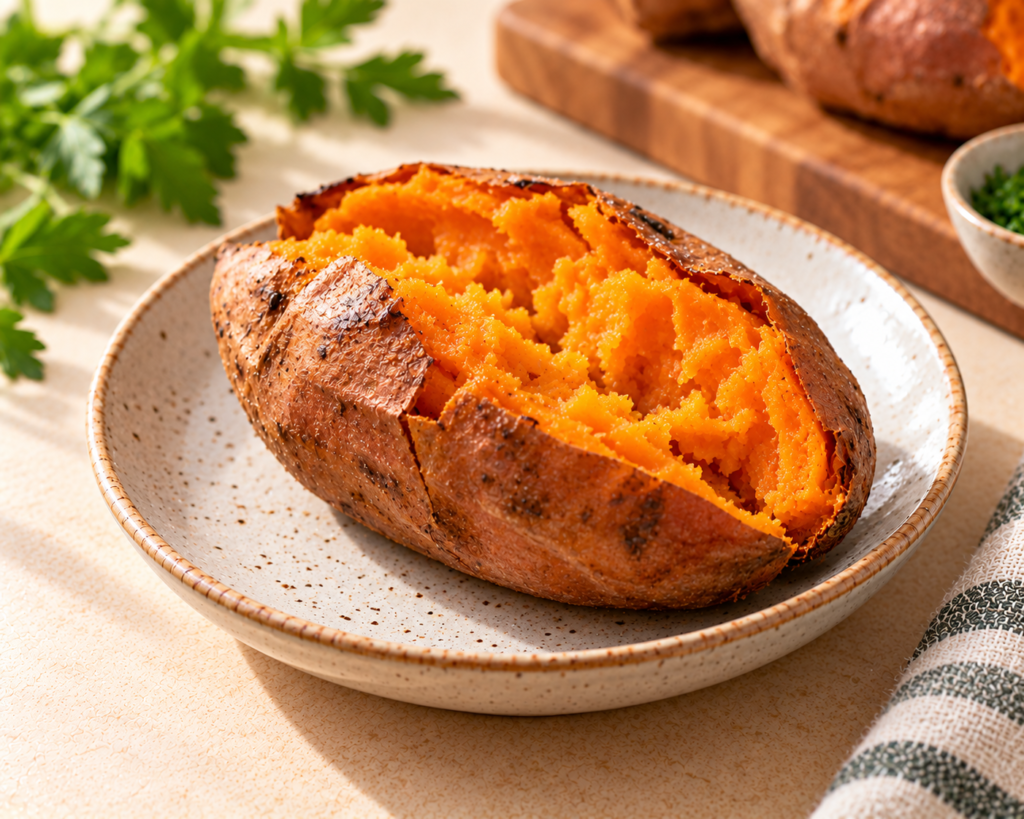
Sweet potatoes provide potassium along with beta-carotene, which the body can convert into vitamin A. One medium sweet potato may provide approximately 500–550 mg of potassium, depending on its size.
They also supply fiber and carbohydrates that can help make meals satisfying.
How to eat them: Roast sweet potato wedges, bake them whole, or mash them as a side dish.
5. Avocados

Avocados contain potassium, fiber, and mostly unsaturated fats. Half a medium avocado provides roughly 350–500 mg of potassium, depending on its size.
Their creamy texture makes them easy to incorporate into meals without relying on heavily processed spreads.
How to eat them: Add avocado to toast, salads, sandwiches, or grain bowls.
6. Spinach
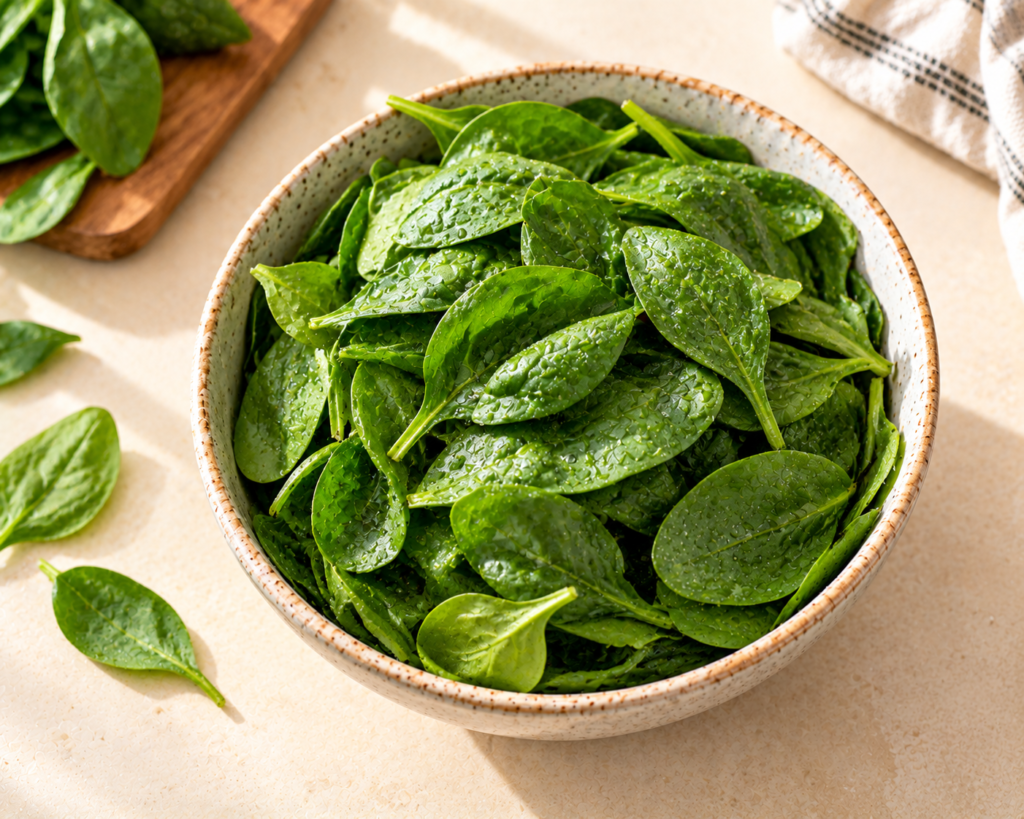
Spinach is a nutrient-dense leafy green that provides potassium, folate, vitamin K, and other beneficial nutrients.
Two cups of raw spinach provide roughly 300–350 mg of potassium. Cooked spinach is more concentrated per cup because it shrinks considerably during cooking.
How to eat it: Add spinach to omelets, curries, soups, lentils, or smoothies.
7. Bananas
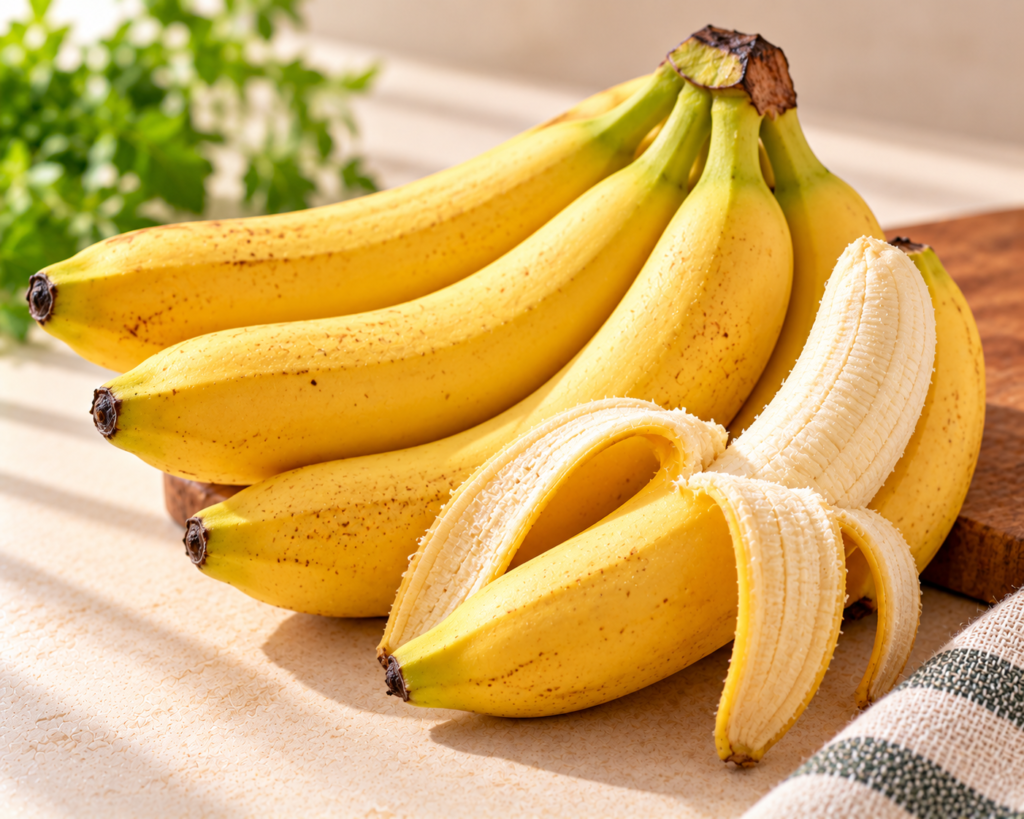
Bananas are a convenient potassium source and are easy to eat without preparation. One medium banana provides approximately 420 mg of potassium.
They also supply carbohydrates and vitamin B6, making them a practical snack before or after physical activity.
How to eat them: Enjoy a banana on its own, slice it over oatmeal, or combine it with plain yogurt.
8. Dried Apricots
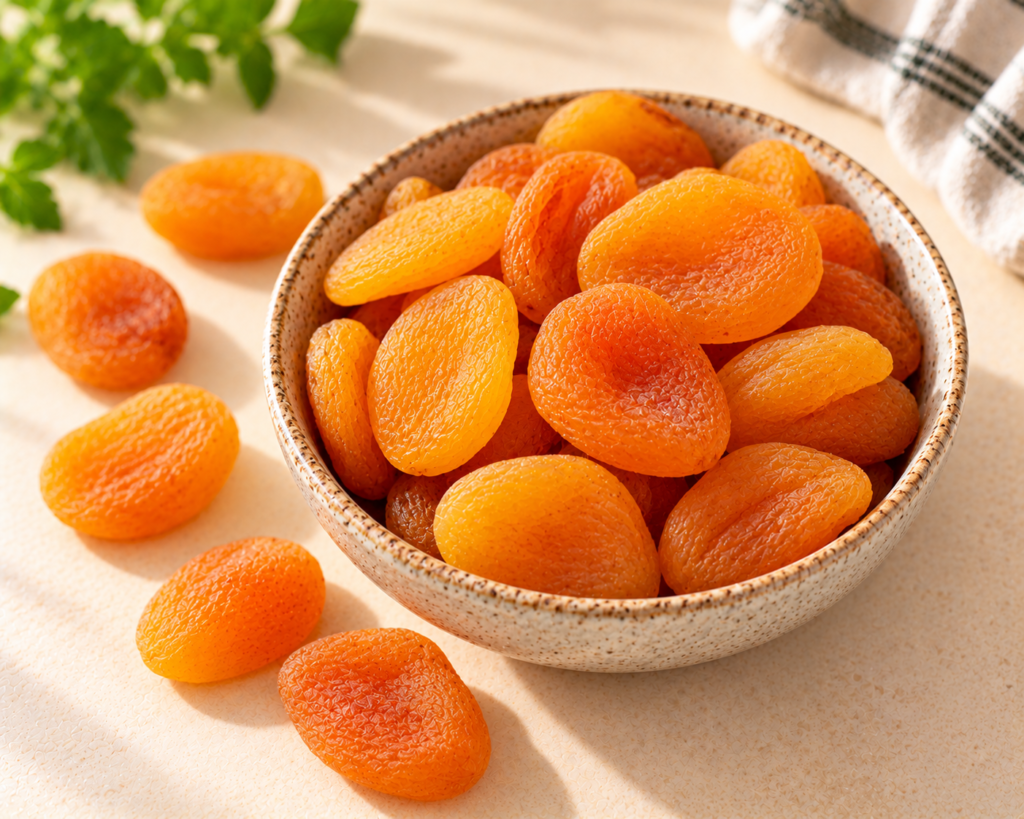
Dried apricots are concentrated sources of potassium because much of their water has been removed. Half a cup can provide approximately 750 mg of potassium.
They also contain fiber, although dried fruit is more concentrated in natural sugars and calories than fresh fruit.
How to eat them: Add a small portion to oatmeal, homemade trail mix, or plain yogurt.
9. Kidney Beans
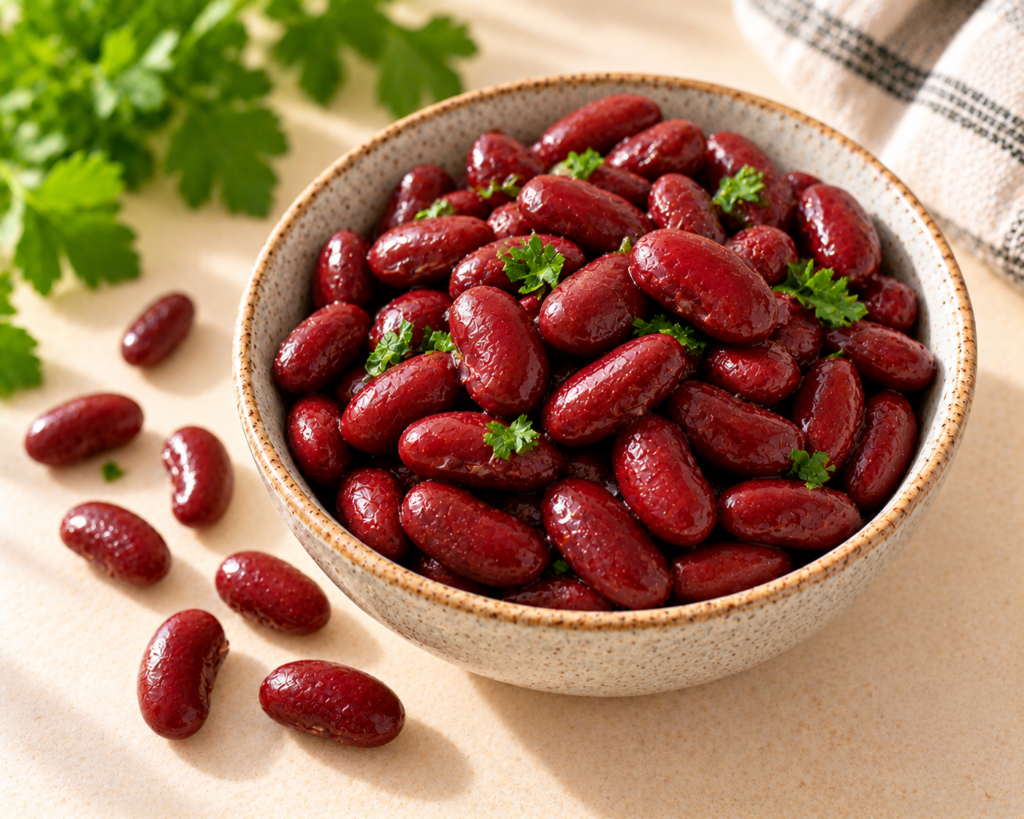
Kidney beans provide potassium, plant-based protein, and fiber. One cup of canned kidney beans, drained, may provide around 500–650 mg, depending on the product.
They are especially useful in affordable, filling meals.
How to eat them: Use kidney beans in bean curry, soups, salads, or chili-style dishes. Rinsing canned beans can also reduce some of their sodium.
10. Plain Yogurt
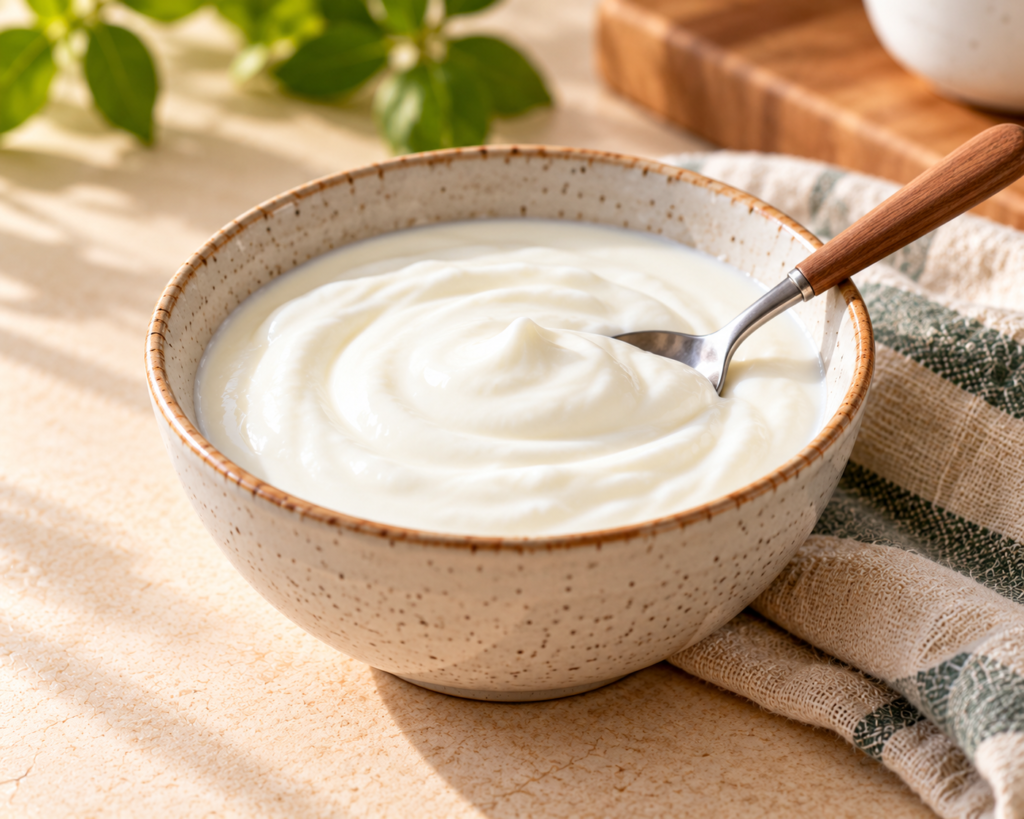
Yogurt provides potassium alongside protein and calcium. A typical cup of plain yogurt may contain approximately 350–600 mg, depending on the type and serving size.
It can be an easy way to add potassium to breakfast or snacks.
How to eat it: Choose plain yogurt and serve it with fruit, oats, or seeds. Compare nutrition labels because potassium content varies by product.
11. Milk
Milk provides potassium, calcium, protein, and vitamin B12. One cup of cow’s milk typically contains around 350–380 mg of potassium.
Fortified plant-based drinks can also contribute nutrients, but their potassium content varies considerably by ingredient and brand.
How to drink it: Enjoy milk with breakfast, use it in oatmeal, or add it to smoothies. Check the label if using a plant-based alternative.
12. Oranges
Oranges contain potassium and vitamin C. One medium orange generally provides around 230–250 mg of potassium.
Whole oranges also contain fiber, which is often reduced when fruit is juiced.
How to eat them: Enjoy a whole orange as a snack or add orange segments to fruit salads.
13. Orange Juice
Orange juice supplies potassium and vitamin C. One cup may provide approximately 450–500 mg, depending on the product.
However, juice contains less fiber than whole fruit and can be easier to consume in large amounts.
How to drink it: If you enjoy orange juice, choose an appropriate portion and favor whole fruit regularly as part of a balanced diet.
14. Tomatoes
Tomatoes provide potassium, vitamin C, and other plant compounds, including lycopene. One medium tomato supplies approximately 250–300 mg of potassium.
Tomato products such as paste and sauce can contain more potassium per serving because they are more concentrated, but packaged versions may also contain added sodium.
How to eat them: Add fresh tomatoes to salads, eggs, sandwiches, curries, and soups.
15. Acorn Squash
Acorn squash is a potassium-containing vegetable that also provides fiber and carotenoids. One cup of cooked, mashed acorn squash can provide approximately 600–650 mg of potassium.
Its mild sweetness makes it a versatile side dish.
How to eat it: Roast squash with herbs, mash it, or add it to vegetable soups.
16. Prunes
Prunes are dried plums that provide potassium and fiber. Half a cup can contain approximately 600–650 mg of potassium.
Prunes are also known for their potential to help relieve constipation in some people, partly because they contain fiber and sorbitol.
How to eat them: Add a small portion to oatmeal, yogurt, or a snack plate.
17. Raisins
Raisins provide concentrated potassium in a small serving. Half a cup can contain around 600 mg, although the exact amount varies.
They also provide carbohydrates and natural sugars, so portion size matters if you are monitoring overall energy intake.
How to eat them: Sprinkle raisins over oatmeal, mix them into salads, or add them to homemade trail mix.
18. Salmon
Salmon supplies potassium along with high-quality protein and omega-3 fatty acids. A cooked 3-ounce serving typically provides approximately 300–400 mg of potassium, depending on the species and preparation.
How to eat it: Bake or grill salmon and serve it with potatoes, vegetables, or whole grains.
19. Chicken Breast
Chicken breast contributes potassium and protein. A cooked 3-ounce serving provides approximately 300–350 mg of potassium.
It can be a useful option for people who eat poultry and want to build balanced meals.
How to eat it: Grill, bake, or roast chicken and serve it with beans, vegetables, or brown rice.
20. Cantaloupe
Cantaloupe is a hydrating fruit that provides potassium, vitamin C, and beta-carotene. One cup of cubed cantaloupe provides approximately 400–430 mg of potassium.
Its naturally sweet flavor makes it a convenient addition to breakfast or snacks.
How to eat it: Serve cantaloupe with plain yogurt, add it to a fruit salad, or enjoy it chilled.

Potassium Foods Chart: Compare 20 Natural Sources
The following chart summarizes approximate potassium amounts in common serving sizes. It is designed to help you compare foods and plan meals.
| Food | Typical serving | Approximate potassium |
|---|---|---|
| White beans, cooked | 1 cup | 800–1,000 mg |
| Lentils, cooked | 1 cup | 730 mg |
| Dried apricots | ½ cup | 755 mg |
| Acorn squash, cooked | 1 cup | 644 mg |
| Prunes | ½ cup | 635 mg |
| Raisins | ½ cup | 618 mg |
| Baked potato, medium | 1 potato | 610 mg |
| Kidney beans, canned | 1 cup | 500–650 mg |
| Sweet potato, medium | 1 potato | 500–550 mg |
| Orange juice | 1 cup | 450–500 mg |
| Cantaloupe | 1 cup | 400–430 mg |
| Banana, medium | 1 banana | 420 mg |
| Salmon, cooked | 3 oz | 300–400 mg |
| Milk | 1 cup | 350–380 mg |
| Avocado | ½ medium | 350–500 mg |
| Spinach, raw | 2 cups | 330 mg |
| Chicken breast, cooked | 3 oz | 300–350 mg |
| Tomato, medium | 1 tomato | 250–300 mg |
| Orange, medium | 1 orange | 230–250 mg |
| Plain yogurt | 1 cup | 350–600 mg |
Nutrition note: Values are rounded estimates, not laboratory measurements of every variety or brand. Cooking methods, water content, draining, and serving sizes can change potassium content. For more precise numbers, consult USDA FoodData Central.
How Much Potassium Do You Need Per Day?
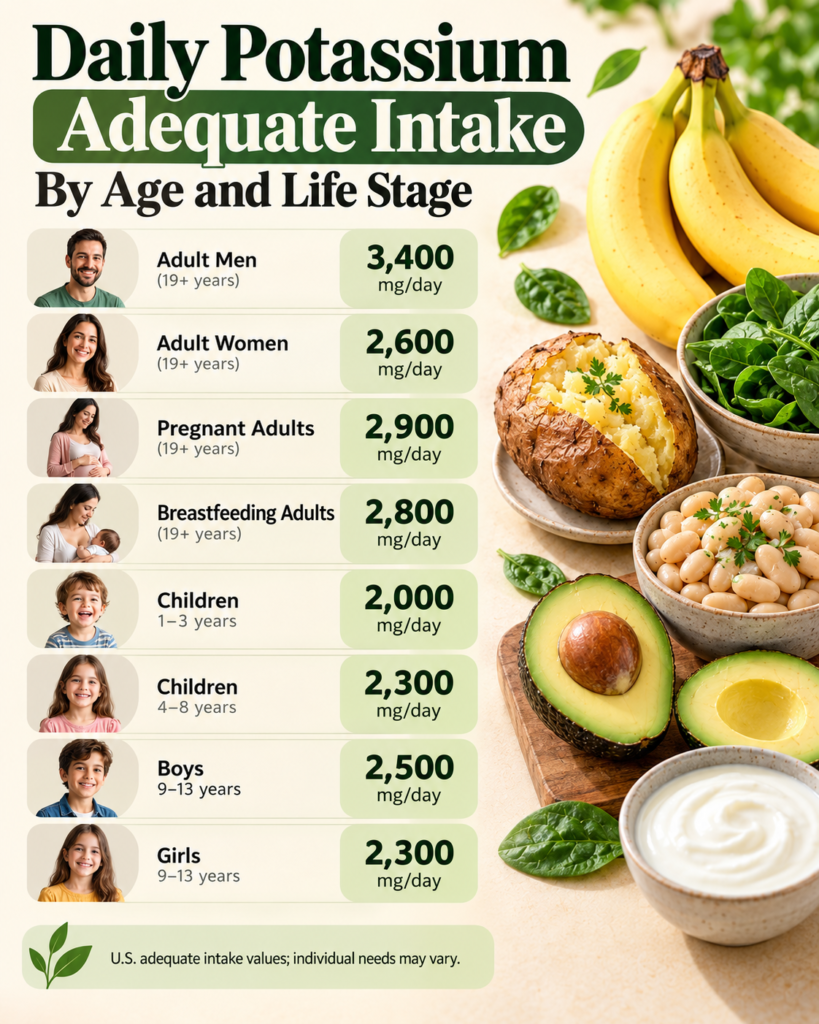
Potassium requirements vary by age, sex, and life stage. U.S. dietary reference values use an adequate intake (AI), rather than a recommended dietary allowance (RDA), for potassium.
| Age or life stage | Daily adequate intake |
|---|---|
| Infants, 0–6 months | 400 mg |
| Infants, 7–12 months | 860 mg |
| Children, 1–3 years | 2,000 mg |
| Children, 4–8 years | 2,300 mg |
| Boys, 9–13 years | 2,500 mg |
| Girls, 9–13 years | 2,300 mg |
| Teen boys, 14–18 years | 3,000 mg |
| Teen girls, 14–18 years | 2,300 mg |
| Adult men, 19+ years | 3,400 mg |
| Adult women, 19+ years | 2,600 mg |
| Pregnant teenagers | 2,600 mg |
| Pregnant adults | 2,900 mg |
| Breastfeeding teenagers | 2,500 mg |
| Breastfeeding adults | 2,800 mg |
These are U.S. reference values for healthy people. Recommendations may differ by country, and people with medical conditions affecting potassium balance need individualized advice.
Benefits of Eating Potassium-Rich Foods
Potassium supports several essential body functions. Including a variety of potassium-containing foods in a balanced eating pattern can help you meet your nutritional needs.
1. Supports normal muscle function
Potassium helps regulate electrical signals involved in muscle contraction. This includes the muscles used for everyday movement.
2. Helps maintain fluid balance
Potassium works with sodium to regulate fluid distribution across cell membranes. Maintaining this balance is important for normal body function.
3. Supports nerve signaling
Nerve cells rely on potassium and other electrolytes to transmit electrical signals throughout the body.
4. Contributes to normal heart function
Potassium is essential for normal electrical activity in the heart. Both excessively low and excessively high blood potassium can be dangerous.
5. May support healthy blood pressure
For many people, a dietary pattern rich in fruits, vegetables, and legumes provides potassium and other nutrients associated with better blood pressure control. Potassium works alongside overall dietary quality and sodium intake; individual results vary.
Important: Potassium-rich foods do not replace prescribed medication or medical treatment for high blood pressure.
Foods High in Magnesium: Natural Sources
Magnesium and potassium are both important minerals, but they have different roles in the body. Eating a varied diet with vegetables, legumes, whole grains, nuts, seeds, and other nutrient-dense foods can help you obtain a range of essential nutrients.
How to Add More Potassium to Your Daily Diet
You do not need to eat all 20 foods every day. Choose several options that fit your budget, culture, and dietary preferences.
Breakfast ideas
- Oatmeal topped with banana and raisins.
- Plain yogurt with cantaloupe or orange segments.
- Eggs served with cooked spinach and whole-grain toast.
- A smoothie made with yogurt, fruit, and suitable ingredients.
Lunch ideas
- Lentil curry with vegetables and whole-wheat roti.
- White bean or kidney bean salad with tomatoes.
- Baked potato with plain yogurt and cooked vegetables.
- Chicken with brown rice and spinach.
Dinner ideas
- Baked salmon with roasted potatoes and vegetables.
- Sweet potato with lentils and a side salad.
- Chickpea curry with tomatoes and whole grains.
- A vegetable and bean soup served with whole-wheat bread.
Snack ideas
- A banana.
- A small portion of dried apricots.
- Plain yogurt.
- Fresh orange or cantaloupe.
- A portion of fruit with a suitable protein-rich food.
Sample one-day meal plan
This example illustrates how potassium-rich foods can be spread throughout a day. It is not a prescribed diet, and its total potassium depends on actual portions and ingredients.
| Meal | Example foods |
|---|---|
| Breakfast | Oatmeal, banana, and plain yogurt |
| Lunch | Lentil curry, whole-wheat roti, and tomatoes |
| Snack | Orange and a small portion of raisins |
| Dinner | Baked potato, salmon or beans, and cooked spinach |
A varied eating pattern helps you obtain potassium alongside protein, fiber, vitamins, and other minerals.

Can You Eat Too Much Potassium?
Potassium from food is generally safe for healthy people with normal kidney function. Healthy kidneys help regulate potassium levels by removing excess amounts through urine.
However, too much potassium in the blood—a condition called hyperkalemia—can be dangerous.
People who have chronic kidney disease or impaired potassium excretion may need to limit certain high-potassium foods, depending on their blood results and medical advice. Some medications, including potassium-sparing diuretics and certain blood pressure medicines, can also increase the risk.
Who should be careful with high-potassium foods?
Talk with your healthcare professional or registered dietitian if you:
- Have chronic kidney disease or reduced kidney function.
- Have previously been told your blood potassium is high.
- Take medications that can raise potassium levels.
- Have a medical condition that affects potassium regulation.
- Have been prescribed a potassium-restricted diet.
Do not start potassium supplements or potassium-based salt substitutes without checking whether they are suitable for you. Some salt substitutes contain substantial amounts of potassium chloride.
NIH guidance on potassium intake, food sources, and safety
Frequently Asked Questions About Potassium Rich Foods
1. What are the best potassium-rich foods?
White beans, lentils, potatoes, dried apricots, spinach, sweet potatoes, yogurt, and avocados are useful options. The best choice depends on your portion size, dietary preferences, and nutritional needs.
2. Which fruit has the most potassium?
Several fruits provide substantial potassium, especially dried apricots, prunes, raisins, bananas, and cantaloupe. Dried fruits often contain more potassium per serving than fresh fruit because water has been removed, but serving sizes differ.
3. Are bananas the best source of potassium?
Bananas are convenient sources of potassium, but they are not the only option. Beans, lentils, potatoes, dried apricots, and some other foods can provide as much or more potassium per typical serving.
4. Which vegetables are high in potassium?
Potatoes, sweet potatoes, spinach, tomatoes, and acorn squash are useful potassium-containing vegetables. Beans and lentils are also valuable sources, although they are legumes rather than vegetables in the strict botanical sense.
5. Can I get enough potassium without supplements?
Many healthy people can obtain potassium through a varied diet containing fruits, vegetables, legumes, dairy products, and other potassium-containing foods. Supplements are not necessary for everyone and should be used with appropriate guidance.
6. Are potassium-rich foods good for blood pressure?
Potassium-containing foods can be part of an eating pattern that supports healthy blood pressure. The overall diet, sodium intake, health conditions, and medications also matter. Do not replace prescribed blood pressure treatment with dietary changes alone.
7. Are beans and lentils high in potassium?
Yes. Cooked lentils and several varieties of beans provide substantial potassium along with fiber and plant-based protein. Their exact potassium content varies by type, serving size, and preparation.
8. Which potassium-rich foods are suitable for a vegetarian diet?
Potatoes, sweet potatoes, lentils, white beans, kidney beans, spinach, bananas, avocados, dried apricots, and yogurt are examples. Vegans can choose plant-based foods and check fortified product labels for additional nutrients.
9. Can people with kidney disease eat potassium-rich foods?
Some people with kidney disease need to limit potassium, while others may not. The appropriate amount depends on kidney function, blood potassium levels, medication use, and clinical advice. Follow an individualized plan rather than automatically avoiding all fruits and vegetables.
10. What is the easiest way to increase potassium intake?
Start by including a potassium-containing food at several meals. For example, eat fruit at breakfast, add beans or lentils to lunch, and serve potatoes or vegetables at dinner. Adjust your choices if a healthcare professional has recommended potassium restrictions.
Conclusion
Adding potassium rich foods to your diet is a practical way to support normal muscle function, nerve signaling, fluid balance, and overall nutritional health. You can choose from a wide range of everyday foods, including potatoes, lentils, beans, spinach, bananas, avocados, yogurt, and dried fruit.
Rather than relying on a single food, aim for variety and include potassium sources in meals you already enjoy. Check reliable food-composition information when you need precise amounts, and seek individualized advice if you have kidney disease or take medication that affects potassium levels.
Small, consistent dietary choices can help you build a balanced eating pattern that meets your nutritional needs.