
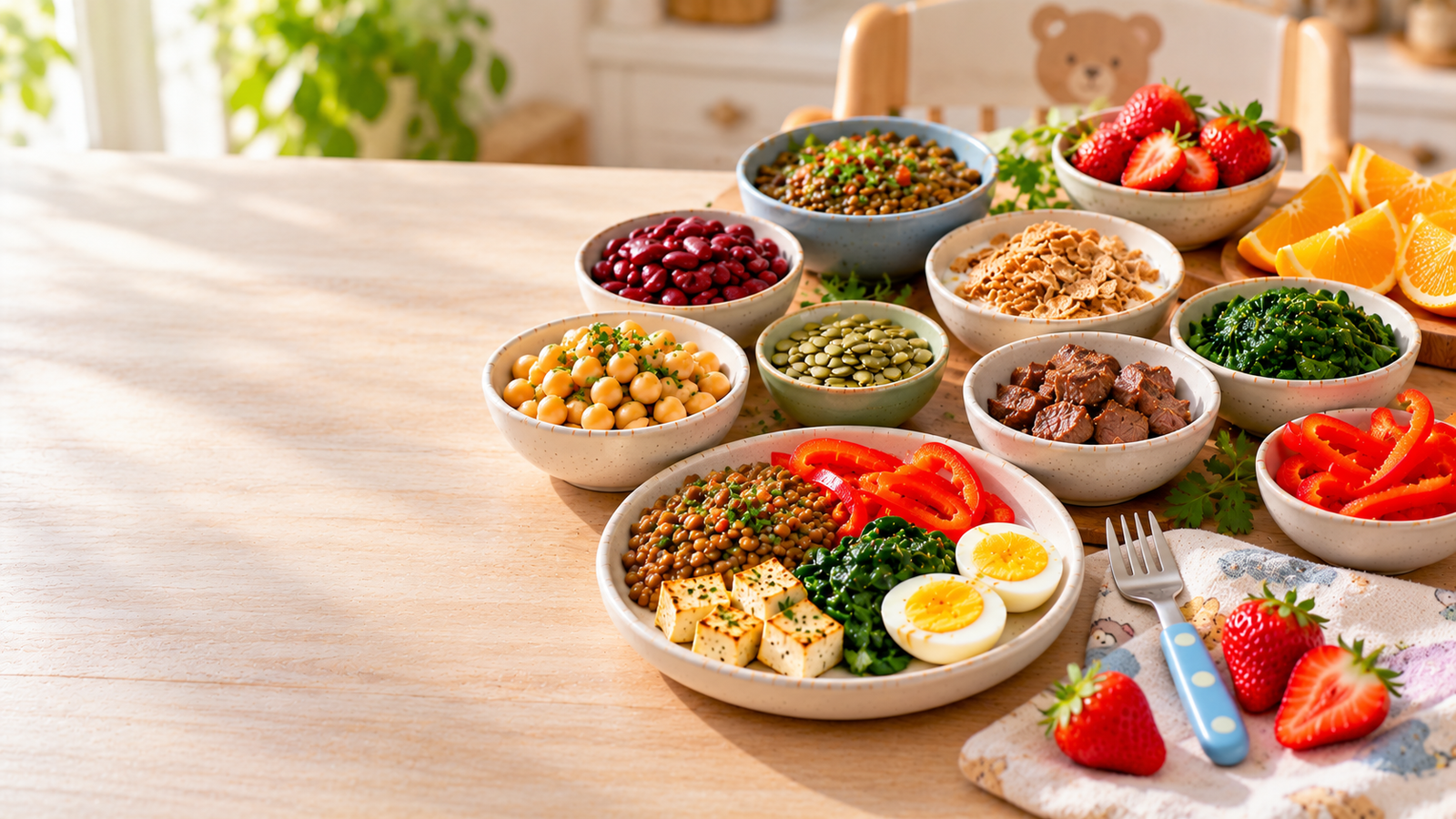
Iron is an essential mineral that helps children grow, develop, and stay active. The body uses iron to make hemoglobin, a protein in red blood cells that carries oxygen throughout the body. Children need enough iron to support normal growth, brain development, and everyday energy needs.
The good news is that iron rich foods for kids can be found in a wide range of everyday meals, including lentils, beans, meat, eggs, tofu, and iron-fortified cereals. Pairing plant-based iron sources with vitamin C-rich foods can also help the body absorb iron more efficiently.
Parents do not need to prepare complicated meals to help children get enough iron. Simple breakfasts, balanced lunches, nutritious snacks, and family dinners can all contribute to a child’s daily intake.
Key Takeaways
- Iron supports healthy red blood cells, growth, and brain development.
- Meat, seafood, lentils, beans, tofu, and iron-fortified cereals are useful sources of iron.
- Vitamin C-rich foods, such as oranges, strawberries, tomatoes, and bell peppers, improve the absorption of iron from plant foods.
- Babies need iron-rich complementary foods from around six months, alongside breast milk or infant formula.
- Children’s iron requirements vary by age, and some children may need extra attention to their iron intake.
- Iron supplements should only be given to children when advised by an appropriate healthcare professional because too much iron can be dangerous.
Why Is Iron Important for Kids?
Iron plays several important roles in a child’s body.
1. Supports Growth and Development
Children grow quickly, especially during infancy and adolescence. Iron helps supply oxygen to tissues and supports normal growth and development.
2. Helps With Brain Development
Iron is important for normal brain function and development. Consistently inadequate iron intake during early childhood can be particularly concerning because this is a critical period for learning and development.
3. Helps Make Healthy Red Blood Cells
The body needs iron to produce hemoglobin, which transports oxygen from the lungs to the rest of the body. When iron stores become too low, iron-deficiency anemia may develop.
4. Supports Everyday Activity
Children need nutrients to play, learn, and participate in daily activities. Iron deficiency may contribute to tiredness, weakness, and reduced concentration, although these symptoms can have many causes.
Providing a variety of iron-rich foods helps children meet their nutritional needs as part of an overall balanced diet.
15 Best Iron Rich Foods for Kids
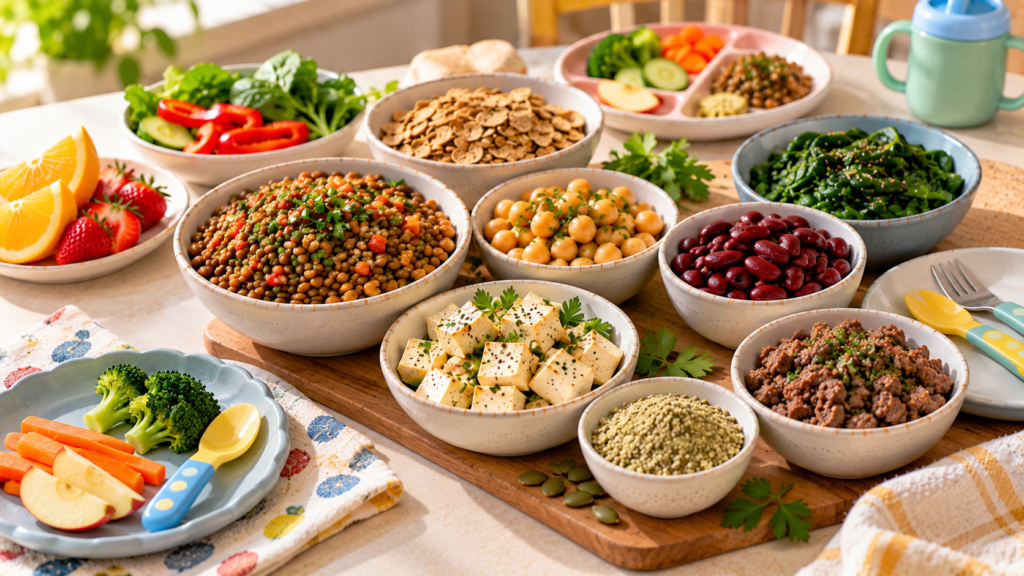
The best approach is to offer different iron-containing foods throughout the week. Some provide heme iron, found in animal foods, while others provide non-heme iron, found in plant foods and fortified products.
Heme iron is generally absorbed more efficiently than non-heme iron. However, plant foods and fortified foods can still make valuable contributions to a child’s diet.
Iron-Rich Food Chart for Children
| Food | Why it is useful | Kid-friendly serving idea |
|---|---|---|
| 1. Lean beef | Provides readily absorbed heme iron | Soft, finely chopped beef in pasta sauce |
| 2. Chicken | Supplies heme iron and protein | Tender shredded chicken in a wrap |
| 3. Fish | Provides iron in varying amounts, depending on the type | Soft, thoroughly cooked fish with rice |
| 4. Eggs | Provide some iron and protein | Scrambled eggs with whole-grain toast |
| 5. Lentils | Plant-based source of non-heme iron | Lentil soup or soft lentil patties |
| 6. Chickpeas | Supply iron, fiber, and protein | Mashed chickpeas or hummus |
| 7. Kidney beans | Provide iron and other nutrients | Mashed beans in a burrito |
| 8. Black beans | Offer plant-based iron and fiber | Soft black beans with rice |
| 9. Tofu | Provides non-heme iron; amounts vary by product | Soft tofu cubes or tofu stir-fry |
| 10. Iron-fortified breakfast cereal | Can be a concentrated source of iron | Cereal served with an age-appropriate milk |
| 11. Oatmeal | Contains naturally occurring non-heme iron | Oatmeal with strawberries |
| 12. Pumpkin seeds | Supply iron and healthy fats | Finely ground seeds mixed into oatmeal |
| 13. Spinach | Contains non-heme iron and other nutrients | Finely chopped spinach in eggs or dal |
| 14. Green peas | Provide some iron and fiber | Soft peas mixed into rice |
| 15. Quinoa | Provides plant-based iron and other nutrients | Soft quinoa mixed with vegetables |
Important: Iron content varies with the variety, brand, preparation method, and serving size. Fortified cereals can contain substantially different amounts of iron, so check the nutrition label. For exact nutrient amounts, consult USDA FoodData Central.
1. Meat and Poultry
Lean beef is one of the useful food sources of heme iron. Chicken also contributes iron, although the amount varies by cut.
Easy meal ideas:
- Minced beef with soft vegetables.
- Shredded chicken mixed into rice.
- Tender meatballs served with tomato sauce.
- Finely chopped meat added to lentil soup.
Prepare meat until safely cooked, and adapt the texture to the child’s age and chewing abilities.
2. Lentils and Beans
Lentils and beans are particularly valuable for families who prefer affordable, plant-based meals. They also provide fiber, protein, and other nutrients.
Easy meal ideas:
- Masoor dal with soft rice.
- Mashed kidney beans in a tortilla.
- Chickpea and vegetable stew.
- Lentil patties with a soft texture.
For babies and younger children, cook legumes until very soft and mash or blend them as needed.
3. Iron-Fortified Breakfast Cereals
Some breakfast cereals are fortified with iron, making them convenient options for busy families. However, not every cereal contains a meaningful amount.
Compare the nutrition labels and choose products appropriate for your child’s age. Lower-sugar options can help limit added sugars.
Easy meal ideas:
- Iron-fortified cereal with sliced strawberries.
- Fortified oatmeal with mashed fruit.
- Soft cereal prepared according to package instructions for a child who is ready for that texture.
4. Eggs and Tofu
Eggs and tofu can add variety to a child’s meals. Eggs provide some iron, while the amount in tofu depends on how it is made and the product selected.
Easy meal ideas:
- Scrambled eggs with chopped tomatoes.
- Soft tofu with rice and vegetables.
- Egg muffins with finely chopped spinach.
- Tofu and vegetable noodles.
Neither eggs nor tofu needs to be served every day. Rotate them with other sources of iron and protein.
5. Seeds and Whole Grains
Pumpkin seeds, oats, quinoa, and whole-grain products can contribute iron to a child’s diet. Seeds are calorie-dense and can be incorporated into meals in safe forms.
For younger children, use finely ground seeds or smooth seed butter thinned and mixed into food. Do not give whole pumpkin seeds to babies or young children who are at risk of choking.
Easy meal ideas:
- Oatmeal with ground pumpkin seeds.
- Soft quinoa with beans.
- Whole-grain toast with smooth hummus.
- A small serving of seed butter stirred into porridge.
How Much Iron Do Children Need Per Day?
The amount of iron a child needs depends on age and life stage. The following recommendations are U.S. National Institutes of Health dietary reference values; local guidance may differ.
| Age group | Recommended daily iron intake |
|---|---|
| Birth to 6 months | 0.27 mg (adequate intake) |
| 7–12 months | 11 mg |
| 1–3 years | 7 mg |
| 4–8 years | 10 mg |
| 9–13 years | 8 mg |
| Boys 14–18 years | 11 mg |
| Girls 14–18 years | 15 mg |
These figures represent total daily intake from food and, where appropriate, supplements. They are not instructions to give a supplement.
Infants who were born prematurely or with low birth weight, children with restricted diets, and children with certain health conditions may have different needs. Their requirements should be discussed with a healthcare professional.
NIH Office of Dietary Supplements: Iron Fact Sheet for Consumers
How to Help Kids Absorb More Iron
Choosing iron-rich foods is important, but the combination of foods can also influence how much iron the body absorbs.
Pair Plant-Based Iron With Vitamin C
Vitamin C helps the body absorb non-heme iron from plant foods and fortified products.
Try these combinations:
| Iron-containing food | Pair it with |
|---|---|
| Lentils or dal | Tomatoes or bell peppers |
| Chickpeas | Lemon juice or tomato |
| Iron-fortified cereal | Strawberries or kiwi |
| Beans and rice | Fresh tomatoes |
| Tofu | Broccoli or bell peppers |
| Oatmeal | Orange segments or strawberries |
Offer age-appropriate portions and prepare foods in a texture the child can safely manage.
Include Different Iron Sources Throughout the Day
Rather than relying on one food, include a variety of sources across breakfast, lunch, dinner, and snacks. For example, fortified cereal at breakfast, lentils at lunch, and meat or tofu at dinner can help build a balanced pattern.
Check Fortified Food Labels
Iron fortification varies considerably. Read the nutrition information and serving size rather than assuming all cereals, breads, or plant-based products provide the same amount.
Keep Meals Balanced
Iron is only one part of children’s nutrition. Include fruits, vegetables, whole grains, protein foods, and suitable dairy products or alternatives as appropriate for the child’s age and dietary needs.
Best Sources of Iron: Heme and Non-Heme Foods
Iron Rich Foods for Babies and Toddlers
Babies and toddlers deserve special attention because iron needs are high during early growth, and their stomachs are small.
Iron-Rich Foods for Babies Around Six Months
When a baby is developmentally ready for complementary foods, generally around six months, iron-rich options can include:
- Iron-fortified infant cereal prepared to a suitable texture.
- Smooth or mashed lentils and beans.
- Finely minced, thoroughly cooked meat.
- Soft, mashed tofu.
- Other age-appropriate iron-containing foods offered in safe textures.
Breast milk remains valuable, but after around six months it does not provide all the iron an infant needs. Iron-fortified infant formula also provides iron for babies who receive it. Continue breast milk or appropriate infant formula while introducing complementary foods according to professional guidance.
Do not use ordinary cow’s milk as the main drink before 12 months. Ask your child’s healthcare professional about iron needs if your baby was premature, has low birth weight, or has other risk factors.
Iron-Rich Foods for Toddlers
Toddlers can eat many of the same foods as the rest of the family, provided the texture and portion are appropriate.
Good choices include:
- Soft lentils and beans.
- Finely chopped meat.
- Scrambled eggs.
- Tofu.
- Iron-fortified cereal.
- Soft peas and cooked vegetables.
Offer meals and snacks at regular intervals without pressuring a child to finish everything. Appetite varies, and a new food may need to be offered several times before a child accepts it.
Choking Safety Matters
Young children need close supervision during meals. Avoid whole nuts, whole seeds, hard chunks of meat, and other choking hazards. Cut or prepare foods according to the child’s developmental stage, and have the child sit upright while eating.
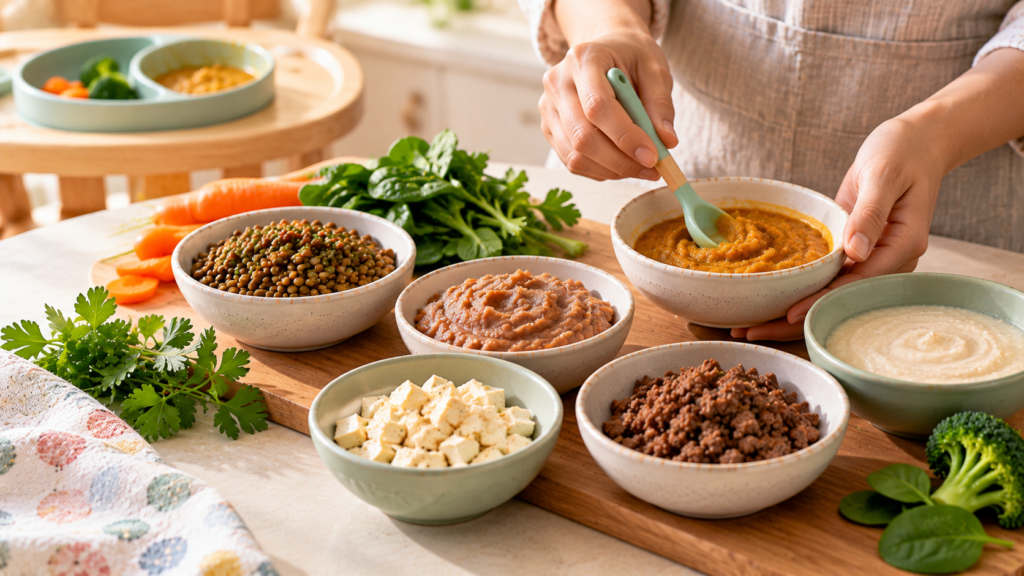
Easy Iron-Rich Meal Ideas for Kids
A practical meal plan can make it easier to include different iron sources without making separate meals for children.
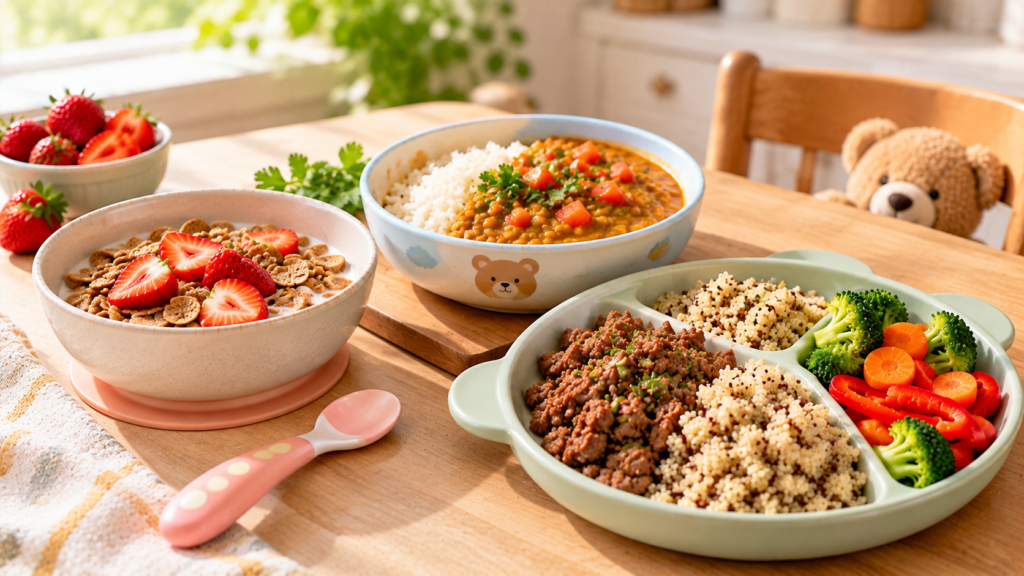
One-Day Example Meal Plan
| Meal | Example | Iron-supporting feature |
|---|---|---|
| Breakfast | Iron-fortified cereal with strawberries | Fortified iron plus vitamin C |
| Morning snack | Soft fruit and an age-appropriate snack | Adds variety to the diet |
| Lunch | Lentil dal, rice, and tomato | Plant-based iron with vitamin C |
| Afternoon snack | Hummus with soft, suitable vegetable pieces | Chickpeas provide non-heme iron |
| Dinner | Minced beef or tofu with vegetables and quinoa | Provides iron from animal or plant foods |
This is an example, not a personalized feeding plan. Portion sizes and textures should match the child’s age, appetite, allergies, and nutritional needs.
More Quick Meal Combinations
- Iron-rich breakfast: Fortified cereal with kiwi or strawberries.
- Easy school lunch: Bean burrito with tomato.
- Vegetarian dinner: Lentil curry with rice and vegetables.
- Family meal: Minced beef pasta with tomato sauce.
- Quick snack: Hummus with soft vegetable sticks for children who can safely manage them.
- Meat-free dinner: Tofu and vegetable stir-fry with rice.
20 Iron Rich Foods to Add to Your Diet
Vegetarian Iron Rich Foods for Kids
Children can obtain iron from a vegetarian diet, but planning matters because plant foods contain non-heme iron, which is generally less readily absorbed than heme iron.
Useful vegetarian choices include:
- Lentils, chickpeas, and beans.
- Tofu and other iron-containing soy foods.
- Iron-fortified breakfast cereals.
- Oats and quinoa.
- Pumpkin seeds in a safe, ground form.
- Spinach and green peas.
- Whole-grain foods that contribute iron.
Combine these foods with vitamin C sources, such as tomatoes, strawberries, oranges, kiwi, or bell peppers.
Children following a vegan diet may need additional attention to other nutrients as well, including vitamin B12, calcium, vitamin D, iodine, and protein. A pediatric dietitian can help families plan a nutritionally complete diet.
NIH Iron Fact Sheet: Food Sources and Iron Absorption
Signs of Iron Deficiency in Children
Iron deficiency can develop when a child’s intake is too low, iron needs increase, or iron is lost through bleeding or certain health conditions. Iron deficiency may occur with or without anemia.
Possible signs include:
- Unusual tiredness or low energy.
- Pale skin.
- Irritability.
- Reduced appetite.
- Headaches or dizziness.
- Difficulty concentrating.
- Slower growth in some cases.
These symptoms are not specific to iron deficiency, and some children may have no obvious symptoms. A healthcare professional can assess risk factors and decide whether blood tests are appropriate.
Children who eat very little iron-rich food, drink excessive amounts of cow’s milk, have restrictive diets, or have certain digestive conditions may be at increased risk. Persistent symptoms or concerns about growth should be discussed with a pediatric healthcare professional.
Iron Deficiency: Signs, Causes and Food Sources
Can Food Alone Correct Iron Deficiency?
Food can help prevent inadequate intake and support healthy iron levels. However, a child who has confirmed iron deficiency or iron-deficiency anemia may need medical treatment in addition to dietary changes.
Do not try to treat suspected anemia with food alone without seeking advice. Never give adult iron supplements or high-dose iron products to a child unless specifically instructed by a healthcare professional. Iron overdose can cause severe poisoning, so supplements must be stored securely out of children’s reach.
Common Mistakes Parents Should Avoid
1. Relying on Only One Iron-Rich Food
A varied diet offers a wider range of nutrients. Rotate between beans, lentils, meat, tofu, fortified cereals, and other suitable foods.
2. Forgetting Vitamin C
Serving beans or lentils with tomatoes, peppers, or fruit can improve non-heme iron absorption.
3. Assuming All Cereals Contain Iron
Some cereals are fortified and others are not. Check the nutrition label and serving size.
4. Offering Unsafe Food Textures
Whole seeds, hard chunks, and poorly prepared foods can pose choking risks for babies and young children. Adapt food preparation to developmental readiness.
5. Giving Iron Supplements Without Guidance
More iron is not always better. Supplements can be harmful if unnecessary or taken in excessive amounts. Ask a healthcare professional before starting them.
Frequently Asked Questions
1. What are the best iron rich foods for kids?
Useful options include lean beef, lentils, beans, chickpeas, tofu, iron-fortified cereal, oats, and some fish. The best choices depend on the child’s age, dietary preferences, and nutritional needs.
2. Which foods are high in iron for toddlers?
Soft lentils, mashed beans, finely minced meat, tofu, and iron-fortified cereal are useful options. Prepare foods in safe textures and supervise toddlers while eating.
3. What are the best vegetarian iron sources for children?
Lentils, chickpeas, beans, tofu, fortified cereals, oats, quinoa, and appropriately prepared seeds can contribute iron. Pair plant-based foods with vitamin C-rich foods to improve absorption.
4. How can I increase my child’s iron intake naturally?
Offer iron-rich foods regularly, include fortified foods where suitable, and combine plant sources with vitamin C-rich fruits and vegetables. If you are concerned about deficiency, ask a healthcare professional for guidance.
5. Do eggs provide enough iron for children?
Eggs provide some iron, but they should not be relied on as a child’s only iron source. Include other options such as lentils, beans, meat, tofu, or fortified cereal.
6. Can too much milk contribute to low iron intake?
Excessive cow’s milk intake in toddlers and young children can displace iron-rich foods in the diet. Discuss an appropriate milk intake with your child’s healthcare professional, especially if your child is a selective eater.
7. When should a child take an iron supplement?
A healthcare professional may recommend supplementation when a child’s needs or medical assessment indicate it. Do not start an iron supplement or determine a dose on your own.
8. What are the signs of iron deficiency in children?
Possible signs include tiredness, pale skin, irritability, reduced appetite, and difficulty concentrating. These symptoms can have other causes, so a healthcare professional should assess persistent concerns.
Conclusion
Including iron rich foods for kids in everyday meals is a practical way to support healthy growth, red blood cell production, and normal development. Lentils, beans, meat, tofu, eggs, and iron-fortified cereals offer different ways to meet children’s iron needs.
Make meals more effective by pairing plant-based iron sources with vitamin C-rich foods, checking food labels, and adapting textures to your child’s age. Babies, toddlers, and teenagers have different nutritional requirements, so focus on age-appropriate foods and varied meals rather than a single “perfect” food.
If your child has symptoms of iron deficiency, follows a restrictive diet, or has risk factors for low iron, seek advice from a qualified healthcare professional. With thoughtful meal planning and appropriate guidance, families can build healthy eating habits that support children’s long-term well-being.