

Zinc is an essential mineral that supports immune function, wound healing, DNA synthesis, cell growth, and normal taste and smell. Because the body does not store large amounts of zinc, getting enough from your regular diet is important.
The good news is that many everyday foods contain zinc, including seafood, meat, dairy products, legumes, nuts, seeds, and whole grains. Knowing which zinc rich foods provide the most zinc can help you build balanced meals without relying on supplements unnecessarily.
This guide covers the best dietary sources of zinc, approximate zinc content, vegetarian options, daily requirements, and practical ways to include more zinc in your meals.
Key Takeaways
- Oysters are among the richest natural sources of zinc, although their zinc content varies considerably.
- Beef, crab, poultry, dairy products, beans, lentils, pumpkin seeds, and nuts can all contribute zinc.
- Animal foods generally provide zinc that is more readily absorbed than zinc from many plant foods.
- Soaking, sprouting, fermenting, and leavening can help improve zinc absorption from some plant-based foods.
- Most people can meet their zinc needs through a varied, balanced diet.
- Taking high-dose zinc supplements without a clear need can cause health problems, including copper deficiency.
What Is Zinc and Why Does Your Body Need It?
Zinc is a trace mineral required in small amounts for hundreds of biological processes. Although the body needs only a relatively small quantity, zinc plays an important role in maintaining normal health.
Major benefits of zinc
1. Supports immune function
Zinc helps immune cells develop and function normally. Inadequate zinc intake can impair immune defenses.
2. Supports wound healing
The body needs zinc for processes involved in tissue repair, cell division, and normal wound healing.
3. Helps with growth and development
Zinc is important during childhood, adolescence, pregnancy, and other periods when cells are growing and developing.
4. Maintains normal taste and smell
Zinc is involved in the normal functioning of taste and smell. A deficiency may contribute to changes in these senses.
5. Supports DNA synthesis and cell function
Many enzymes depend on zinc to carry out processes involved in DNA production, protein synthesis, and cellular maintenance.
Eating zinc-rich foods regularly helps supply this essential nutrient as part of a balanced diet.
15 Best Zinc Rich Foods to Add to Your Diet
The zinc content of foods varies with the species, cut, serving size, preparation method, and growing conditions. The values below are approximate examples, not exact measurements for every product.
| Food | Typical serving | Approximate zinc |
|---|---|---|
| Oysters, cooked | 3 oz (85 g) | 20–50+ mg |
| Beef, cooked | 3 oz (85 g) | 4–9 mg |
| Crab, cooked | 3 oz (85 g) | 3–7 mg |
| Pork, cooked | 3 oz (85 g) | 2–3 mg |
| Dark-meat chicken, cooked | 3 oz (85 g) | 1.5–3 mg |
| Pumpkin seeds | 1 oz (28 g) | 2–3 mg |
| Hemp seeds | 1 oz (28 g) | 2–3 mg |
| Cashews | 1 oz (28 g) | 1.5–2 mg |
| Chickpeas, cooked | ½ cup | 1–1.5 mg |
| Lentils, cooked | ½ cup | 1–1.5 mg |
| Oatmeal, cooked | 1 cup | 1–2 mg |
| Plain yogurt | 1 cup | 1–2 mg |
| Milk | 1 cup | 0.8–1.2 mg |
| Eggs | 2 large | 1–1.5 mg |
| Whole-wheat bread | 2 slices | 1–2 mg |
Food values are rounded estimates compiled from typical food-composition data. Oysters are especially variable; certain varieties can contain substantially more zinc than the range shown. Check a reliable food database for a specific product.
1. Oysters
Oysters are exceptionally rich in zinc and can provide several times the daily requirement in a single serving. Their mineral content varies by species, size, and growing environment.
Enjoy properly cooked oysters as part of a meal. Because a serving may contain a very large amount of zinc, regularly eating large quantities is not necessary to maintain an adequate intake.
2. Beef
Beef is one of the most practical animal-based zinc sources. Lean beef can provide a meaningful amount of zinc alongside protein, iron, and vitamin B12.
Try grilled beef strips, a lean beef curry, or beef added to a balanced grain bowl. Choose suitable portions and vary your protein sources throughout the week.
3. Crab and Other Seafood
Crab provides zinc as well as protein and vitamin B12. Other shellfish and seafood may contribute zinc too, although amounts differ by species.
Choose thoroughly cooked seafood from safe sources, especially if you are pregnant or have a higher risk of foodborne illness.
4. Pork and Poultry
Pork and chicken provide moderate amounts of zinc and can be incorporated into many familiar meals. Dark-meat chicken often supplies more zinc than an equivalent portion of chicken breast, though the exact amount depends on the cut.
5. Pumpkin Seeds
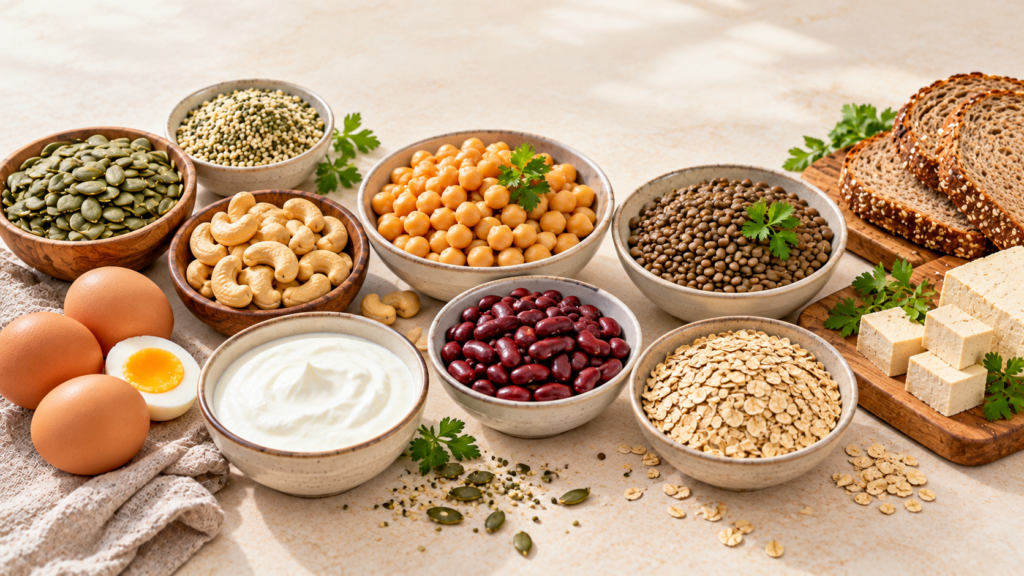
Pumpkin seeds are a convenient plant-based source of zinc. Add them to oatmeal, yogurt, salads, or homemade trail mix.
Seeds also provide healthy fats, protein, and other minerals. Because they are energy-dense, a small handful is usually a practical serving.
6. Hemp Seeds
Hemp seeds contain zinc, protein, and unsaturated fats. Sprinkle them over porridge, blend them into smoothies, or add them to grain bowls.
7. Cashews
Cashews contribute zinc, magnesium, and copper. A small handful makes a useful snack, and chopped cashews can add crunch to vegetable dishes.
8. Chickpeas
Chickpeas provide zinc along with protein and fiber. Use them in hummus, curries, salads, and roasted snacks.
9. Lentils
Lentils are an affordable source of plant-based protein, fiber, iron, and zinc. Pair them with whole grains and a variety of vegetables to build nutritious meals.
10. Oats
Oats provide some zinc along with fiber and other nutrients. Prepare oatmeal with milk, then add pumpkin seeds or cashews to increase the meal’s zinc content.
11. Yogurt and Milk
Dairy foods provide zinc in addition to protein and calcium. Plain yogurt can be a convenient breakfast or snack, while milk can contribute zinc throughout the day.
12. Eggs
Eggs contain a modest amount of zinc and provide high-quality protein, choline, and vitamin B12. Combine them with whole-grain toast and vegetables for a balanced breakfast.
13. Whole-Wheat Bread
Whole-wheat bread contains zinc, although some of it may be less readily absorbed because whole grains contain phytates. Fermented or yeast-leavened bread may have lower phytate levels than some other grain preparations.
14. Beans
Kidney beans, black beans, and other legumes supply zinc alongside fiber and plant protein. Add them to soups, stews, salads, and rice dishes.
15. Fortified Breakfast Cereals
Some breakfast cereals contain added zinc. The amount varies considerably by brand, so check the nutrition label rather than assuming every cereal is fortified.

How Much Zinc Do You Need Per Day?
Daily zinc requirements depend on age, sex, and life stage.
The following values are US National Institutes of Health recommendations for generally healthy people.
| Life stage | Recommended daily intake |
|---|---|
| Adult men | 11 mg |
| Adult women | 8 mg |
| Pregnancy, adults | 11 mg |
| Breastfeeding, adults | 12 mg |
| Children aged 9–13 | 8 mg |
| Teen boys aged 14–18 | 11 mg |
| Teen girls aged 14–18 | 9 mg |
These values are general guidelines, not individualized medical advice. Requirements for younger children vary
NIH Office of Dietary Supplements — Zinc Fact Sheet
Suggested URL: https://ods.od.nih.gov/factsheets/Zinc-HealthProfessional/
Best Zinc Rich Foods for Vegetarians
Vegetarians can obtain zinc from seeds, nuts, legumes, whole grains, dairy products, eggs, and fortified foods, depending on their eating pattern.
Plant-based foods high in zinc
- Pumpkin seeds and hemp seeds
- Cashews and other nuts
- Chickpeas, lentils, and beans
- Oats and whole grains
- Tofu and other soy foods
- Zinc-fortified breakfast cereals
How to improve zinc absorption from plant foods
Plant foods contain varying amounts of phytates, natural compounds that can reduce zinc absorption. This does not mean you should avoid nutritious whole grains or legumes.
Instead, consider practical preparation methods:
- Soak dried beans and legumes before cooking, where appropriate.
- Use fermented foods and traditionally fermented doughs.
- Choose a varied diet instead of relying on one single plant source.
- Include zinc-containing foods at several meals throughout the day.
People following strictly plant-based diets may need to pay particular attention to zinc intake because zinc from plant foods can be less bioavailable.
Best Magnesium-Rich Foods for a Balanced Diet
Easy Ways to Add More Zinc to Everyday Meals
You do not need an expensive meal plan to eat more zinc-rich foods. Small, consistent changes can make a difference.
Breakfast
- Oatmeal with milk and pumpkin seeds.
- Eggs with whole-wheat toast.
- Plain yogurt topped with oats and cashews.
Lunch
- Chickpea and vegetable salad.
- Lentil soup with whole-grain bread.
- Lean beef with rice and vegetables.
Dinner
- Grilled chicken with beans and vegetables.
- Beef and chickpea curry.
- Properly cooked seafood with whole grains and greens.
Snacks
- A small handful of cashews.
- Pumpkin seeds mixed with other unsalted nuts.
- Hummus served with fresh vegetables.

Can You Get Too Much Zinc?
Yes. Excessive zinc intake, particularly from supplements, can cause nausea, vomiting, abdominal discomfort, and other adverse effects. Taking high amounts for extended periods can interfere with copper absorption and may lead to copper deficiency.
For adults, the US tolerable upper intake level is 40 mg of zinc per day from all sources, unless a clinician recommends otherwise for a specific medical reason.
This limit is not a target. It is a safety boundary for routine intake in generally healthy adults.
Before taking a zinc supplement, consider your diet and speak with a qualified healthcare professional if you suspect a deficiency, take medications, or have a condition affecting nutrient absorption.
Signs You May Not Be Getting Enough Zinc
Inadequate zinc intake may contribute to:
- Reduced appetite
- Changes in taste or smell
- Slow wound healing
- Hair loss
- Skin problems
- Impaired growth in children
- Greater susceptibility to infections
These symptoms can have many causes and do not establish a zinc deficiency on their own. A healthcare professional can assess your symptoms, dietary pattern, and relevant medical history.
Conclusion
Including a variety of zinc rich foods in your everyday meals is a practical way to support normal immune function, wound healing, growth, and cellular health. Oysters and beef are concentrated sources, while pumpkin seeds, cashews, lentils, chickpeas, dairy products, and whole grains can help you meet your needs throughout the day.
Focus on balanced meals, varied protein sources, and realistic portions rather than trying to obtain all your zinc from one food. Most importantly, avoid high-dose supplements unless there is a clear reason to use them.
A varied diet is a strong starting point for meeting your daily zinc requirements.
3 thoughts on “Zinc Rich Foods: Complete Food Guide”