
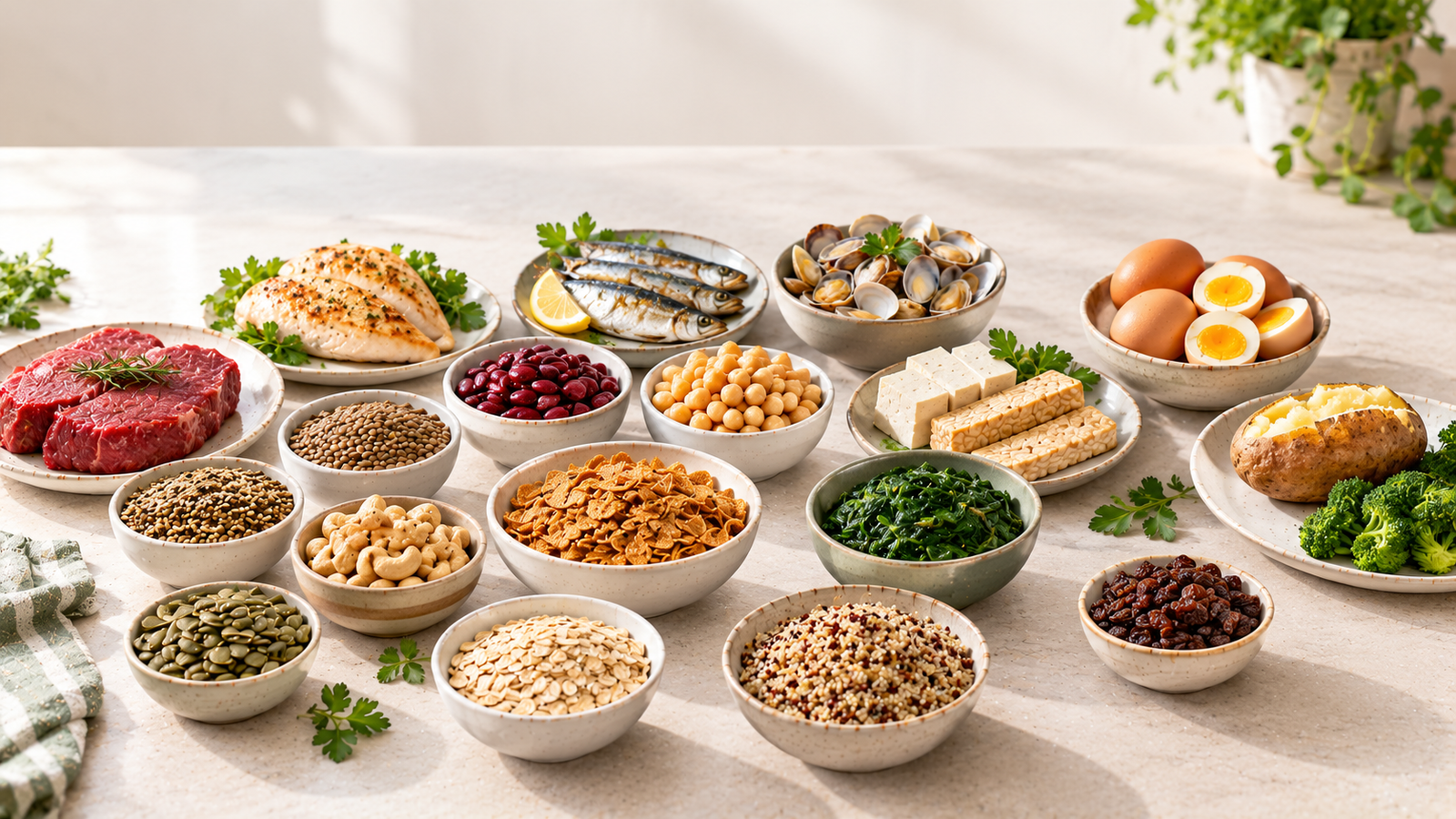
Iron is an essential mineral your body needs to produce hemoglobin, a protein in red blood cells that carries oxygen throughout the body. It also supports normal energy metabolism, growth, and other important functions.
Getting enough iron through a balanced diet can help you meet your nutritional needs. However, iron requirements vary depending on age, sex, pregnancy status, and individual health circumstances.
The good news is that iron rich foods to add to your diet include a wide variety of animal-based and plant-based options. Whether you eat meat, follow a vegetarian diet, or prefer vegan meals, you can build balanced meals around foods that provide iron.
This guide covers 20 iron-rich foods, practical meal ideas, and simple ways to improve iron absorption.
Key Takeaways
- Iron-rich foods include shellfish, meat, poultry, lentils, beans, tofu, seeds, and fortified cereals.
- Animal foods provide heme iron, which the body generally absorbs more readily.
- Plant foods provide non-heme iron, and vitamin C can help improve its absorption.
- Pair lentils, beans, tofu, and leafy greens with foods such as bell peppers, tomatoes, citrus fruits, or broccoli.
- Iron needs vary by age and life stage; menstruating people and pregnant individuals may need more.
- If you suspect iron deficiency, a healthcare professional can assess your symptoms and determine whether testing or treatment is needed.
What Are Iron-Rich Foods?
Iron-rich foods are foods that provide meaningful amounts of iron in a serving. They include meat, seafood, poultry, legumes, seeds, leafy vegetables, whole grains, and certain fortified products.
There are two main dietary forms of iron.
1. Heme Iron
Heme iron is found in animal foods, including meat, poultry, and seafood. The body generally absorbs heme iron more efficiently than non-heme iron.
Examples include:
- Beef
- Clams
- Sardines
- Chicken
- Other types of meat and seafood
2. Non-Heme Iron
Non-heme iron is found in both plant foods and animal foods, including fortified products. Plant-based sources are particularly important for vegetarians and vegans.
Examples include:
- Lentils
- Beans
- Tofu
- Pumpkin seeds
- Spinach
- Iron-fortified cereals
You can obtain iron from either type. The key is to choose a variety of suitable foods and consider how your overall diet affects absorption.
20 Iron Rich Foods to Add to Your Diet
The following foods offer practical ways to increase dietary iron. Iron content varies by variety, brand, preparation method, and serving size, so values are approximate rather than universal.
| No. | Food | Approximate iron per serving | Serving |
|---|---|---|---|
| 1 | Cooked clams | 23 mg or more | 3 oz (85 g) |
| 2 | Iron-fortified breakfast cereal | 4–18 mg or more | 1 serving, depending on brand |
| 3 | Cooked beef | 2–3 mg | 3 oz (85 g) |
| 4 | Cooked lentils | 3.3 mg | ½ cup |
| 5 | Cooked white beans | 3–4 mg | ½ cup |
| 6 | Cooked chickpeas | 2.4 mg | ½ cup |
| 7 | Firm tofu | 2–3 mg | ½ cup, depending on product |
| 8 | Cooked spinach | 3.2 mg | ½ cup |
| 9 | Pumpkin seeds | 2.5 mg | 1 oz (28 g) |
| 10 | Cooked kidney beans | 2 mg | ½ cup |
| 11 | Cooked soybeans | About 4.4 mg | ½ cup |
| 12 | Cooked quinoa | 1.4 mg | ½ cup |
| 13 | Cooked chicken | About 1 mg | 3 oz (85 g) |
| 14 | Sardines | About 2–3 mg | 3 oz (85 g) |
| 15 | Cashews | About 1.9 mg | 1 oz (28 g) |
| 16 | Cooked oatmeal | About 1.5 mg | 1 cup |
| 17 | Sesame seeds | About 2.1 mg | 1 oz (28 g) |
| 18 | Baked potato with skin | About 1.9 mg | 1 medium potato |
| 19 | Raisins | About 1 mg | ¼ cup |
| 20 | Cooked broccoli | About 0.7 mg | ½ cup |
Values are estimates compiled from commonly reported food-composition data. Actual values can differ, especially for shellfish, fortified cereal, tofu, and packaged products. Check product labels when available.
1. Clams
Clams can be an exceptionally rich source of iron, making them one of the most concentrated options on this list. They also provide vitamin B12 and protein.
How to eat them: Add properly cooked clams to soups, pasta, or seafood dishes. Iron content varies substantially by species and preparation.
2. Iron-Fortified Breakfast Cereal
Some breakfast cereals contain added iron and can provide a substantial portion of your daily requirement in one serving.
How to eat it: Choose a cereal with iron listed on its nutrition label. Pair it with strawberries, kiwi, or another vitamin C-rich fruit to support non-heme iron absorption.
3. Beef
Beef provides heme iron, which is generally more readily absorbed than iron from plant foods. It also supplies protein, zinc, and vitamin B12.
How to eat it: Try lean beef in a vegetable stir-fry, homemade meatballs, or a balanced meal with potatoes and broccoli.
4. Lentils
Lentils are affordable, versatile, and useful for vegetarian and vegan diets. They also provide fiber, protein, and folate.
How to eat them: Prepare lentil soup, lentil curry, or a lentil salad with tomatoes and bell peppers.
5. White Beans
White beans provide iron, fiber, and plant-based protein. They work well in soups, stews, and mixed vegetable dishes.
How to eat them: Add white beans to tomato soup or combine them with broccoli and lemon juice.
6. Chickpeas
Chickpeas are a convenient source of non-heme iron. They are also rich in fiber and can be used in many cuisines.
How to eat them: Make hummus, roast chickpeas for a crunchy snack, or add them to a chickpea and bell pepper salad.
7. Tofu
Tofu is a useful iron-containing protein source for people following vegetarian or vegan diets. Its exact iron content varies by product and preparation.
How to eat it: Stir-fry tofu with broccoli and red bell pepper, or add it to a curry with tomatoes.
8. Spinach
Spinach provides non-heme iron alongside folate and other nutrients. However, it also contains compounds that reduce the absorption of some of its iron.
How to eat it: Add cooked spinach to lentils, omelets, soups, or vegetable curries. Pair it with a vitamin C-rich food.
9. Pumpkin Seeds
Pumpkin seeds provide iron, healthy fats, protein, and magnesium. They are an easy addition to meals and snacks.
How to eat them: Sprinkle pumpkin seeds over oatmeal, yogurt, salads, or roasted vegetables.
10. Kidney Beans
Kidney beans contain iron, fiber, and plant protein. They are a practical pantry staple for quick meals.
How to eat them: Add kidney beans to chili, bean curry, vegetable soup, or a tomato-based rice dish.
11. Soybeans
Soybeans contain plant-based iron and protein. They can be eaten as edamame or used in foods such as tofu and tempeh.
How to eat them: Add cooked soybeans to grain bowls, salads, or vegetable stir-fries.
12. Quinoa
Quinoa provides some iron along with protein, fiber, and other minerals. It is an easy alternative to rice or other grains.
How to eat it: Serve quinoa with beans, roasted vegetables, and a lemon-based dressing.
13. Chicken
Chicken contains iron, although it typically provides less per serving than some red meats and shellfish. It also supplies protein and several B vitamins.
How to eat it: Add chicken to a balanced meal with beans, leafy vegetables, and tomatoes.
14. Sardines
Sardines provide iron as well as protein, vitamin B12, and omega-3 fatty acids. They can be a convenient shelf-stable option.
How to eat them: Serve sardines on whole-grain toast, add them to salads, or pair them with tomatoes and lemon.
15. Cashews
Cashews offer a modest amount of iron along with unsaturated fats, magnesium, and other minerals.
How to eat them: Enjoy a small handful as a snack or add chopped cashews to oatmeal, stir-fries, and grain bowls.
16. Oatmeal
Oats contain non-heme iron and fiber. Some instant oatmeal products may also be fortified, so their iron content can differ from plain oats.
How to eat it: Prepare oatmeal with seeds and fruit. Check the label if you’re choosing an iron-fortified product.
17. Sesame Seeds
Sesame seeds contribute iron and healthy fats. Tahini, a paste made from sesame seeds, is another practical way to include them in meals.
How to eat them: Add sesame seeds to salads and stir-fries or use tahini in a chickpea dip.
18. Baked Potatoes
A baked potato with its skin provides some iron along with potassium and carbohydrates. It is not among the most concentrated iron sources, but it can contribute to an overall balanced diet.
How to eat it: Top a baked potato with beans, lentils, or tofu and serve it with a vitamin C-rich vegetable.
19. Raisins
Raisins contain a modest amount of iron and can be convenient when you want a portable snack. Because dried fruit is concentrated, portions matter.
How to eat them: Add raisins to oatmeal, trail mix, or a chickpea and grain salad.
20. Broccoli
Broccoli contains a smaller amount of iron but also provides vitamin C. That makes it a useful partner for meals containing non-heme iron.
How to eat it: Serve broccoli with lentils, tofu, beans, or quinoa, and add lemon juice if desired.
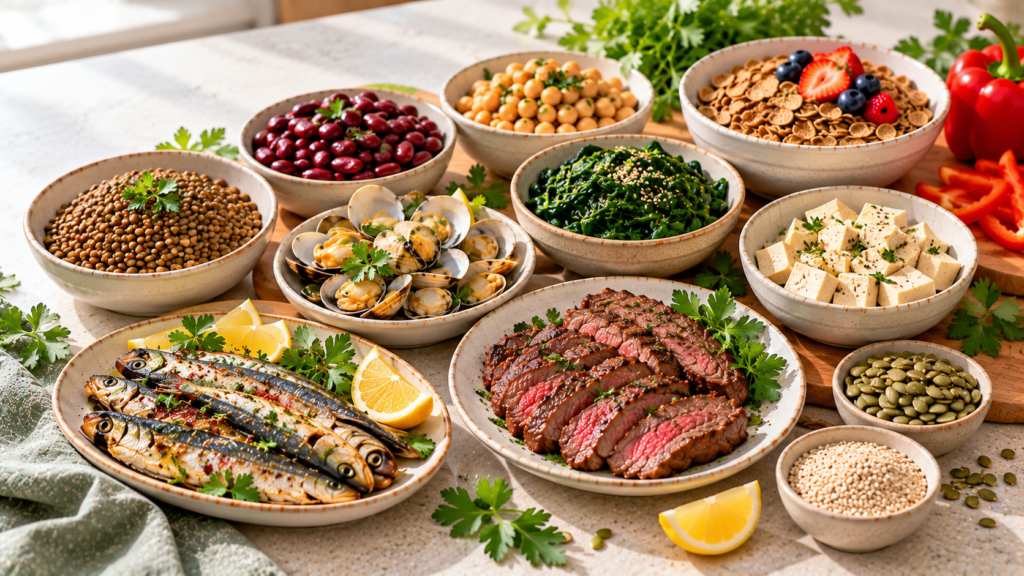
A variety of iron-rich foods including lentils, beans, beef, tofu, spinach, seeds, and seafood.
Which Iron-Rich Foods Are Best for Vegetarians and Vegans?
Vegetarians and vegans can get iron from a range of plant-based foods. Because non-heme iron is generally absorbed less efficiently than heme iron, meal combinations can be especially helpful.
Best Plant-Based Iron Sources
- Lentils
- Chickpeas
- White beans and kidney beans
- Soybeans and tofu
- Pumpkin and sesame seeds
- Iron-fortified breakfast cereals
- Oats and quinoa
- Cooked spinach
- Other beans, peas, and iron-containing grains
How to Improve Iron Absorption From Plant Foods
Pair iron with vitamin C. Add bell peppers, tomatoes, broccoli, citrus fruits, kiwi, or strawberries to meals containing beans, lentils, tofu, or seeds.
Build meals around several sources. A lentil bowl topped with pumpkin seeds and served with a tomato salad can provide iron from more than one food.
Check fortified-food labels. Iron content varies between breakfast cereals, breads, and other fortified products.
Consider tea and coffee timing. Tea and coffee can reduce the absorption of non-heme iron when consumed with meals. If you are trying to improve iron status, consider drinking them between meals rather than alongside iron-rich food.
Don’t rely on spinach alone. Spinach can contribute iron, but combining it with legumes, seeds, grains, and vitamin C-rich produce creates a more varied dietary pattern.
If you follow a vegan diet and have concerns about your iron intake, a registered dietitian or healthcare professional can help you assess whether your eating pattern meets your needs.
20 Vitamin C Rich Foods to Add to Your Diet
How Much Iron Do You Need Per Day?
Iron requirements depend on age, sex, and life stage. The following US Recommended Dietary Allowances (RDAs) provide a useful reference.
| Life stage | Recommended iron per day |
|---|---|
| Children ages 1–3 | 7 mg |
| Children ages 4–8 | 10 mg |
| Children ages 9–13 | 8 mg |
| Teen boys ages 14–18 | 11 mg |
| Teen girls ages 14–18 | 15 mg |
| Adult men ages 19–50 | 8 mg |
| Adult women ages 19–50 | 18 mg |
| Adults age 51 and older | 8 mg |
| Pregnancy, adults | 27 mg |
| Breastfeeding, adults | 9 mg |
These figures are general guidelines, not individualized prescriptions. Requirements can differ depending on medical circumstances, blood loss, pregnancy, and other factors.
People who eat vegetarian diets may need to pay particular attention to iron intake because plant-based non-heme iron is less bioavailable on average. Individual needs should be discussed with a qualified professional where appropriate.
NIH Office of Dietary Supplements iron fact sheet.
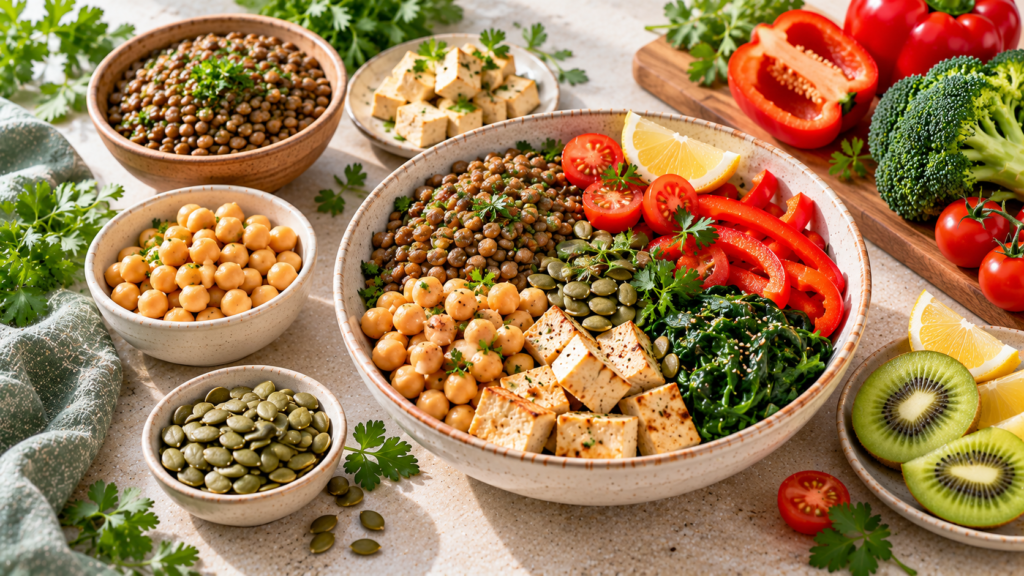
Plant-based iron sources such as lentils, chickpeas, tofu, and spinach served with vitamin C-rich vegetables and fruit.
Easy Ways to Add More Iron to Everyday Meals
You don’t have to change your entire diet to include more iron-rich foods. Start with simple meals and combinations you already enjoy.
Breakfast Ideas
- Iron-fortified cereal with strawberries or kiwi.
- Oatmeal topped with pumpkin seeds and raisins.
- Eggs served with whole-grain toast and tomatoes.
Lunch Ideas
- Lentil soup with a tomato and bell pepper salad.
- Chickpea salad with lemon dressing.
- Tofu and vegetable stir-fry with quinoa.
- Sardines served with whole-grain toast and tomatoes.
Dinner Ideas
- Lean beef with potatoes and broccoli.
- Kidney bean curry with tomatoes.
- Lentil and spinach stew with lemon.
- Tofu with red bell peppers and brown rice.
Snack Ideas
- A small handful of pumpkin seeds or cashews.
- Hummus with red bell pepper strips.
- Iron-fortified cereal, if appropriate as a snack.
- Raisins combined with nuts and seeds.
The most useful approach is variety. Include several iron-containing foods across the day, and pair plant-based sources with vitamin C-rich ingredients where practical.
Can Iron-Rich Foods Help Prevent Iron Deficiency?
A diet that regularly includes iron-containing foods can help you meet your nutritional needs. However, diet alone may not be enough to prevent or correct iron deficiency in every situation.
Iron deficiency can develop for several reasons, including inadequate dietary intake, increased requirements, heavy menstrual bleeding, pregnancy, certain gastrointestinal conditions, or blood loss.
Possible symptoms include:
- Persistent tiredness or low energy
- Weakness
- Pale skin
- Shortness of breath during usual activities
- Headaches or dizziness
- Difficulty concentrating
These symptoms can have many causes and do not confirm iron deficiency on their own. A healthcare professional may recommend blood tests, such as a complete blood count and ferritin testing, to assess your iron status.
Important: Do not start high-dose iron supplements solely because you feel tired. Too much iron can be harmful, and treatment depends on the cause and severity of a deficiency. Children are particularly vulnerable to iron overdose.
https://ods.od.nih.gov/factsheets/Iron-Consumer/]
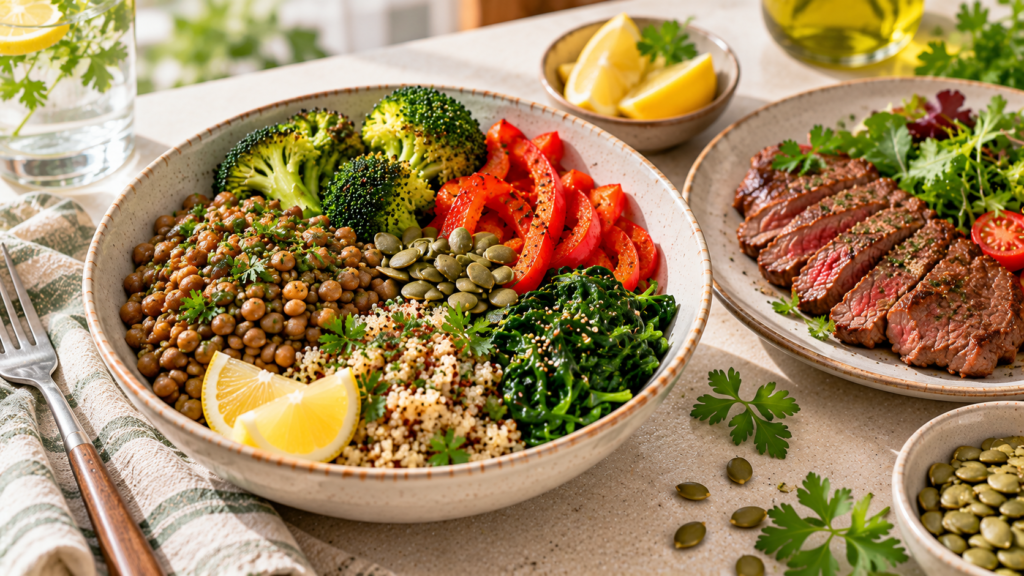
A balanced meal featuring lentils, quinoa, pumpkin seeds, spinach, broccoli, red pepper, and lean beef as iron sources.
Common Mistakes to Avoid When Increasing Iron Intake
Assuming All Iron Sources Are Absorbed Equally
Heme iron is generally absorbed more readily than non-heme iron. That does not make plant foods unhelpful; it means food combinations and overall dietary variety matter.
Eating Plant-Based Iron Without Vitamin C
You can still absorb non-heme iron without vitamin C, but adding vitamin C-rich foods can improve absorption. Try lemon juice on lentils or tomatoes with beans.
Expecting One Food to Meet Every Need
No single food provides the ideal amount of every nutrient. Rotate legumes, seeds, grains, vegetables, and—if you eat them—meat or seafood.
Assuming Food Alone Will Correct a Diagnosed Deficiency
Diet is important, but confirmed iron deficiency may require medical treatment and investigation of the underlying cause. Follow your clinician’s advice.
Taking Iron Supplements Without Checking Whether You Need Them
Iron supplements can cause side effects and may be unsafe in excess. A clinician can help determine whether supplementation is appropriate and what dose is suitable.
Frequently Asked Questions About Iron-Rich Foods
1. What are the best iron-rich foods to add to your diet?
Clams, iron-fortified cereals, beef, lentils, beans, tofu, pumpkin seeds, and cooked spinach are useful options. The best choices depend on your dietary preferences, iron needs, and the amount of iron your body absorbs.
2. Which plant-based foods are highest in iron?
Soybeans, lentils, beans, chickpeas, tofu, pumpkin seeds, sesame seeds, and some iron-fortified cereals are useful plant-based sources. Exact amounts vary by serving and product.
3. What foods are rich in iron for vegetarians?
Vegetarians can include lentils, chickpeas, beans, tofu, seeds, oats, quinoa, spinach, eggs if eaten, and iron-fortified cereals. Pair plant sources with vitamin C-rich foods to improve non-heme iron absorption.
4. Which fruit is highest in iron?
Most fresh fruits are not concentrated sources of iron. Dried fruits such as raisins can contribute modest amounts, but legumes, seeds, tofu, and fortified cereals are generally more practical sources. Fruit such as kiwi, oranges, and strawberries can help by supplying vitamin C.
5. Does spinach contain a lot of iron?
Cooked spinach provides a useful amount of iron, but its iron is non-heme iron and is not absorbed as efficiently as heme iron. Eating it with vitamin C-rich foods can help improve absorption.
6. What should I eat with iron-rich foods?
Pair plant-based sources such as lentils, beans, tofu, and seeds with vitamin C-rich foods, including bell peppers, tomatoes, broccoli, citrus fruits, or kiwi.
7. Can I get enough iron without eating meat?
Yes, many people can meet their iron needs through a well-planned vegetarian or vegan diet that includes legumes, tofu, seeds, grains, vegetables, and fortified foods. Individual requirements and absorption vary.
8. How can I increase my iron intake naturally?
Include several iron-containing foods throughout the day, choose fortified products when useful, and pair plant sources with vitamin C-rich produce. If you have symptoms or a diagnosed deficiency, seek medical guidance rather than relying on food changes alone.
9. Are eggs a good source of iron?
Eggs contain some iron, but they are not among the most concentrated sources. Beans, lentils, seeds, meat, shellfish, and fortified cereals may contribute more per typical serving.
10. How long does it take to improve iron levels through food?
The time needed depends on the cause and severity of low iron, your diet, absorption, and whether treatment is required. Food changes alone may not be sufficient for diagnosed iron-deficiency anemia. A healthcare professional can recommend appropriate treatment and follow-up testing.
Conclusion: Make Iron-Rich Foods Part of Your Daily Diet
Adding iron rich foods to your diet can be straightforward when you choose a variety of options and build meals around foods you enjoy. Clams, beef, lentils, beans, tofu, pumpkin seeds, fortified cereals, and leafy vegetables can all contribute to your iron intake.
For plant-based meals, combine sources such as lentils, chickpeas, and tofu with vitamin C-rich foods like tomatoes, bell peppers, broccoli, or citrus fruits. This simple habit can help your body absorb non-heme iron more effectively.
Remember that iron needs vary, and symptoms such as fatigue or weakness do not necessarily mean you have iron deficiency. If you are concerned about your iron status, ask a healthcare professional whether testing or treatment is appropriate.
Start with one or two practical changes—such as adding lentils to lunch, choosing a suitable fortified cereal, or topping a salad with pumpkin seeds—and build from there.
3 thoughts on “20 Iron Rich Foods to Add to Your Diet”